A mystery solved

Carriage memories confirmed

We’ve had many people coming up to us recalling old horse-drawn carriages stored at Kings Weston shortly after the Second World War. It’s been a bit of a puzzle as to what they were, and what happened to them, but this week the story came into sharp focus. A new on-line interface for the collections of Bristol Museum and Art Gallery Provided the answer.

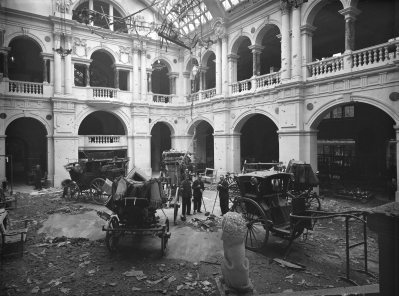
While searching for Kings Weston related items an entry appeared for one of a collection of carriages in the City’s ownership. This was an early Nineteenth Century carriage used by the Duke of Beaufort of Badminton. During the war it had been on display in the rear atrium of the museum when, in 1941, a bomb detonated on the roof, completely destroying a biplane hung from the ceiling, and badly damaging the carriages. They  were speedily removed to Kings Weston estate buildings for safe storage for the remainder of the war, where they must have stayed into the early 1950s when people recall seeing them. They reputedly received more damage from damp through the leaky roofs of the stables than they did in the initial blast! 

Annual Big Bulb Plant October 10th

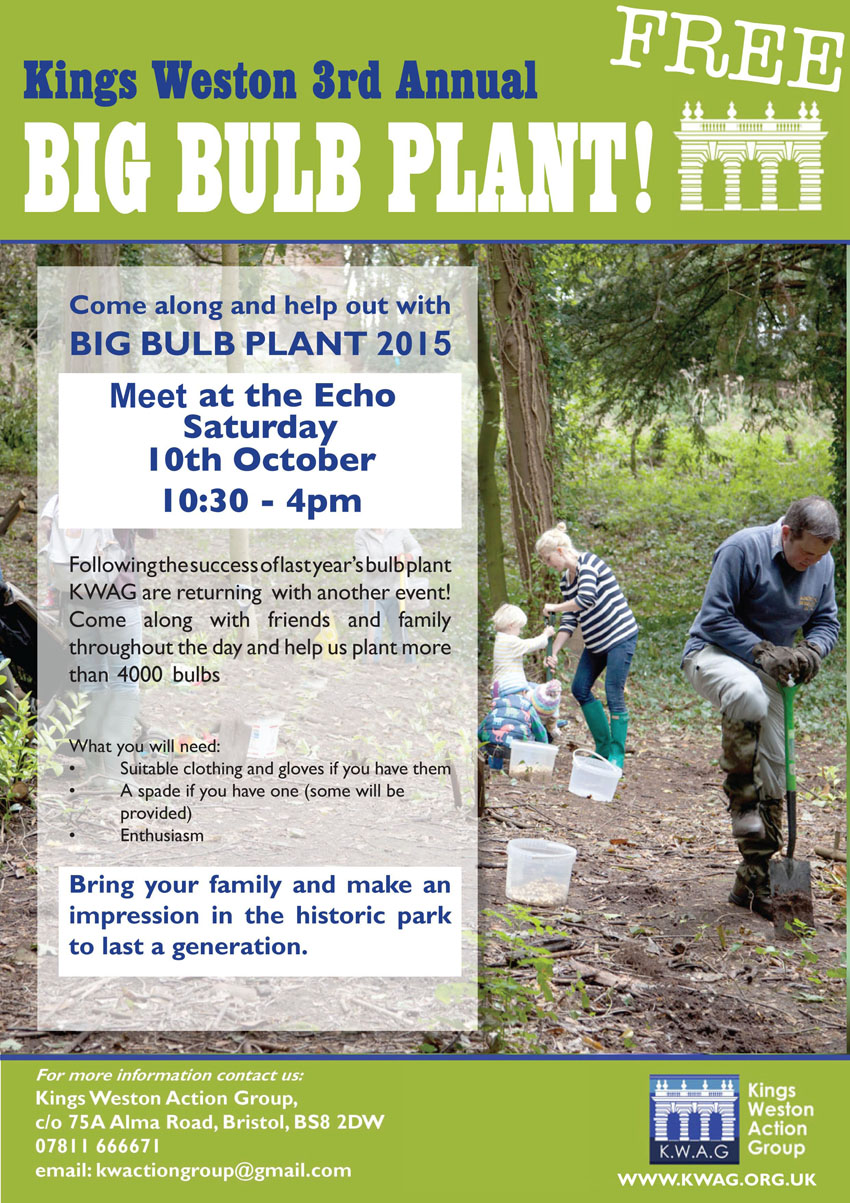
After the success of last two years Big Bulb Plant we are running it again this year, but with THOUSANDS MORE BULBS! The Big Bulb plant is a free, family-friendly event where you can get involved in one of our easier going working party events. The event is completely free with all the native wild flower bulbs provided!

This year we have a great mix of natives all ready to be slipped in the ground in areas around the Echo and down the South Walk. The event will run on Saturday 10th October,  between 10:30am and 3:30pm and we’d love to see you there. Please bring a spade if you have one, but gloves and some tools will be provided.

bulbs copy

Doors Open Day this Sunday

Take the opportunity to spend a Sunday discovering Kings Weston

Kings Weston House will be open to the public for Free on  Sunday 13th September 10am-4pm. As part of the Doors Open Day weekend.

People will have an opportunity to visit other venues on the main day, the Saturday, before taking a more leisurely time around Kings Weston House and grounds on the Sunday. As always the cafe will be open, and KWAG will be hosting our regular exhibition and tours. It will be a great chance to learn more about the history of Kings Weston and see how the restoration of the house has progressed. We will also reprise our popular art exhibition and sale after last years success; this will be held jointly to raise funds for KWAG and local Twyford House Art Group. Some of our recent discoveries will be on view too!

If you are able to help out and help supervise the exhibition we would really welcome the assistance from anyone. You needn’t know everything about the park, or KWAG, but it is a great opportunity to meet everyone and get involved. Please email us or phone 07811 666671 if you can spare any time on the 13th to help us.

WWII in the Home Park

A series of fascinating discoveries have come to light in recent weeks

Surprisingly it’s the more recent history of Kings Weston that we have less historical evidence for than earlier periods. A lack of original material is a particular problem when researching the Second World War at Kings Weston when necessary secrecy meant that fewer records were kept. We know that it played and extremely active role during the war with two army camps; one on the Shirehampton Park Golf Course and one on Penpole Lane. These were “Camp Seamills” A and B respectively and mainly housed regiments of Black US Army soldiers that formed the Port Companies used to unload war supplies and arms arriving in Avonmouth.

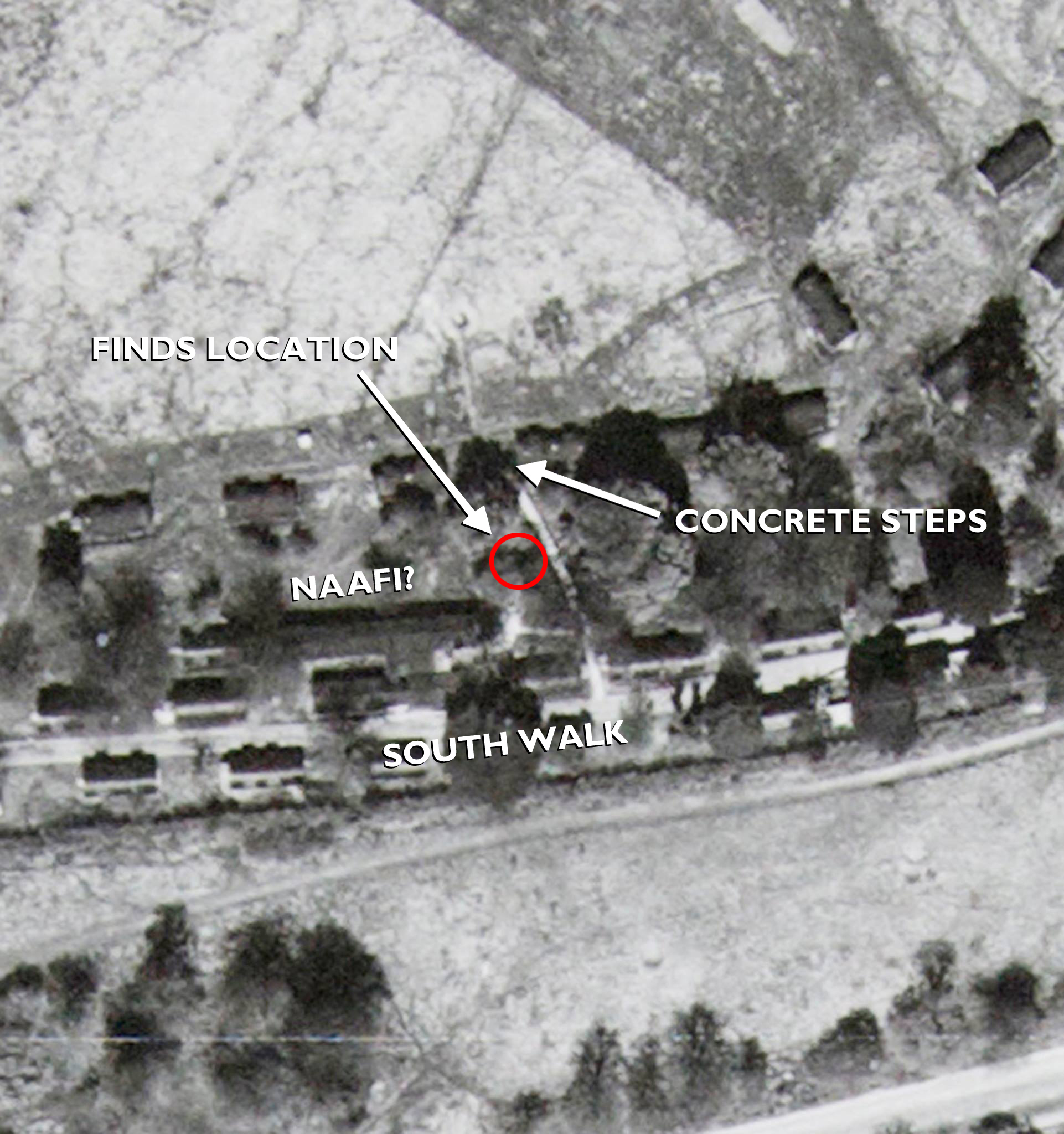
We’re less clear about how Kings Weston house and the surrounding area of the Home Park operated during the War. From contemporary aerial photos, and from the remaining concrete bases, we know that there were several dozen barrack huts built along the South Walk and as far as the Echo, but we’ve yet to establish who they were used by.

Our recent work clearing the area below the South Walk has uncovered a lot of the ruins of the former army camp, but last month we uncovered some interesting artefacts from the area. Close to where the newly-revealed concrete steps descend towards the house there is a very large concrete slab base from a building much larger than the other barrack blocks. It was close-by that we found a rubbish dump with a lot of contemporary finds amongst a lot of tipped ash. You can see where we found it using this link to the Know Your Place website.

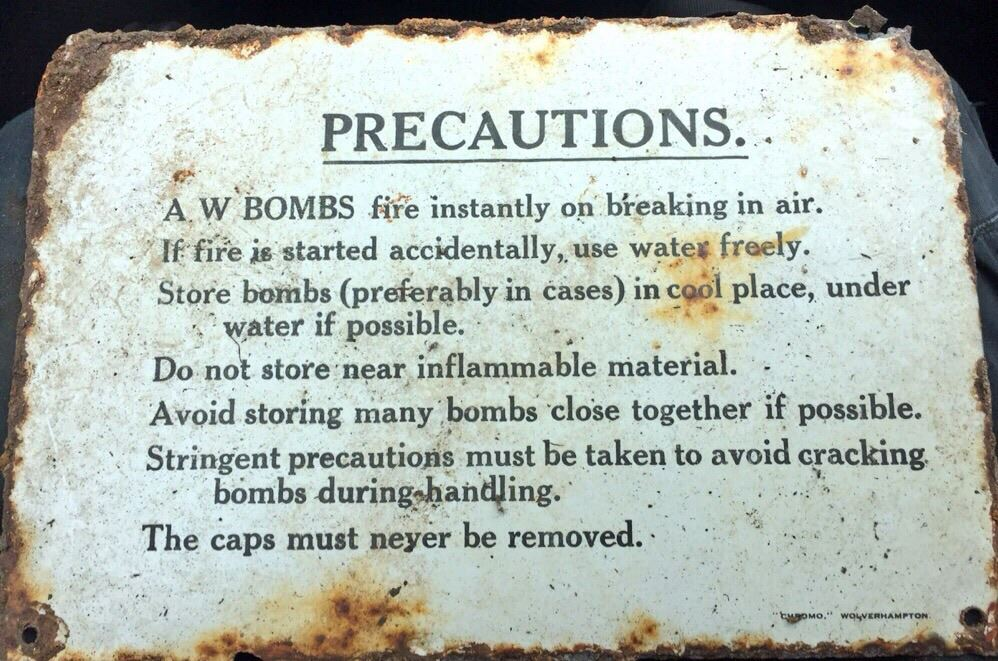
Most interesting was probably this well-preserved enamel sign. Further research has shown that this came from the inside lid of a wooden crate used to store “A W Bombs”. These ‘bombs’ – actually incendiary grenades – were produced in large numbers from 1940 onwards and were issued to the Home Guard in the event of German invasion – a real threat at that point in the war. Fortunately we didn’t find any of the glass flasks that contained the white phosphorous that would still have been dangerous today!

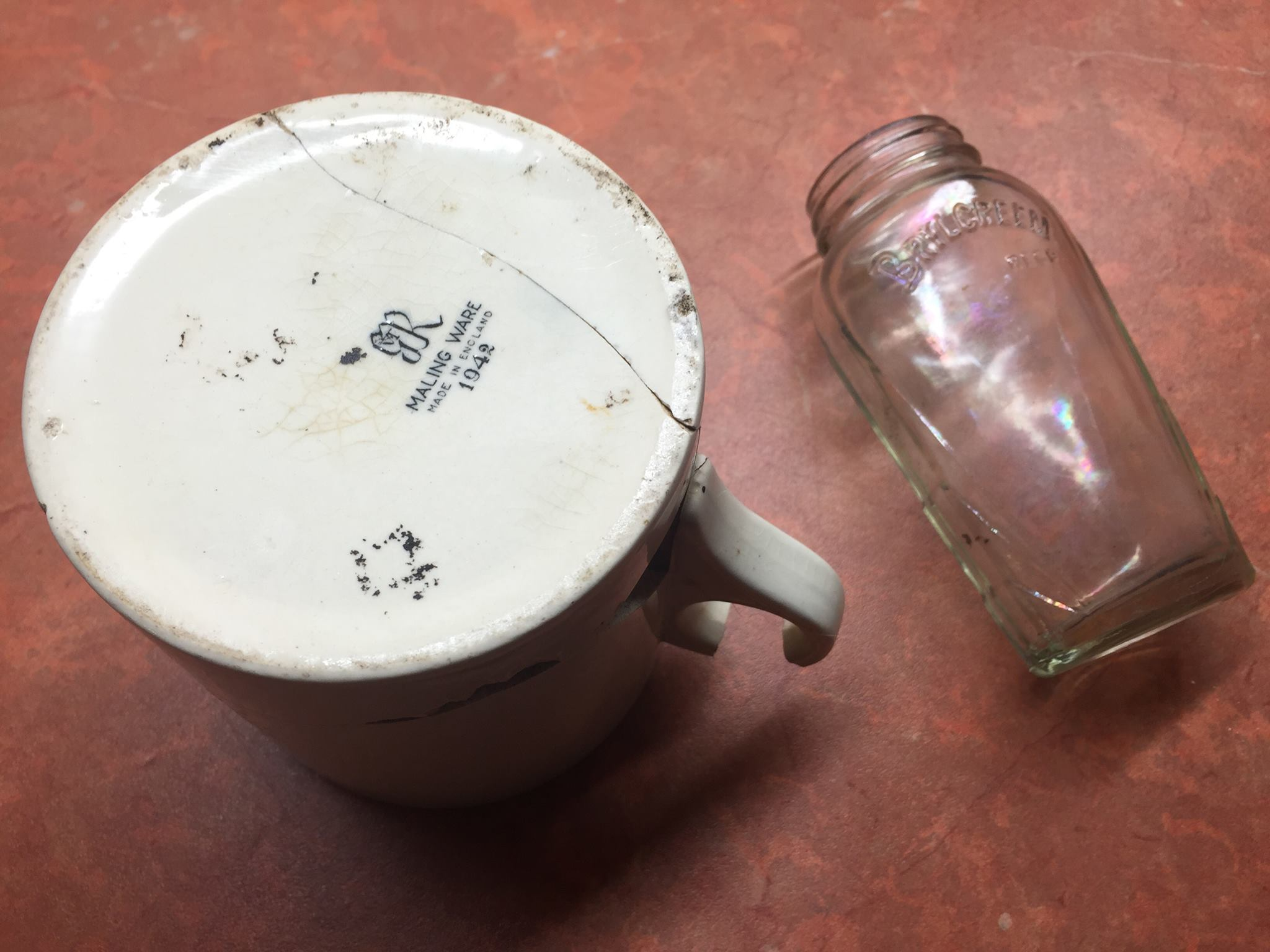
Also uncovered were the shards of a very large mug with the printed date 1942 on the base – could this have been from a nearby N.A.A.F.I canteen? Amongst other artefacts was a 1940s Brylcreem bottle; an evocative reminder that men lived and slept in the huts scattered about the estate.

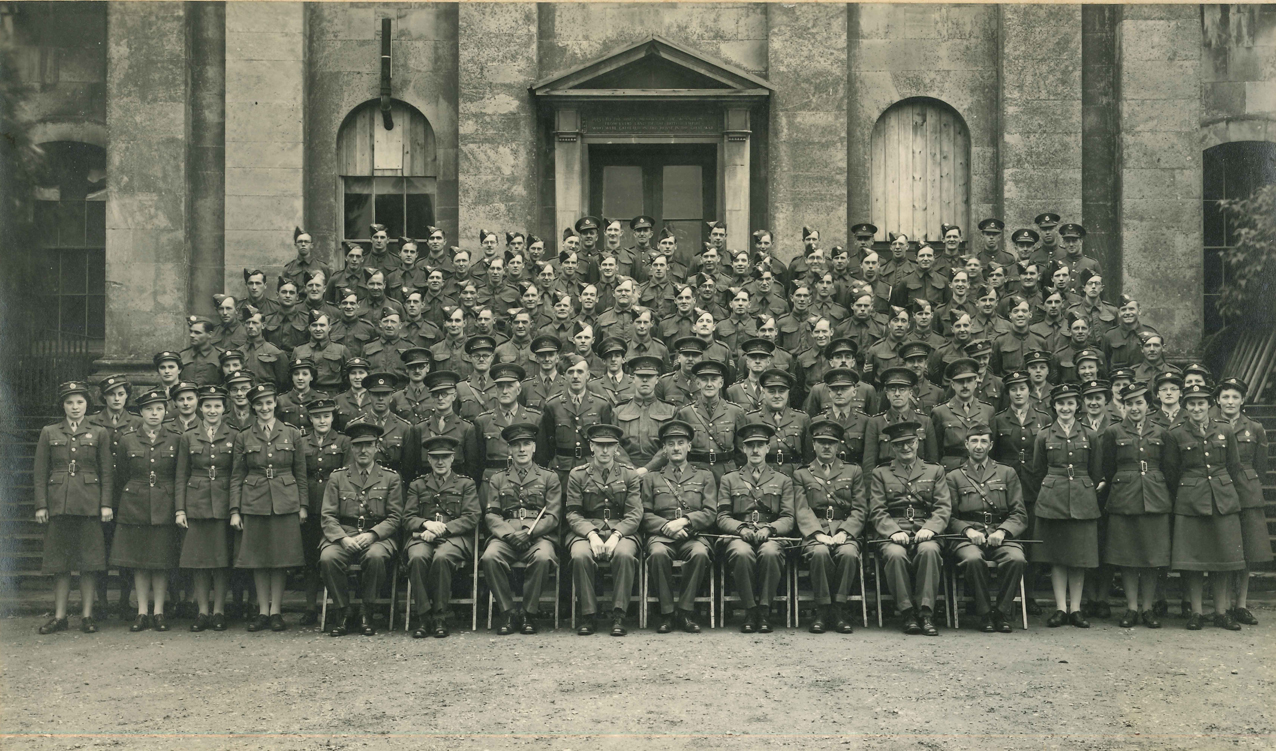
This month seems to have had a WWII theme running through it as we also acquired two period photographs that we are hoping people might be able to help with. The setting for both is clearly on the front steps of Kings Weston House. The front windows have been boarded over as protection against bomb damage for the paintings still in place in the Saloon beyond it. In front are posed British servicemen and women from a wide variety of regiments. One photo shows just the officers, and the other, shown below, shows a wider group of staff. The only clue we have to the event, or organisation represented here is the pencil note on the back of the photographs “Capt’ Myles”.

We’d be really interested to know more about this photo and if you can add anything please let us know. Can you find out who Myles was, what does this group of people represent, or do you even recognise anyone? Please let us know if  you can  help us. A much larger version of the photos can be found on our website here.

Check our our Angel Award Nomination film

Check out KWAG’s shortlist film for the Heritage Angel Awards. The two-minute film showcases what KWAG have been up to and the impact of our work on the historic estate. KWAG’s section begins at 4mins 30 seconds.

There are just a few day left to register your vote to help put us in with a chance of getting the People’s Choice Award. We need your votes before midnight on Sunday 16th August. To register your vote head over to the Historic England website for the award here and vote here.


New acquisitions – can you help?

New additions to the park’s history

We’re always on the lookout for new historic material relating to the Kings Weston estate. If you have anything you can share with us, photos, memories or artefacts, we’d love to hear from you

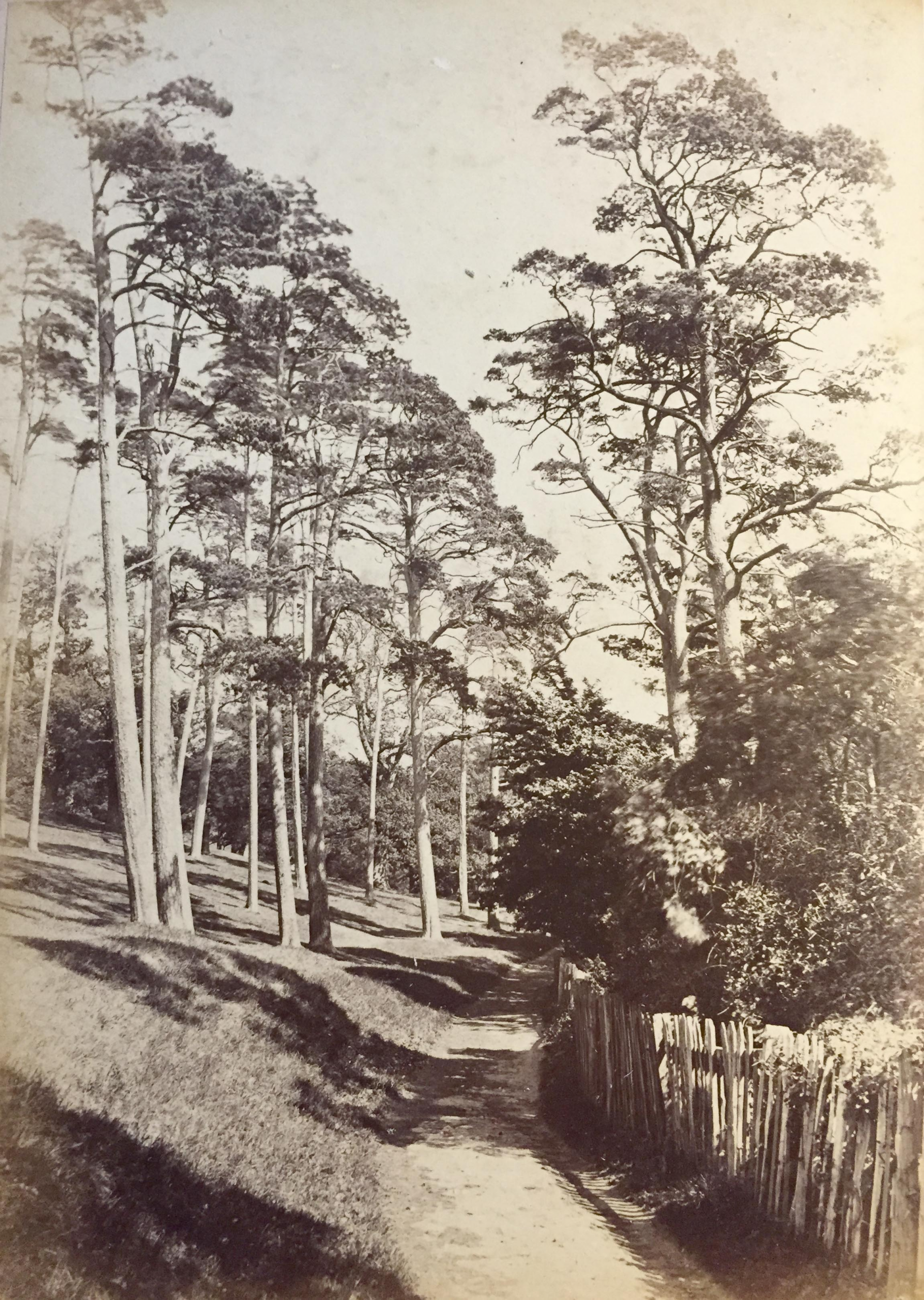
This month several items have come to our attention. Above you’ll see an idyllic photograph of Shirehampton Park looking in the direction of Sea Mills in about 1880. The grove of pines was a popular spot for artists at this time, but the trees were probably planted much earlier, by Sir Robert Southwell in the late Seventeenth Century. They are a constant feature of Shirehampton Park through the 1720 and 1772 estate surveys and successive owners must have replenished and maintained the small plantation. This picturesque view shows the wooden fence that was erected to protect the public from the recently opened railway line that had been threaded through the park, along the banks of the Avon, in 1875.

Sadly this viewpoint and most of the pines were lost in in the 1920s when the Portway cut through this exact location.

We hope that someone out there can help with another discovery. We’ve acquired the scout badge illustrated here, but we are having difficulty in tracking down its history. Emblazoned with a crown (possibly symbolic of the “King” in Kings Weston?),  a pole, and the words ‘Penpole District’ we believe it relates to the Bristol District Scout camp that was based in Penpole Woods between 1937 and 1947. During this time Penpole Lodge became the gateway into the camp site and was used by the older Ranger Scouts as their HQ. 

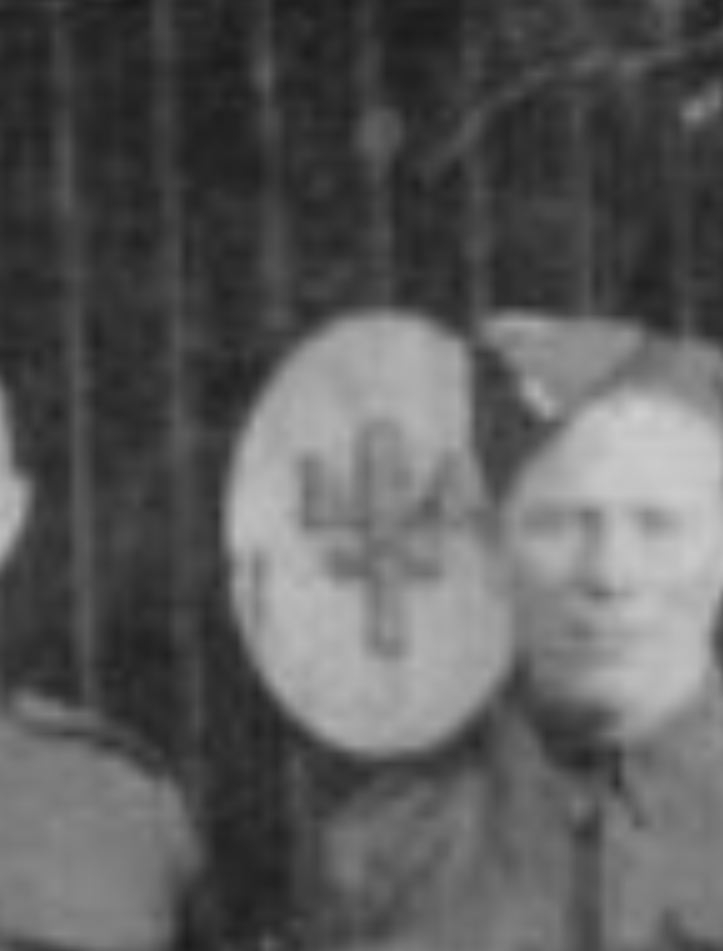
A second image here shows the detail of a wartime photo posed in front of the gates of the now-ruined lodge and shows the plaques the Scouts attached to them. Is this the same logo as the badge we’ve acquired, was there a later Penpole District Scout Group, or is there no connection with the estate at all? We hope that someone out there might know and we hope that any former Scouts that remember their time at the Penpole camp might be able to help us.

Fantastic news, but we need your help!

KWAG is short-listed for a national award, but we need your help.

These are exciting times for us. KWAG is in the running for a prestigious national award; the Heritage Angels awards. The awards are run annually by Historic England (English Heritage) and Andrew Lloyd Webber, and supported by the Telegraph. The awards celebrate the efforts of local people who’ve saved historic buildings and places, and this year our work on the Kings Weston estate has been nominated!

KWAG has been shortlisted for our work in the “other sites” category and we are up against just three other historic properties in England and Wales. We are also in the running for the “people’s choice” award, and for this…

WE NEED YOUR VOTE!

Details of all the short-listed projects in our category can be found here, and the on-line voting form is here. Voting closes at midnight on the 16th August.

Please, please, put us in with a chance of getting this national recognition for the estate, and for our efforts over the last four and a half years. We would be incredibly grateful for your help in bringing this accolade back to Kings Weston. Please forward this email to anyone you think might be interested, and help spread the word far and wide!

Our hopes are in your hands!

Thank you
from the Kings Weston Action Group.

The Flowers of Lady de Clifford

A garden can be a very transitory thing. At Kings Weston we have the buildings, most of the remaining parkland features, and many mature trees, but we are missing an important dimension of its history; its flowers. To get an insight of how flowers might have been used at Kings Weston it has been helpful to try and understand the people who lived their and their passions. Research has recently uncovered details of the life of Sophia, Lady de Clifford, wife of Edward Southwell III, and has helped us gain new insight into the estate.
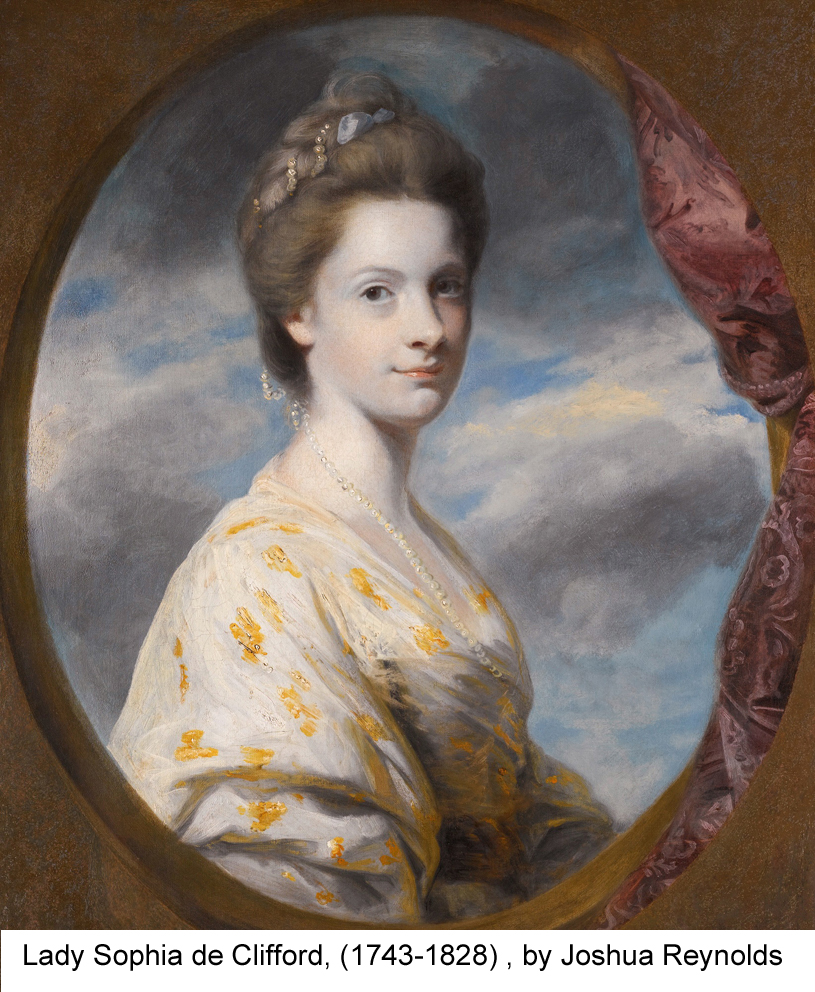
Sophia, mrs Edward Southwell, later Lady de Clifford (1743-1828)  *oil on canvas *79.5 by 65.5 cm  *1766Sophia was from a wealthy and influential Irish family, the Campbell’s of Mouth Campbell, and married Edward Southwell in August 1765. Their marriage seems to have been one of love rather than simple convenience, though a substantial dowry would not have been unwelcome to Edward who had ambitious designs for his political career as well as for Kings Weston. Sophy, as Edward affectionately called her, bore nine children. In 1776 she became Lady de Clifford when her husband successfully established his claim to a Barony. Their happy life together was cut short suddenly when, in the following year, Edward died.

On his death their son, also Edward, was still in his minority, and executors took control of Kings Weston. Sophia received a regular allowance from the estate, but the house was no longer hers, and, now as the Dowager Lady de Clifford,  she would have been obliged to start a new life for herself. It appears she had moved out by 1786 when a contract for maintaining the grounds by an external contractor, rather than staff, was agreed by the executors.
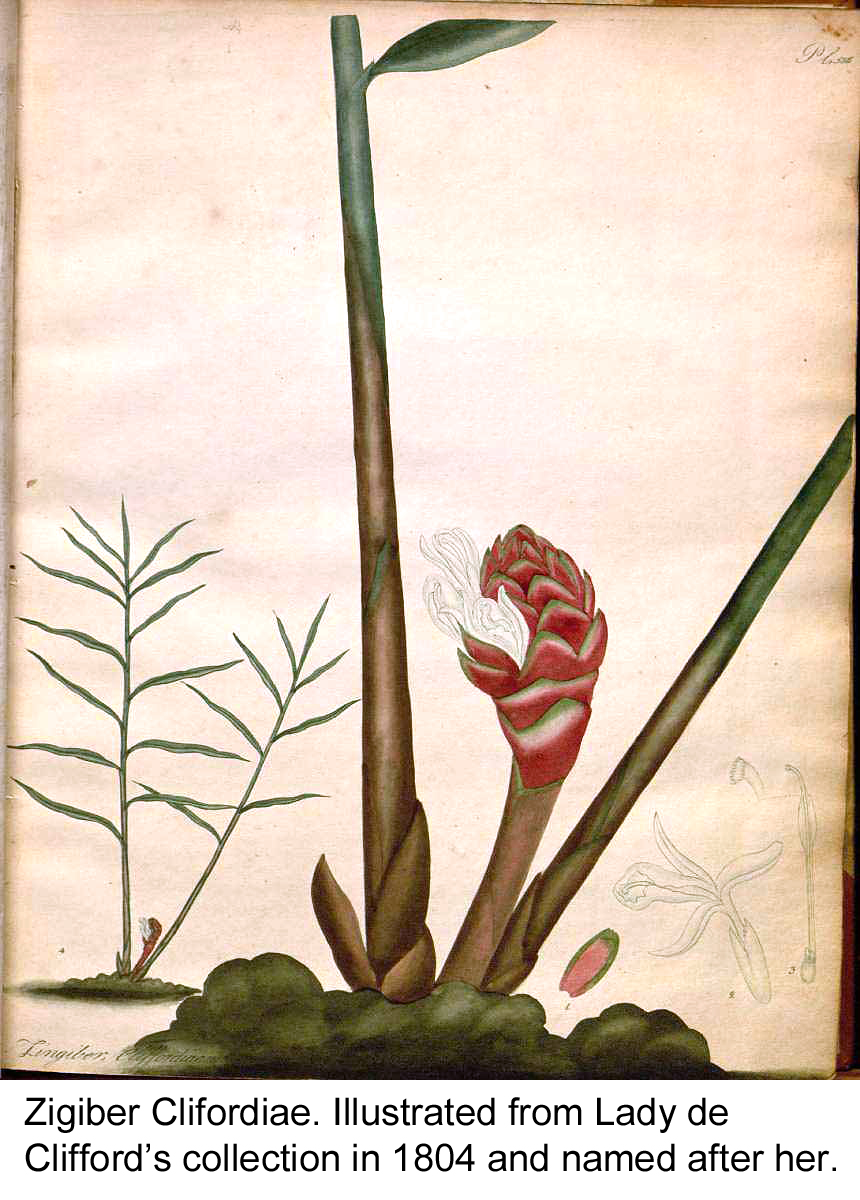
358f5602-6e82-4618-ae45-b7e4e7c73cb7We have little personal detail about Sophia before this time – perhaps she was in the shadow of her husband – but in the decades that followed she made her own impression on the world, driven by a passion for plants. Starting first at a house she rented at Nyn Park, near Barnet, and later moving permanently to a villa in Paddington, she built up a nationally important and famous collection of exotic flowers brought there from all corners of the known world.

Between 1793 and her death in 1828 the popular botany journals of the time brimmed, not only with illustrations of plants she’d nurtured, but also great praise for her scientific approach to Botany which “all the collectors and professors of science stand much indebted for the zeal and patronage which her Ladyship has shown in her endeavours to promote it”. Titles such as Botanists Repository, Botanical Register, Exotic Botany and Curtis’s Botanical magazine all relied heavily on access to her unrivalled collection, and several plant species were named in ed8fa32f-9aab-4b50-b0bc-07286095eba0honour of her (though subsequently names have altered). At least three books on the growing of flowers and other exotics were dedicated to her during the same period.
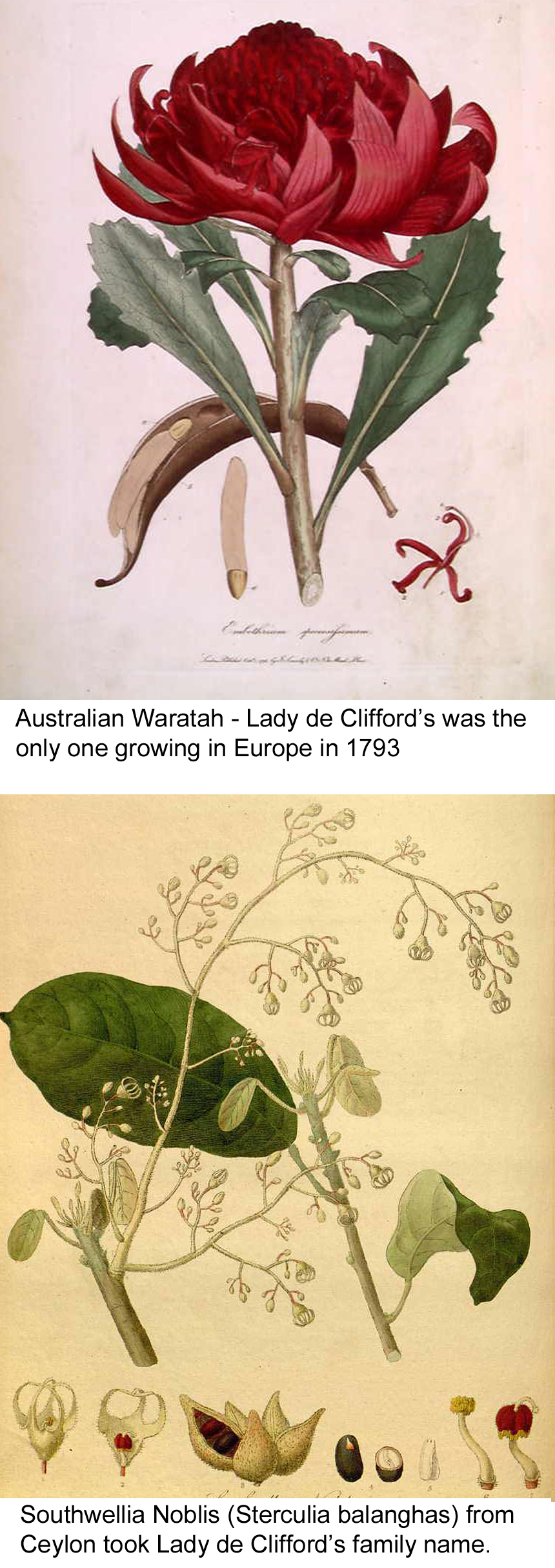
Many of her plants were grown from seed or bulb in her hothouses, stove houses, or conservatory, and in this way she was identified as the introducer into the UK of such plants as the Australian Waratah, and a South African Ixia. Some-such plants were amongst the only growing in Europe, and the collection boasted imports as far-afield as Minorca, the West Indies, Guinea, Ceylon, and Mauritius.

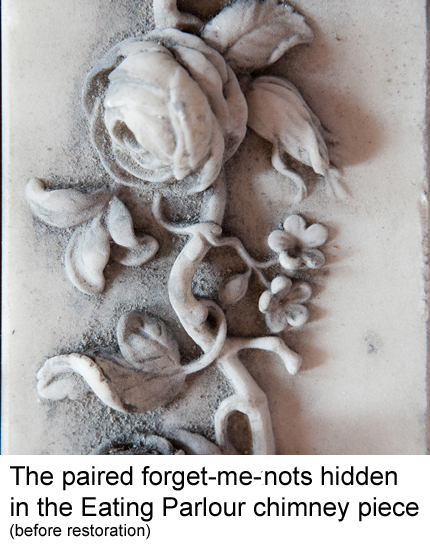
What then can this tell us about Kings Weston? Its certain that Sophia nurtured her fascination with flowers from an early age, and when she married Edward she would have found in him a shared interest in gardening. The design of the eating parlour fire surround with cascading roses, completed in the year of their marriage, is sure to have been designed to delight her and the incorporation of the two tiny forget-me-nots was a symbol of their union.

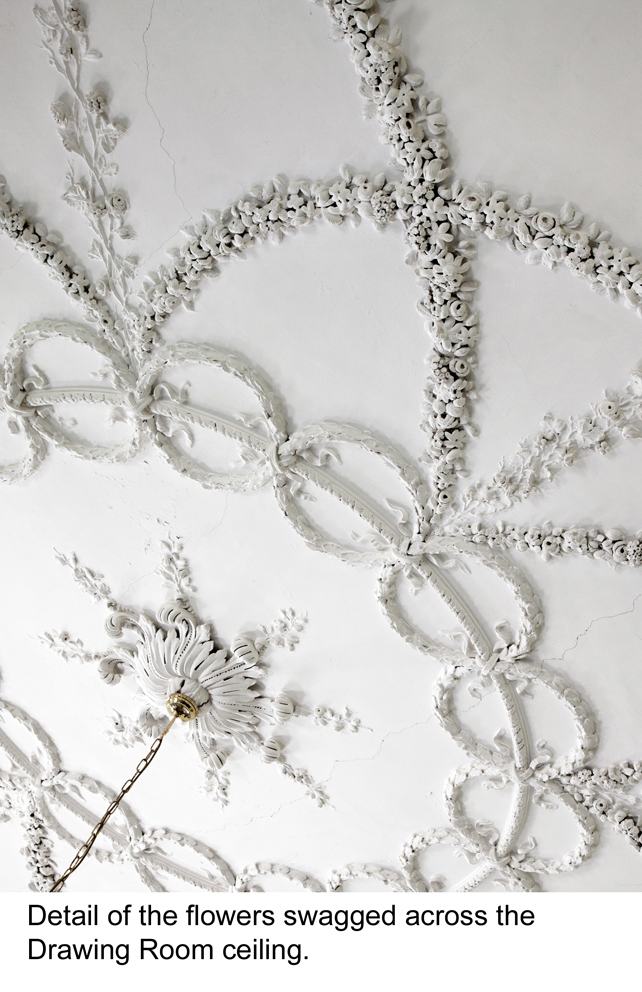
As the refurbishment of Kings Weston House continued Sophy’s taste must have begun to exert itself. Whilst Thomas Stocking’s stucco ceiling in the eating parlour was rigid and formulaic, that of the Drawing Room, designed the year following, is an explosion of flowers swagged, and re-swagged across the whole  of its surface. The flowered theme was reprised in the design of the Saloon (Main Hall) where roses, tulips, jasmine, and more sprigs of forget-me-nots dance around the ceiling. 91947f30-1163-4a79-bac6-dd663397b193
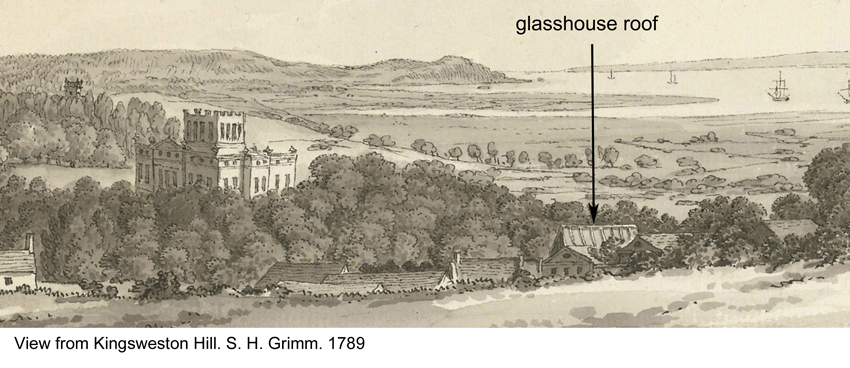
Before their marriage Edward had already begun the construction of the walled gardens and stables behind the house on present Napier Miles Road, but it may have been to satisfy Sophy’s growing interest that in about 1772 a vast new glasshouse was constructed on a former orchard. Stretching over 30m in length, and carefully orientated southward to gain maximum benefit from the sun it once projected far above the roof of the adjacent stables as a major feature of the estate. Its ruins, still standing almost 7m tall, can still be found close to the stables and ice house.
3dfa55a6-140b-4815-86fe-1319d2cfe21b
The garden designer Thomas Wright greatly admired the glasshouse on a visit, but the French diplomat Malesherebes gives us the only scant detail as to what grew there. Writing in 1785, after Sophia had departed, he noted “the vast hothouses, and a house made ​​entirely of glass, both walls and roofs, which is 54 feet long by 30 wide. The exotic plants think they are in the natural earth, and I have never seen such beautiful bamboos or Bengal figs anywhere“.

Whilst reforming the parkland of Kings Weston was the obsession of Edward, the gardens must surely have received attention from Sophy too. The 1772 estate plan by Issac Taylor offers tantalising suggestions of planting around the Echo, the ‘Terras’, and in other areas, where flowers may have played a more intimate role. Sadly we have nothing to tell us of what might have been, but for the fascinating legacy of Sophia, Lady de Clifford.

f0366a5f-c640-49ef-b1d7-aa12d8b468a9