Category Archives: Volunteer work

Working Party update: Jubilee Clearing cleared!  

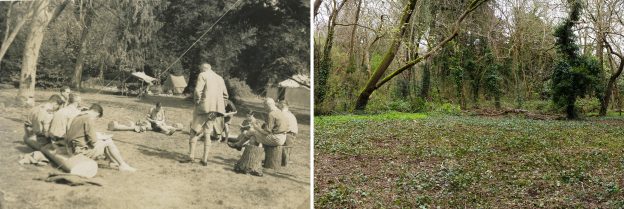
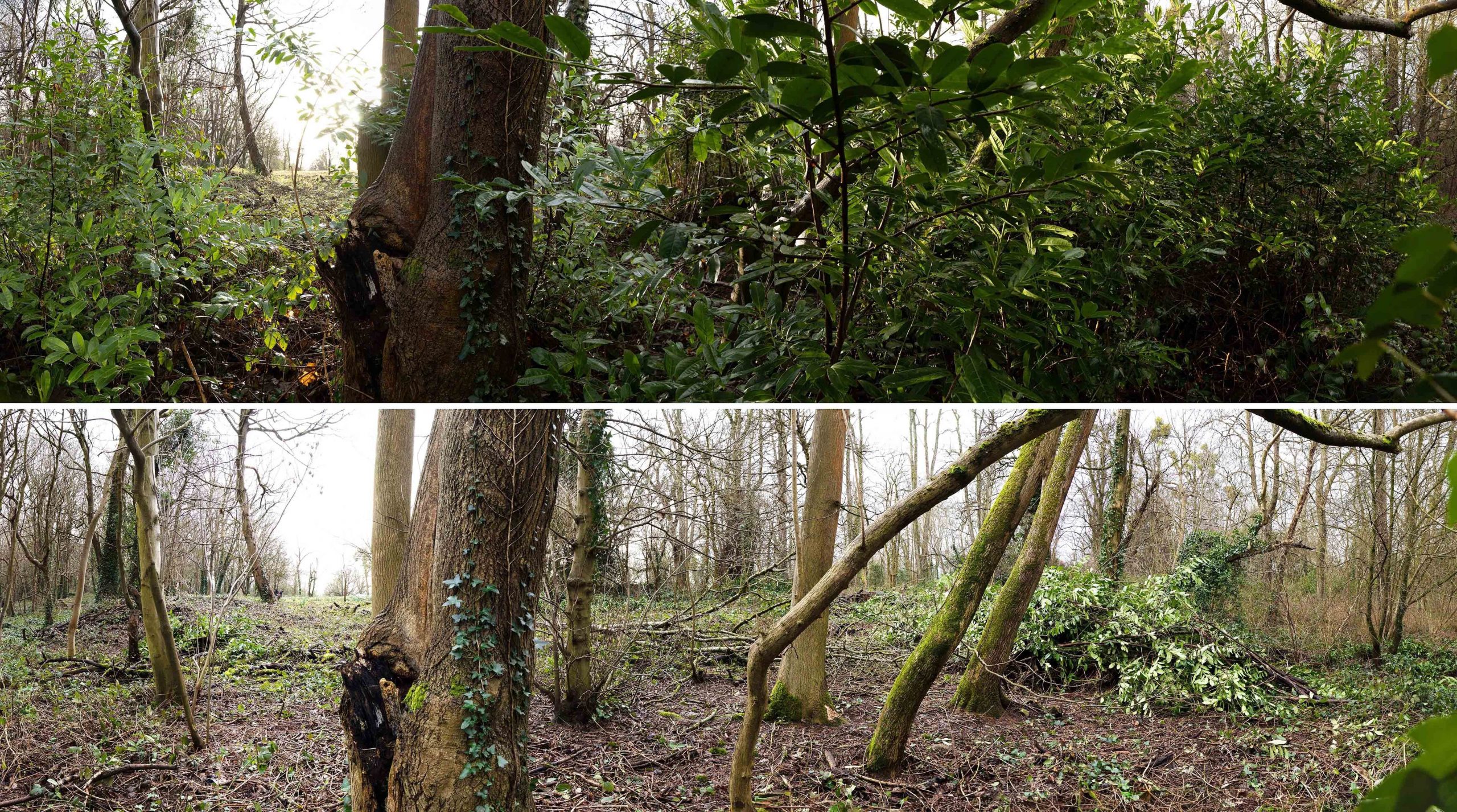
Jubilee Clearing has long been a memorable spot for local people from Shirehampton and Sea Mills. After the death of the last squire, Philip Napier Miles, large parts of Penpole Wood and fields beyond were sold to Bristol District Scouts. Between 1937 and 1947 the clearing became the favoured campsite of the district’s scouts.

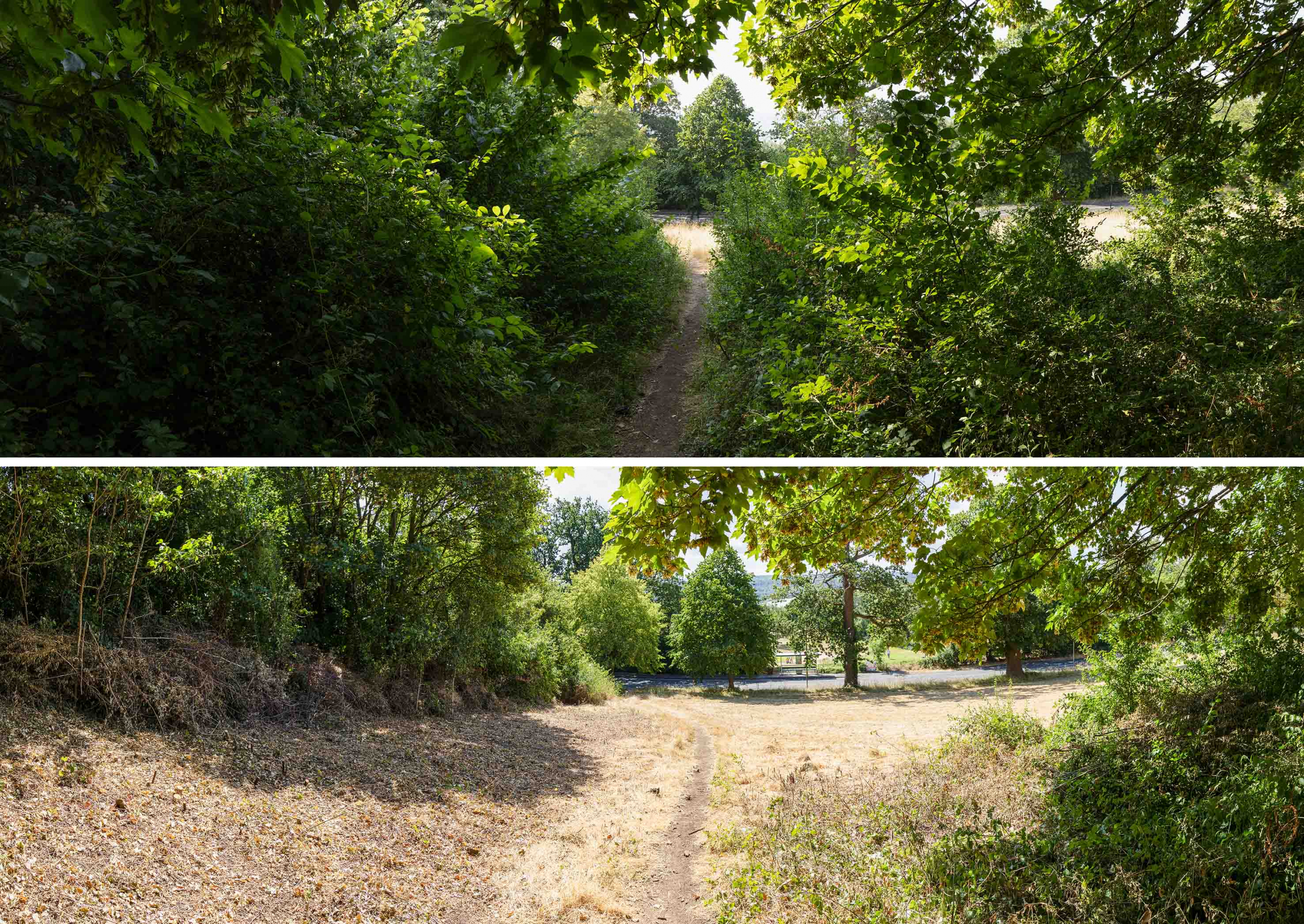
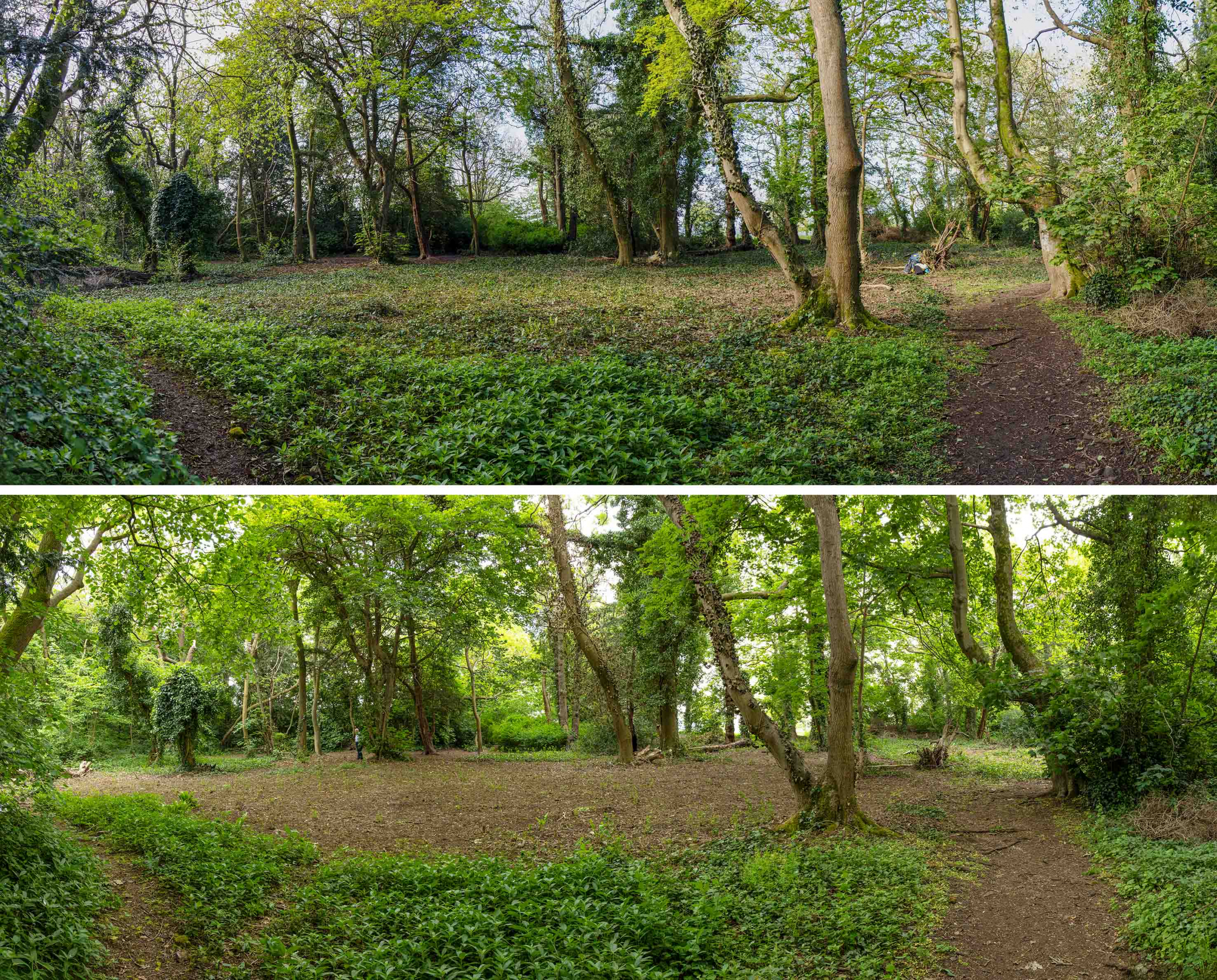
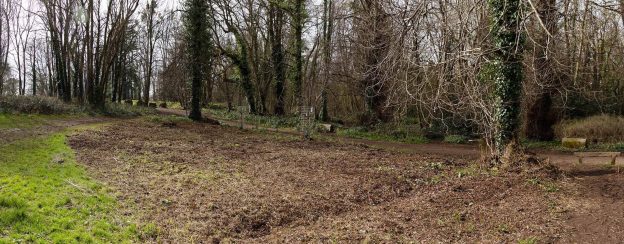
The view on entering the clearing from Penpole Lane on the south edge.

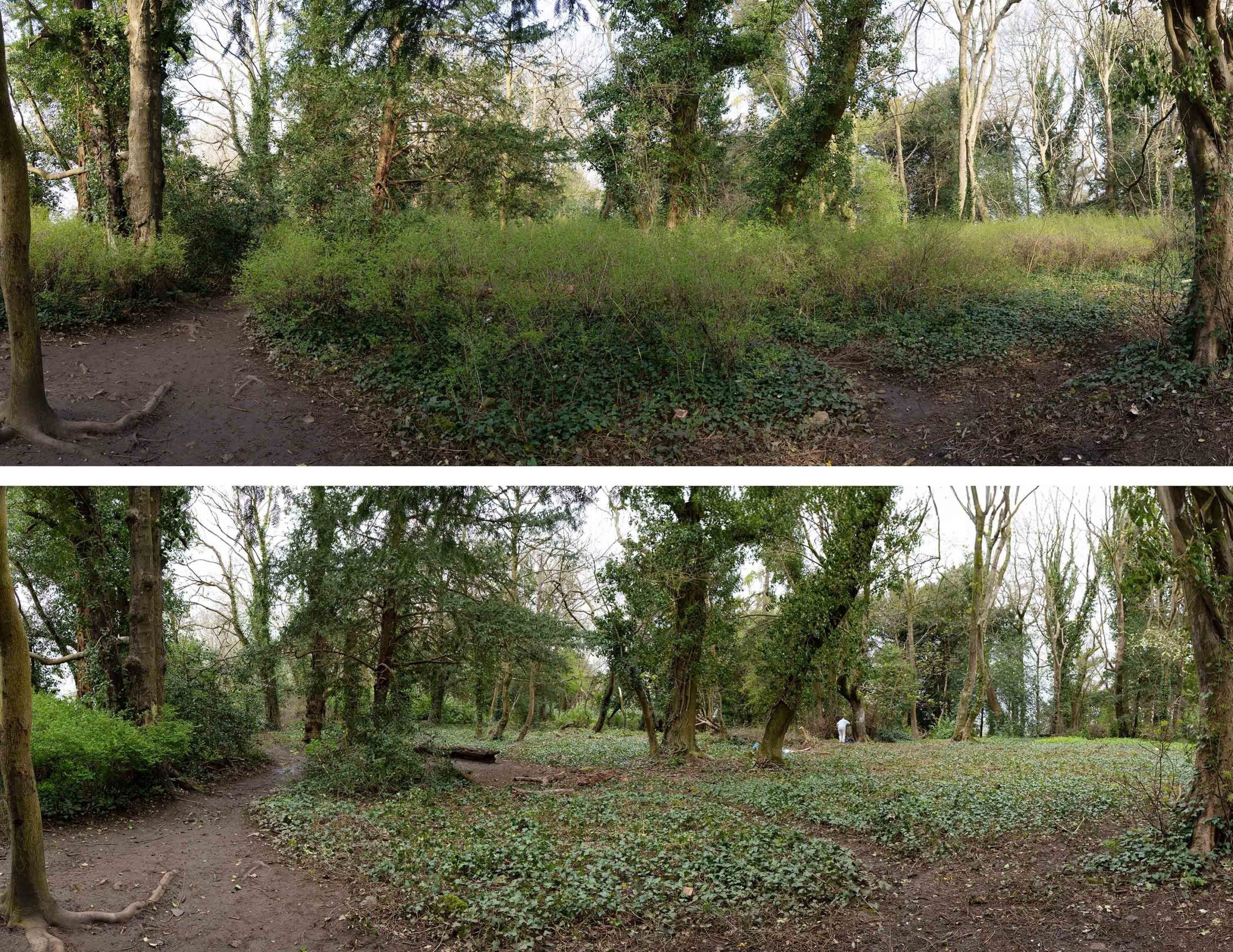
Since the compulsory purchase of the Scout’s land by the Council, little has been done to protect the character of the woodland clearing – until now. The Snowberry that’s invaded the area is not native, and had obscured the open character of the area. With the recommendation of the wildlife and woodland officers, the restoration of the clearing for both heritage and ecology is a project we’ve been keen to engage with.

A good band of volunteers set out to clear the invasive shrub from the area in mid-March. Knowing that bird nesting season was upon us, we were exceptionally careful in approaching the task, though, with the Snowberry yet to leaf, there was little cover to attract birds.

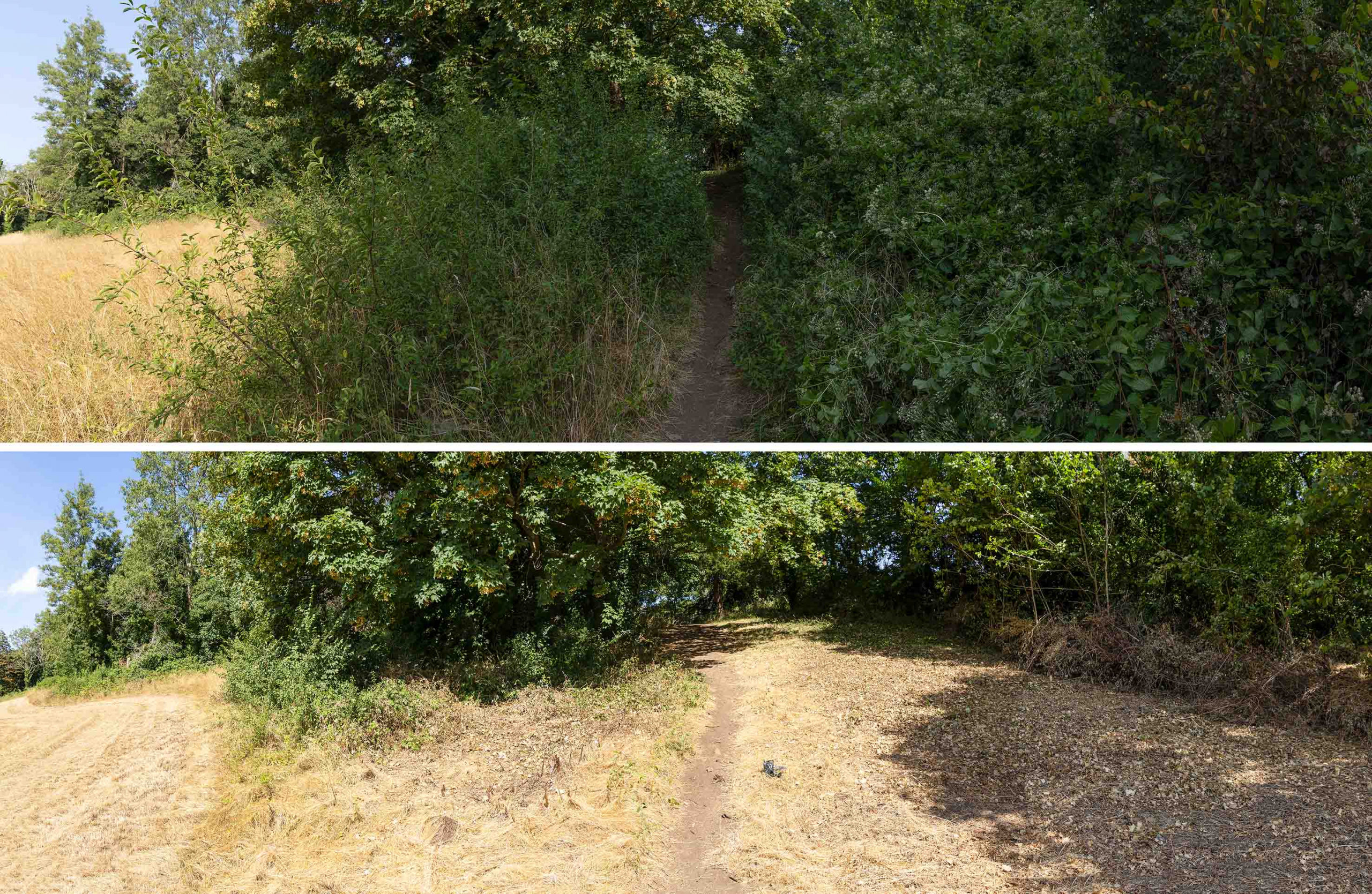
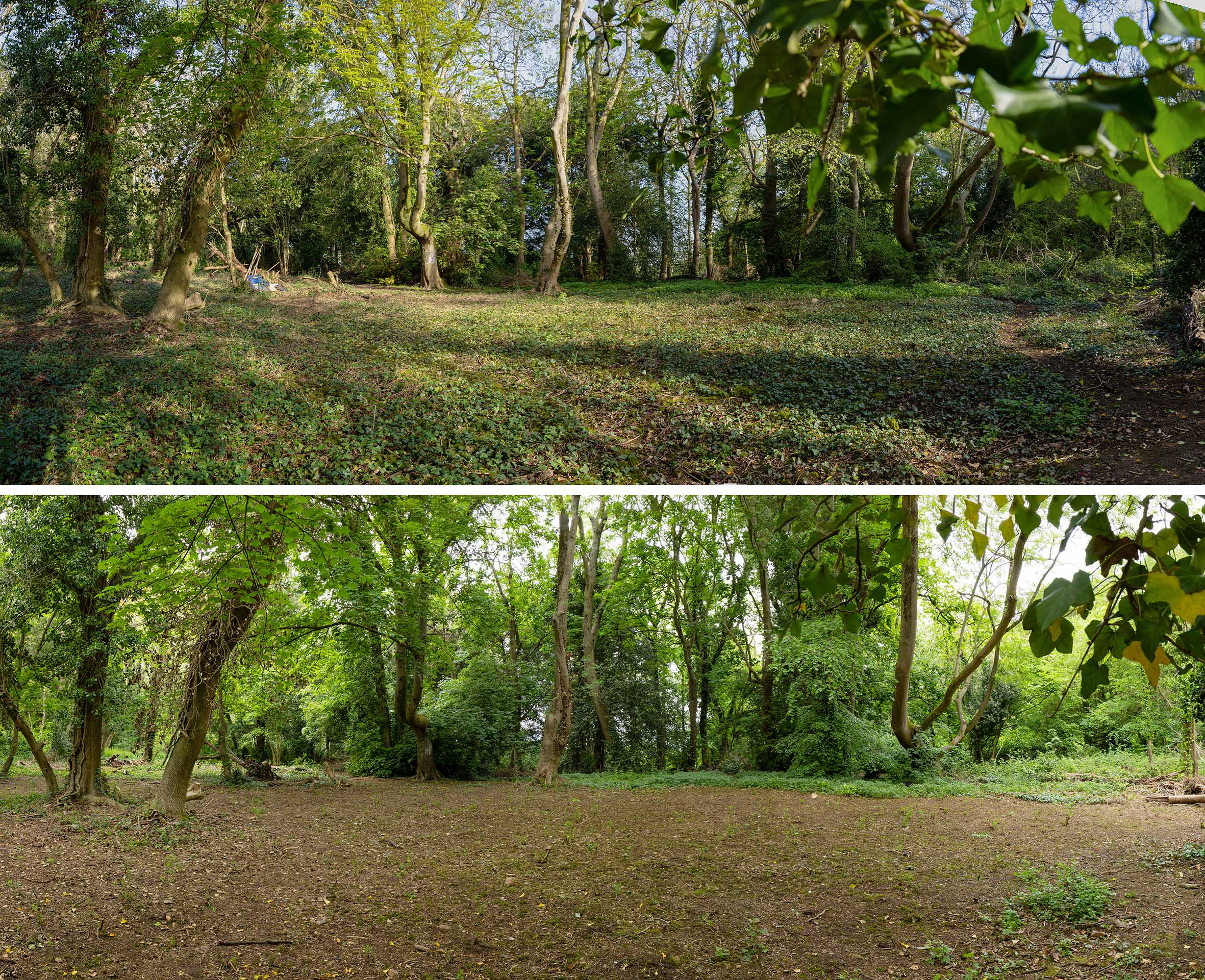
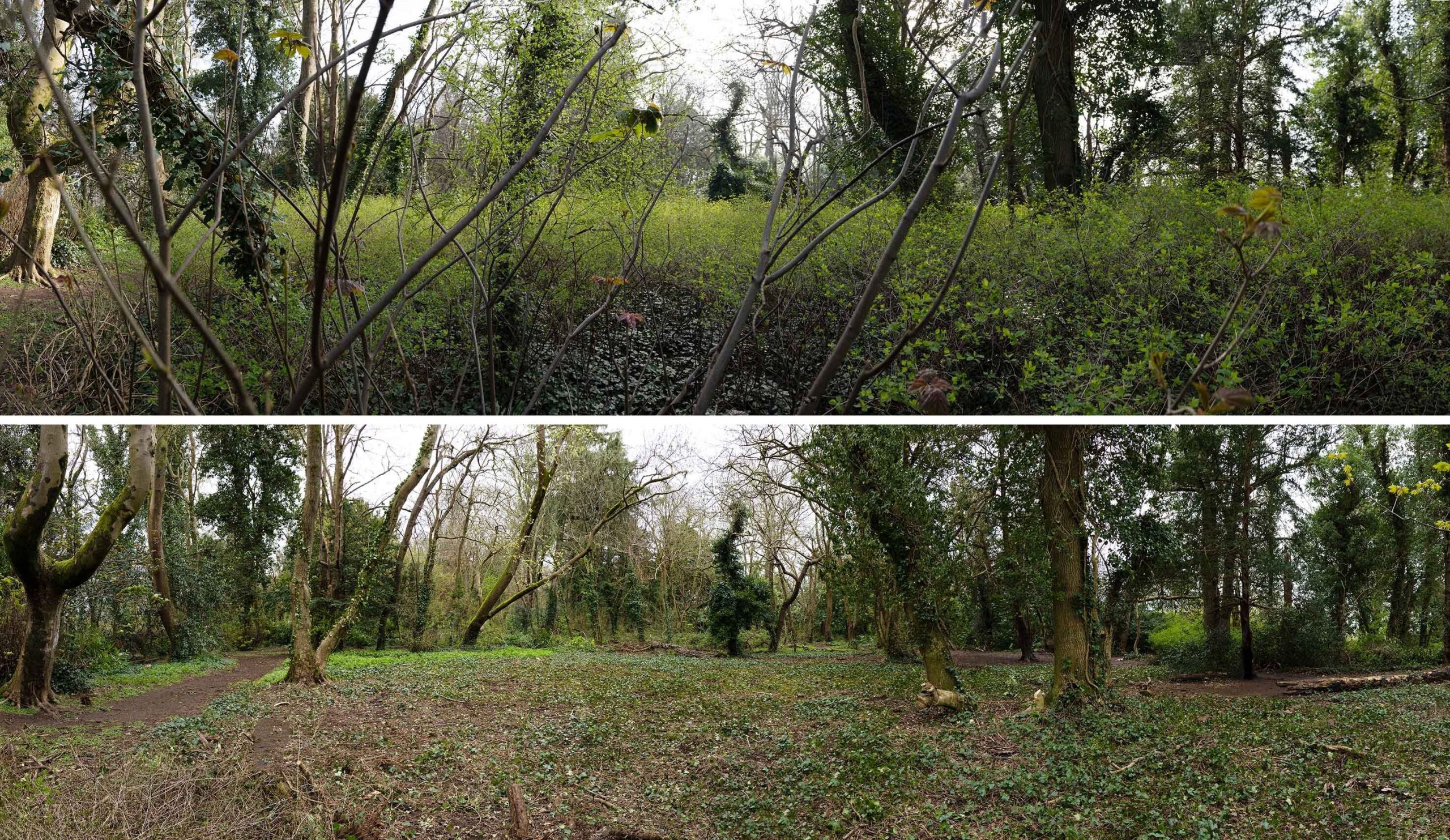
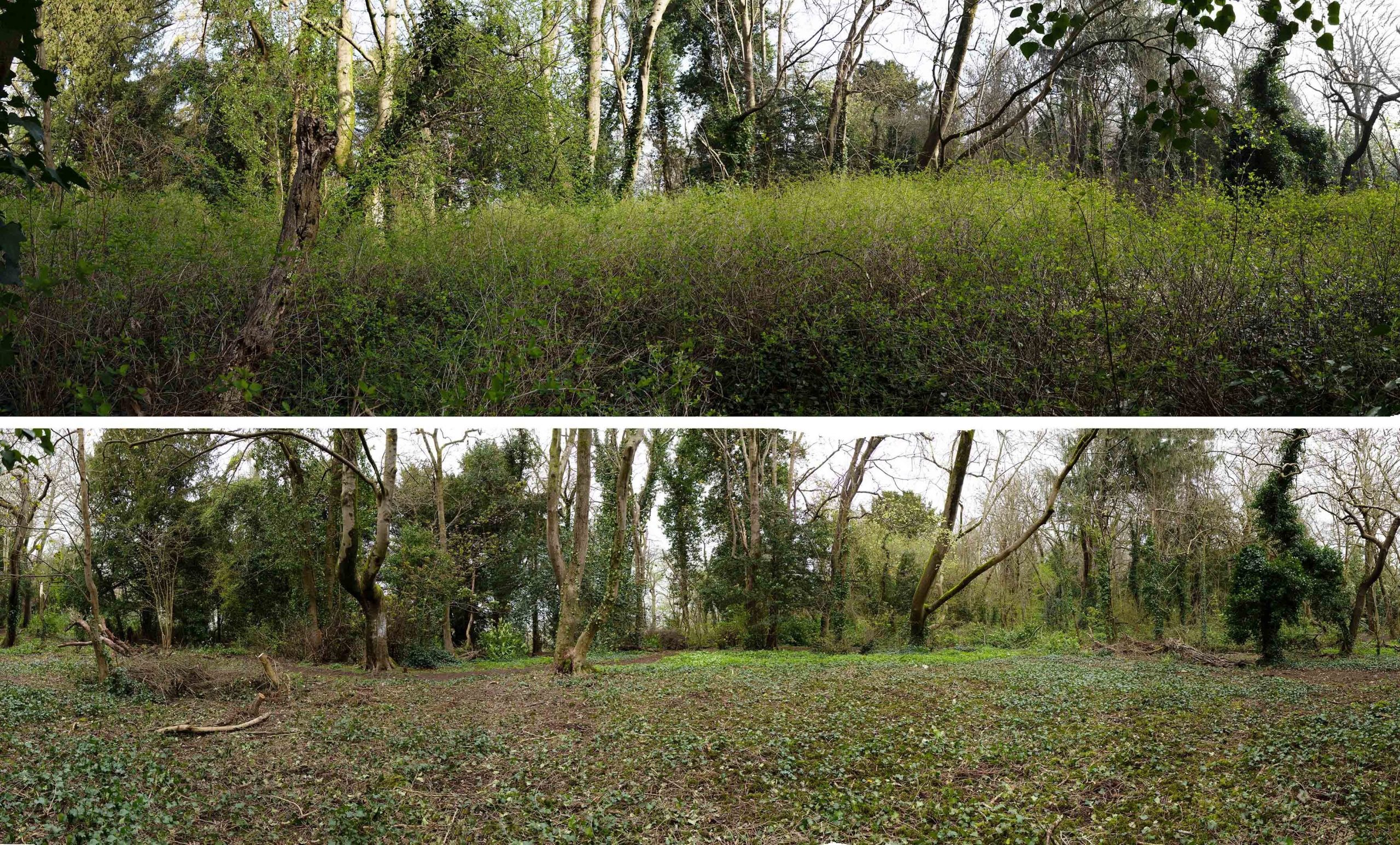
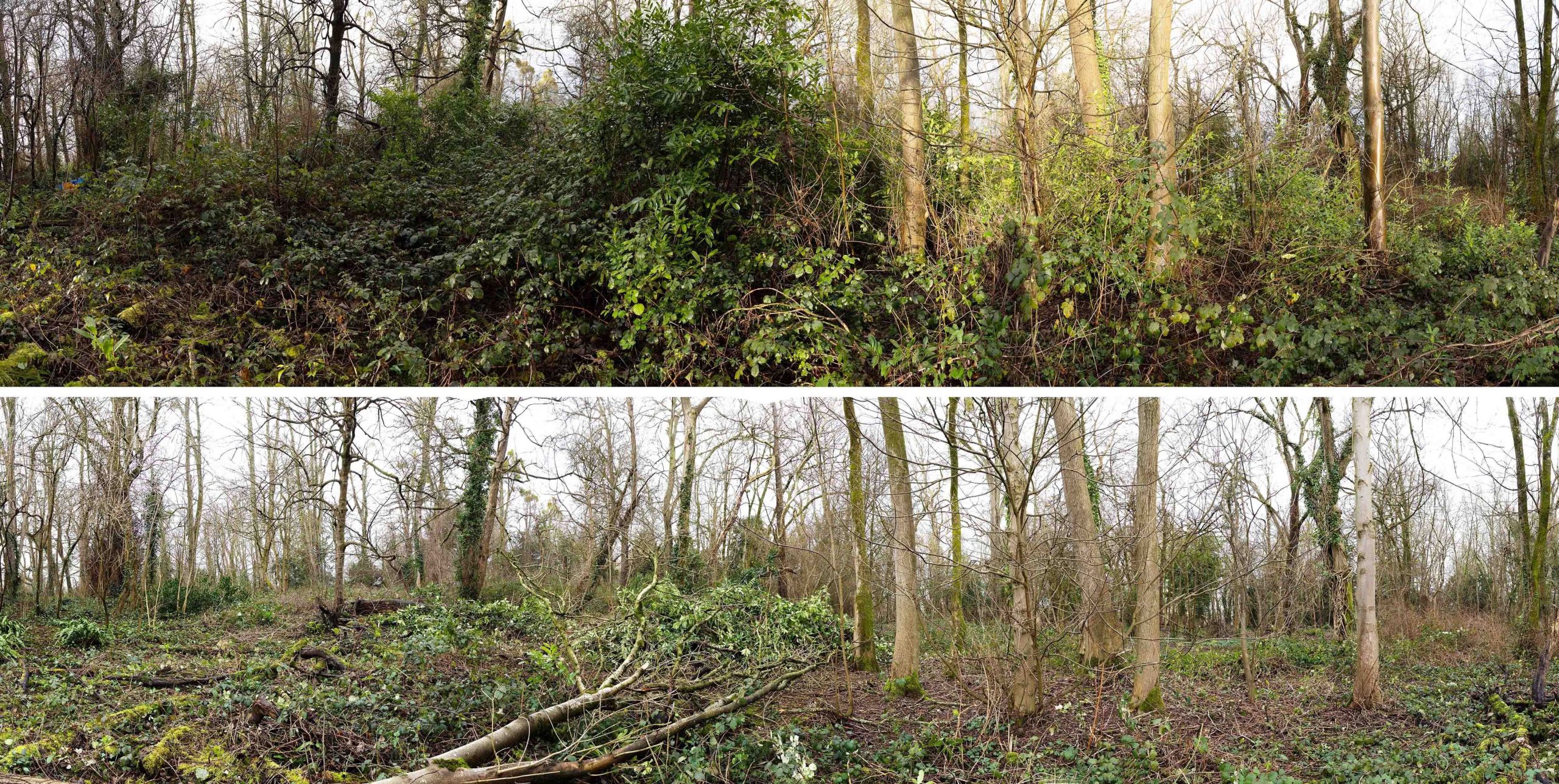
The view east across the historic clearing. Some of the original imported evergreen specimin trees can be seen on the far edge. 

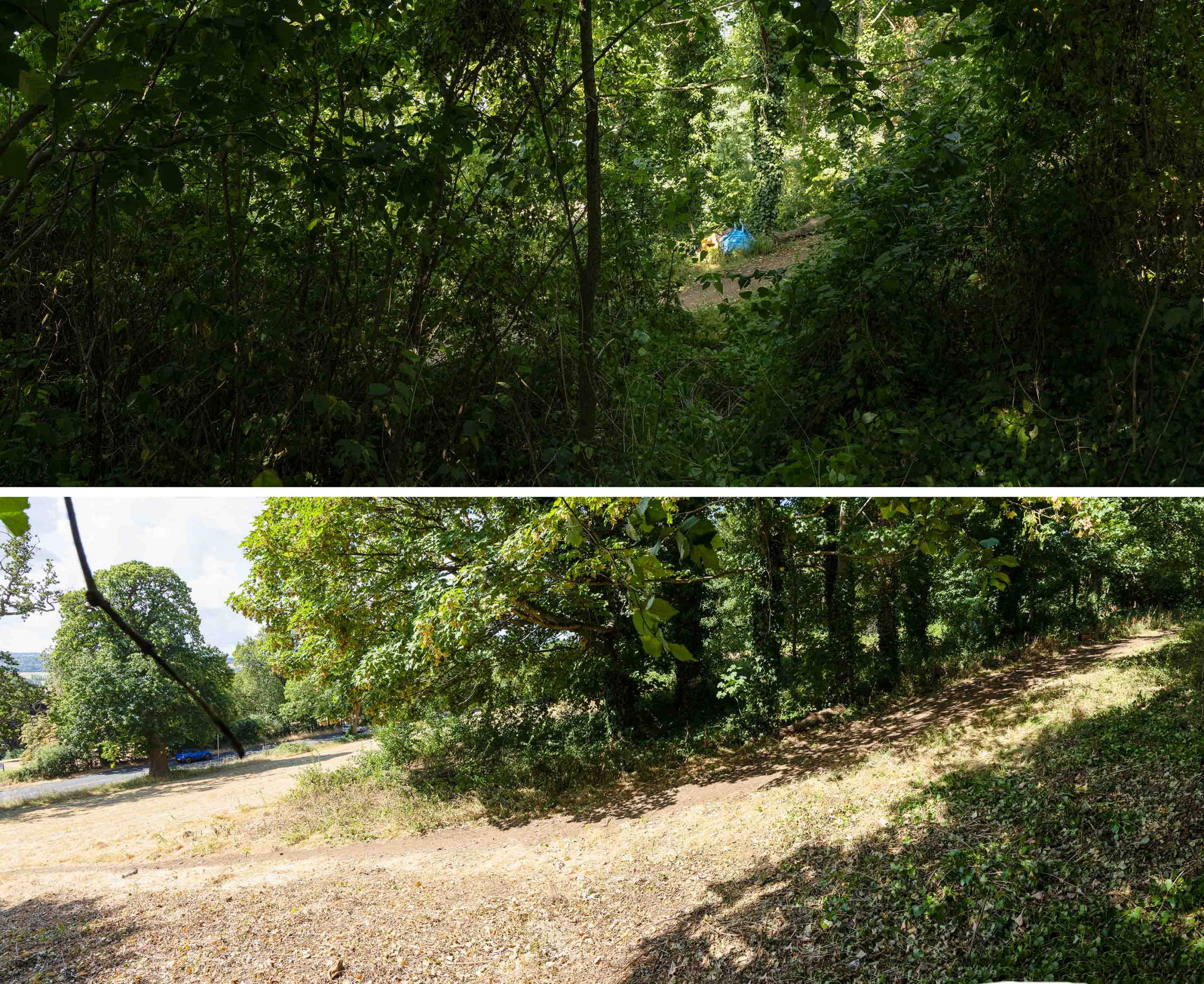
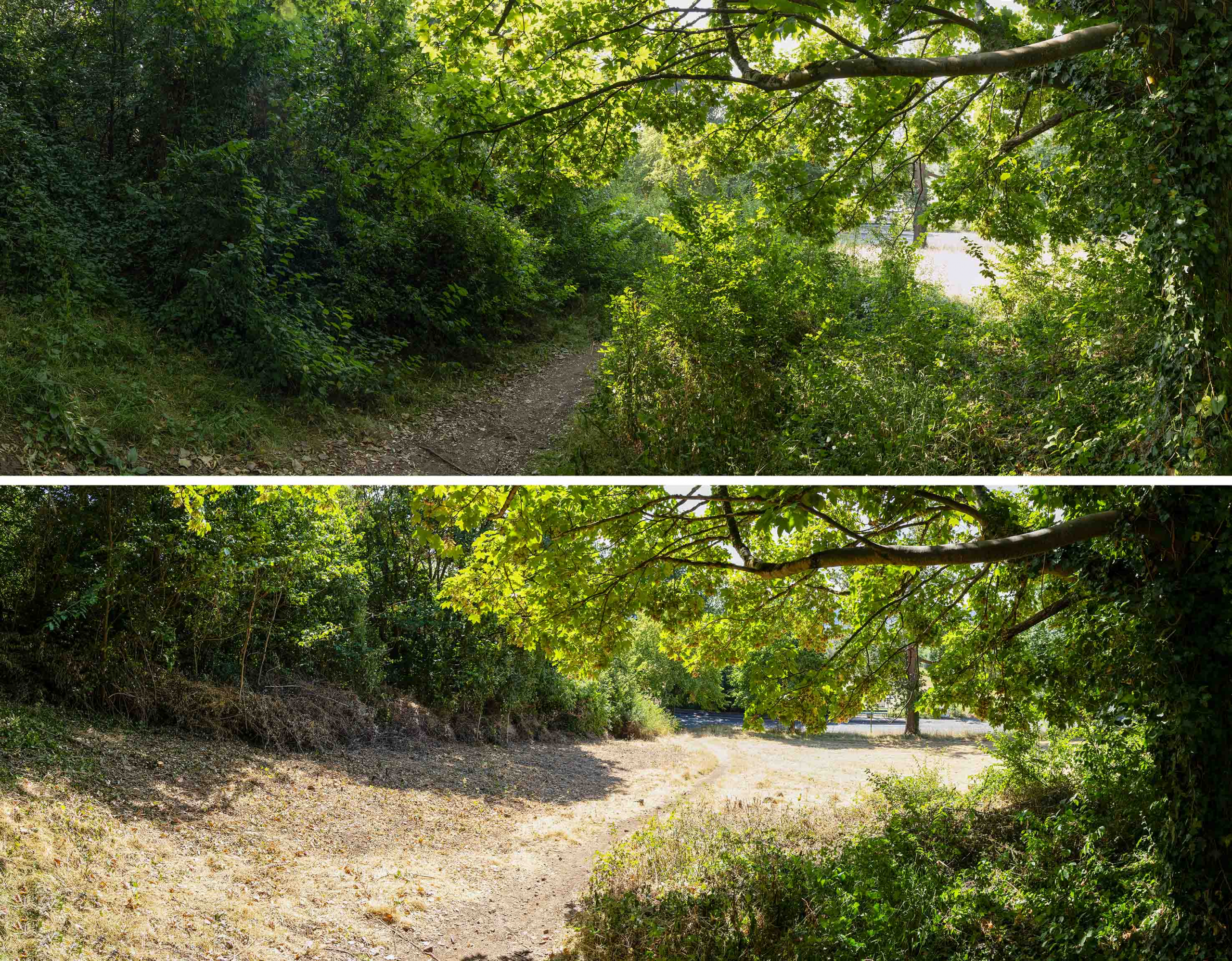
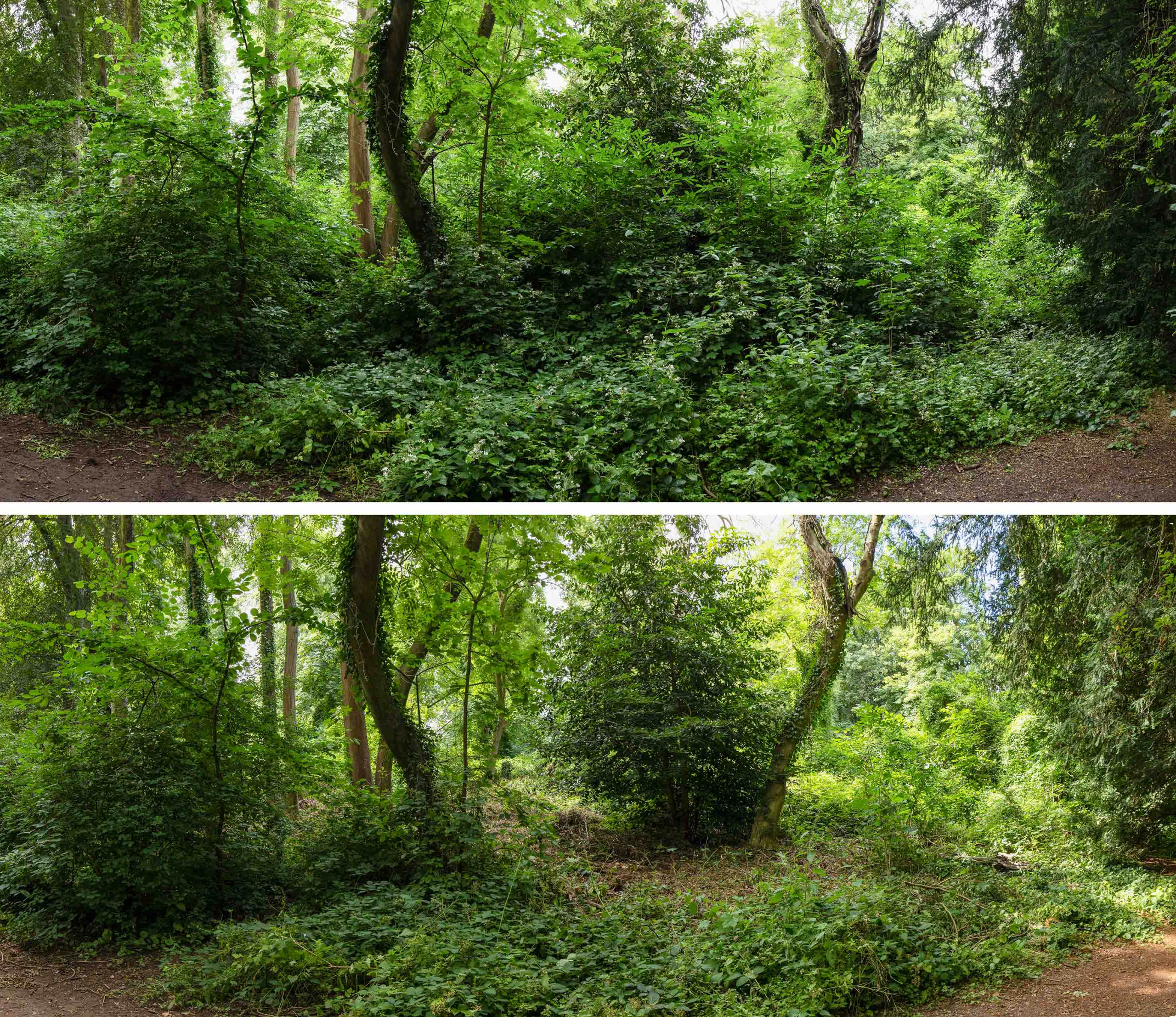
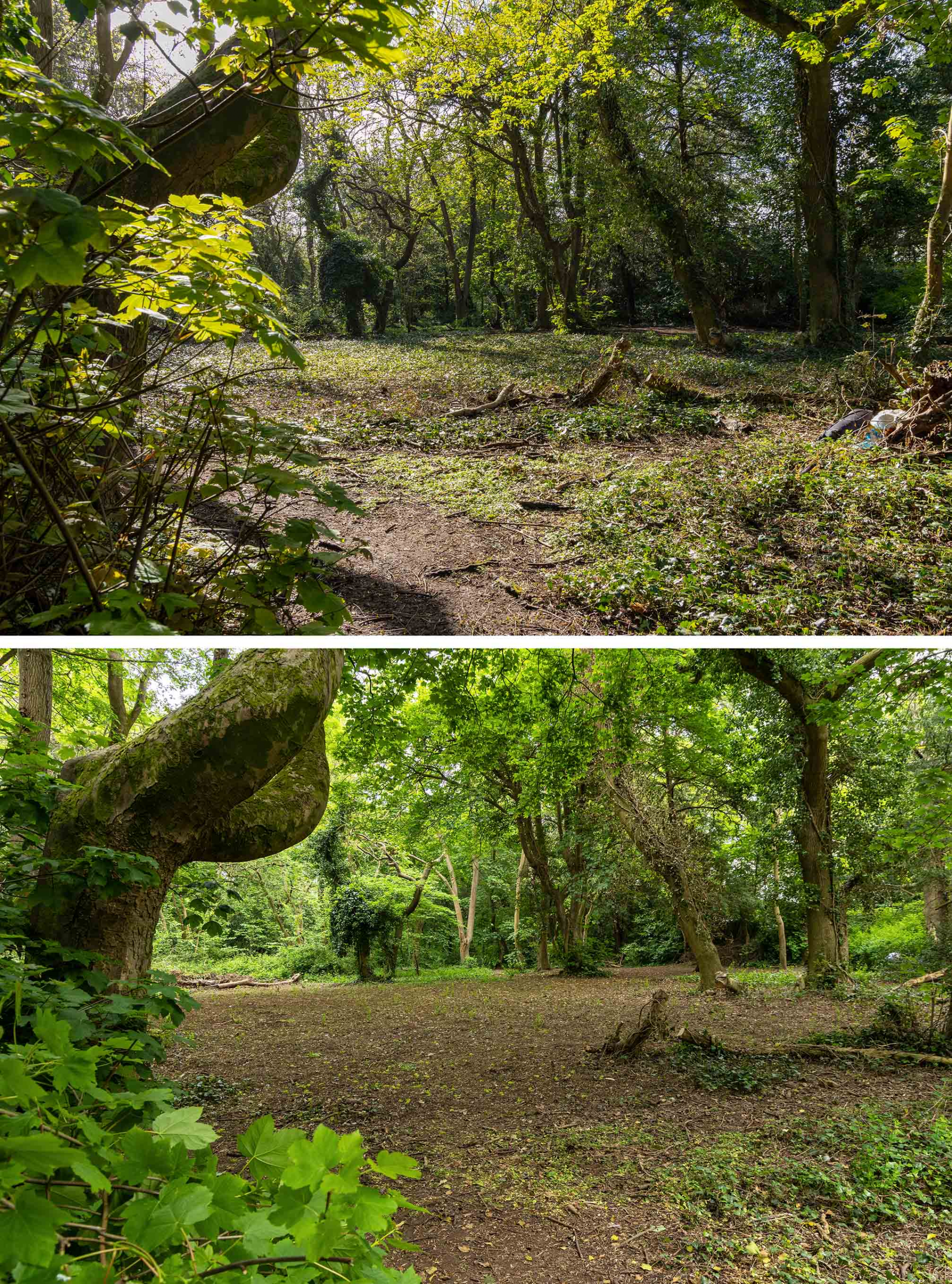
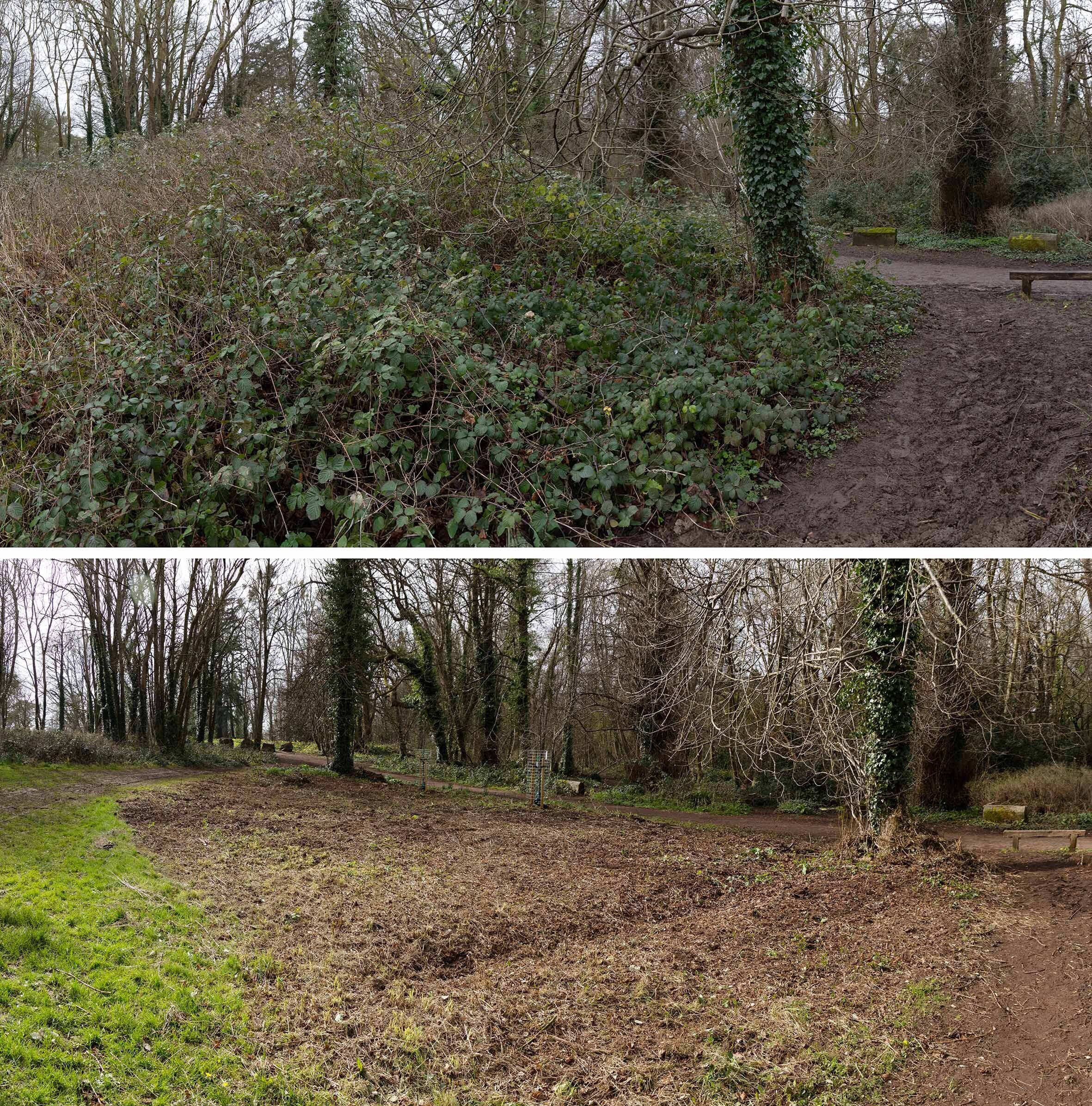
The removal has been surprisingly effective. The transformation now hits you immediately you enter the area, views through and across it restoring the sense of openness. We recognise that the snowberry is a tenacious plant, and will need repeated cutting, but this is a major step in restoring the character. The ground-cover beneath it is largely moss or ivy, the only species able to grow below the dense coverage. This month we hope to try and improve the biodiversity further by preparing the way for seeding of suitable shade-loving grasses and wildflowers.

Looking across Jubilee Clearing from the south, before and after work. 

Working Party update: Bramble rooting on the lime avenue 

In retrospect, perhaps February’s working party was a bit of a challenging job. We hoped to root out a large patch of brambles, the first along the ancient avenue of lime trees leading towards the house. Through a combination of limited resources and tools that were less than ideal, we struggled to meet the target we’d set for ourselves. The poor ground conditions, clinging wet mud, and rain hardly helped matters.

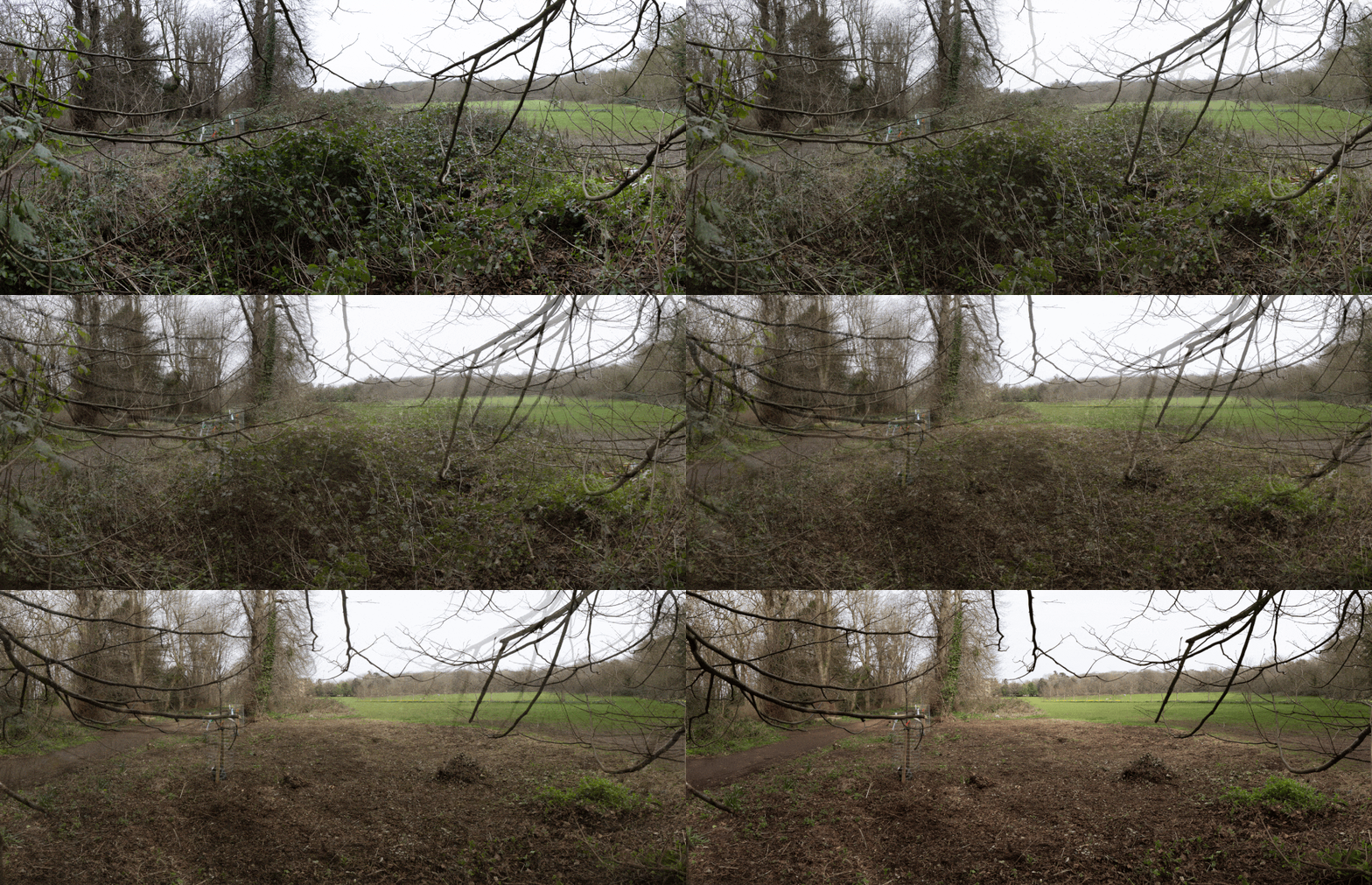
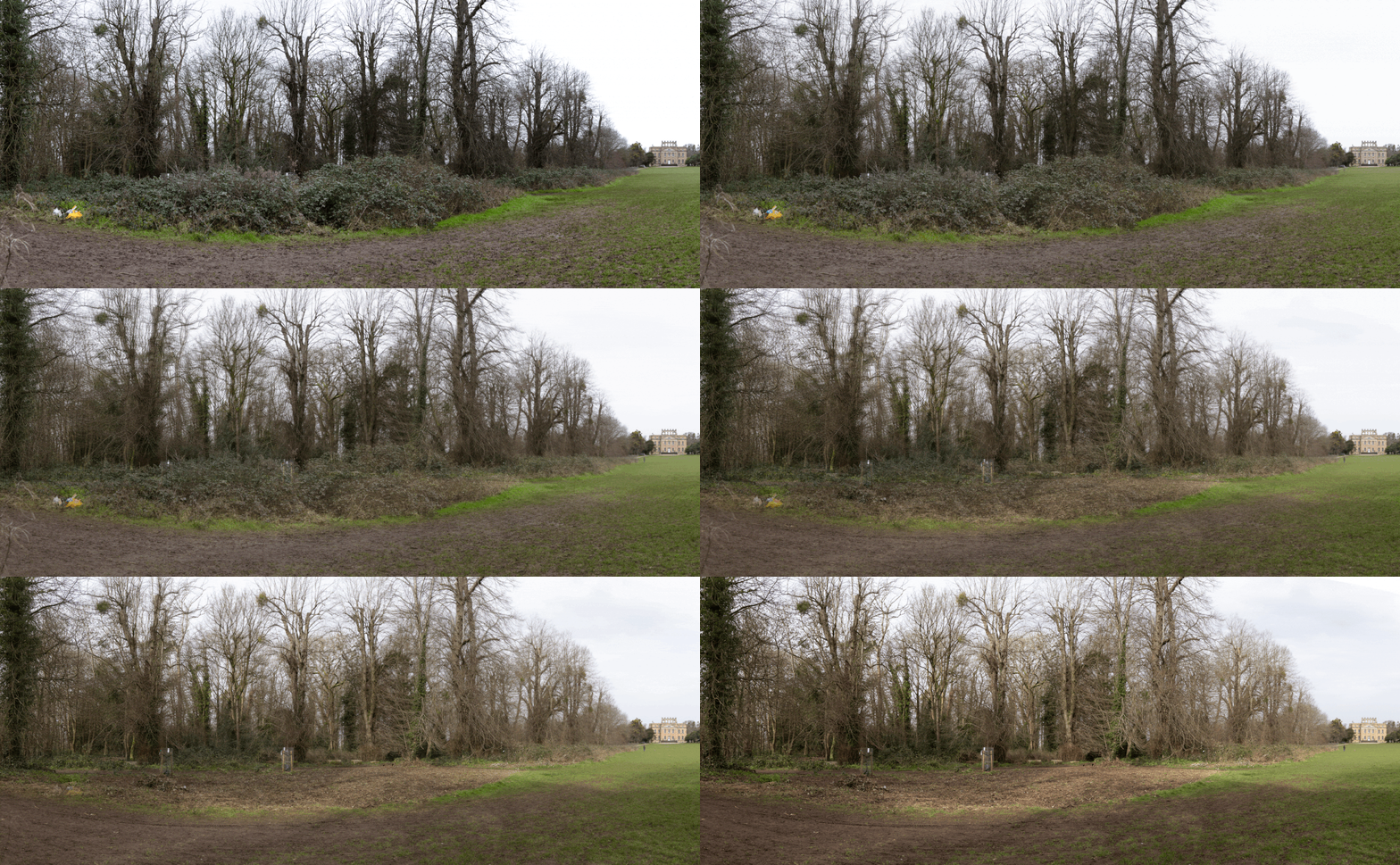
Animated image showing the scene before and after work. The drive down the lime avenue is on the left.  

We did manage to complete a significant part of the work on the day, but had to admit defeat when the rain began in earnest later on. Fortunately, a few volunteers were able to donate more of their time a couple of weeks later to complete the job.    

Now the two recently replanted trees on the avenue are better revealed, and there’s a definite improvement in the open character between the main drive and the open lawns leading to the house. It’s our hope that, having taken the brambles out by the root, we’ll have a much better chance of them not returning with such vigour this year.

Before and after work on the brambles looking from the lawn back towards the drive and the Circle beyond it. 

Whilst this will stem the encroachment of only a small part of the avenue, we’ll be unable to continue this work during bird nesting season. This will also give us time to rethink how we approach the job.

Animated image showing the work on the lime avenue looking towards Kings Weston house on the right. 

Working Party update: A decade’s growth restrained  

It was invigorating to see so many new volunteers join us in January to re-cut cherry laurel regrowth close to The Circle. It was 2016 when we last went through the compartment to fell the forest of laurel that had grown to choke out natural species. Gratifyingly, it’s been slow to try making a comeback, mainly due to the Council following through with poisoning at the time.

Above: Looking into the woods westward from The Circle 

However, the laurel remains a persistent weed and has begun to get going again, so last month’s work helps to knock it back again.

The area sits at the northern, back, side of The Circle, a patch lined on the south with the Avenue to Penpole and the north by the main path to the Point. Most of the work could be done with loppers, but there were a few extra bits that needed the saw taken to them again.

Looking back to The Circle in the direction of the car park from the main path through the woods.

We also took the opportunity to get back on top of some natural spacing, clearing competing saplings around trees that stand a better chance of maturing. This should keep the avenue to Penpole clear and in good shape for a little longer.

A huge thank you to everyone who helped out, and we hope to see you all this month.   

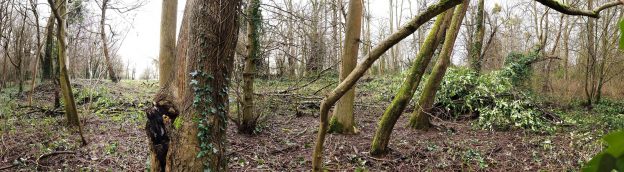
A broad panorama from The Circle looking west towards Penpole

Nature pond progresses  

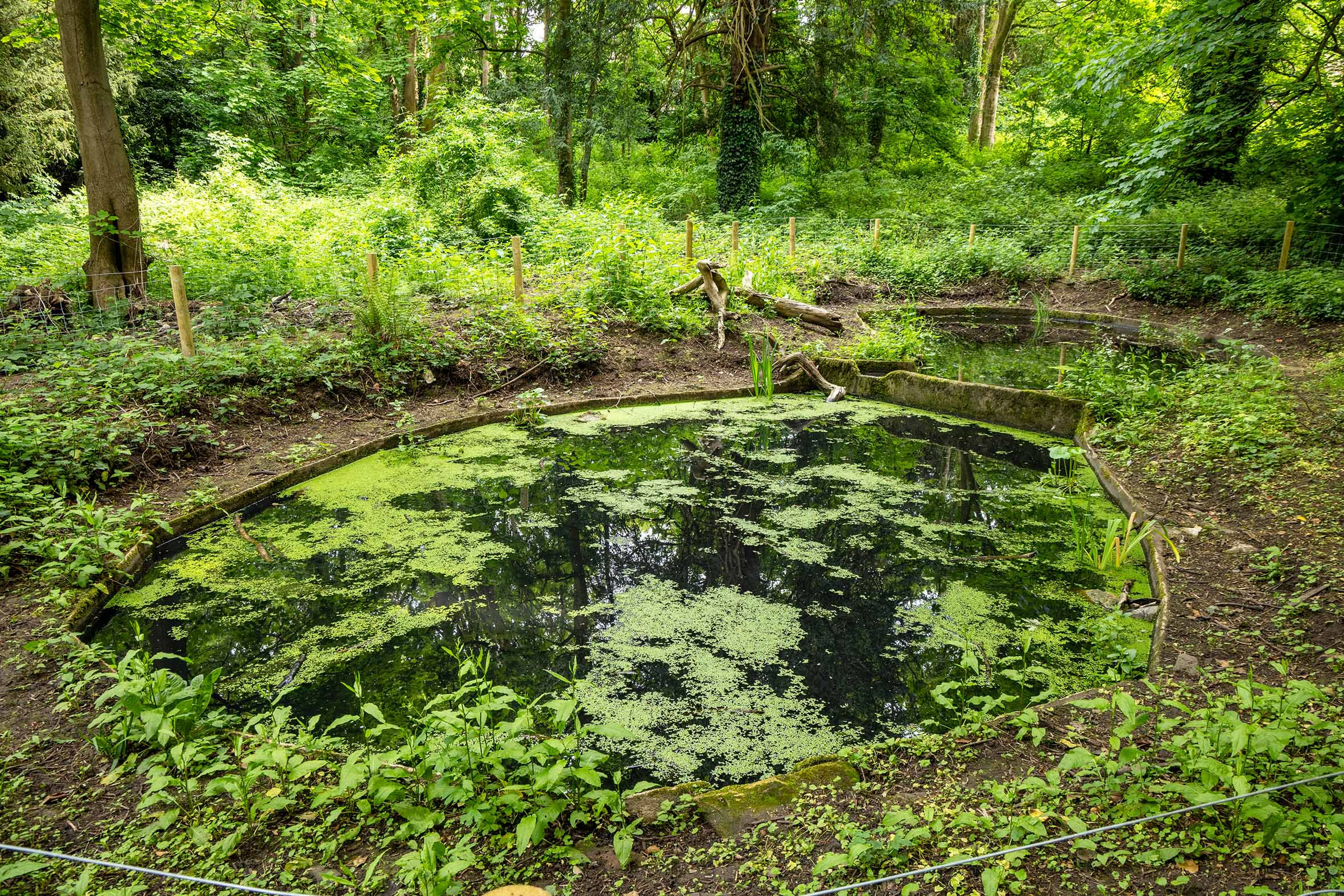
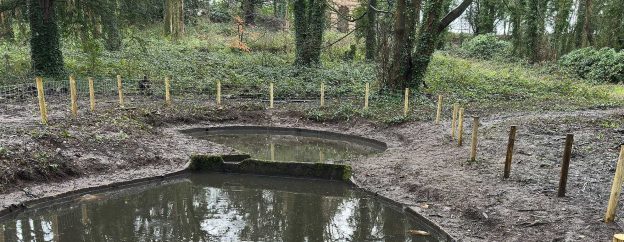
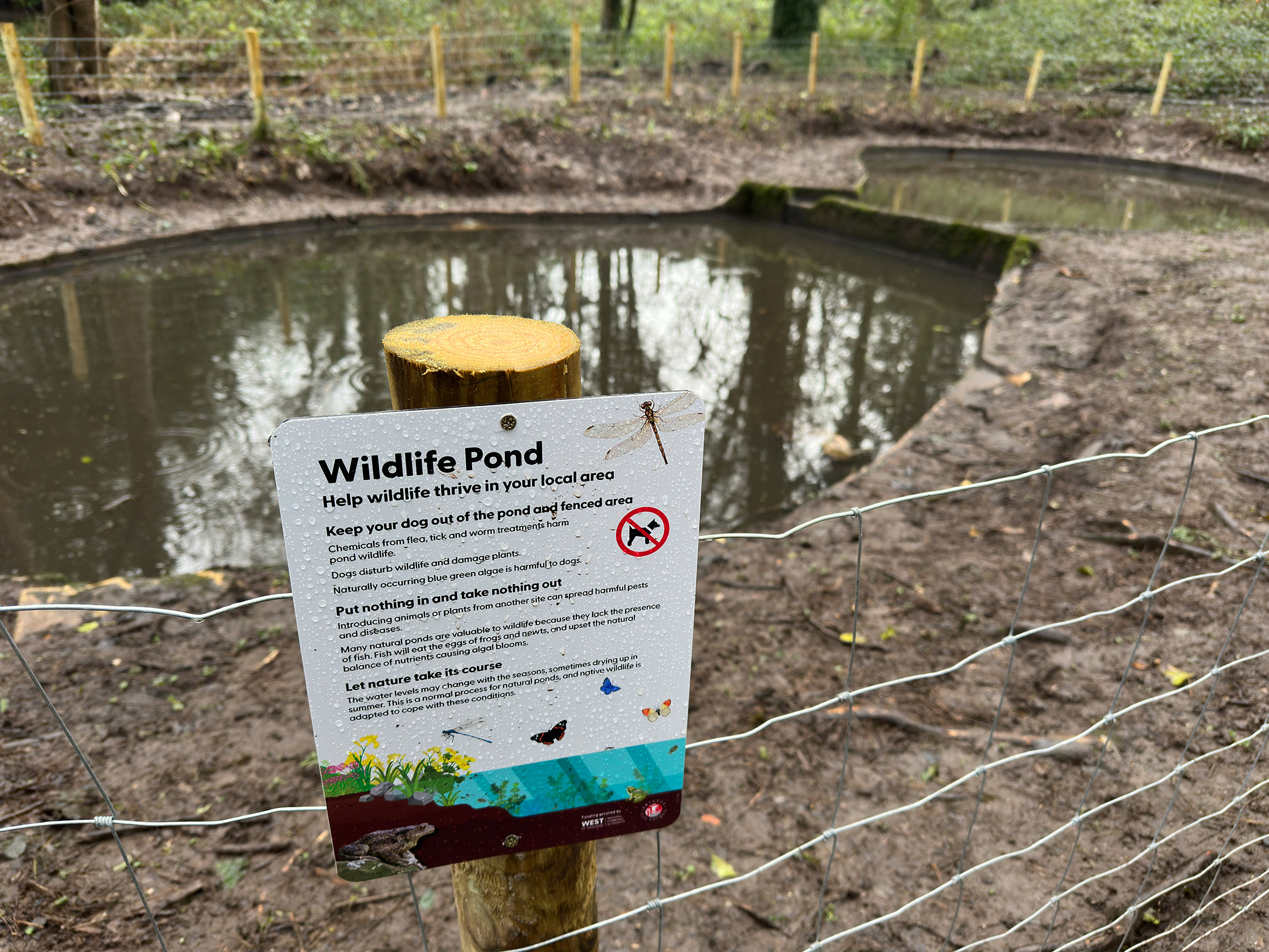
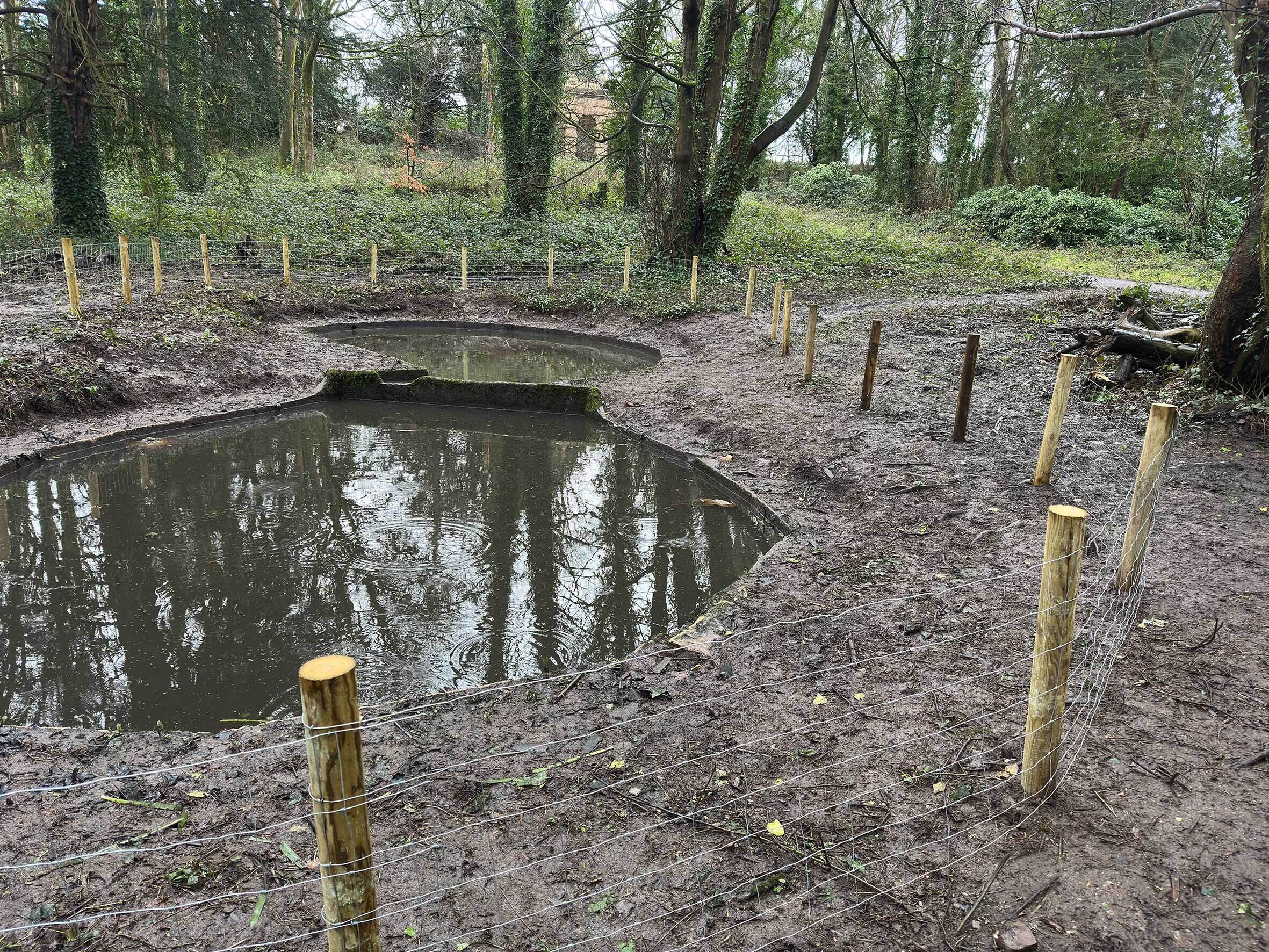
At the end of January, Bristol City Council park rangers held true to their promise to provide a fence around the recently cleared ponds close to the Echo. This is to ensure the progress made in emptying it of mud and logs is not undone as it was after we last cleared it.

Unfortunately, silt, sticks and logs thrown in for fun, and dogs regularly enjoying a dip prevented earlier work from flourishing. This, and the regular autumn dump of leaves and a large dead tree finally finished any aspiration to revive it.
 
Now,  a fence with timber posts and large gauge mesh fence should help protect the wildlife and give the ponds a chance to thrive. They’ve now filled-up with water very nicely after the recent wet weather, and are brim-full, ready to start receiving some native pond plants the Council will be providing soon.
 
We look forward to Spring when the project should be finished, and we hope wildlife will begin to make its return.

Working Party update: Slopping-out at the ponds

December might not be the favoured time of year to be splashing about in ponds, but that’s just what we did at the tail end of last year. Our plan was to continue work that the Council had begun with a mini-digger, but by hand. It hadn’t been possible for the digger to reach into the middle of the pond and so the Council turned to our volunteers for help.

The two ponds are concrete-lined and probably date to the 1960s or 70s. The lower pond, the larger of the two, had to be emptied of water so people could get in to do the dirty work of shovelling-out mud and hauling branches away. In the event it worked out easy to scoop the water up into the top pond, from where it would need to be transferred back afterwards.

There was a great turnout for the event with some new faces, so a big thank you to everyone for making this such quick work. The lower pond was certainly an easy job and was finished in a brief space of time. The debris was carried away as far as possible, continuing piles already set up by the Council workers.

The top pond, however, was more of a challenge. Once most of the water had been thrown back to fill the lower pond, there was a dirty sloppy silty mess that was more challenging to scoop out. With most of it poured into buckets and taken away we called it a day at about 1pm, a job well done.

The next phase in the restoration of these ponds as natural habitat will be the erection of a small fence to prevent dogs disturbing the  wildlife and discourage rubbish being thrown in again.

Working Party update: Back into the woods for cherry laurel clearance 

In July this year, we made a start on clearing laurel from an area at the foot of the steps down through Penpole Wood, close to the Point. This location is at the far eastern end of the Eighteenth Century pleasure walks through the woods, an important route long-neglected. Last month we returned to continue efforts to stem the tide of this invasive species.

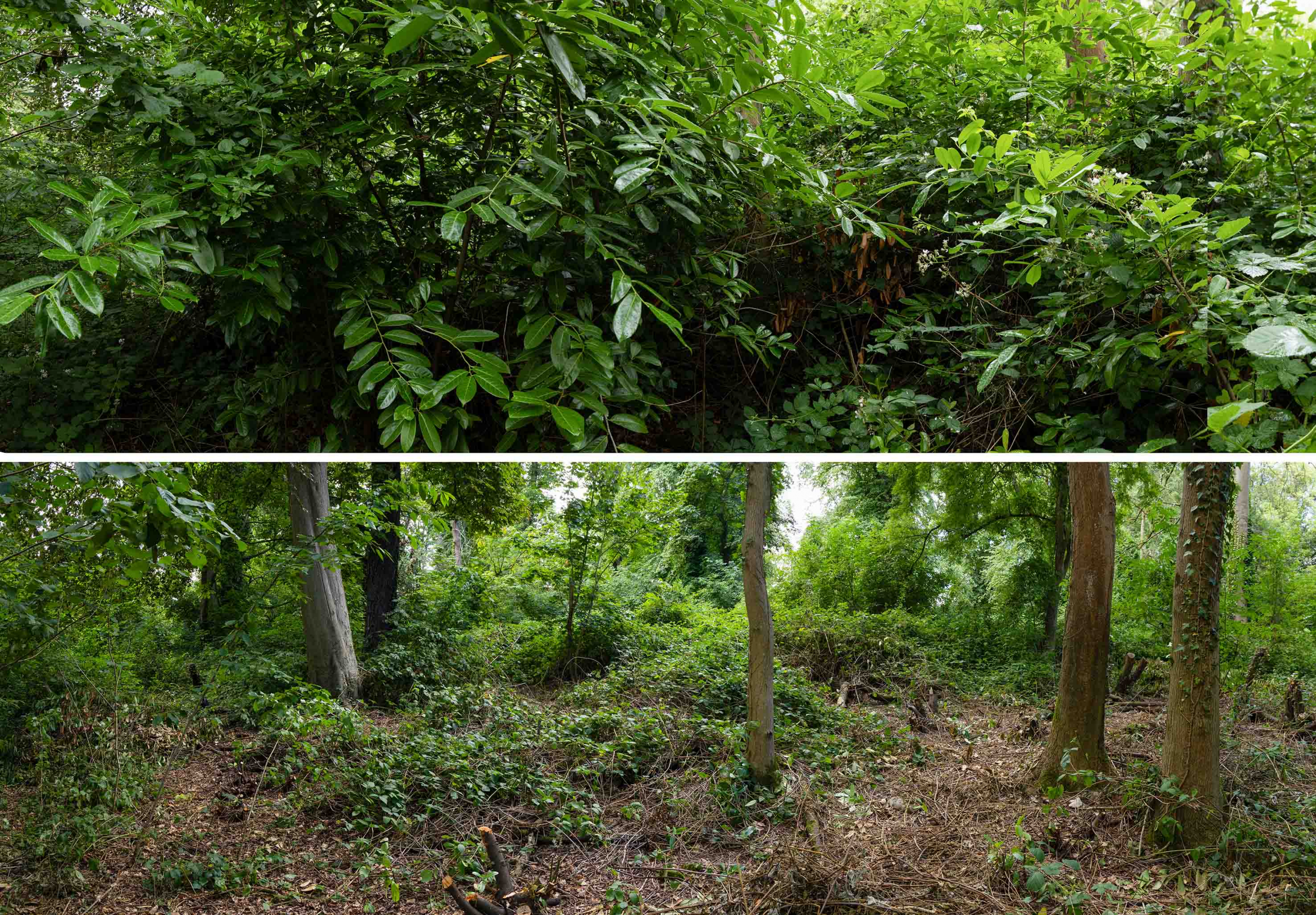
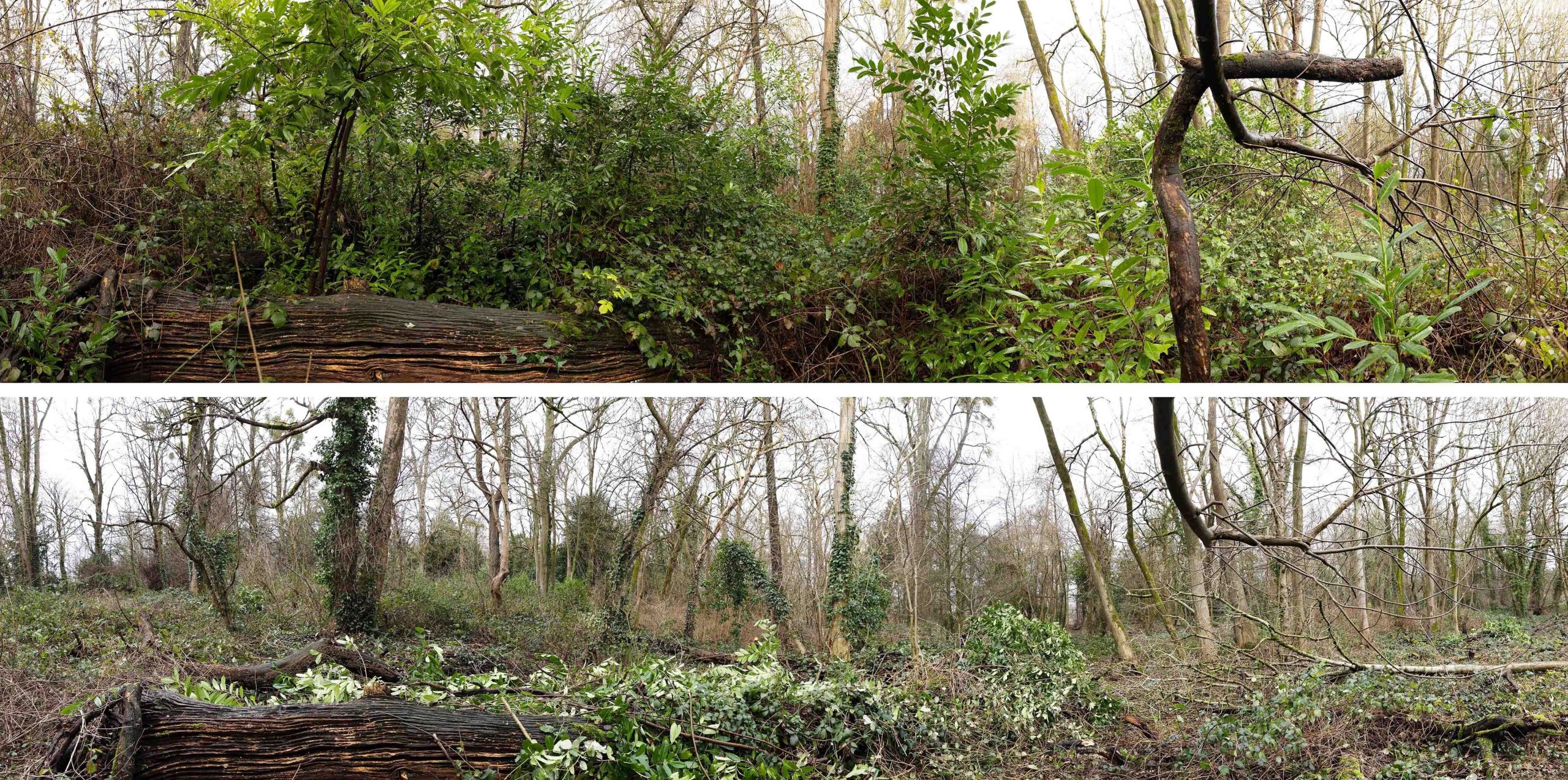
a wide panorama looking up the slope from the Middle Path, before and after volunteer work.  

We were a little depleted in numbers in October, but set ourselves clear targets of two areas either side of the path. The steep slope here proved challenging and sapped energy in requiring a steady footing and the transport of the cut material towards waste piles.

Cherry laurel is pushed back from assailing a beech tree along the Middle Path.  

With just seven volunteers, we managed to achieve most of the task at hand. Unfortunately, by the time everyone’s energy had lapsed, we were left with a mess. Having managed at least to clear the path, it was down to the efforts of one of our volunteers to tidy everything into piles over the following weeks; a huge effort that we’re enormously grateful for.

Perched on the slope and looking westwards, with the Middle Path leading into the distance. 

Lily pond resurgent 

Starting recovery, 12th September

About a week after volunteer work at the lily pond in August, the heavens opened for days on end and helpfully began to complement our work on restoration. By the start of this month, the pond has really begun to recover some of its water, despite the reeds already having begun a resurgence. There was never an expectation, or immediate desire, to see the reeds eradicated, but they were in need of better management to help protect the pond. This and the removal of many of the trees has put the brakes on the speed of decline for a little while longer.

Fuller still, the level of the water on 4th October.


Working Party update – Urgent work at the lily pond

There were some herculean efforts put in last month from a crowd of volunteers, over a dozen, and we managed to make serious restoration progress on the historic lily pond on Napier Miles Road. There were two objectives the work; firstly, the cutting-down or rooting-up of trees and vegetation that has grown to suffocate the pond, and to enable a clearer survey of the condition of the pond walls and bottom.
 
Even after a long dry Summer, it was a surprise to find no open water at all in the pond tank! The vegetation has acted to soak up much more water than would be usual, and the ground was relatively firm across the whole area.

Volunteers rake-up the cut rubbish in an effort to clear the historic lily pond. 

The target to cut and remove the vegetation was only just met by the end of the day, the hot conditions meaning volunteers tired quickly despite the great turnout. The waste was lifted to the pond edges and stacked in existing piles of debris up and away from the water line. Sadly, there was little sign of any of the 49 individual native pond species recorded here in 2012 as part of our Bioblitz. There were two types of reeds, sporadic water lily plants, some froglets, and an invasion of sallow trees, but nothing that indicates a thriving environment.

Before and after work focussed on reversing the decline of the Georgian pond.
A volunteer inspects the trial hole dug through the decaying vegetation to find the pond base. 

Initial review showed the original hydraulic lining applied to the pond walls has dried and begun disintegrating, allowing water to leak away around the edges. We dug a small trial hole to establish the depth and condition of the lining of the pond. Digging down through an astonishing 18 inches of black sloppy rotting organic material, we encountered the original clay bottom of the pond.

In the area inspected, this looked to be in a decent wet condition, but where areas dry out in the summer, any cracked clay base or root damage will also be letting the water leak away. The hole we dug filled with water during the afternoon, showing that even though it looks like a field right now, the water is still close to the surface.

A quick calculation suggests there are around 350 cubic metres of mud needing clearing out to start restoration of the pond lining. This could equate to about 340 tons of black gunk that need removing from the pond!

We’re grateful too for the incredible positive reaction to this work, and the kind words of support we’ve received; more than for any other project we’ve undertaken on the estate!

The view from the road before and after restoration work
The dense monoculture of reeds is cut out to slow the decline in the pond’s condition. 


Scything on Penpole Point

The Council’s Nature Nurture events happen across parks in the north of the city every Friday. A number of these have focussed on nature conservation work around the Kings Weston estate and included several opportunities for scything.  

A few regular KWAG volunteers came out for the two events last month focussing on the grassland on Penpole Point, joined by Council rangers and new volunteers.

Scything isn’t something KWAG has put on before, so it was interesting learning to use different tools and techniques to help maintain the important grasslands. Over two of the Friday sessions we got to grips with the area sown with wildflower meadow five years ago, raking-off the cut material to keep the grassland healthy. The area around the ruins of Penpole Lodge were also tended to, but the encroachment of brambles and elm runners remains an issue.

the area around the 17th Century dial before and after scything and raking. 

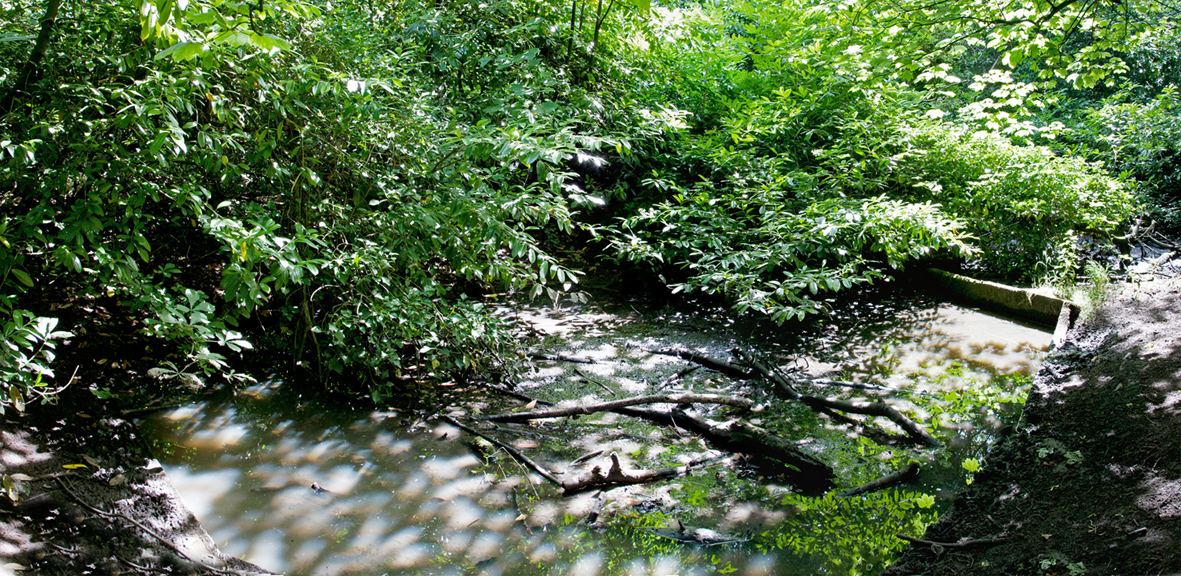
The Nature Nurture team also hope to focus on the two ponds close to the Echo, brining a corporate group of volunteers to help clear in and around it, and set up a post and wire fence to keep dogs and debris from finding their way into the pools instead of the wildlife hoped for.

The Council are also looking at thinning some of the self-seeded trees from around the pond, trees that undermined KWAGs last effort to clear them by overshadowing them and filling them with dead leaves in Autumn. We hope everyone will appreciate the efforts now being put into increasing the biodiversity of this part of the historic parkland.  If you have any concerns or queries, please email us and we can pass them on.

The current sorry state of the ponds below the Echo. 

Working Party update – Hot stuff in the woods!

It was one of the hottest days of the year when we met in July for volunteer work in Penpole Woods. Not only was it hot, but the chosen location was distant from all of the usual meeting points. The area, deep in Penpole Wood, was at the bottom of the steps we rebuilt about ten years ago. Until last month they deposited the visitor into a thicket of cherry laurel.

Animated transition showing the view from the bottom of the Penpole Wood steps. 

Already, someone had been trying to keep the paths there open, taking out branches overhanging the path, but our ambitions were somewhat greater. Considering the forecast, we had a good turnout, and thank you to all our regulars who made it. We started with the knowledge we’d cut things short to avoid the worst of the heat, but the shady area on the north-facing slope gave us some respite from the worst of it.

The impact of work turned out to be more incredible than expected. A relatively dense cherry laurel gave way quickly, revealing a number of handsome mature trees that hadn’t really been noticeable at the start of work; If we’d have spotted them earlier, we might have been a bit more careful over the location of spoil piles and their visibility.

Animated transition showing the view eastwards along the middle path. 

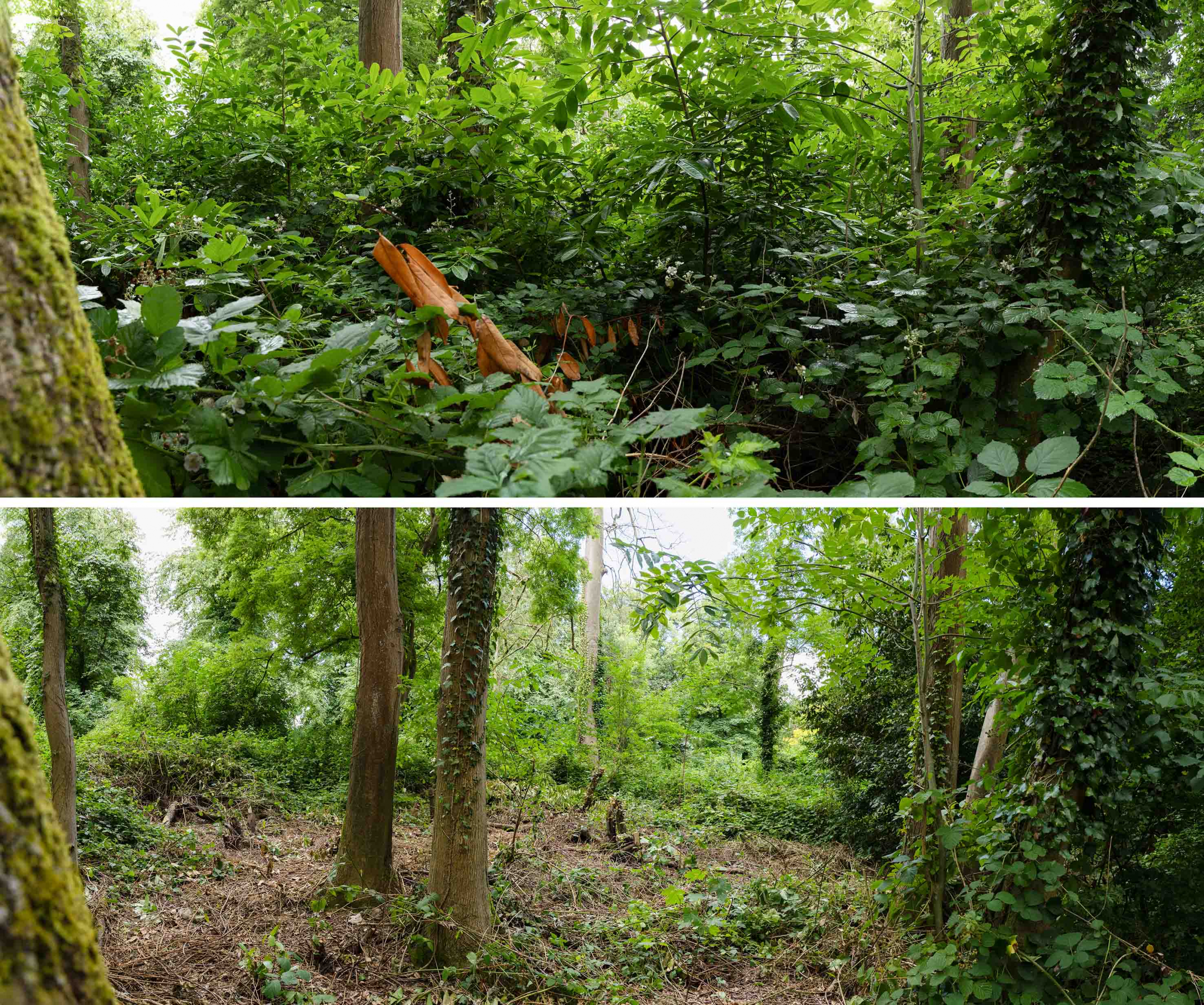
By the end of the day, the section of the middle path we worked on was unrecognisable. Now, coming off the end of the  steps, the scene opens out into a light clearing with a backdrop of fine trees. The route up from Lawrence Weston has been cleared of a lot of obstacles and joins the middle path at a junction at the stone steps. Hopefully the path remains traceable through the stone rubble.

We had planned to return here this month to continue work, but an urgent matter has cropped up at the Lilypond. September will be Heritage Open Day, and October is usually the Big Bulb Plant, so continuing the work may take longer than planned.   

Looking west along the middle path before and after work clearing cherry laurel
The three stone steps between the middle path and main steps appear from beneath the cherry laurel.