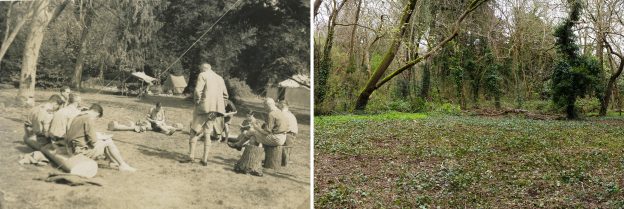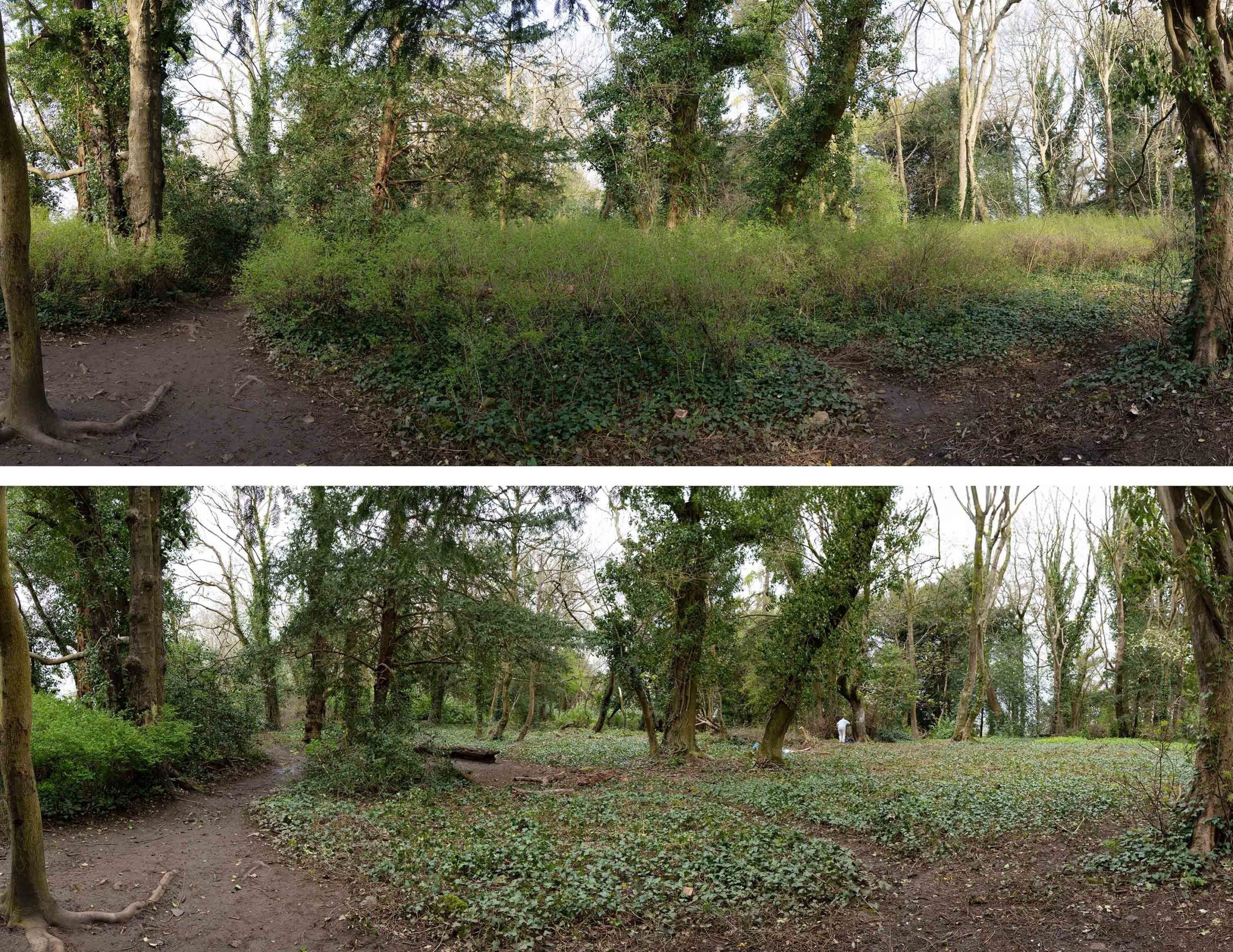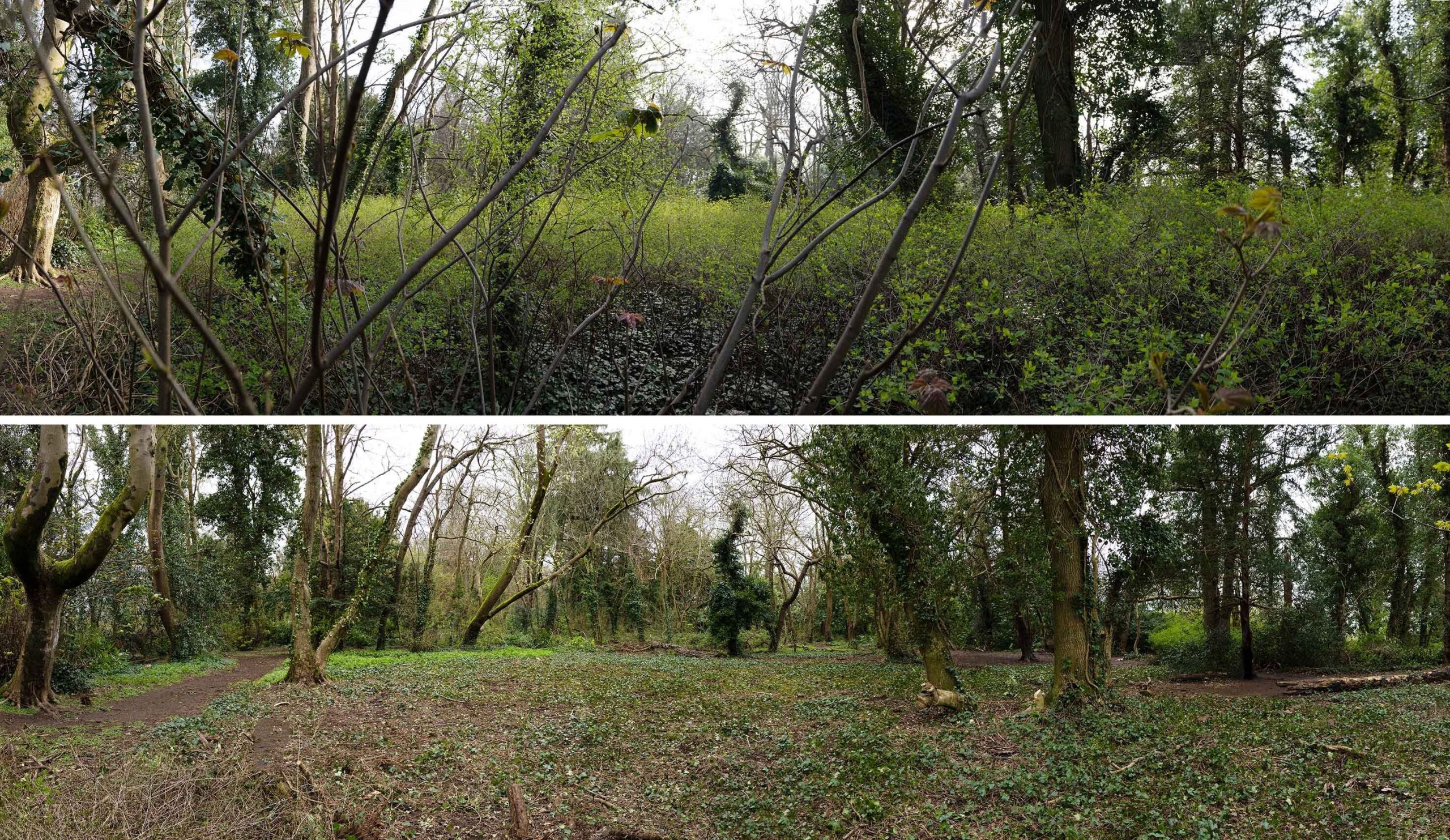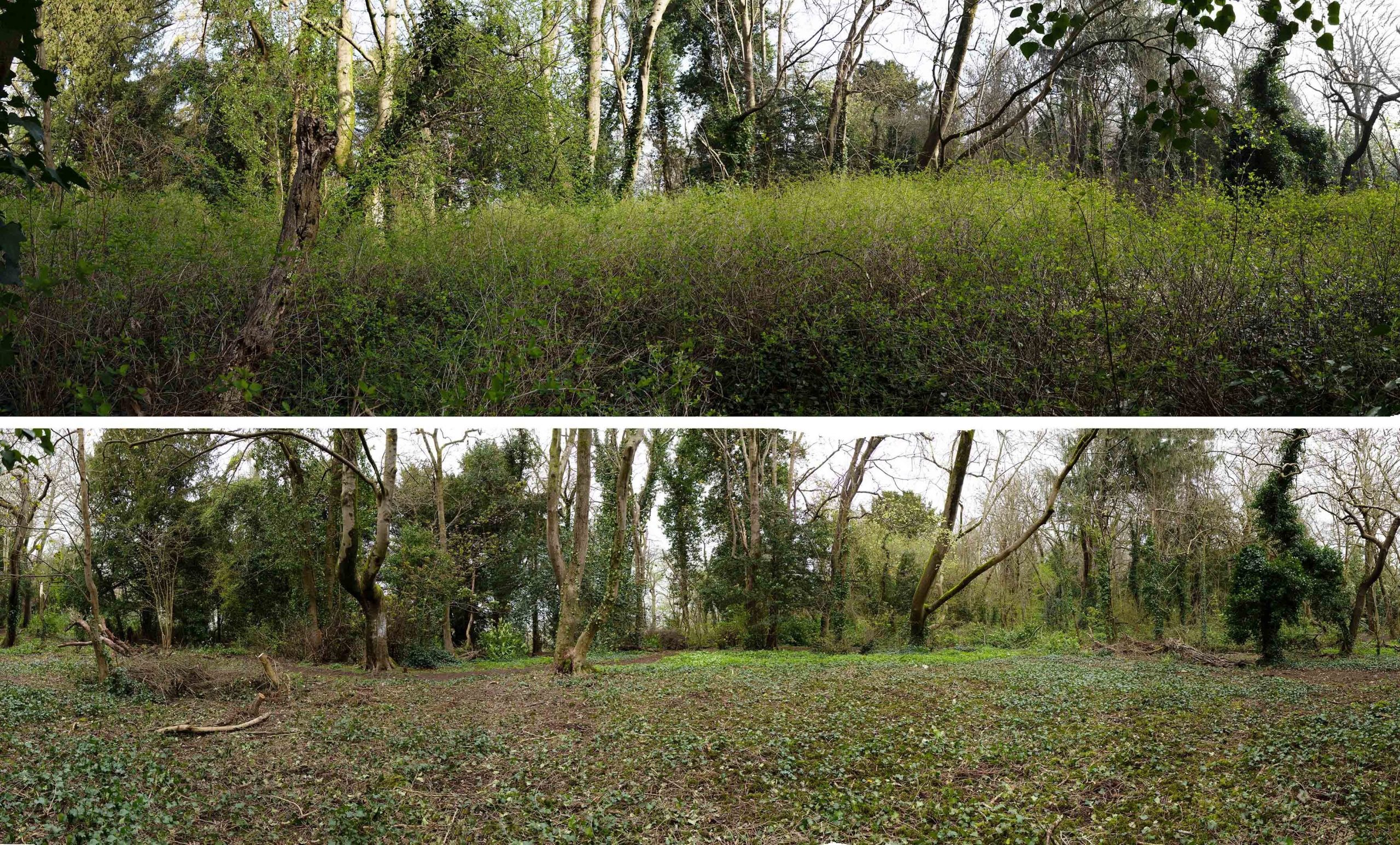
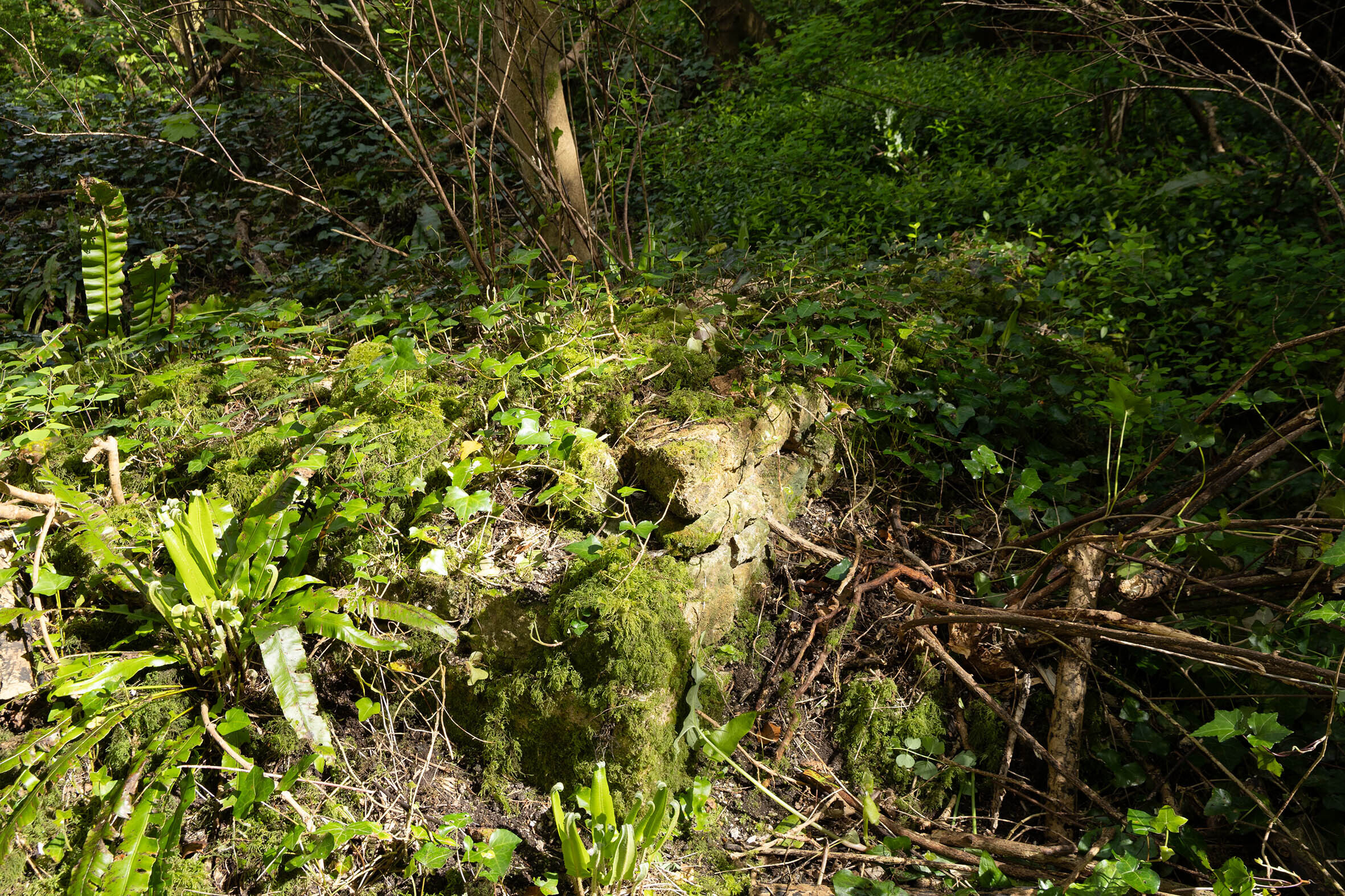
Deep in Penpole Wood lie the half-forgotten remains of a small cottage. Now just a few fragments of wall and some undulations in the forest floor, this was once the Keeper’s home.
As far as we’ve been able to ascertain, the house was built after 1845, so would have been an addition made by the Miles Family who then owned the Kings Weston estate. It may even have been designed by Philip William Skinner Miles, who considered himself something of an amateur architect and is responsible for much minor work around the parkland.
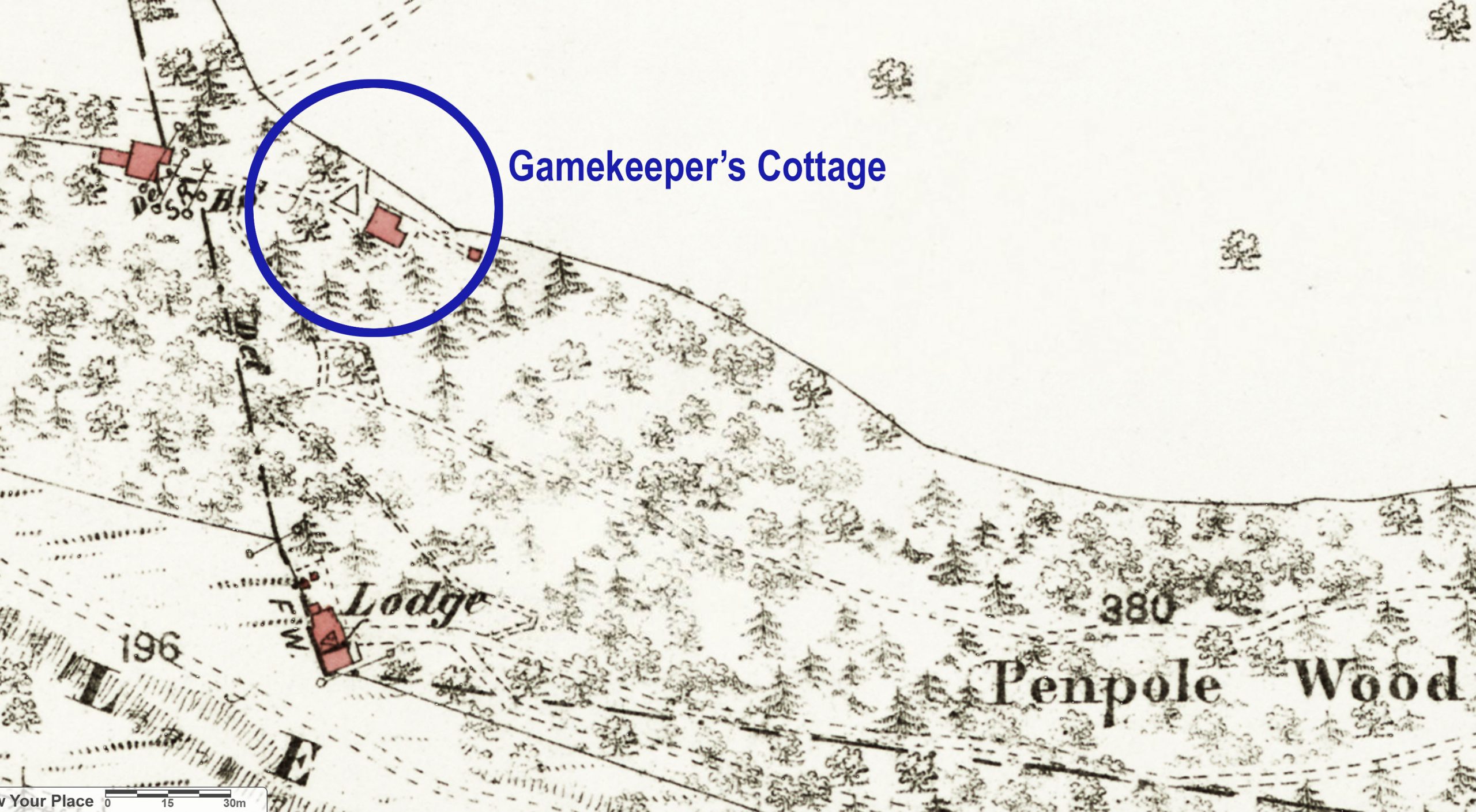
The location at the foot of the Penpole Ridge once enjoyed views northward across open fields of the parkland, but today’s woodland margins have long extended to encompass it. It is assumed that any game shooting would have taken place in these fields with pheasant or other birds bred in the woodland before release. The location of a gamekeeper’s cottage on the boundary between these two areas makes sense in this context.
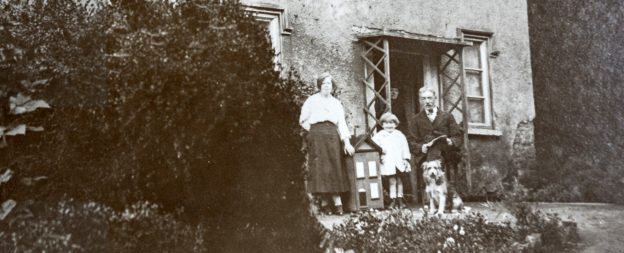
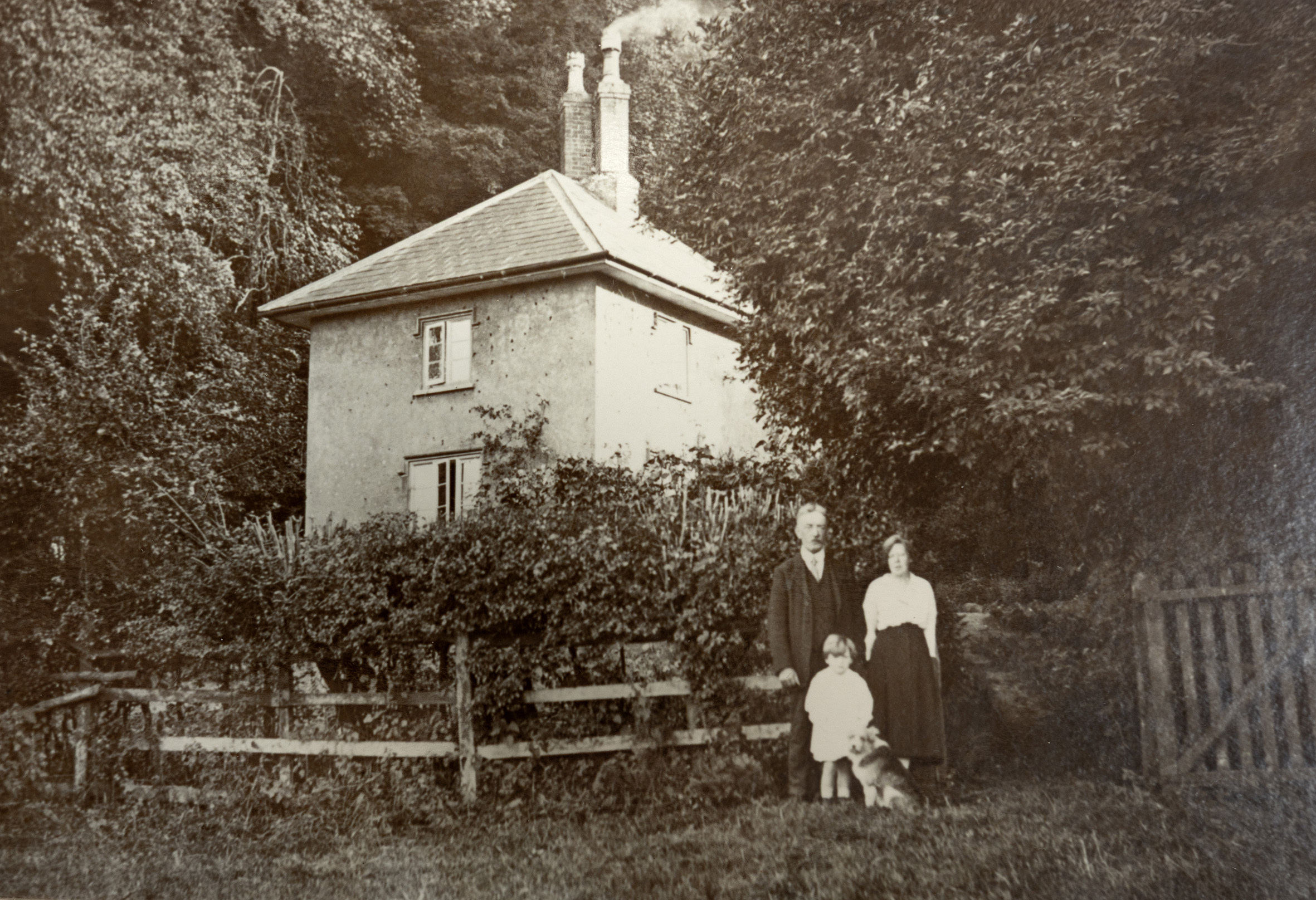
The cottage itself was small, but not without some architectural pretention. From early photos we can see it was of two storeys and its main frontage to the north and west were carefully composed with attractively proportioned casement windows and Tudor-style drip-mouldings carried across each. It had a smart hipped roof, slate-covered, and a pair of tall chimneys, again in the Tudor manner. The whole building was finished in rough-cast render, some which still clings to the walls today. It must have had quite a picturesque effect when viewed from the fields, sitting with a heavily wooded backdrop, with its a small garden and smoke drifting from its prominent chimneys a sign of domestic life within.
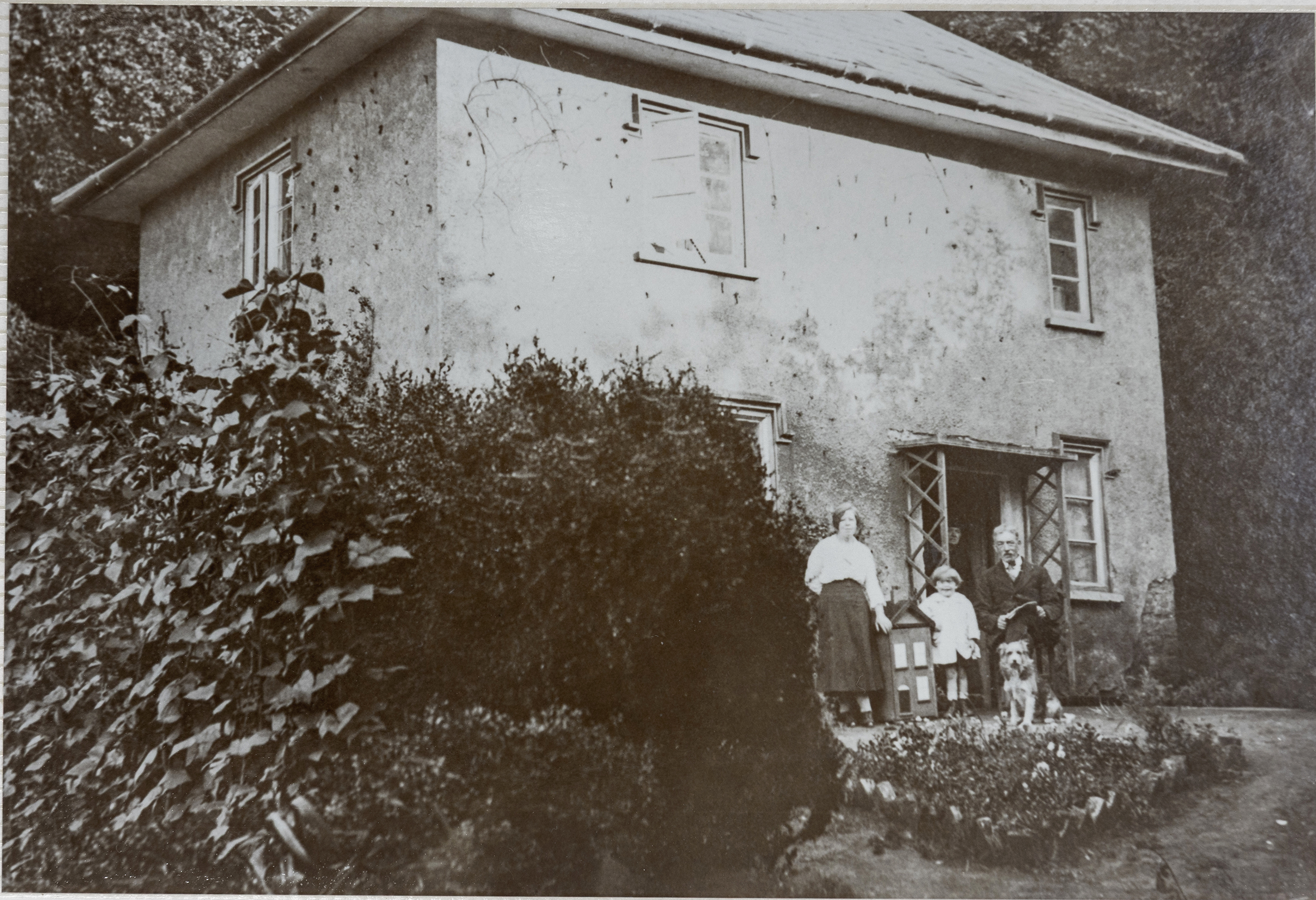
These two photographs record the Keepers Cottage in 1921 when it was the home of the McEwen family. Arthur McEwan was head of the family and is seen with his wife Lilian, and their children Winifred and Arthur John, the latter just glimpsed at the door. The dog was Gyp.
Winifred, later Mrs Pople, remembers that in her childhood she carried buckets of water down the steep path from Penpole Lodge where Mrs Turk kept a tank filled with drinking water. Her mother, only 4’ 11”, nearly fell down the well they used, so the water tank was installed by Squire Miles as a safer, if less convenient, source.
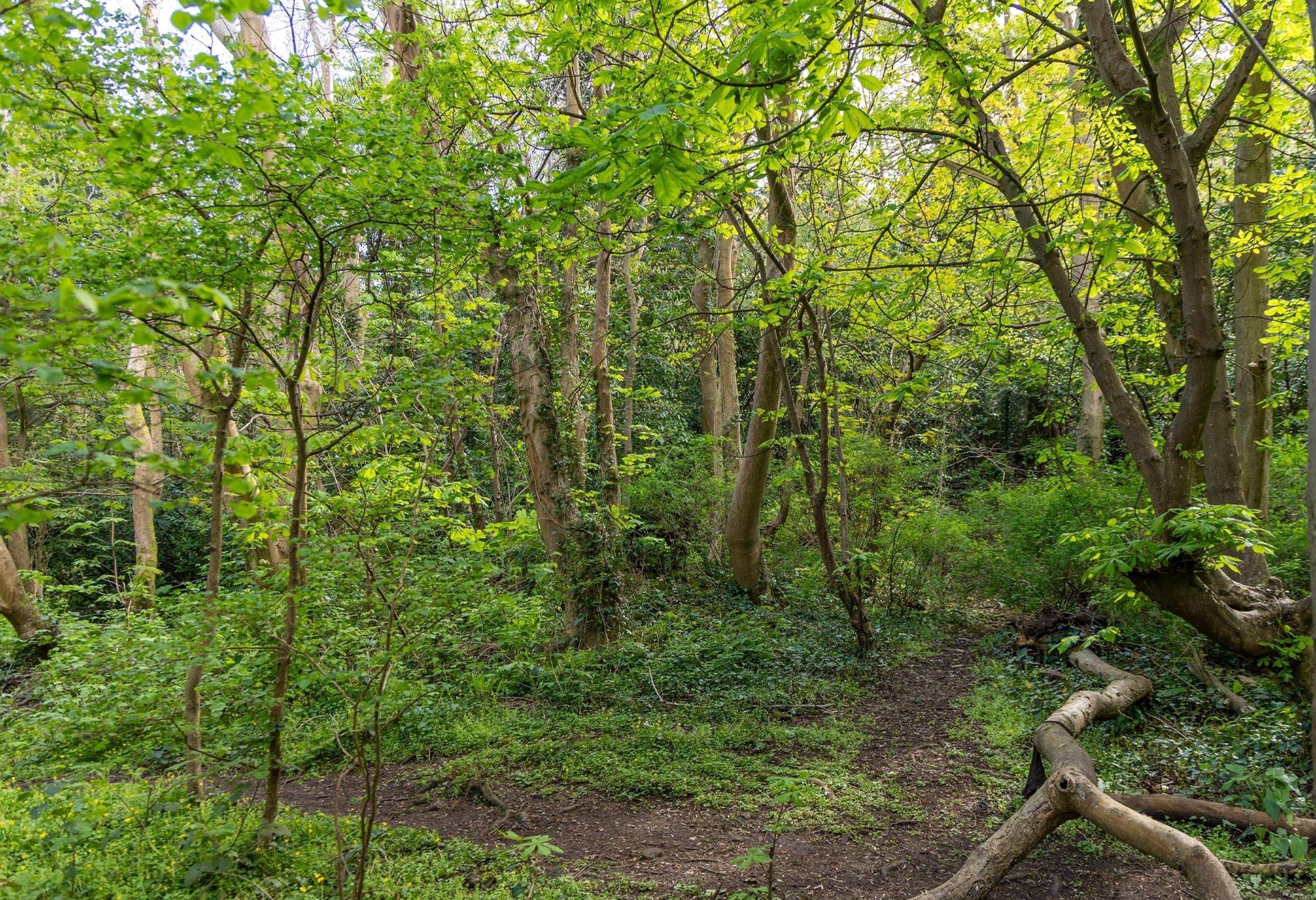
The house remained occupied until WWII. By then the district Scout groups owned the land and the cottage and it was referred to as the Lower Lodge. With the outbreak of the war parts of their property were commandeered by the RAF and the Home Guard. The wardens wrote that “We had viewed with some concern the activities of the Home Guard when the took over the Lower (lodge)” and it suffered badly during this time.
A few tiles were damaged by the explosion of a high explosive bomb nearby, but the house survived only to become the target of “local roughs”. By 1944 it had suffered badly from “wanton destruction” in the absence of regular use and, when the woods were sold to the Council in 1947, it’s unlikely that it was in habitable condition. It’s believed at this time the Council took the place down to prevent it from becoming the focus of more vandalism.
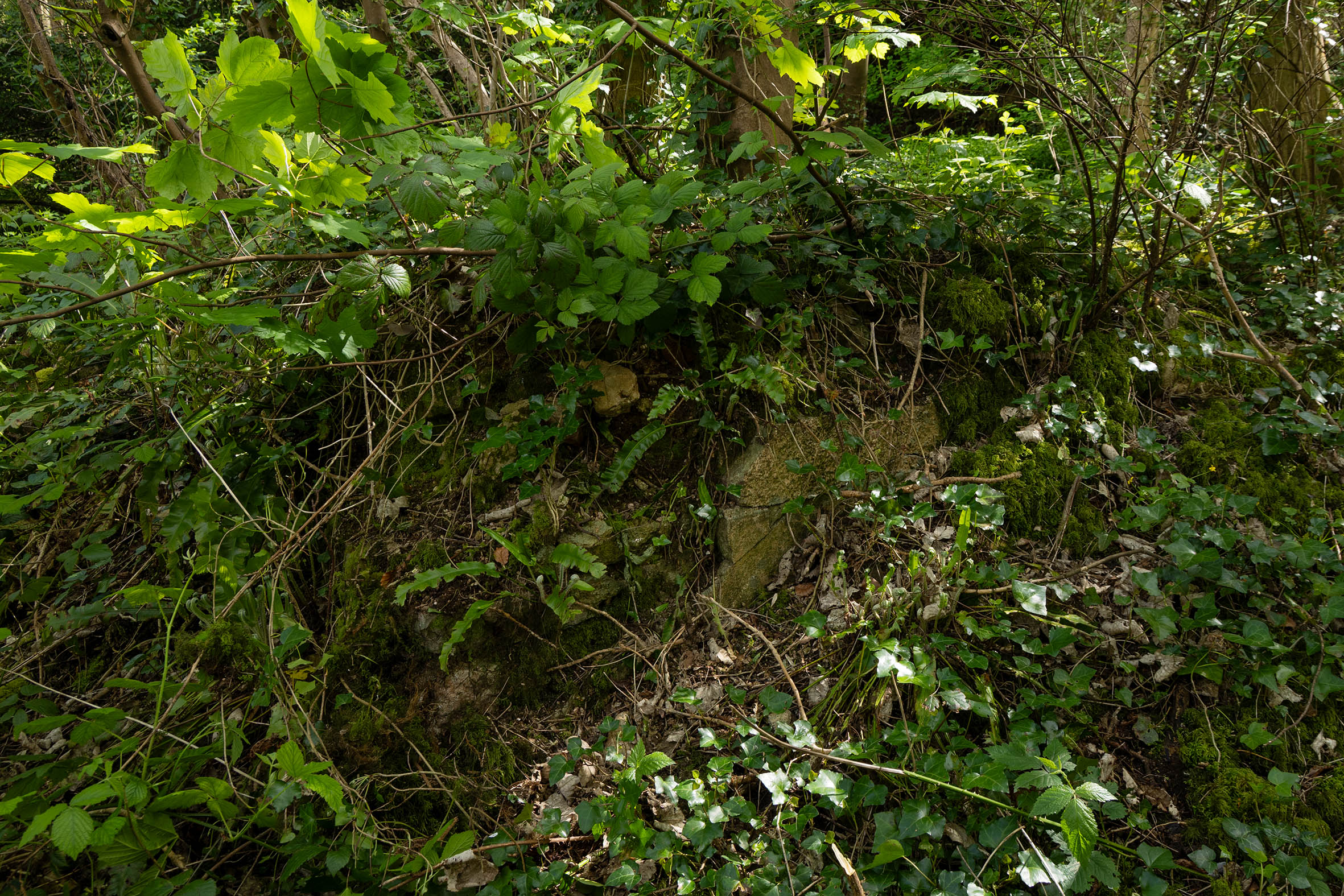
The walls survive to shin-height though sycamores now fight their way through the old floors. In the future it would be a good job for KWAG to clear around these ruins, measure and record them, and make sure there is some preservation before they are lost for all time.