Category Archives: Uncategorized

An intriguing Italian perspective

A new description of Kings Weston has come to light with some fascinating new detail about the estate dating from the height of its fame. The description comes from an Italian author, Luigi Angiolini, who was drawn to Kings Weston in 1788 by its international reputation. Two features in particular stand out in a translation of his 1790 book “Letters from England, Scotland and the Netherlands”, and are unique insights.
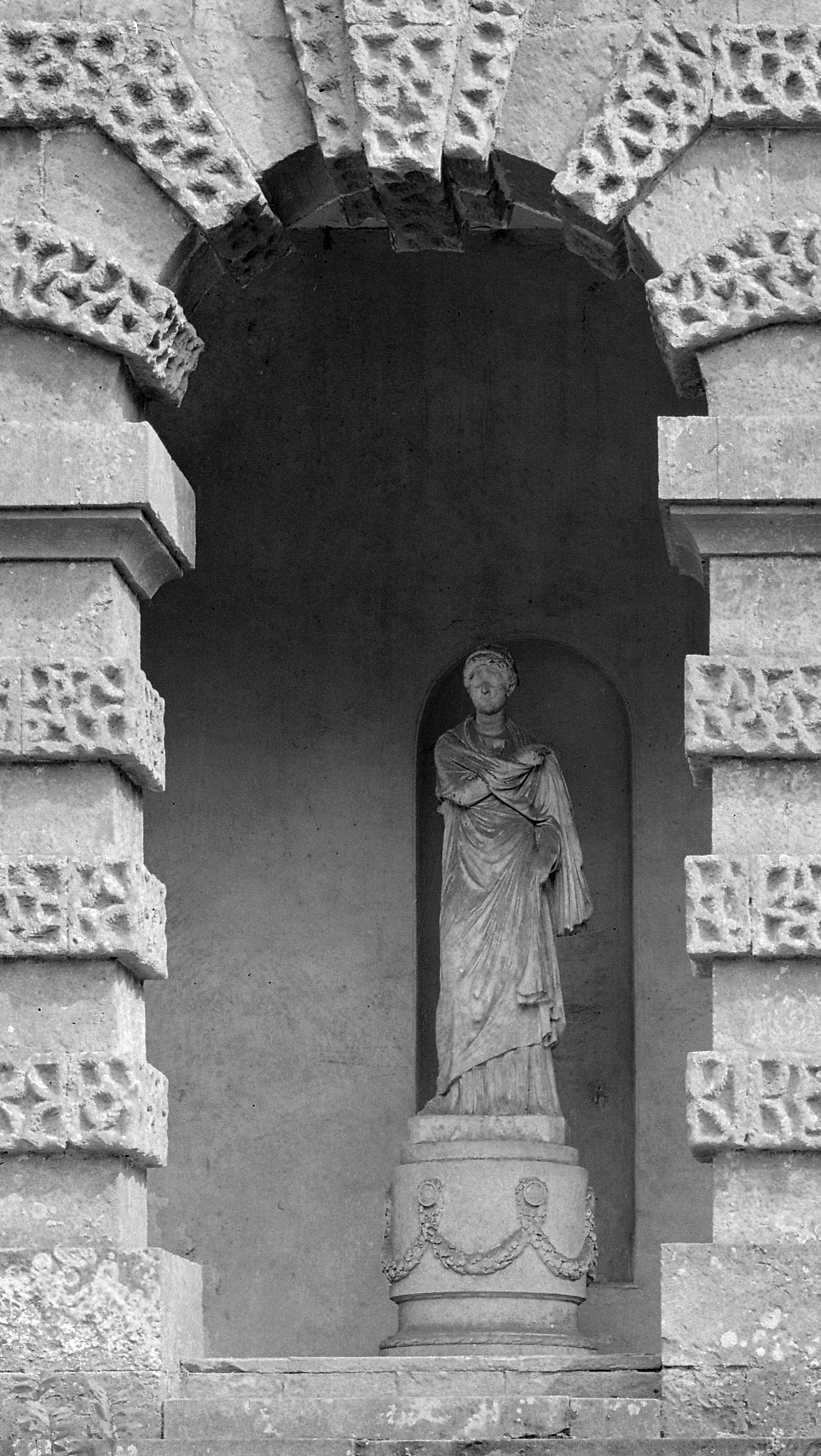
The statue standing on its plinth in the 1920s.

Describing his visit to the grounds Angiolini describes the long-lost statue in the Echo as being a “good ancient Roman” figure. This is the earliest mention of the statue we’ve so far found and adds considerable weight to our belief that it was a classical era state collected on the continent by one of the Southwell family and transported to the estate. Our identification of the pose as conforming to a standard classical portrait model, retrospectively categorised as “small Herculaneum Woman”, always implied that it was not a bespoke commission for the Echo. Had it been we might expect it to have represented a more recognisable deity.

We might hope that Angiolini’s assessment of the statue is based on a knowledge of ancient examples which, as he notes, survived in far greater numbers in his homeland; his countrymen lacking the same reverence or value that Gentlemen travelers from Britain attributed to them.
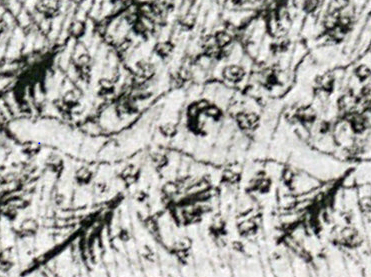
 detail of Isaac Taylor's estate  plan of 1772

detail of Isaac Taylor’s estate plan of 1772

Sadly it’s likely that the only confirmation of the statue’s origins might come if it can be located, perhaps still, where anecdotal evidence suggests, tipped of off the terrace wall and into the ash pile close to the house.

Angiolini also treats us to another revelation about the landscaped grounds; He mentions an “artificial cave”, made of wood, and hidden in a grove of evergreens. Five years ago we identified an unusual feature in a 1772 map of Penpole Wood which may correspond to Angiolini’s cave, and, at the time, we tentatively attributed it to the landscape designer Thomas Wright. Since then we have proven Wright’s involvement in the design of the Kings Weston grounds and the description of a rustic wooden cave, intertwined with ivy, compares favorably with other known examples of then-fashionable grottoes and seats in Arcadian settings.  Such examples of “grotesque architecture” were perishable by nature, an intentional contrast to the permanence of classical garden temples, and so often decayed unrecorded, but a quarried area adjacent to one of the paths through the woods corresponds to the map location.

An example of one of Thomas Wright’s designs from his book “Universal Architecture”

We are left to imagine what the structure looked like, but the closest example is the root house at Blaise Castle Estate. This was recorded by the artist Samuel Hieronymous Grimm the year after Angiolini’s visit to Kings Weston. Angiolini doesn’t mention visiting Blaise in his writings, and travels quickly on to Aust and the ferry to Wales. We trust that in describing the example at Kings Weston he was not conflating it with a similar rustic seat on the adjacent Blaise estate.
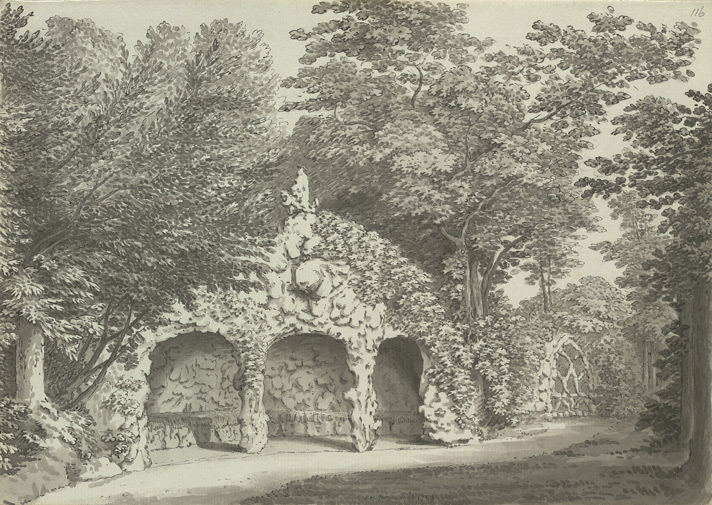
The root house at Blaise Castle depicted by S H Grimm in 1789 (British Library)

A full translation of Angiolini’s description of Kings Weston follows:

“It was a total satisfaction to visit the palazzo of the Lord; It is not big, but is tasteful, with portico supported by columns in Palladian style, which I liked. I will not speak at length about the different parts that compose it; the paintings are mostly Italian, few originals, many copies, including some very good. I was occupied with the pleasure gardens, even those said orchards, namely gardens of fruits and green vegetables. I will not dwell on the way they are maintained; It would be easier to perform than to describe what I observed. The park, which is well cut with many majestic evergreen trees, obliges one to take a path which is long but not tiring, because one is amused by many diversions of variety and innovation. If ever you came into these parts, do not neglect to educate yourself of a point half a mile from the palazzo, from which you can discover all the Bristol Channel at once, the outlet of ‘Avon into Severn, the Counties of Somerset, Gloucester and Wilts, and a large tract of country of Wales. In the Gardens there is a good ancient Roman statue for which a temple has been built, if not very large, very elegant and dignified. In England, perhaps for the rarity, you have a respect and a reverence for old things that we, too abundant of them, do not. In the midst of an evergreen grove, there is a pleasant surprise, a kind of hidden cave, made of timber and artificially covered in ivy that appears alive. Englishmen are unique in their knowledge of how to contrive art from nature. “
Georgian marker rediscovered.      

The Georgian boundary marker recently uncovered.

We’ve recently uncovered an Eighteenth Century boundary marker that has been lost for some time. Only know through a photo included in Shirehampton: The continuing story, by local historian Ethel Thomas, the stone  lies within the Georgian landscaped Shirehampton Park portion of the estate; or rather it did before both the routing of the railway and then the A4 Portway between the parkland and the river.

Dated 1770 it bears a series of carved letters which Professor Richard Coates of UWE has interpreted as “St. P. H”, though the ‘S’ has been badly eroded. He further suggested that it related to St Peter’s Hospital, a Bristol institution that held a number of parcels of land around Shirehampton in the 1700s.

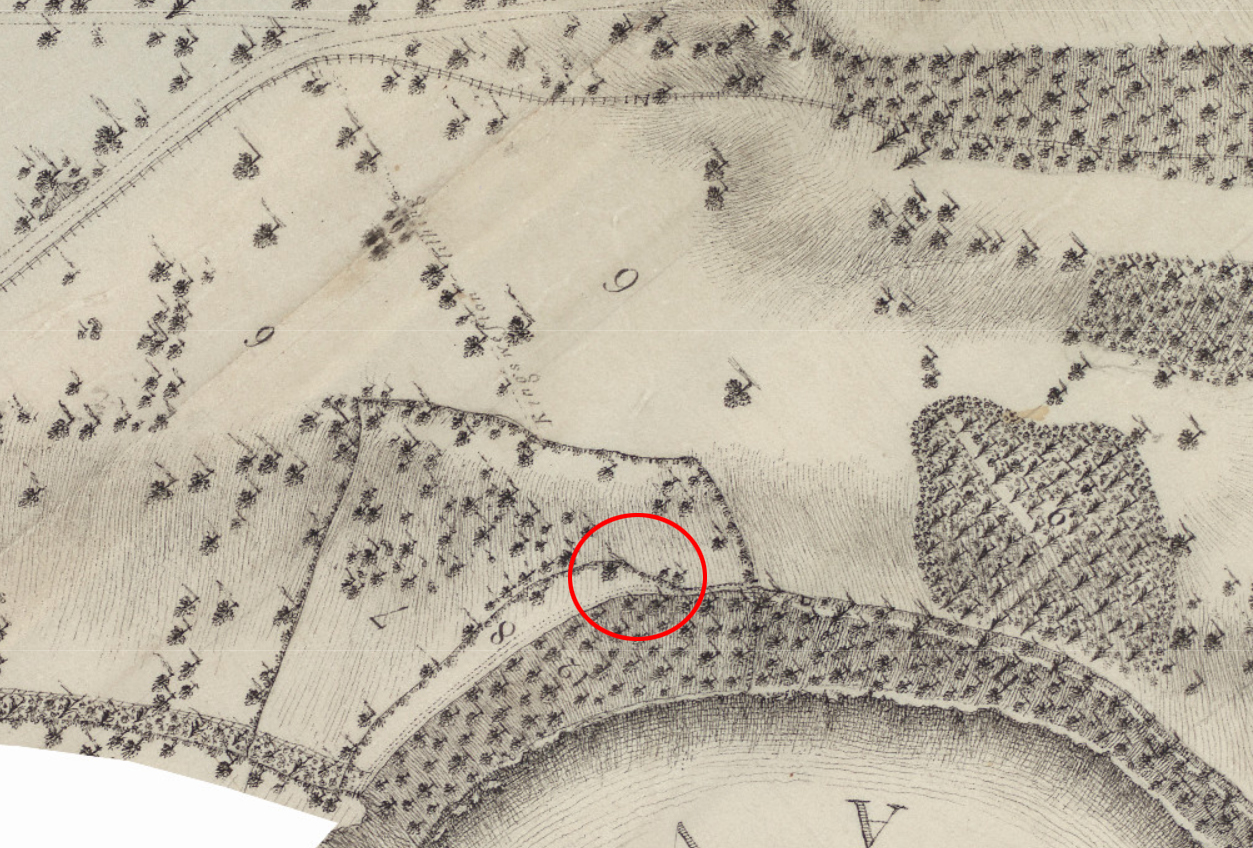
The stone was moved during Twentieth Century and the  civil engineering works for the Portway, but it is likely that it stood at one end of a narrow strip of land above the Avon called Bucklewell Field, and marked the point on a footpath between the Kings Weston estate, owned by the Southwell family, and this smaller piece of land.

Though the stone was uncovered again recently the brambles are likely to reclaim it quickly, but we’ve made sure its location is recorded along with a photo on the Councils Know Your Place website HERE.

The 1772 estate plan of Shirehampton Park showing the approximate location of the boundary marker 

Do you remember… Photographic reminiscences from the 1960s


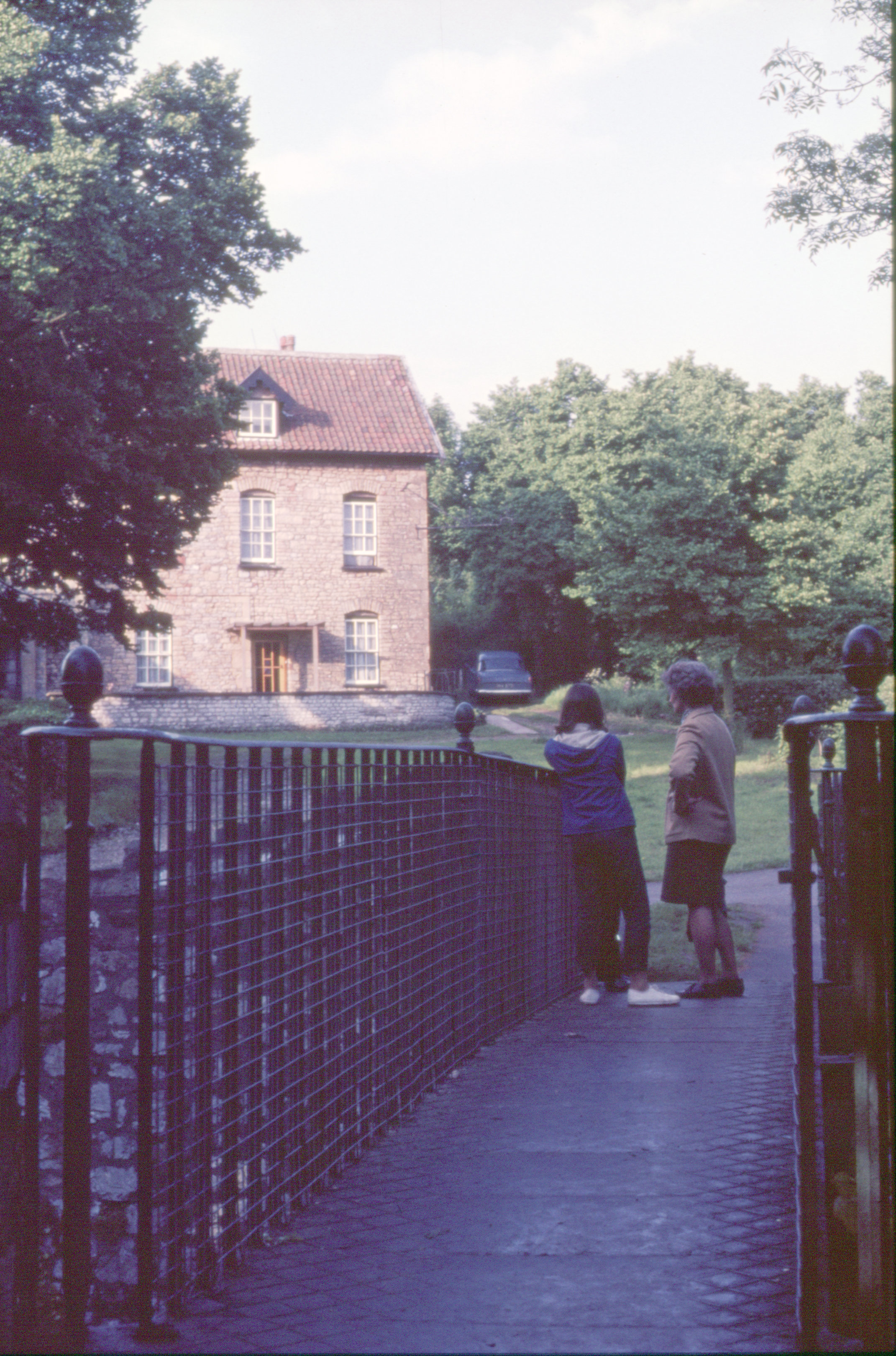
The Iron Bridge and old Inn in 1968. 

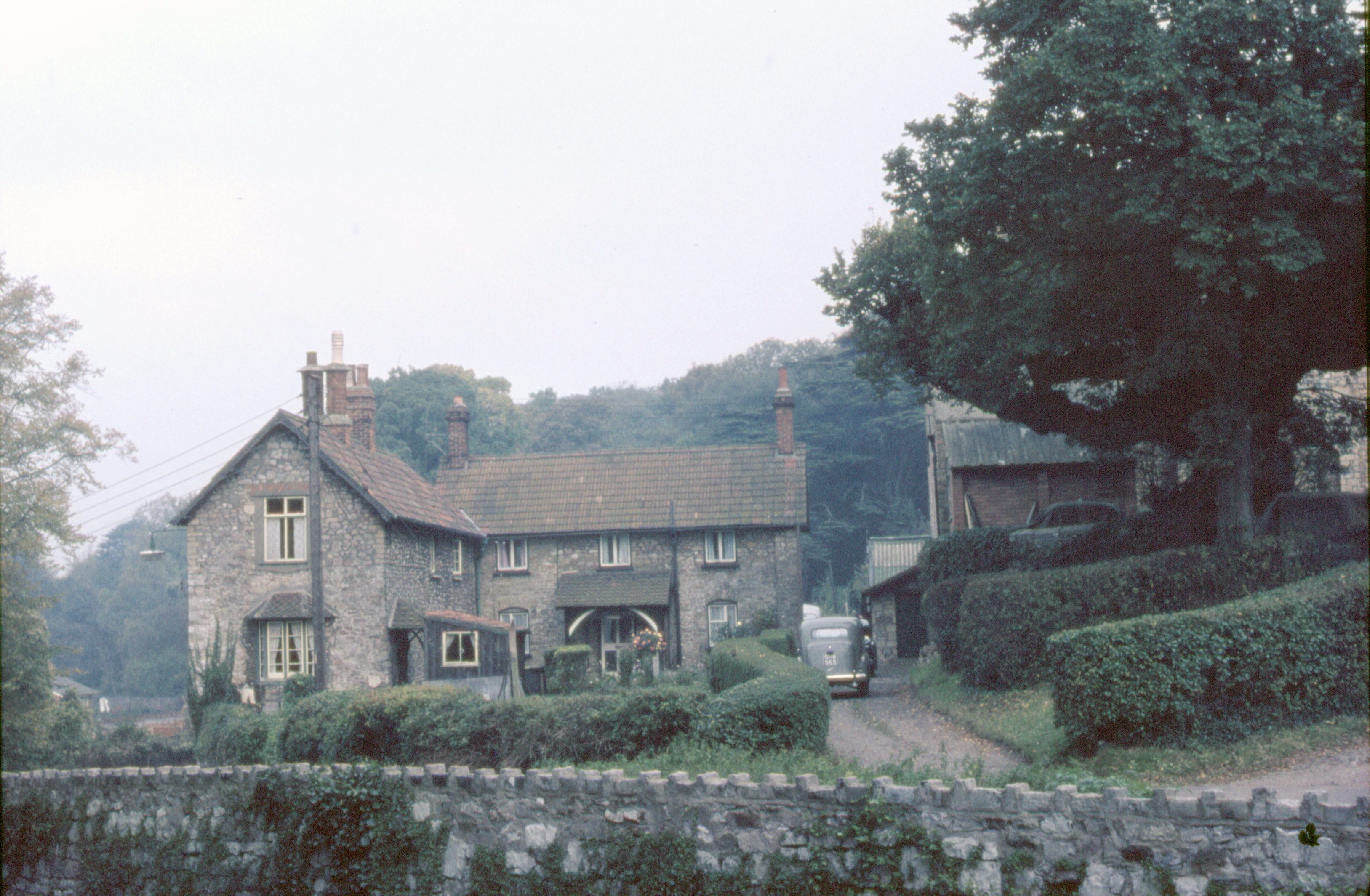
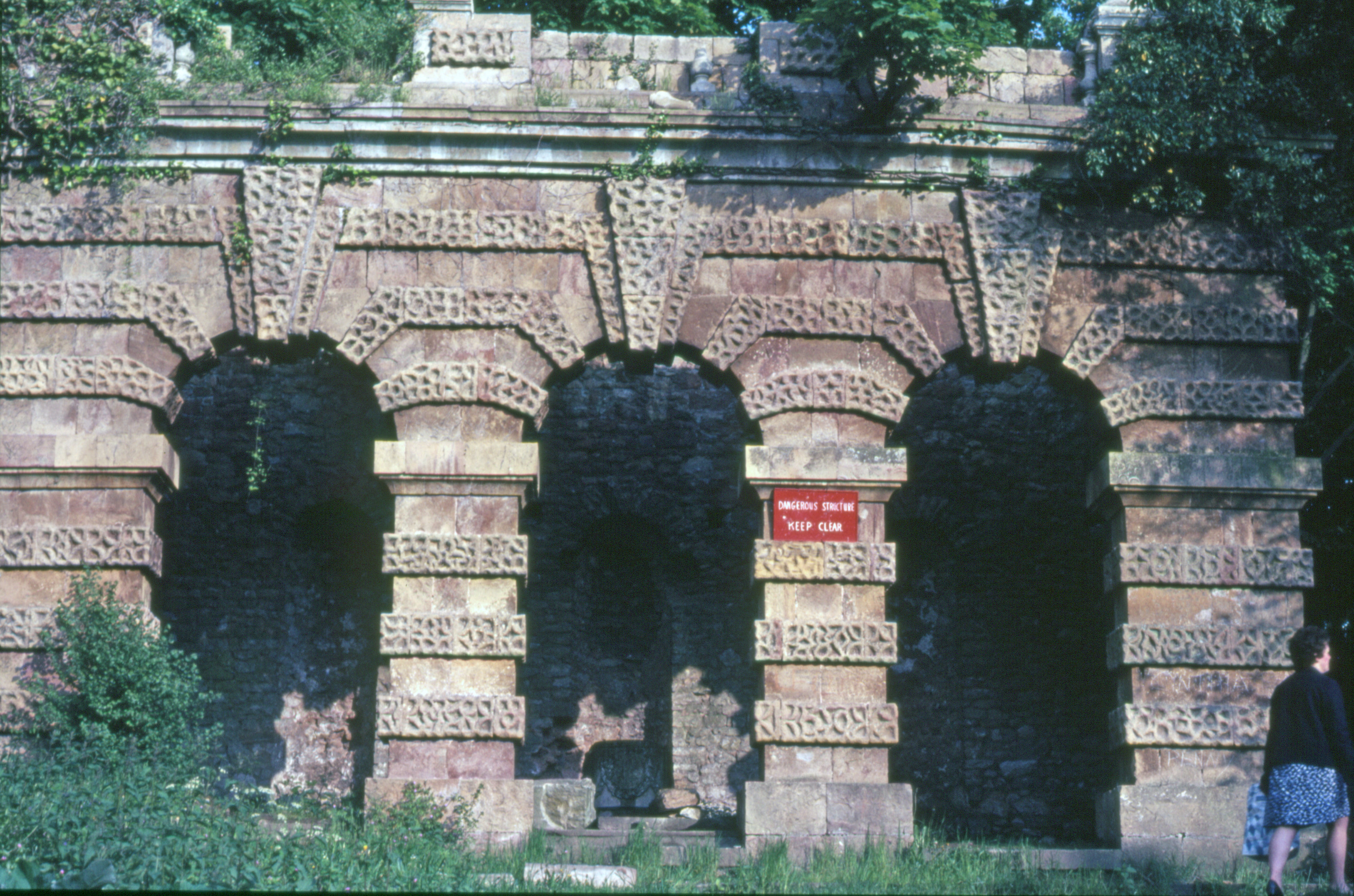
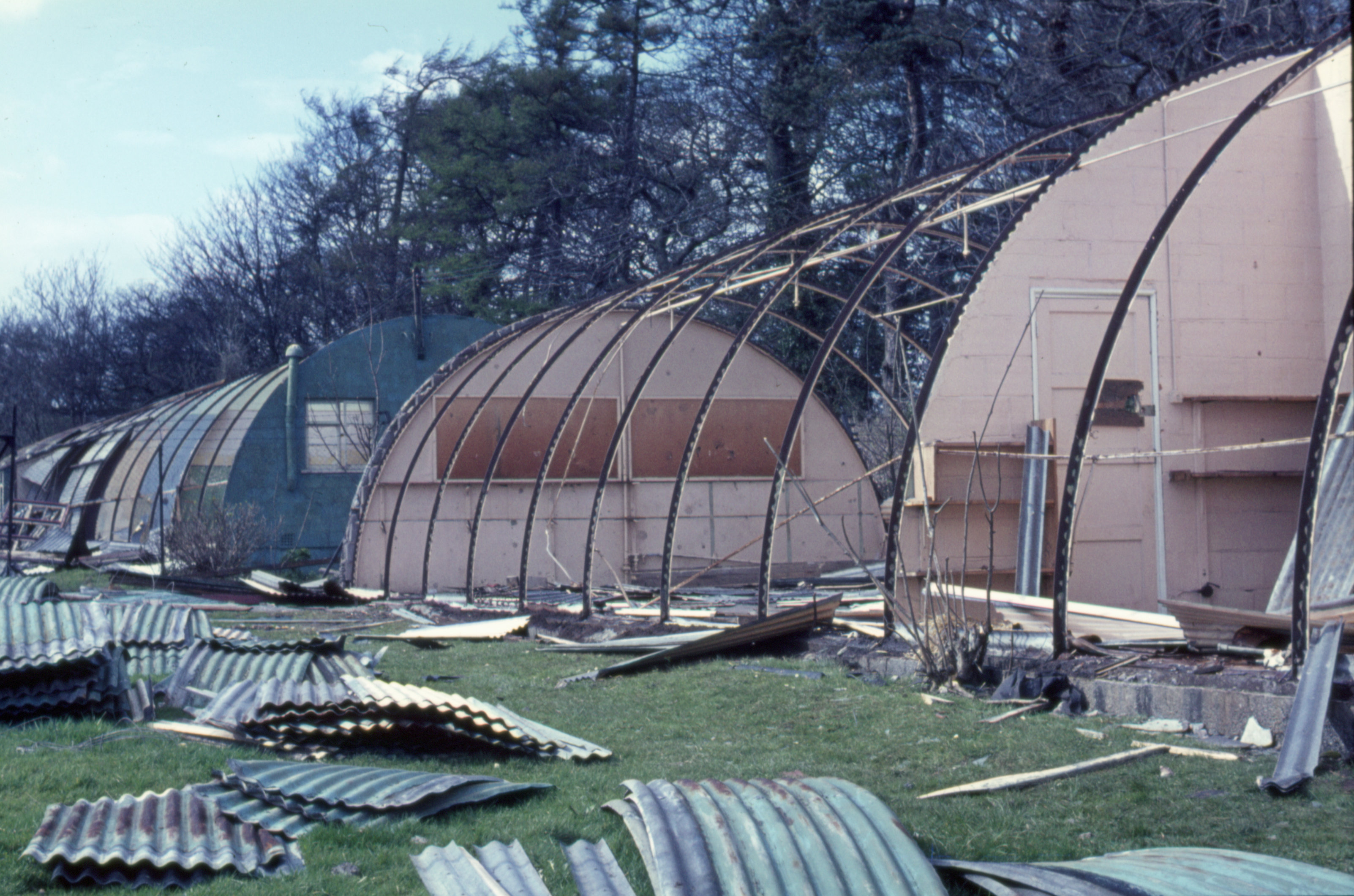
KWAG were approached recently by one of our followers, Steph Gillet, with a collection of scanned photos of the estate dating from the 1960s. The photos show the estate in decline after the Second World War, though some parts are is surprisingly good condition; The Iron Bridge and the Inn Cottages on Kingsweston Hill for example, look neat and well cared for. The Echo is shown in 1968 in a perilous condition with the parapet fallen and without its famous baroque urns. Elsewhere on the estate, on Penpole Lane, the remains of Nissan huts along the woodland edge in 1965 waiting to be removed.

Old Inn Cottages in about 1965
The Echo in 1968 with much of the architectural detailing lost and a warning sign hung on the front
Nissen Huts being dismantled from Sea Mills Camp B on Penpole Lane in 1965


The farms of Kings Weston

Professor Richard Coates of the University of the West of England has been a regular contributor to academic research on the Kings Weston Estate. Recently he has completed work on a paper detailing the fascinating history of the many farms that lay within the wider ownership of the families who held Kings Weston House. The majority have their foundations in the land improvements undertaken by Sir Robert Southwell and his heirs though some may have their origins in earlier times. Sir Robert was President of the Royal Society and in the 1690s he employed another of its fellows, and close friend, Robert Hooke to design a new sea wall to protect his farmlands from inundation from the Severn. After this work was completed the Southwell family could start developing the floodplain with confidence and throughout the Eighteenth Century new farms were developed for leasing onwards. 

Sea Mills Farm now on Bowerleaze, but dated 1710
Campbell Farm on Kings Weston Lane. 

Whilst the majority of the farmland owned by the Southwell’s stood to the north of Kings Weston house the estate boundary encompassed lands on the south side of the Kings Weston Ridge, stretching as far as Sneyd Park. The area now covered by Sea Mills also incorporated several farms and other buildings that contributed to the annual income of the estate. 

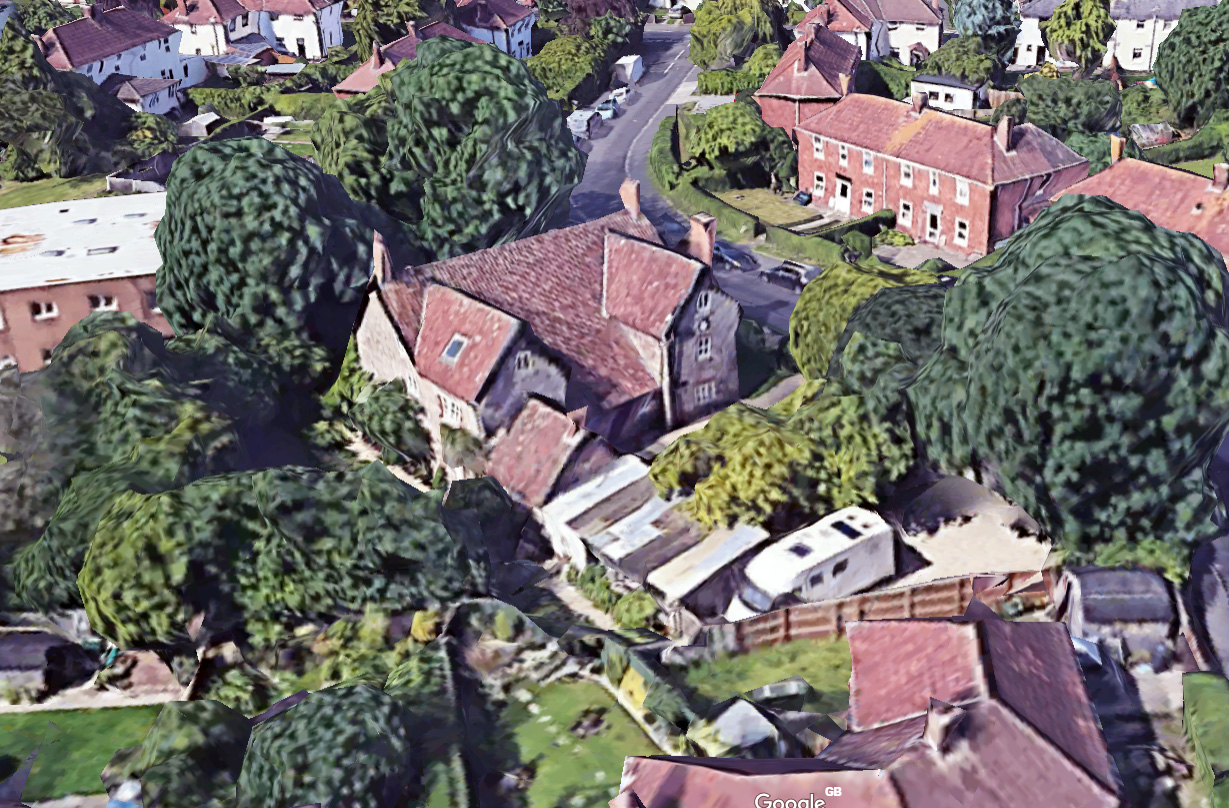
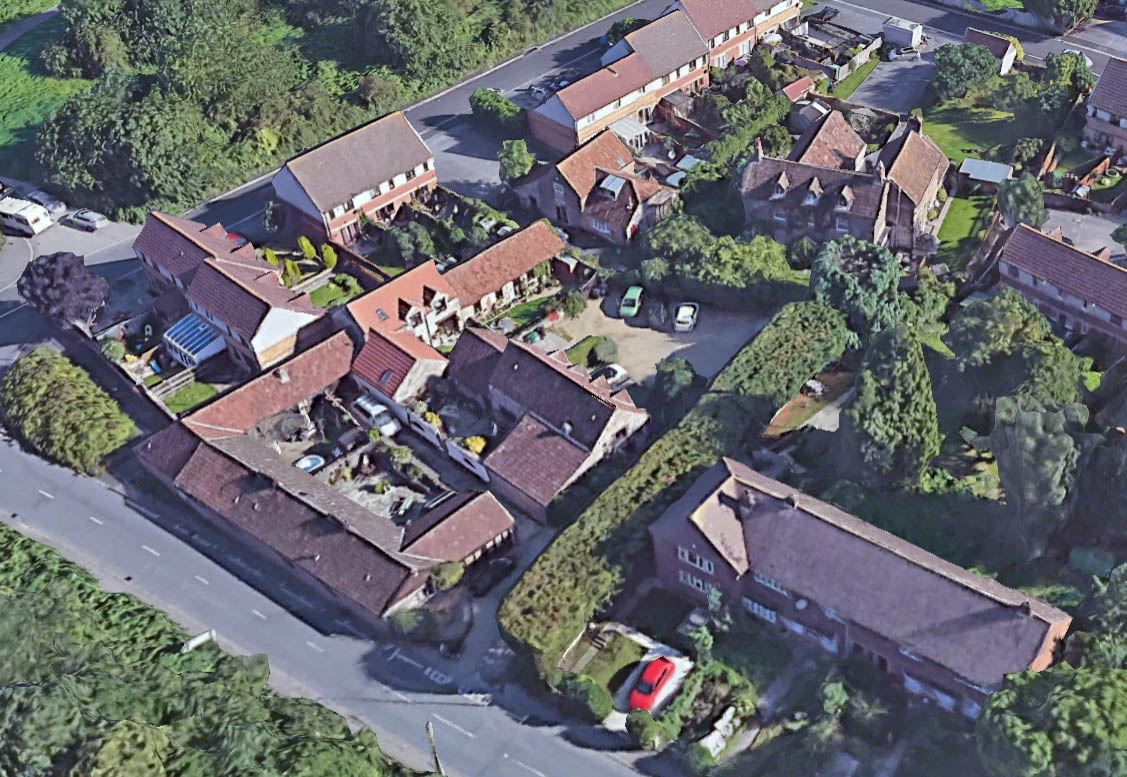
Professor Coates research identifies eighteen farms within these two areas, split by the Kingsweston ridge on which the mansion sits. Many of the buildings of these farms remain today, hidden amongst more recent housing estates. Lost fragments lie scattered in industrial estates, and other have vanished entirely, known today only through historic maps or road names.  Perhaps the most interesting collection of farms are those  that were given family names of the Southwell Family. The best preserved of these is Campbell Farm just to the north of Long Cross on Kings Weston Land. Here there is a good collection of former farm buildings that date from the Eighteenth Century and have since been converted to residential use. This farm would have formed part of the extended village of Kings Weston before it was swallowed up by the post-war Lawrence Weston housing estate.   

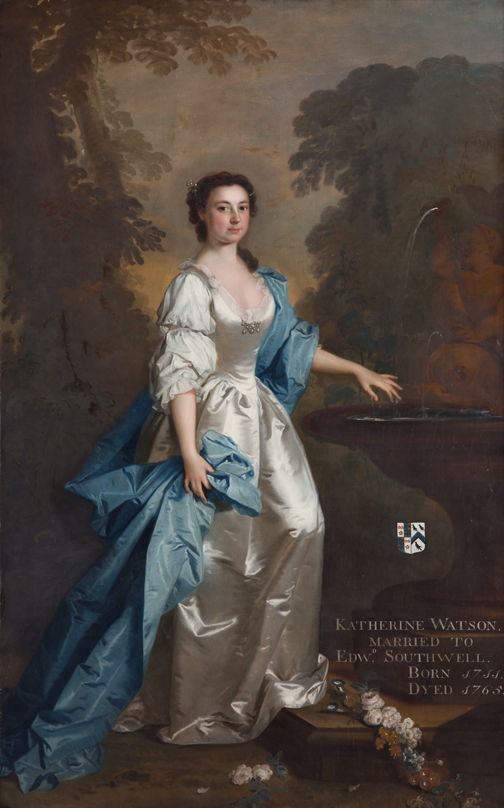
Katherine Watson, wife of Edward Southwell II, after whose family many of the farms were named. 

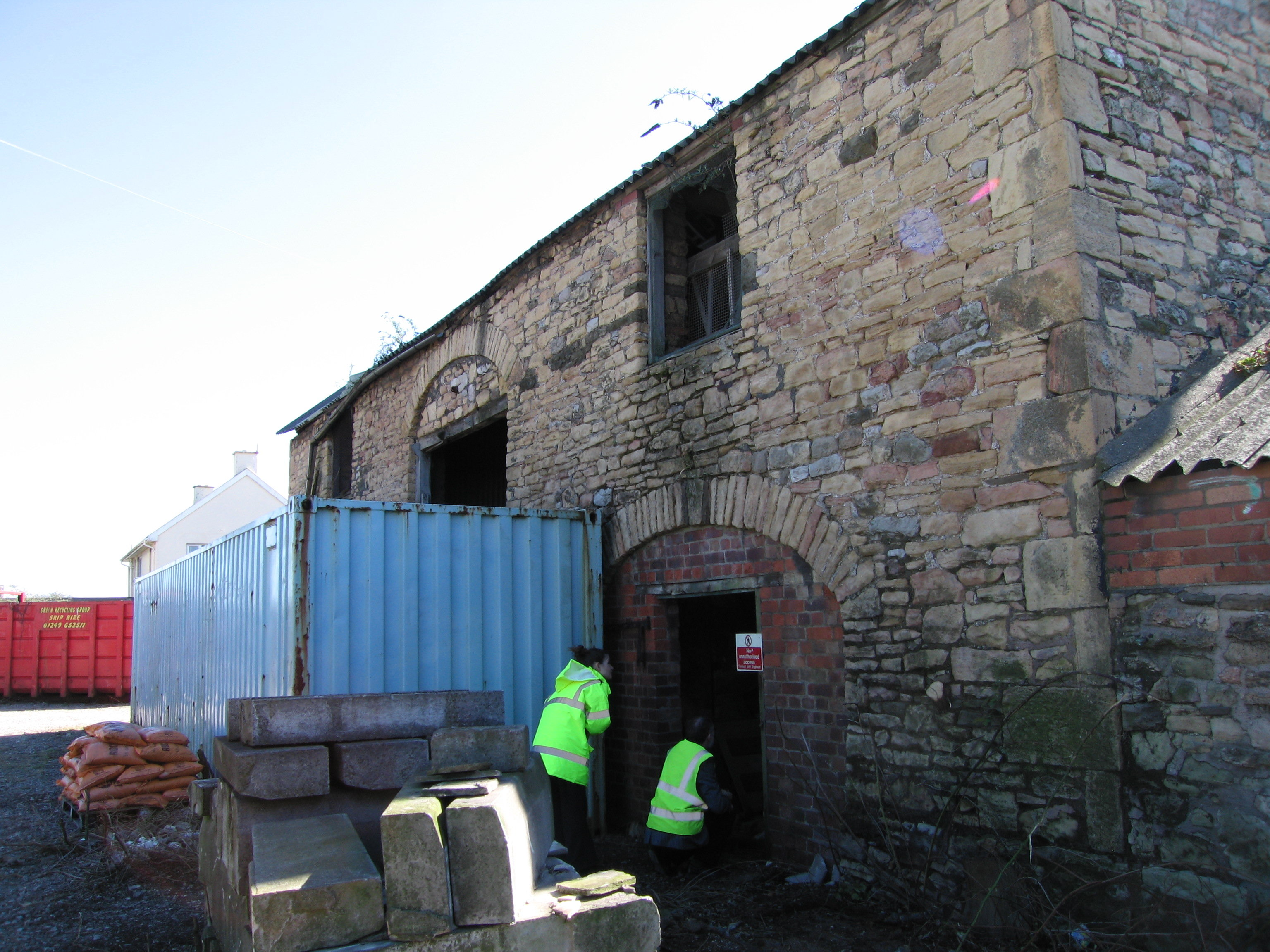
Other farms in this collection are Cromwell Farm, named after Lady Elizabeth Cromwell who married Sir Robert’s son, Edward, Rockingham Farm, named after the noble family title of Edward Southwell II’s wife Katherine, Watson Farm taking the same lady’s surname, and of course Katherine Farm itself at the far northern extremity of the Eighteenth Century estate. The last fragment of this farm is a stone barn still standing on the edge of the modern sewerage works, but the grandiose farmhouse has sadly long gone. 

If you would like to read the full paper Proffessor Coates has kindly allowed us to host it on KWAG’s website and can be viewed and downloaded here: http://www.kwag.org.uk/wp-content/uploads/2018/06/KWFindependent.pdf

Kings Weston
Katherine Farm in the 1950s from Know Your Place
The Georgian barn; the last fragment of Katherine Farm on Lawrence Weston Road.

The yew trees talk to us

the recently revealed line of yews looking up the slope towards the main path 

We’ve made a habit recently of clearing undergrowth and revealing some majestic trees in the woodland, but it’s easy to forget that this wilderness was once all part of a designed landscape; Our April  Working Party uncovered more trees that help tell that story. Just to the north side of the main path through the woods we discovered a line of three mature yew trees, clearly planted in an intentional line, and with the stumps of a fourth and fifth tree nearby and to the same spacing.

the boundary of the woods shown in 1772

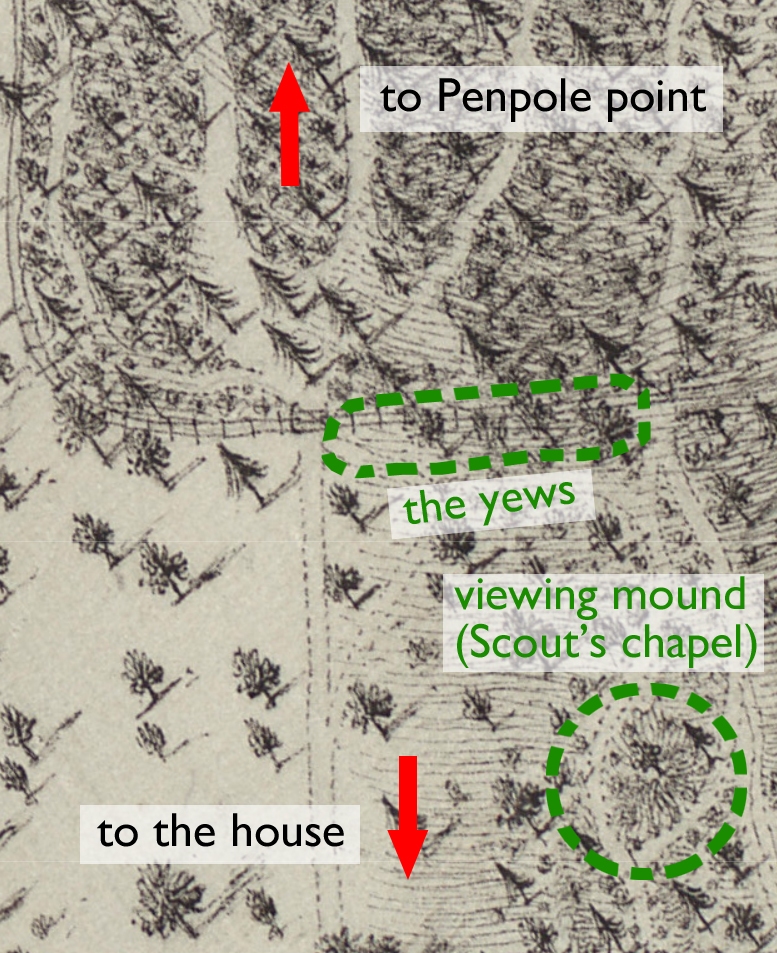
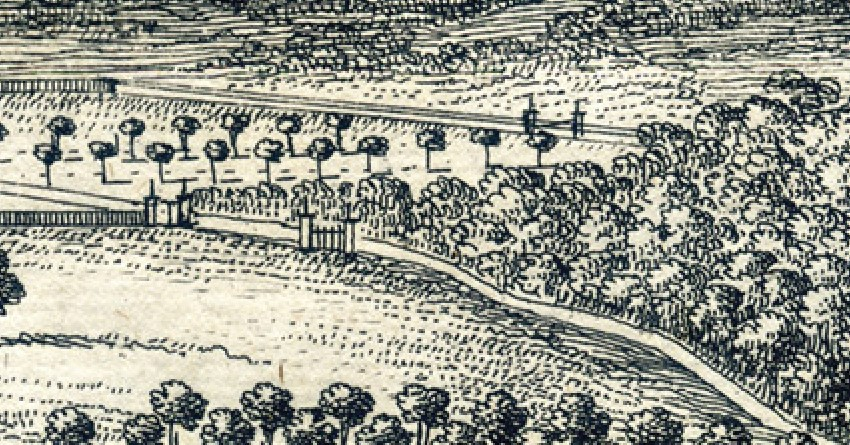
Yew are something of a tell-tale species at Kings Weston; whilst their scattering may at first seem random through the woodland many relate to historic planning schemes and features. When compared with historic plans and illustrations the significance of the yews becomes more clear. The three yews we rediscovered last month run along a former boundary between the more open parkland to the east, and the long-established woodland to the west. Originally a wall formed this boundary, with a set of gates straddling the main path, but, by the 1770s this had be de-formalised and  instead an iron park fence replaced it. An estate plan from this date clearly shows the planting of trees on the outer edge of it and the yews are certainly the same ones described in plan.

the walled boundary and gates into Penpole Wood in 1710

This is not the only instance of yews indicating lost historic features. Further along the path through the woods to Penpole Point you will encounter many more, frequently grouped around certain points. A careful comparison between these locations and an earlier estate plan of 1720 suggest that these are the remains of woodland saloons where viewing corridors were cut through the trees northwards towards the Severn and Wales beyond. Whether these yews were planted as a deliberate grove, or whether they are the vestiges of a more formal hedged circle can’t be established, but their planted locations are not coincidental.

Penpole Wood in 1720 showing the main path and circular saloons with viewing alleys cut through the trees. 

Our next Working Party will reveal another designed feature in which yews feature prominently: an avenue of mixed yews and oaks leading from the ruins of Penpole Lodge to the Jubilee Clearing. This strip of land is a curiosity. In 1772 the park boundary appears to run just above the main path through the woods, so this elongated sliver of land between that path, the current boundary wall, and running as far east as to incorporate the clearing, is outside the woodland. By 1840 the park boundary had been pushed out to its current extent and the line of yews planted. The planting defining the clearing (along with more cherry laurel) appears to have been laid out at the same time. This may all have been the work of the last of the Southwell family to live at Kings Weston , the 21st Baron de Clifford. He was known to be a keen planter and the dates, between 1777 and 1832, and the enclosure Acts would fit this incursion onto the common land.

So next time you are walking through Penpole Wood keep an eye open, and next time you spot a yew ask yourself what it might be telling you about the lost historic landscape and the people who created it.

Historic letter by Sir John Vanbrugh returns to Bristol

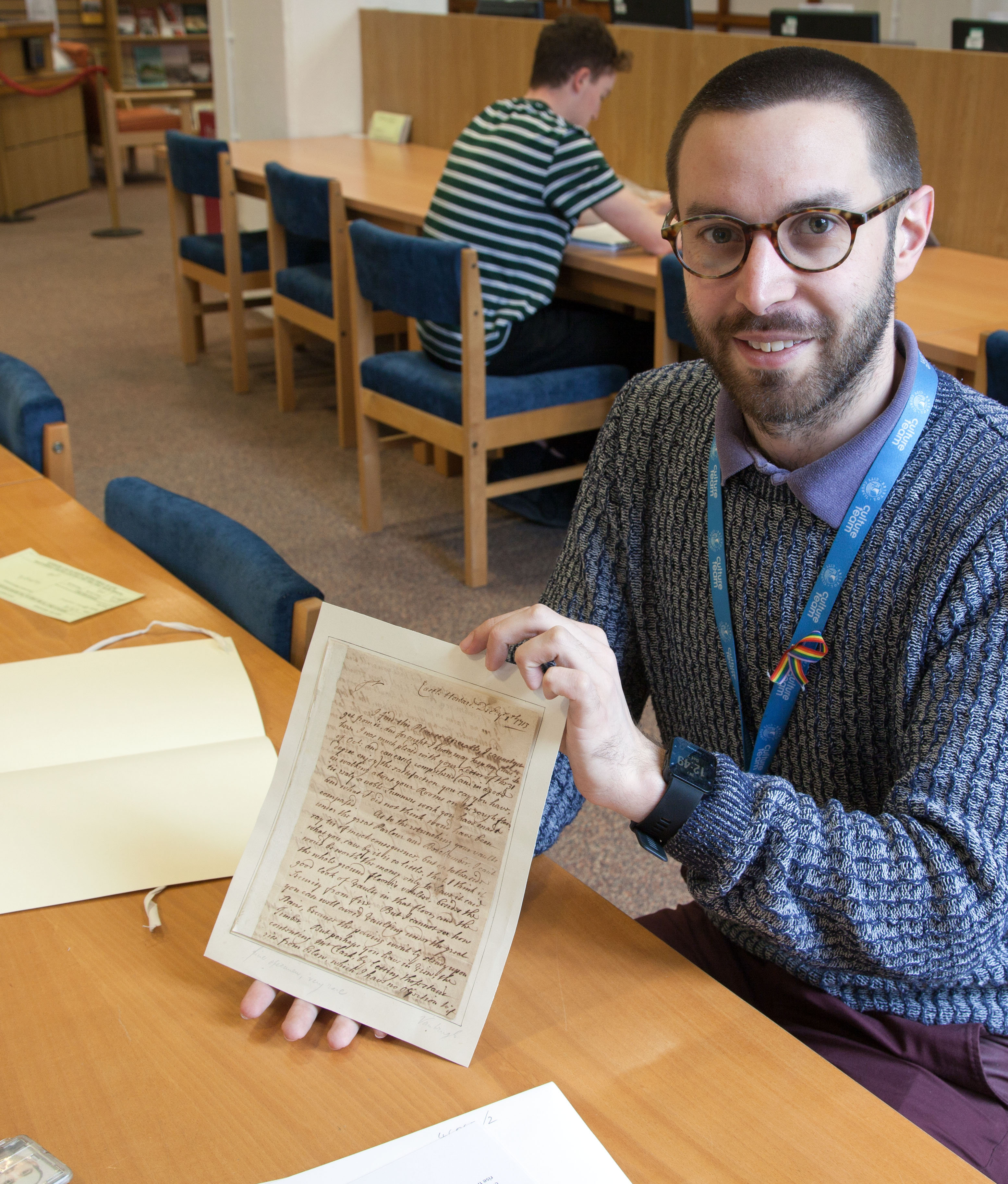
Archivist Mark Small of Bristol Archives holds the newly delivered letter

We’ve had confirmation this month that the missing Sir John Vanbrugh letter has arrived at Bristol Archives! We remain hugely grateful to everyone who donated to our short campaign to bring the document back from the USA, and to the Friends of Bristol Museums, Art Galleries, and Archives for their partnership in securing it. The letter has now been accessioned and is available for anyone to study, though is not yet included on the public catalogue.


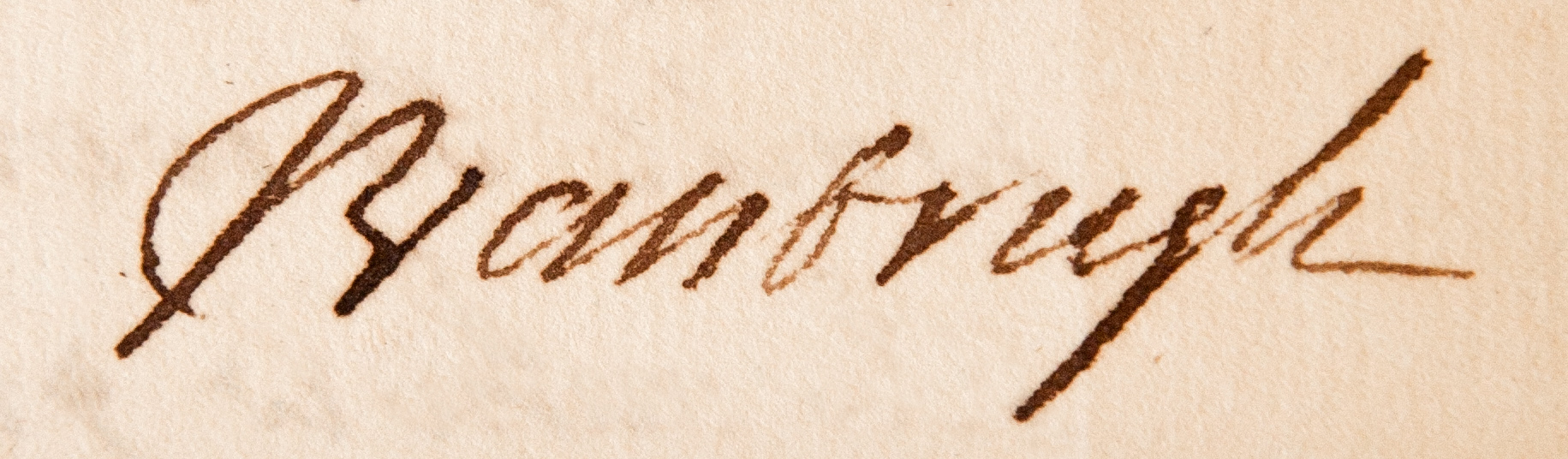
Architect Sir John Vanbrugh’s signature from the letter. 

The Southwell’s and the Slave Economy: Report 

The 17th of last month saw Kings Weston house host a talk, and discussion, on the slavery connections of the estate. Dr Madge Dresser, of the University of the West of England and KWAG’s chairman David Martyn tried to put the complex relationships between the Southwell family of Kings Weston and their associations with the Atlantic Trade and slavery into context. Dr Dresser began the evening by explaining the many ways in which historic estates such as Kings Weston could be said to have slavery connections. She outlined the Atlantic trade of the Seventeenth and Eighteenth Centuries and how almost every aspect of it had some relationship with slavery and the direct “triangular trade” connecting Europe, Africa, and the colonies of east-coast America.

The Oak Room was packed for the talk. 
East Florida in the Eighteenth Century, where the Southwells had plantations. 

Mr Martyn sought to tease out the members of the Southwell family and their relationships with the Atlantic Trade. Whether family members were administering government departments, promoting political causes, or involved in plantations it became clear that there were many blurred edges in how their actions could be interpreted. The most direct unequivocal involvement was Edward Southwell III’s grant from the Crown of 20,000 acres of land in East Florida to settle, and the development of that land with plantations worked by black slaves.

The debate following the two presentations mainly revolved around the extent to which Kings Weston could be considered an estate that had benefited from money derived from slavery or the Atlantic Trade. Although the East Florida plantations had collapsed in massive debt, there were members of the Southwell Family who were complicit in enabling the trade to continue. It was difficult to identify any direct financial benefit from the trade that could be linked to the house and estate, but it was largely unanimous that the connections needed to be acknowledged and accepted. The evening was rounded off with continued discussions over drinks at the bar.

Sophia Southwell, wife of Edward Southwell III, 20th Lord de Clifford, and her children by Daniel Gardner. Painted circa.1775, a time at which the family were speculating in plantations in East Florida, but amounting considerable losses. 

Recently acquired painting of Shirehampton Park.

The golf course on Shirehampton Park often puts off potential visitors, but it remains an integral part of the historic landscape. This oil painting, “In Shirehampton Park”, recently surfaced showing the pastoral scene in the Edwardian Era. The Golf course began in 1904 and extended to eighteen holes in 1907. This painting shows the scene before the setting out of the course in the eastern side of the park, and illustrates the rolling pastures dotted with parkland trees which sadly have not survived later landscaping schemes.

The artist. CW Goodridge, was apparently an amateur, but anyone with further details of him or his work would be very welcome.

“In Shirehampton Park”, CW Goodridge, early Twentieth Century  

Historic Vanbrugh Letter saved for the nation!

There has been some incredible generosity from KWAG members over the last couple of weeks in their support of our campaign to repatriate a letter written by Sir John Vanbrugh regarding the construction of Kings Weston House. We are delighted to announce that we’ve met our fundraising target of £500 to bring the letter back to Bristol in partnership with the Friends of Bristol Museum and Art Gallery. Our contribution will now be added to the £900 the Friends have granted towards the purchase, and the letter added to the collections of the Bristol Archives at B-Bond in Bristol. Once it arrives, and is appropriately conserved, the letter will be available to study by anyone, and we hope that an exhibition celebrating its acquisition might be a good way of thanking the donors.

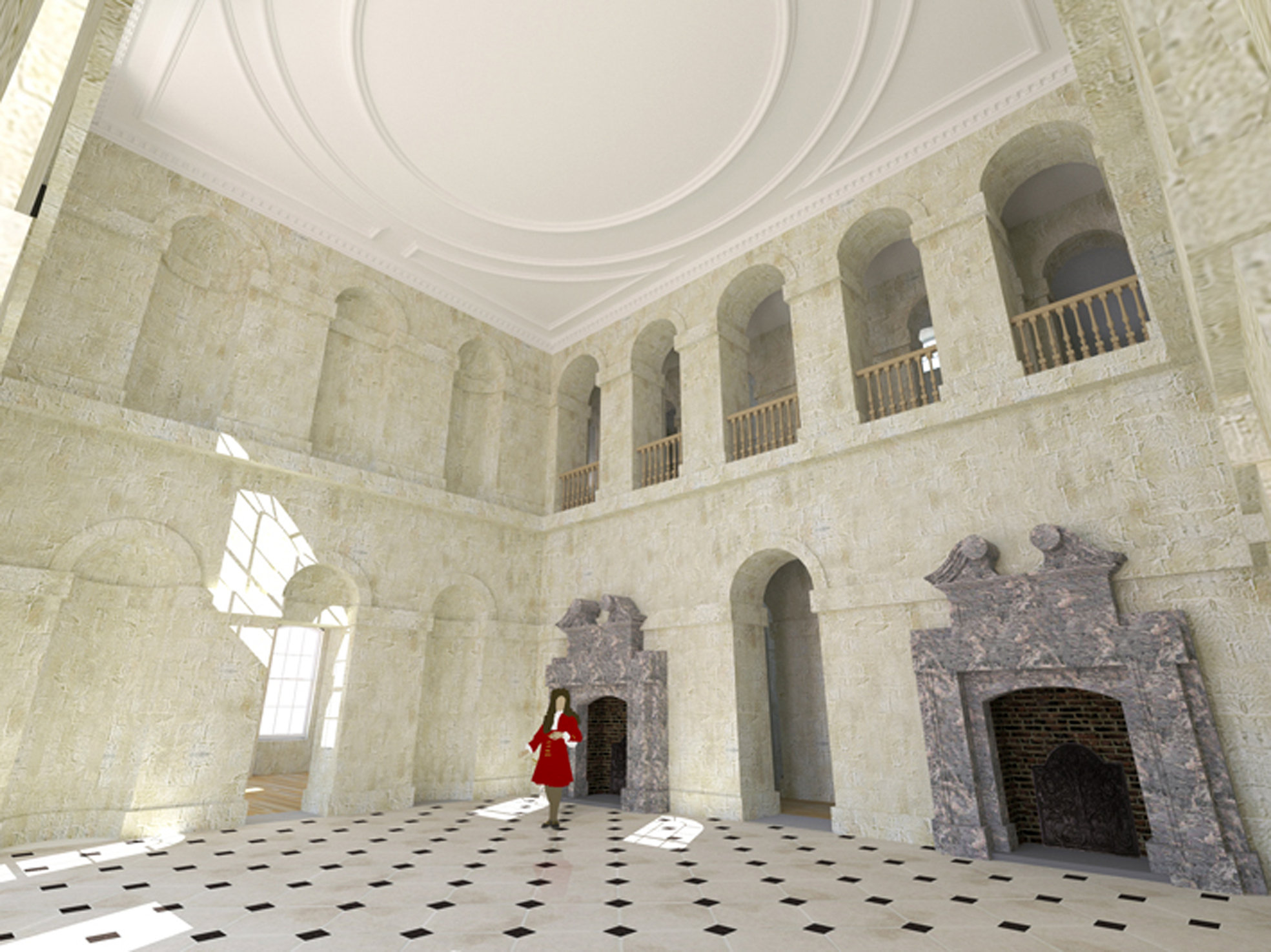
Reconstruction of the Saloon as originally designed. 

The letter now in the process of acquisition dates from December 1713, a time when Edward Southwell was able to walk around the rough floors of the house. From a letter the same September, also in the Archive, we know that it had taken just fifteen months to build the walls of the house up to roof level and have begun leading the roof. In the December letter Vanbrugh discusses Edward Southwell’s hopes to cut costs by leaving out the stone vaults of the basement level which, apparently, were only constructed after the shell of the house was already complete. We also discover that the original plan was to have a stone floor in the great stair hall. Whilst the change to a timber floor appears to have been undertaken against Vanbrugh’s advice Southwell’s idea to extend the stair itself into the cellar was, fortunately, abandoned in favour of the “Little Stair” that was still in construction.

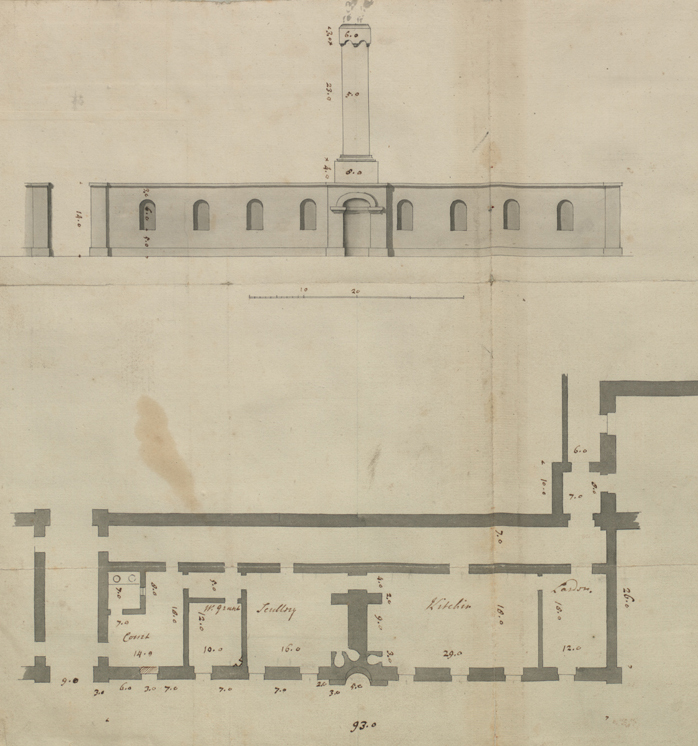
Vanbrugh also discusses the plans to build his intended Kitchen wing at the rear of the building; this structure was built, but later demolished and replaced a few decades later. The letter confirms Vanbrugh’s authorship of the Great Terrace and, from what he writes, he is clearly pleased with Southwell’s decision to execute his designs for it.

Whether Vanbrugh ever returned to Kings Weston in the Spring of 1714 as he promised is not known, but certainly he was keen to make a “trial with boards” to make sure the distinctive chimneys made the effect he intended.

We’re grateful to Mark Small from Bristol Archives for transcribing the whole letter and presenting it along with images of the original. It can be viewed as a PDF here.

Vanbrugh’s original design for the kitchen wing, attached to the north corner of the main house 


The Home Guard at Penpole Lodge

Another foray into the Bristol Archives has uncovered a new photo. The image shows the Home Guard in an official photograph, lined up at Penpole Point close to the end of the Second World War in 1944. These men were part of “C” Company of the 14th Battalion of the Home Guard.

The Home Guard at Penpole Point in 1944. Part of the Ethel Thomas Collection at Bristol Archives. 
The ruinous condition of Penpole Lodge in about 1950

During the war the Home guard used Penpole Woods and the Home Park at Kings Weston, at that time the District Scout Camp, for training purposes. In 1940 they even requisitioned the tower of Penpole Lodge. The Scouts, who still owned the building observed “some concern the activities of the home guard when they took over the tower” and their site warden recalls in his diary of the time that “In the autumn of this year  the Home Guard, or the LDV’s as they were then called, took over the tower as an observation post. They stayed until the Spring. Poor old tower – it bears its scars from friend and foe now. Still we won’t say too much about that; but it’s another job to be attended to after the war.” The journal now also forms part of the Bristol Archives collection.  

It is not clear exactly what damage the Home Guard might have inflicted on the tower, but this, and further vandalism by “Local toughs” in the years following the war, led to the building being ruinous by the 1950s.  

The Home Guard trained in the woodland and camouflage skills were practiced amongst the trees and undergrowth. The warden’s journal for the war years includes some humorous sketches of their activities!  

Humorous sketches abound in MR W Webber’s journal of the Scout’s district campsite (Bristol Archives ref: 45305/1)