Category Archives: Uncategorized

A Century of The Lark Ascending 

 Philip Napier Miles of Kings Weston

This year sees and important centenary for Kings Weston; in 1920 the house hosted composer Ralph Vaughan Williams at the invite of his friend Philip Napier Miles, and together with a gifted violinist Marie Hall, completed work on William’s most famous work The Lark Ascending. Philip Napier Miles was a gifted composer, one might hesitate in calling him an amateur as he’d both published scores and had choral and operatic work performed on the London Stage, but his principal occupation remained focused on being an active member of the landed gentry. It’s not known when Napier Miles and Vaughan Williams first became friends, but it may have been when the latter was studying under Hubert Parry in London. However it might have been its known that Vaughn Williams was a frequent visitor to Kings Weston as a focus for musical life in Bristol.

Napier Miles’s passion for music saw him found several choral societies, and a concert season in the City in the decades before the turn of the Twentieth Century. He keenly promoted classical music and opera and, at one point, was one of the promoters of a plan to develop a festival opera house in Glastonbury to celebrate native English opera and rival Germany’s Bayreuth. In 1902 Miles supported a planned public hall for Shirehampton. Donating land along Station Road, and the sum of £100, he also ensured that the design of the building was adapted for the sort of theatrical and musical performances he loved; this resulted in the addition of a gallery at the back of the hall as one of the more unusual features. He ensured that his estate architect Frederick Bligh Bond was secured for the project to ensure his brief was met for both performance and architectural display. The hall opened in 1904.

Shirehampton Public Hall shortly after opening in 1904. 


Napier Miles had also given musical and financial support to a struggling musician 16-year old Marie Hall at about the same time. He and some likeminded musical friends in Bristol had discovered her and her remarkable talent with the violin when she was virtually destitute and had ensured she’d acquired a full musical education in London and on the Continent. Their dedication paid off and she grew to become an internationally renowned artist, though continued a friendship with Napier Miles and was a frequent performer in Bristol’s concert programme. The stage was then set for these three people, Hall, Napier Miles, and Vaughan Williams, to come together at Kings Weston house and complete work on what would become one of Britain’s best-loved pieces of classical music.

Marie Hall at about the time of the Shirehampton Premiere.

Vaughan Williams in 1920 

The room used by Napier Miles as his music room is today the Kneller Room on the far northern corner of the main floor. It’s one of the smaller rooms in the house, but with once-spectacular views across the Severn. It was here, late in the year in 1920, that the trio would have sat around a grand piano and worked on a planned concert performance in Shirehampton Hall. For it Vaughan Williams had revived an earlier piece of music he’d begin in 1914 but had either never completed, or resolved to his satisfaction. This, The Lark Ascending, would showcase Marie Hall’s skills accompanied only by piano.The premiere was an unremarkable event. The concert was held on 15th December and went without notice in the local press. Marie Hall was accompanied by well-known pianist Geoffrey Mendham. Sadly we are left to imagine how it was received by the gathered audience that evening.

The Lark Ascending received more recognition when it was performed in London the following year with full orchestral accompaniment, but its true premiere is now commemorated at Shirehampton with a brass plaque mounted on the doors. With its romantic violin evocation of lark song strung through the score it’s become recognised as Vaughn William’s master work and is regularly voted as the nation’s most popular piece of classical music. It will be performed again to mark the centenary on the 15

th December by the Bristol Ensemble and we’ll publicise the event closer to the time.  

https://www.bristolensemble.com/production/the-lark-ascending-centenary/
Research Update: Kingsweston Hill in history  

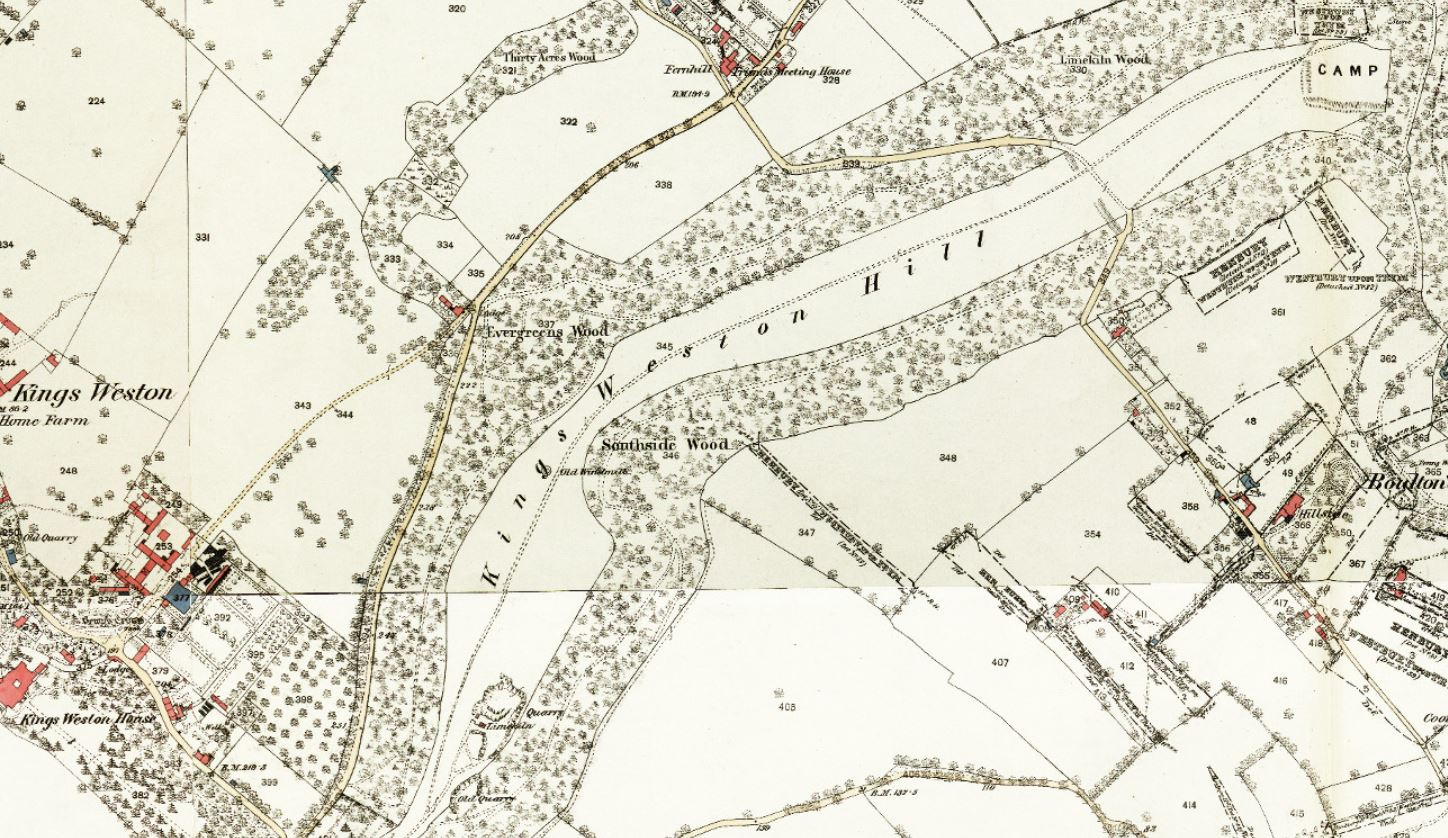
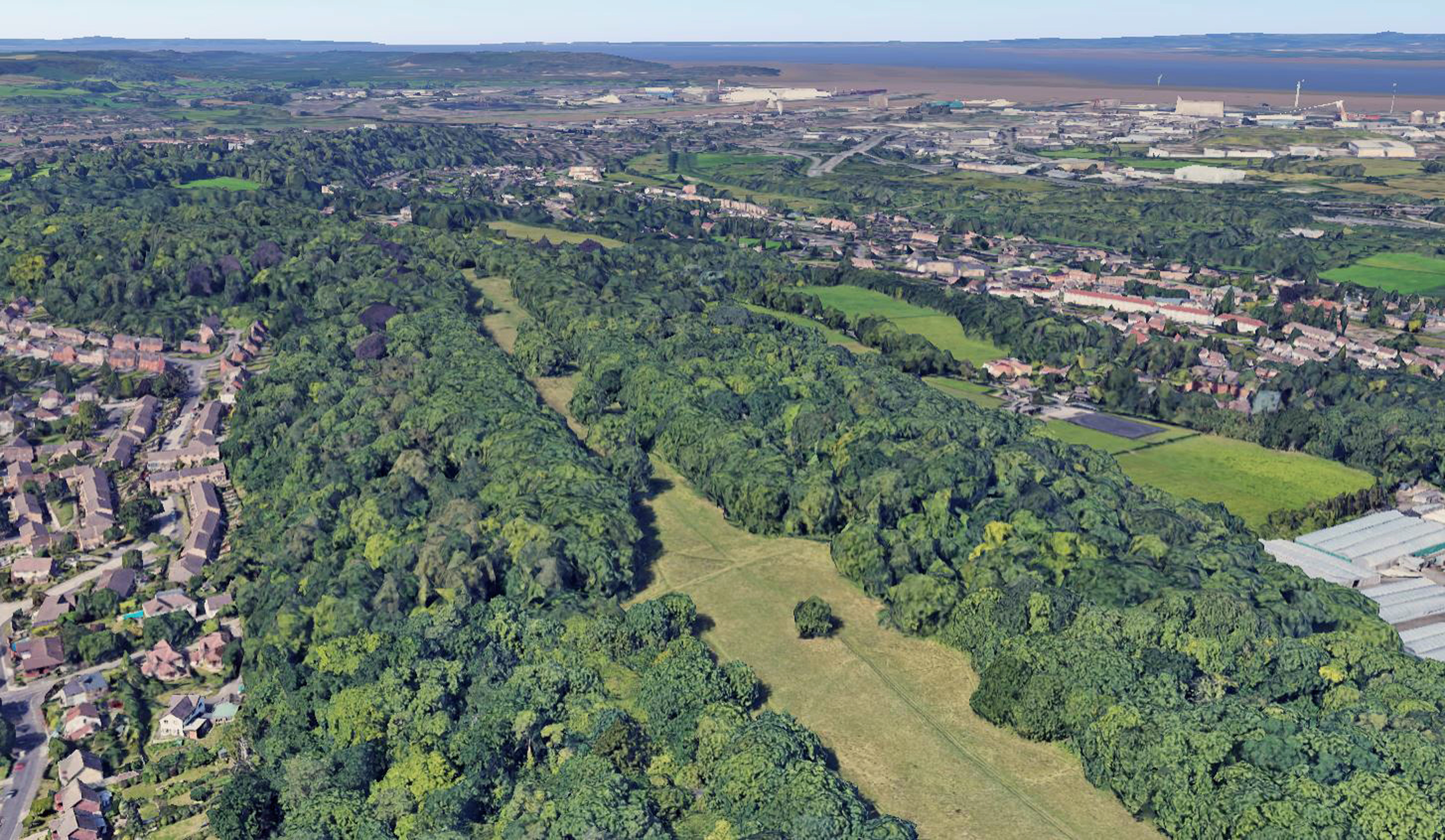
Since the closure of the iron bridge four years ago we’ve somewhat neglected the eastern part of the historic kings Weston estate incorporating Kingsweston Hill. The boundary identified by Historic England between the Kings Weston and Blaise Castle estates runs across the middle of the hill along the line of the reputed Roman Road that zig-zags between Sea mills and Lawrence Weston. However the eastern end of the Hill, including the Bronze Age encampment really falls within the historic bounds of Kings Weston. Until the 1800s the hill remained open grazed downland and the prehistoric monuments that stood there stood out in high relief on the horizon.   

Aerial view west across Kingsweston Hill with the house in the far distance

The hill has been treated as common land for centuries, but it’s never known to have actually held that status officially. In the 1840s there were alarmed newspaper reports that the Miles family, who’d recently taken up residence in Kings Weston house, had set up gates and fences and were preventing the public from accessing that which they considered their own. The situation was rapidly resolved, but the privacy-loving miles family can’t have been comfortable with the constant traffic across the hill to take in the views.

First edition Ordnance Survey map of the 1880s showing the hill, reputed Roman Road, and Limekiln Wood marked. 

It was these views, particularly the ones looking northward across the Severn towards Wales, that were a popular attraction for Bristol residents keen to escape the city for a few hours recreation. The hill was famed for much of the Nineteenth Century for its panoramic aspect, but today these have been replaced by dense woodland plantations established by the Miles family and the Southwells’ before them.

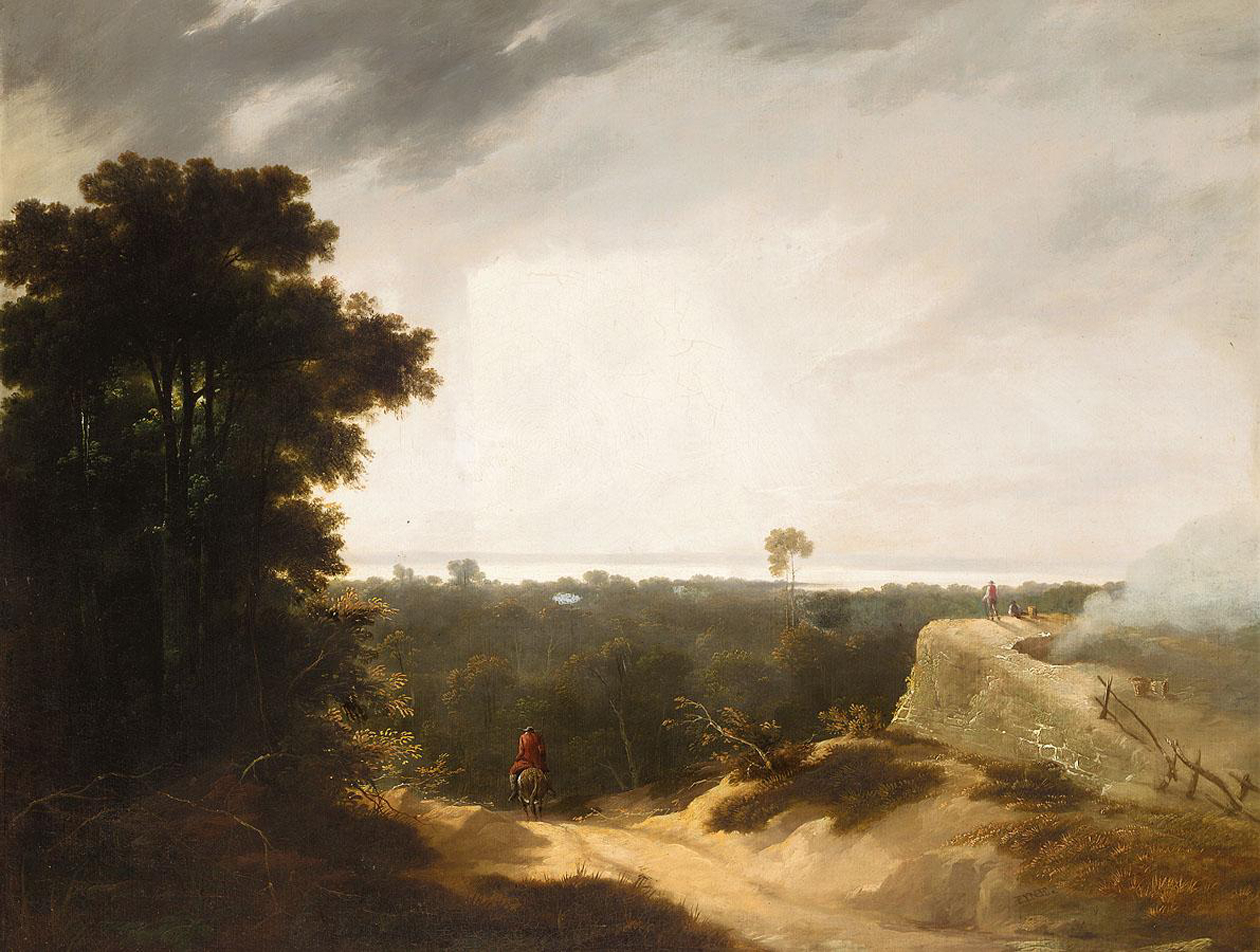
Already by the 1830s Limekiln Wood on the north side of the hill was well established, replacing the historic grassland, and Evergreens Wood and Southside Wood on the opposite side of the hill, followed. The lime kiln that gave the northern wood its name was established already in the Seventeenth Century and its setting-up is mentioned in documents written by Sir Robert Southwell. Limestone quarried from the slopes was ideal for burning to extract lime used in the building trade and agriculture. The kiln has long vanished, but formed an atmospheric landmark until the 1840s.

the lime kiln is seen on the right in this view looking north-west from the hill, along the line of the modern path crossing it. Painting by James Baker Pyne from about 1830. 

Up on the roof: A hidden history

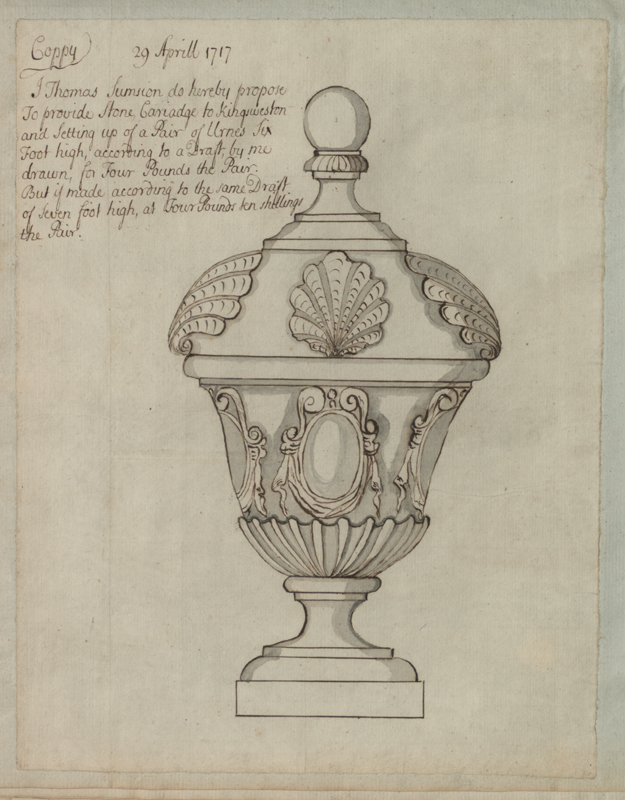
The 1717 contract drawing in the Kings Weston Book of Drawings (Bristol Archives)

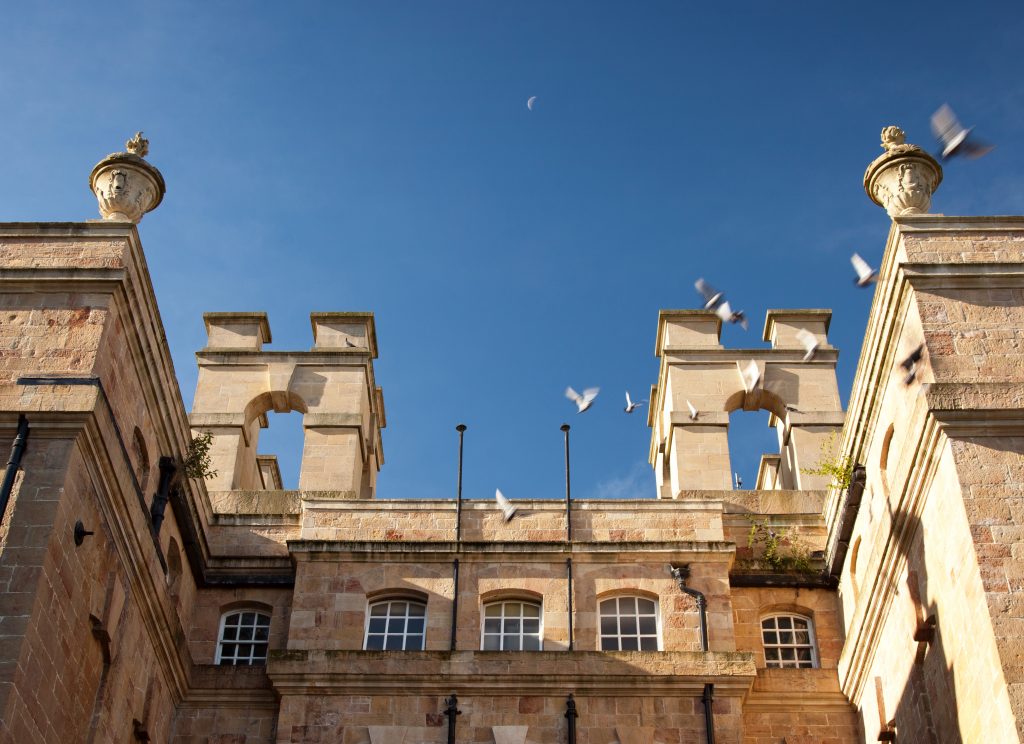
One of the most recognisable features of Kings Weston house is its roof; the castellated arcade on the top was designed to look like a fortification from a distance, and the open arches encircled a lookout platform from where visitors could admire the views across the Severn and beyond; but there’s much more up there of interest.

Although begun in 1712 the house was largely finished by 1716, enough for the rooms  to be furnished and Edward Southwell to be able to  move in with his second wife. However  work continued on various aspects of the house; The veneered decoration on the stairs was made in 1719, the traditional completion date for the house, whilst the rooftop was the focus of continuing decorative masonry work. In the Kings Weston Book of Drawings, preserved in in Bristol Archives, there is a design for an urn intended to sit on the parapets on all four sides of the building. In total there are eight individual urns, massive stone structures that appear deceptively small when viewed from the ground; in fact they are each seven feet tall! There are three individual styles of urns, and the historical drawing illustrates the design for the pair on the “back front” of the house overlooking the service courtyard. The drawing’s dated 1717 and is one of the contract drawings given to the builders to work up, for which they would charge just four pounds ten shillings for the pair!

The air of urns still towering over the ‘back front’ of Kings Weston house 
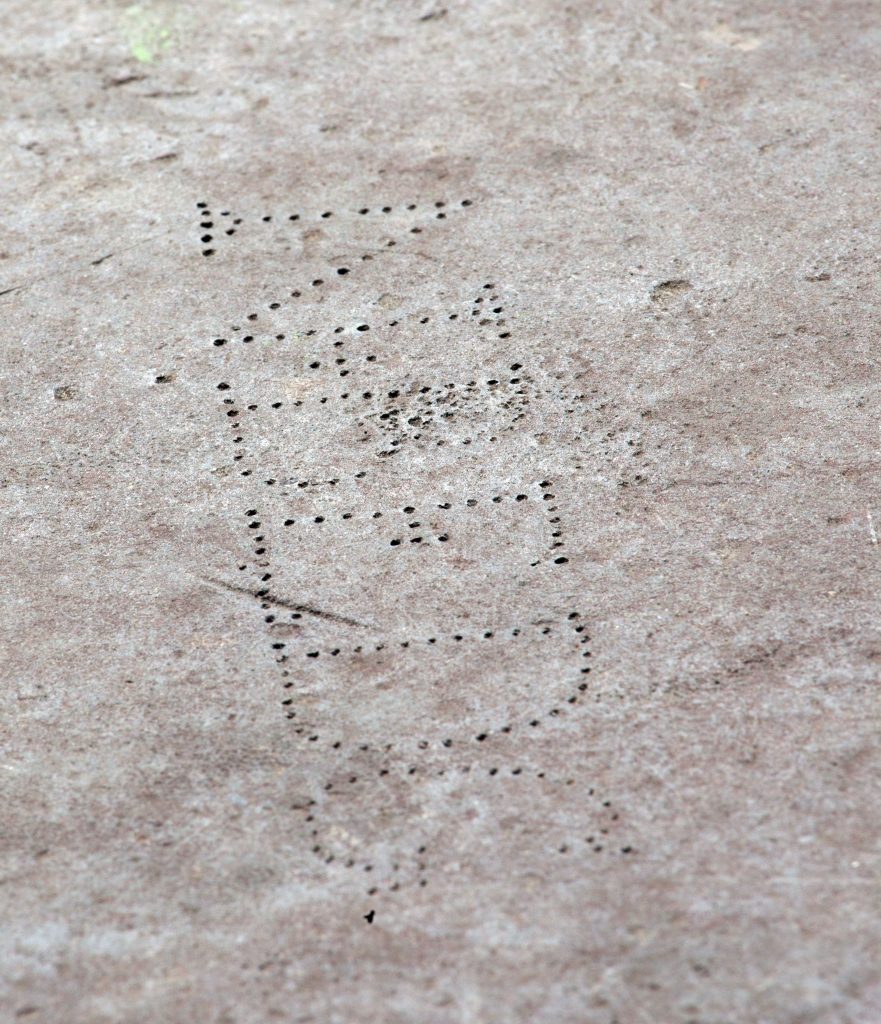
 A more cryptic mark N+BEDG

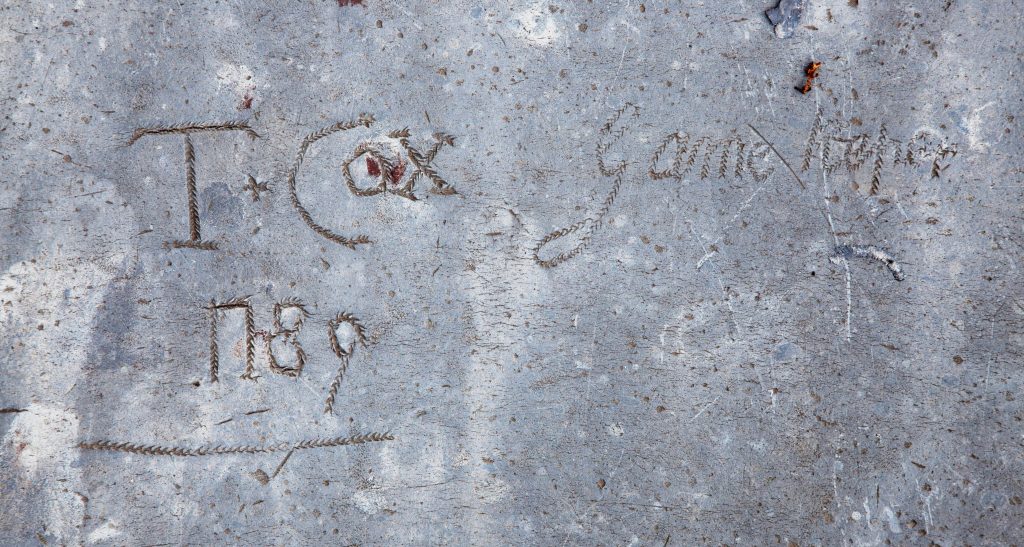
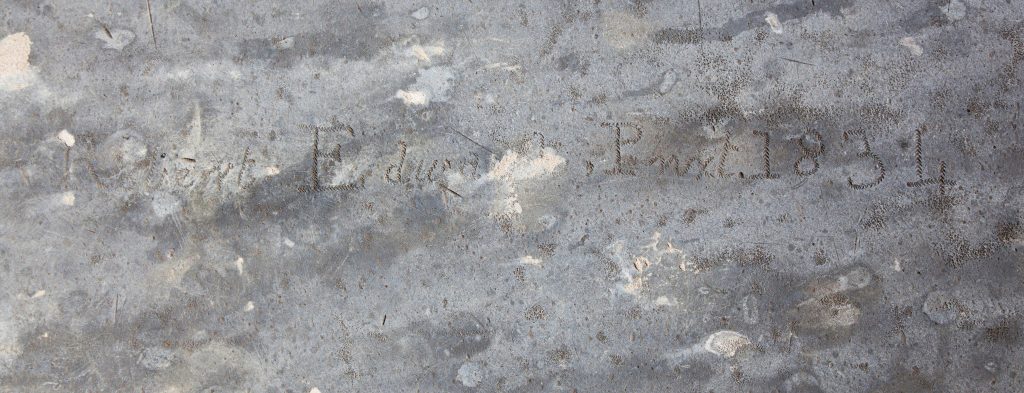
The roof itself is covered in tons of heavy cast lead sheet, some of which appears to have been on the building since it was finished, but certainly most was in place after mid-Eighteenth Century alterations. The lead itself has become something of an historical document since it was first laid; there are literally dozens of graffiti signatures and marks made by visitors to the roof over the centuries. Some are simple initials indented into the soft lead surface, others are full names, and some dated. Most are made by taking an iron tool and joggling it across the surface of the metal, giving a distinctive line almost as if it were embroidered. Others are gouged directly into the surface, but this method must have been more difficult to undertake and control.   

T Cox, Gamekeeper, 1789 in the roof lead.

The earliest found so far is the most illuminating; dated 1789 it’s signed T Cox who was bold enough to also identify himself as an estate game keeper. Although we have a number of named gamekeepers from the house Mr Cox’s rooftop signature  is perhaps his only memorial as we can find nothing more about the man.

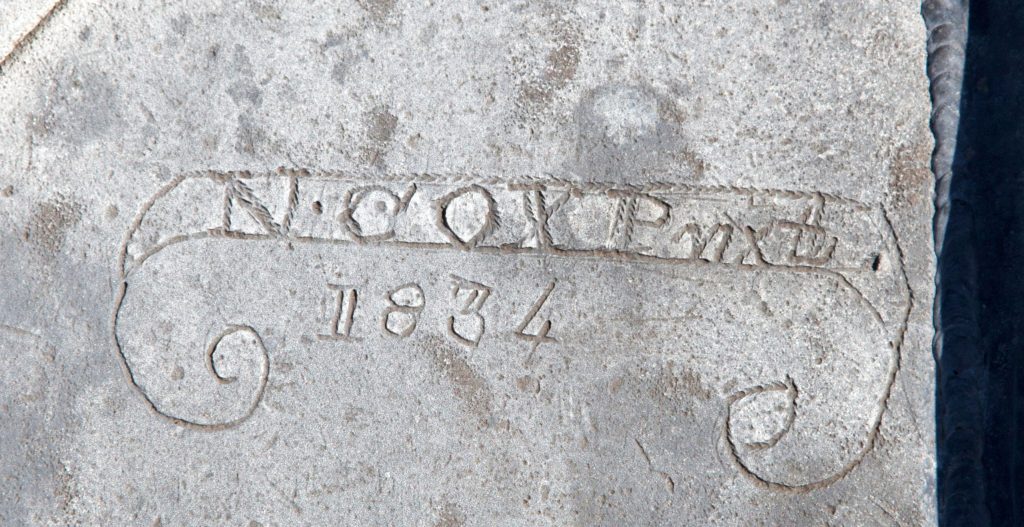
Robert Edward signed the leadwork in 1834. This may have been a time at which the house was empty, awaiting the new residents, the Miles family, to take occupation after the Southwell family had died out in 1832. Edward, apparently proud of his work, adds the Latin ‘pinxit’, declaring he himself was responsible for the mark. N Cox was perhaps his companion on this visit as he too adopts the Latin elaboration, and goes further in adding a little cartouche about his name; was he related to Mr Cox the gamekeeper?

Robert Edward Pinxit 1834
N Cox Pinxit, also 1834

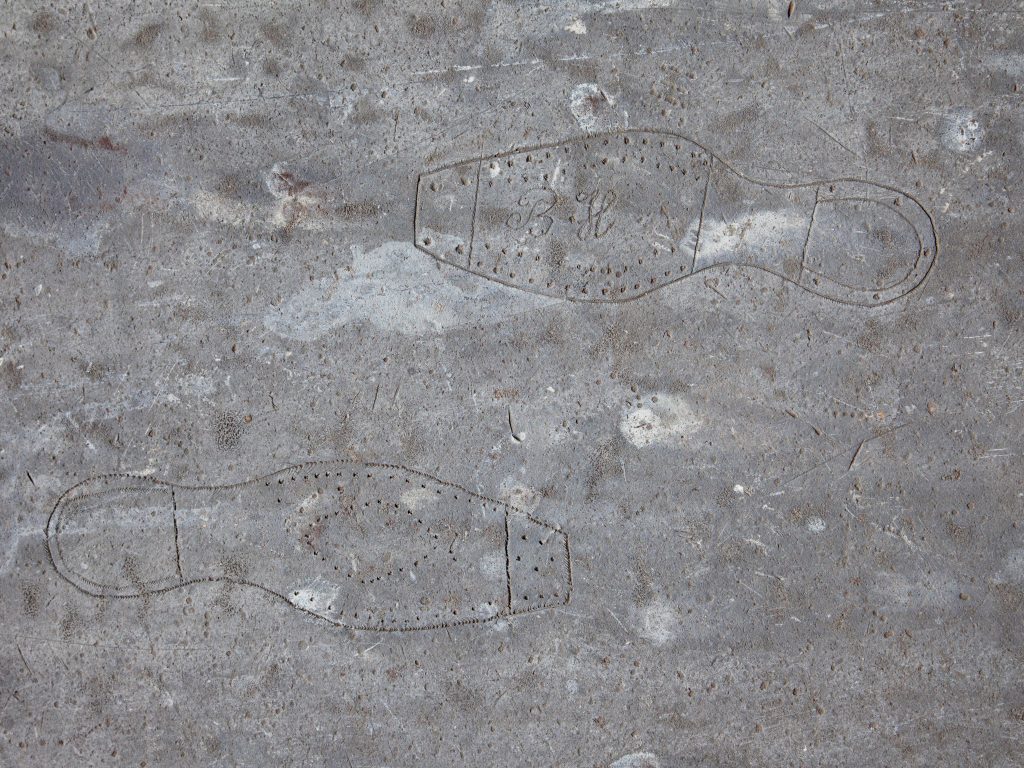
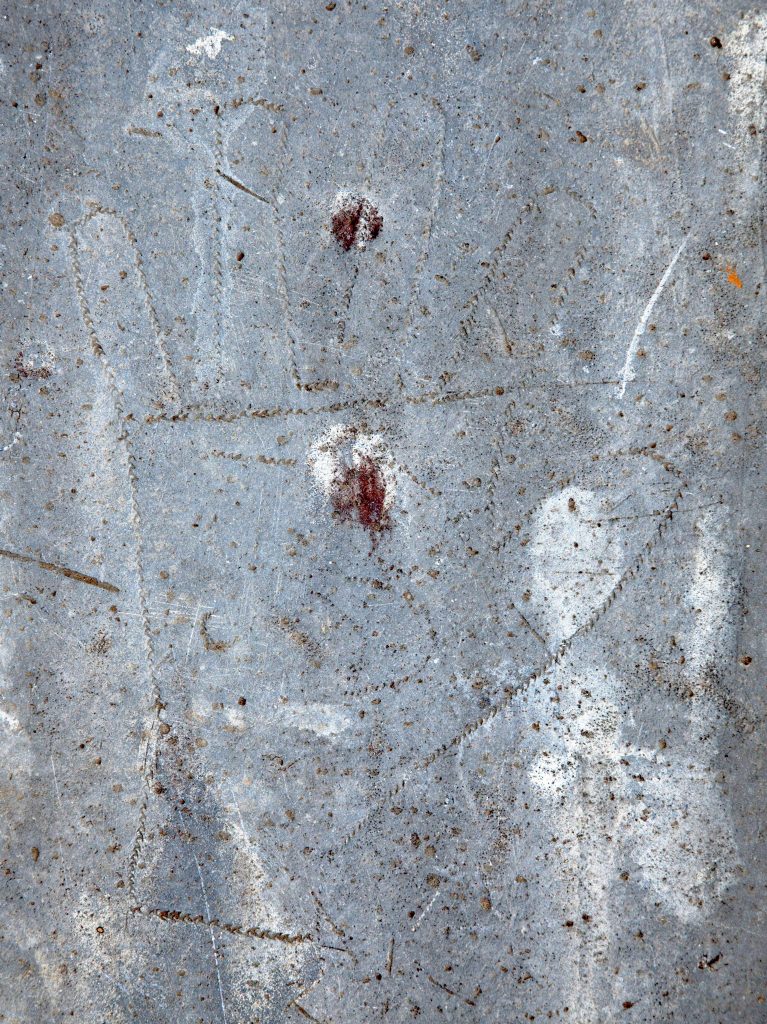
The most fascinating  marks are those drawn around shoes or hands, of which there are several. Sadly only one of these is  signed and it’s tempting to conclude that these men were illiterate, able only to make their mark by pictogram. The shoes, al of which are very small sizes, are distinctive shapes, with rounded heels and chisel-ended toes; does anyone know how these could be dated? The artists have embellished their outlines with the boot-nails and reinforced iron heels marked on.  The hand is perhaps the most enigmatic. Only a single left hand has been discovered, it’s author no doubt using his right hand to draw around it with a steel tool.    

Two separate shoe marks, one initialed B H
The hand.

Lost chandelier up for auction 

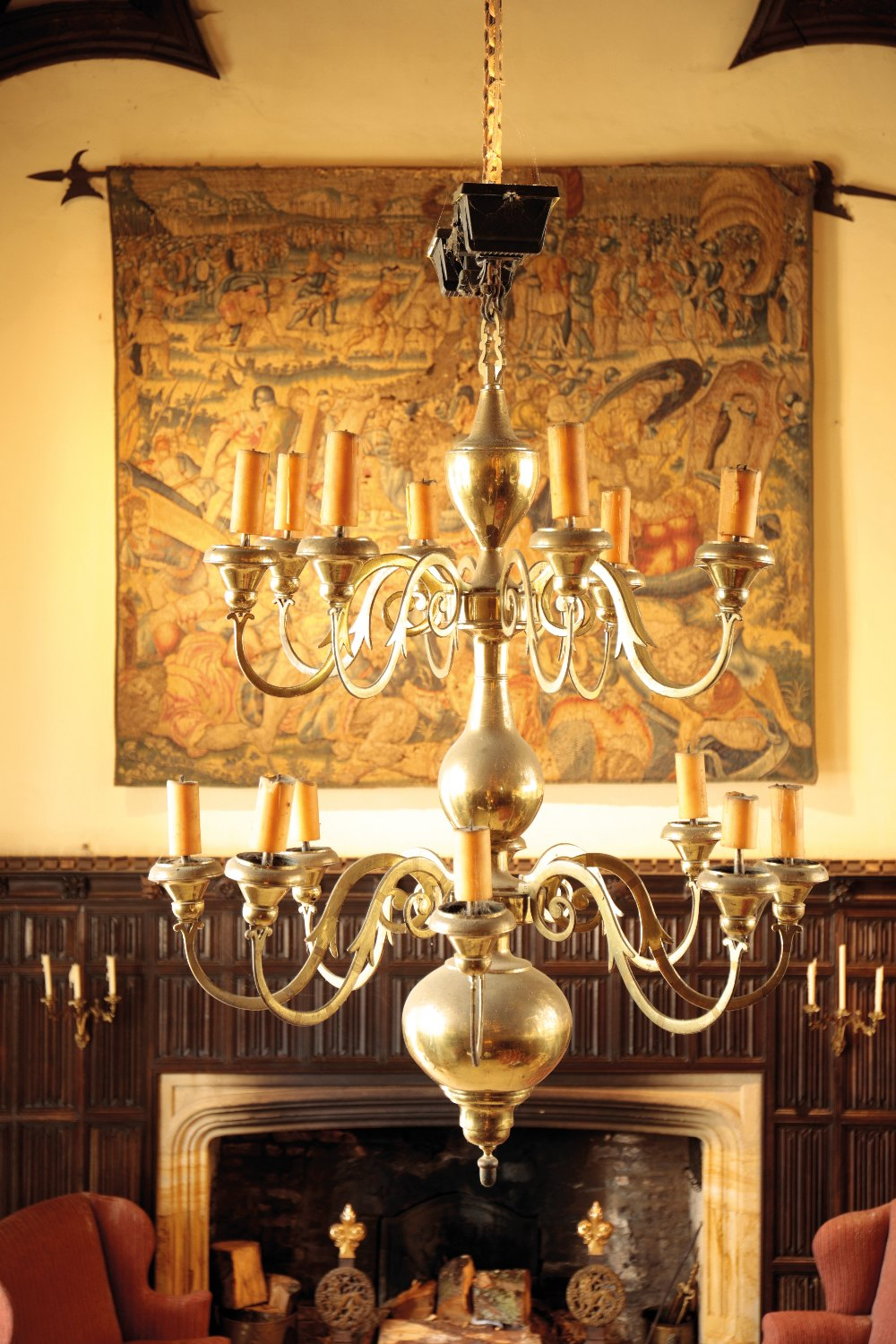
The chandelier from Kings Weston hanging at Athelhampton House.

We recently discovered an auction lot of Kings Weston interest was coming up for sale shortly. It was a shock to find that Athelhampton House in Dorset was selling its entire contents, amongst which is a brass chandelier which formed the centrepiece to the main hall of Kings Weston until recent times.

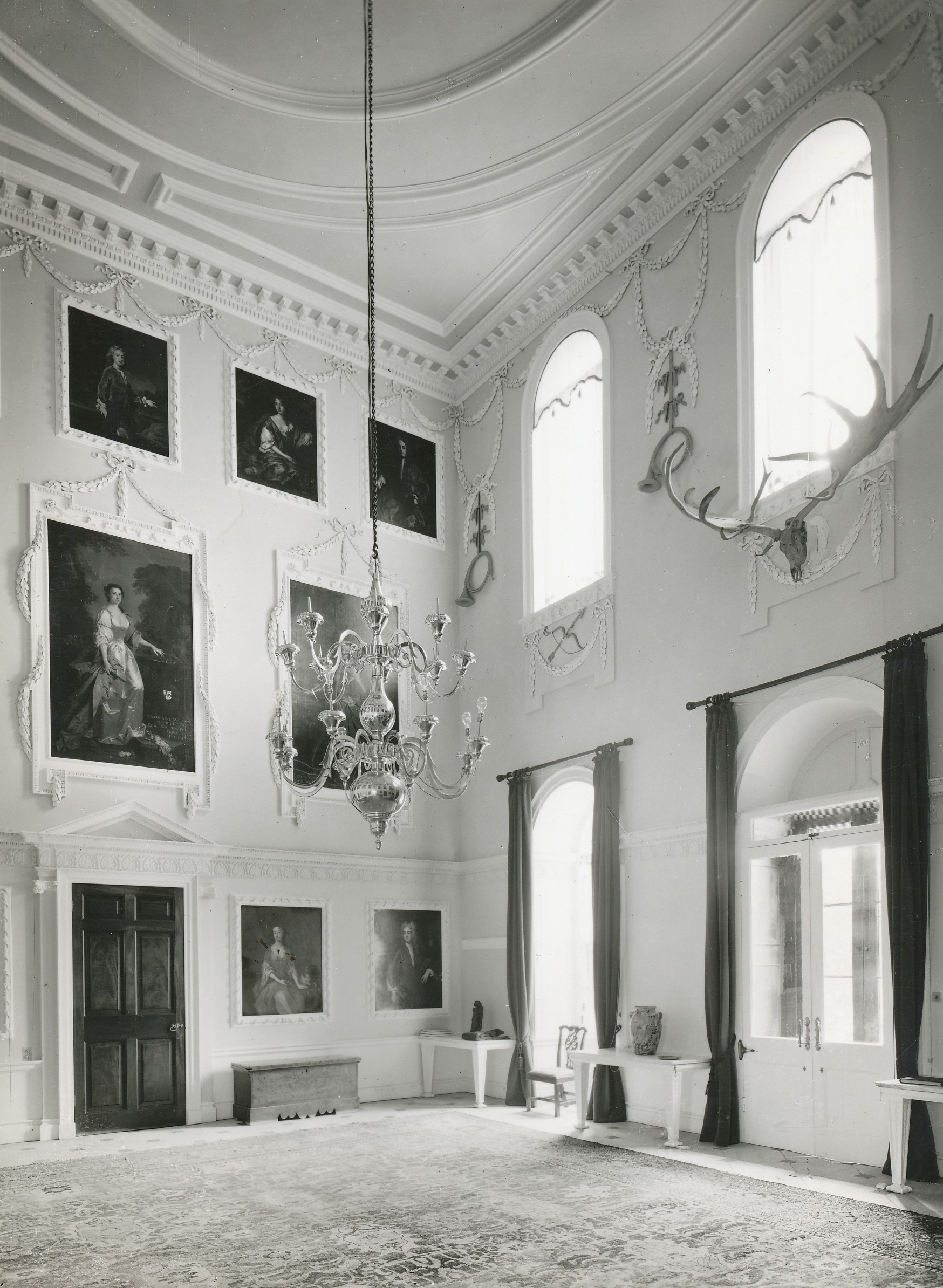
The chandelier was part of the redecoration of the house in the mid-Eighteenth Century and forms part of its original interior design scheme. It disappeared from the house sometime in the 1960s or 1970s, sold-off by Bristol Technical College during their occupation of the building; it was replaced by a rather depressing and incongruous light fitting until this was replaced with a more suitable modern chandelier in about 2000.

The chandelier in its original location in the hall at Kings Weston, 1927

We have known for some time that the original ended up at Athelhampton, though we’re also aware that there was never any Listed building consent for its removal. This has always led to the paradox that it was in another Listed building where it might contribute to the special interest, whilst it should still be in Kings Weston house. We assume that, as it is now being sold, that Historic England are satisfied that it’s not integral to Athelhampton’s importance as an historic property.

With the chandelier coming up for sale there are questions whether it should be returned to Kings Weston, having been removed without consent and against Listed Building legislation. For the moment the chandelier is up for sale by Duke’s auctioneers with a guide price of £2000-£4000. For anyone who might be interested in bidding on the lot and returning it to Kings Weston the auction is to be held on the 9th of this month, and it’s Lot 11 in the auction which will be held inside Athelhampton House. It’s worth noting that the lucky buyer is required to dismantle and remove the chandelier at their own cost.   

The interior of Kings Weston House in about 1973 about the time it was taken on  by Avon & Somerset constabulary, and with the incongruous modern lantern hanging in place of the original. At this time the paintings were removed for safety. 

The Echo: Baroque Ruin  

The Echo at the end of the gardens from the house, was an important addition to the Kings Weston landscape in about 1724. Edward Southwell had finished work on the house itself and moved in in 1716 with his new wife Anne Blathwayt. Sadly Anne died the year after and it was a little while before Edward returned to his architect, Sir John Vanbrugh, to turn his mind to further elaborating the estate.Plans began in about 1720 when Edward began buying up land to extend the parkland, and had a map drawn up to further this expansion. We know from this that the long axial path from the house terminated at nothing more than a wall dividing the grounds from a public lane behind; parts of this was can still be traced in the rear structure of the present Echo building.

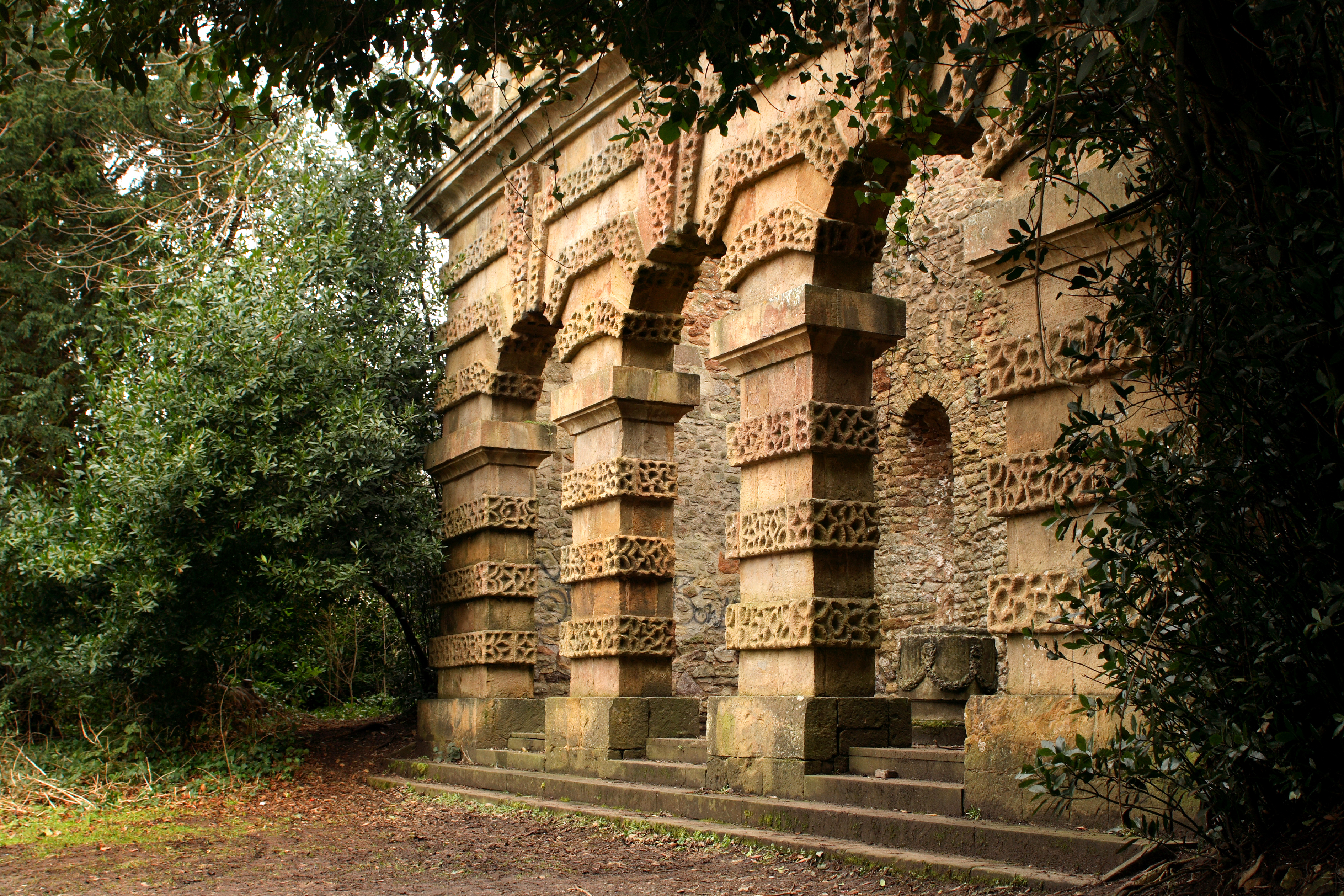
The Echo today
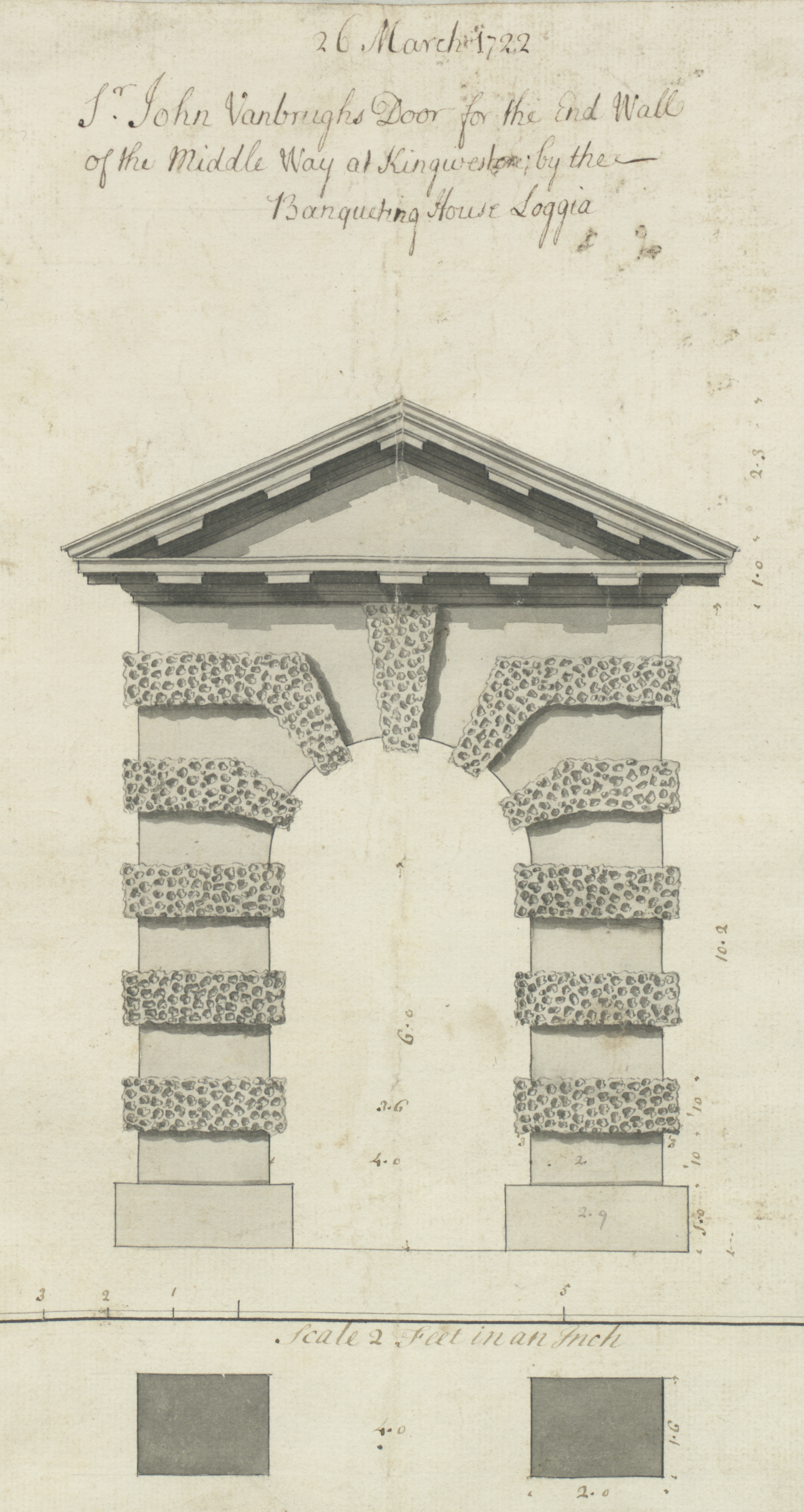
1724 proposal for an arched entrance gate by Sir John Vanbrugh. (Bristol Archives)

The echo at Kings Weston Was already a well knows acoustic feature. The gradually rising ground allowed sound to reflect back off the front of the house and echo back down the garden in a remarkable way. The termination of the axis from the house with a suitable celebration of this effect, and an eye-catcher from the house, would have seemed an ideal opportunity to provide an ornamental monument.

The Echo, as the pavilion was to become known, is one of the few buildings at Kings Weston where there are no original drawings known. In Bristol archives there is a design by Sir John Vanbrugh for another structure, an ornamental gateway that was to stand at the end of the terrace on the north side of the house; with its boldly handled rusticated piers and arches this has more than a passing resemblance to some of the features of The Echo. The drawing is dated 1724 and it is reasonable to assume that it echoed architectural developments at the other end of the garden at this time. This coming weekend we will try and compare the measurements of this drawing with those of the Echo and see what conclusions we might draw. The dramatic urns on the parapet of the finished building are also strongly redolent of Vanbrugh’s work, with a series of similar features in the gardens at Blenheim Palace.

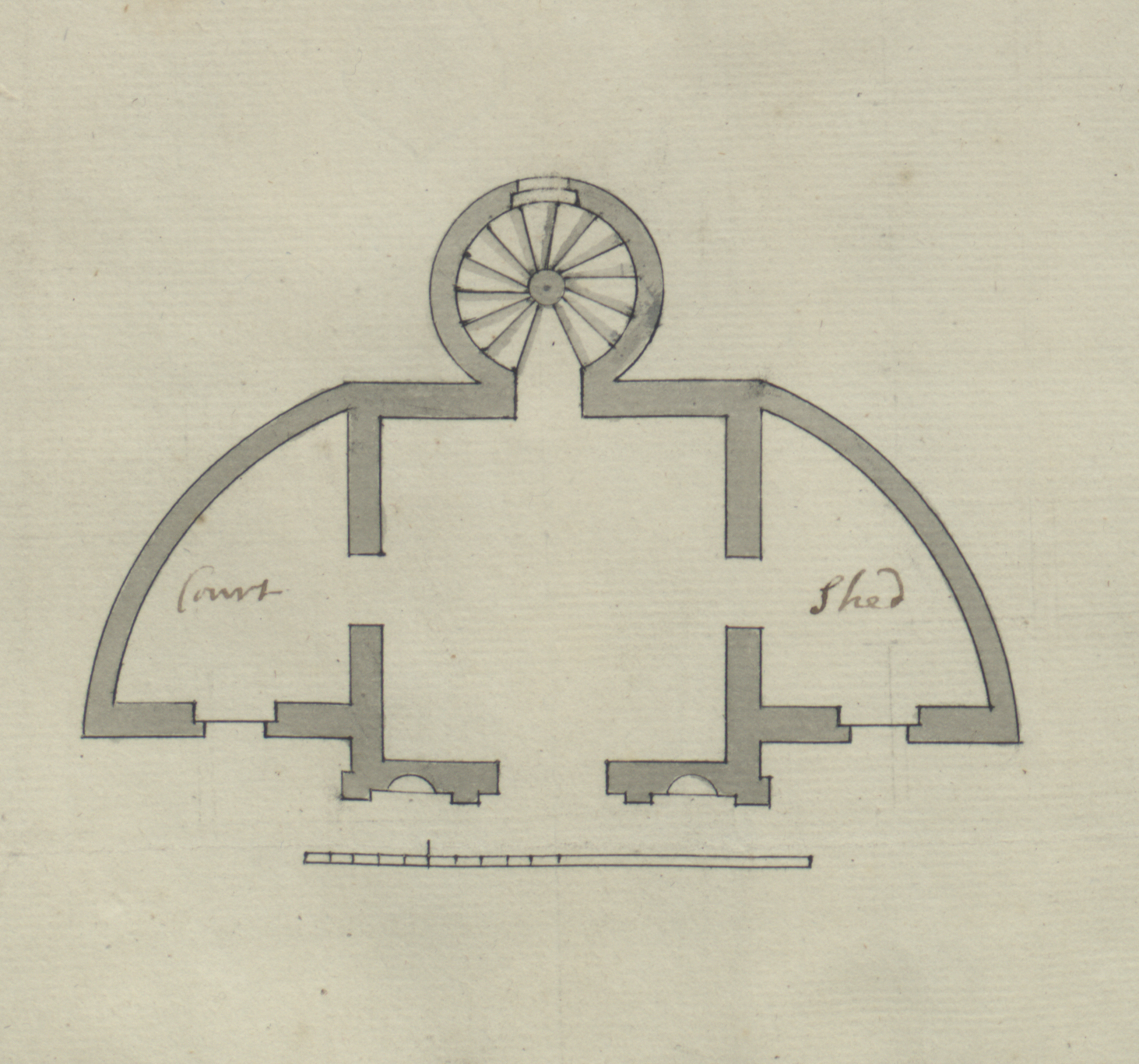
In the tradition of gardens at the time the Echo would have terminated the long axis through the landscape with a series of formal gardens either side of it. There never seems to have been a viewing terrace on the roof of the building, which might have capitalised on views back to the house and across the landscape towards Bristol. Another drawing in Bristol archives does show the plan of a garden pavilion that would have afforded this; it had a single ornamental frontage with odd carved rear walls and a stair tower at its rear, but, other than its inclusion with other known  Kings Weston drawings, there is insufficient evidence to suggest it was even considered for Kings Weston.

Was this a plan for the Echo? 

The little building served no more elaborate purpose than a place to sit, admire the view back towards the house, enjoy the echo, and perhaps enjoy a summer meal. The arches were never glazed in, but the roof, that once sheltered visitors, disintegrated and collapsed in the 1950s; the scars of this can still be seen in the structure today. Efforts to demolish the garden buildings in the 1970s were fortunately resisted, and eventually the Echo was patched-up and restored.   The Echo remains an important landmark in the park, a focal point on the main walking circuit, and a Grade I Listed building. The gardens that once swept down the slope to the house have been overtaken by woodland, and views between the two buildings lost or diminished. Sadly the echo from which the building got its name has also been diffused. But this weekend we will be celebrating the building again by holding our Doors Open day event within it. Come along and find out more about the building and its history on one of our short tours to be running throughout the day.        

Preserving the memory of Penpole Lodge 

Ahead of August’s Working party, when we’ll be returning to Penpole Point, KWAG have produced a model of the long-lost Penpole Lodge, a building that remains with us only in ruin today. As with the reproduction statue described last month the model is intended to broaden understanding of the lost feature, and show what an imposing architectural statement it once was. In 2012 KWAG fully revealed and recorded the ruins with the assistance of South Gloucestershire’s county archaeologist, but the area is beginning to succumb to undergrowth once more.  

The building was designed by Sir John Vanbrugh as a belvedere and monumental landmark for Edward Southwell, and was designed to dominate the horizon in views from Kings Weston house. The building was a return commission for Vanbrugh who’d been responsible for the rebuilding of the house between 1712 and 1719. After its completion the pair looked to expand the parkland setting around the mansion and ornament it with fashionable garden structures, including Penpole Lodge.

Below: One of Sir John Vanbrugh’s proposals for penpole lodge showing the unexecuted colonnades on the shoulders of the gate

Below: one of Vanbrugh’s more robust designs for the building, circa 1724

Several drawings for the lodge exists showing variations on the design, one with a colonnaded veranda overlooking the Severn, but in the end a symmetrical tower built over an arched gate at the boundary of the private grounds was decided upon. It is dated to about 1724. Our reconstruction shows the building as-completed and recorded prior to demolition in the 1950s. We’re fortunate that students from Bristol University architecture school created a measured survey of the whole building in 1947, showing plans, sections, and key details, for it was to succumb to the wreckers in 1951 following decades of neglect, and the deprivations of wartime use by the Home Guard.

Whilst the Lodge appeared frequently in picture postcards of Penpole Point at the start of the Twentieth century these only captured the less ornamental side facing public common land. The façade facing Kings Weston house across the park was more refined and ornamental and only known to us through the 1947 drawings.  

Penpole Lodge as backdrop to the stone dial on Penpole Point, circa 1905. 

Wildflowers running wild

We reported a few months ago about the Urban Buzz project and the new wildflower meadow seeded below Kings Weston house; we’re glad to say that the first year has proved a success with a large number of new native annual wildflowers having bloomed over the last couple of months. Yellow rattle last month preceded an unprecedented show of poppies over the last couple of weeks, along with many others. It’s important to note that these flowers are only the annuals, with the majority of perennial wildflowers unlikely to show unto next summer. We look forward to see the results!

The wildflower meadow has leapt to life since seeding was carried out earlier this year.

It’s also been a pioneering year for the regrowth in Penpole Wood, where just three years ago there was nothing but cherry laurel. One of the advantages of re-covering areas we dealt with in 2016 is that we can appreciate quite what a difference volunteers have made. Although barren immediately after our operations areas have now exploded into new growth with many native woodland wildflowers broadening biodiversity, and offering new habitat and vitality to the woodland floor. If you can help identify some of these please let us know.

Of particular curiosity is the incredible growth of wild raspberries throughout the woodland areas. A resident told us some time ago that they recalled some that grew near the Echo, but the extent of the fruiting canes across the historic landscape is a surprise, particularly where the blight of laurel has been conquered.  

Just a selection of the wild flowers and plants that have begun to recolonise cleared areas in penpole Wood.

John William Miles: Last of a political dynasty

In 1868 a fierce political fight broke out between Conservative and Liberal supporters each eagerly supporting their candidates in the city’s by-election. This was an age where electioneering could generate bitter personal attacks and even physical violence and the 1868 election was amongst the most divisive.

Standing as the Conservative Party candidate was John William Miles, brother of Philip William Skinner Miles of Kings Weston House and resident there for much of his life. The Miles family bought Kings Weston in 1834 after Lord de Clifford had died in 1832 without an heir. John Miles’ brother, and his father before him, had both represented the city for an unbroken period between 1835 and 1852. John Miles no doubt wanted to continue the family’s political legacy.

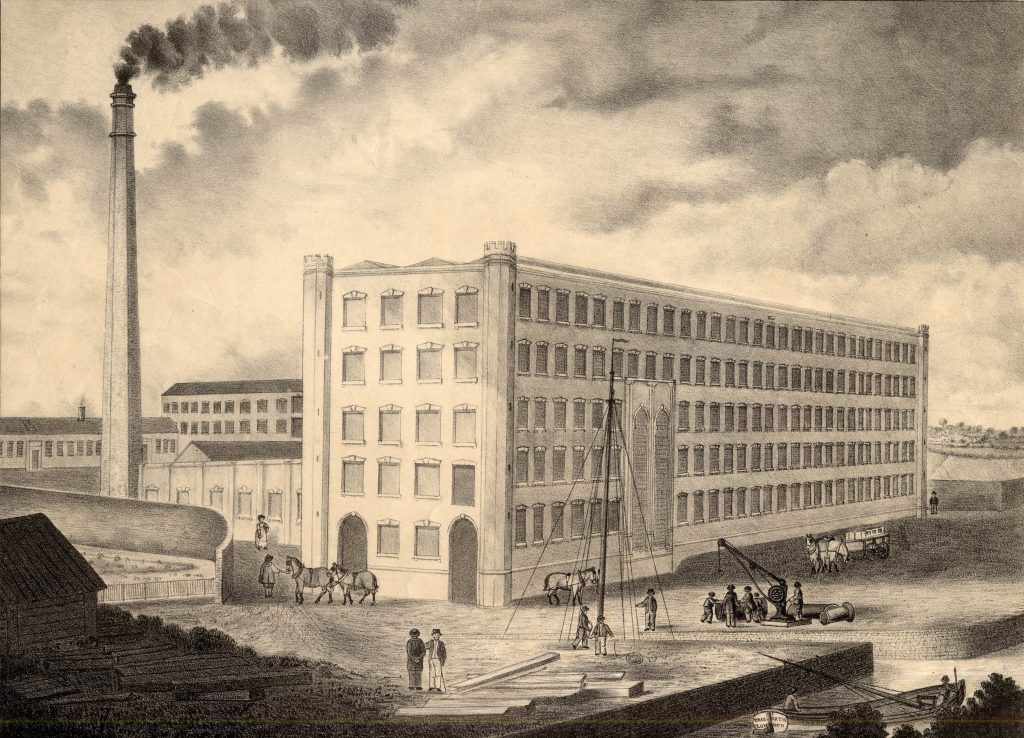
The Great Western Cotton Co, Barton Hill, that Miles helped found

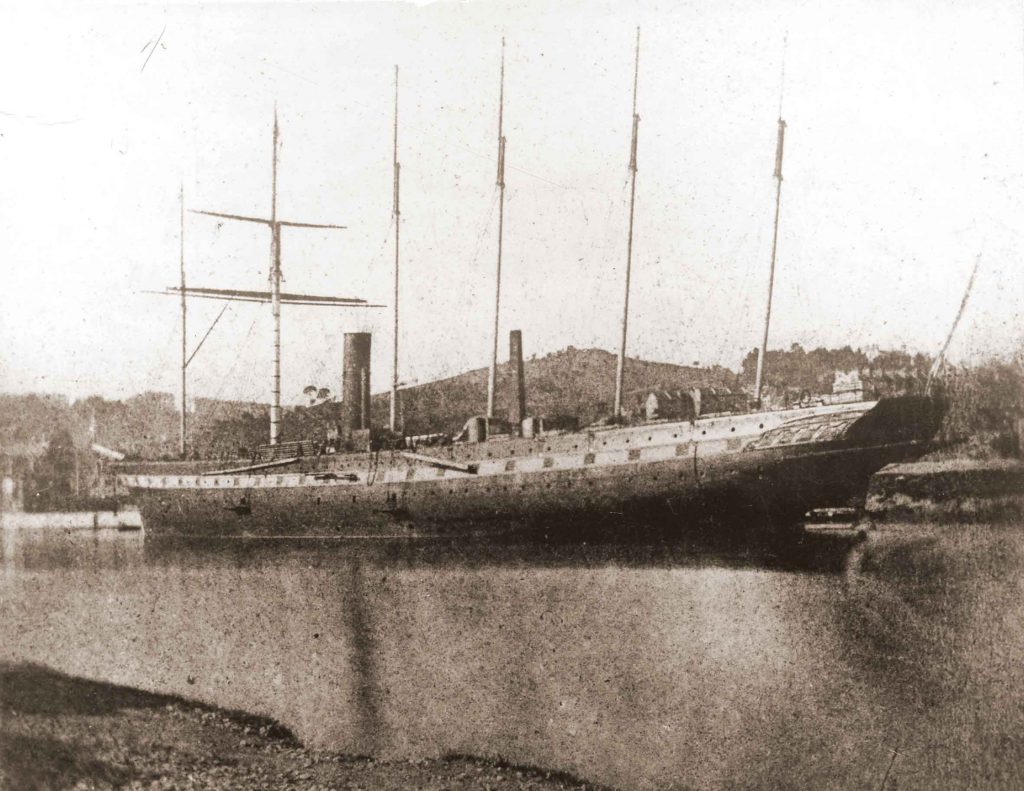
Like the other members of his family John Miles was keenly and actively involved in the industrial development of the city, but also worked tirelessly in modernising the farms at Kings Weston. He was director, at one time vice-chairman, of the Great Western Railway, a director of the Great Western Cotton Company, South Wales Union railway, and director of the Great Western Steamship Co; the SS Great Britain was registered in is co-ownership. He had been a member of the Bristol Docks committee and on the city’s council. He was a well-respected member of the mercantile class of the city, and would have made a popular choice to follow in his family’s political footsteps.

The SS Great Britain Shortly after launch in 1843. The ship was registered jointly in John William Miles’ name. 
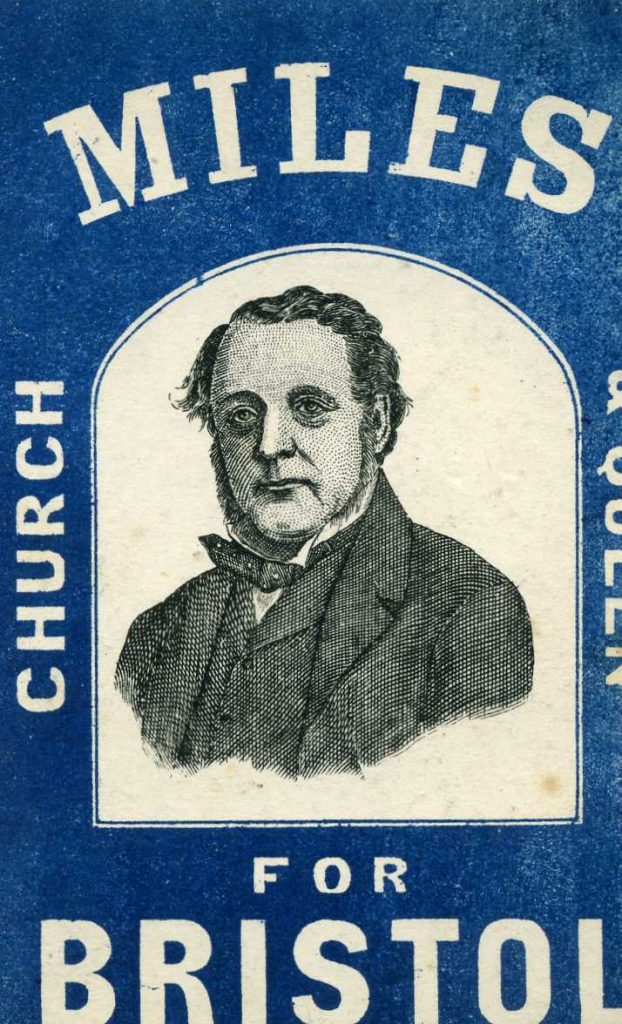
John William Miles portrait on a handbill for the 1868 by-election 

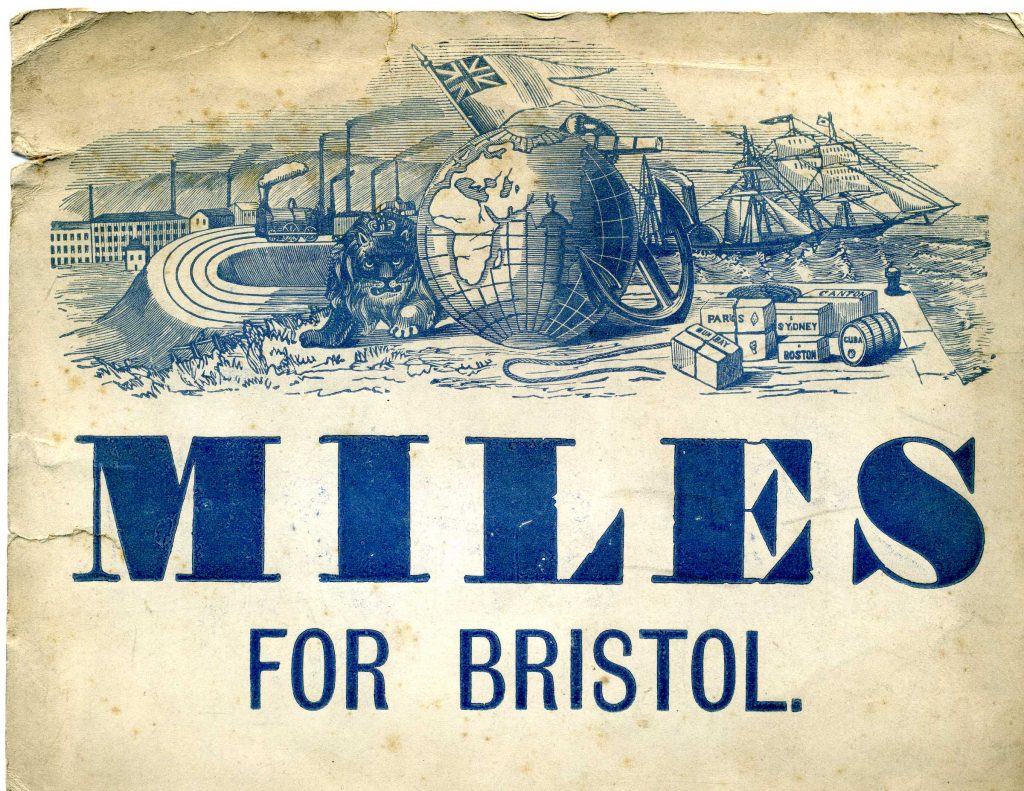
Against Miles the Liberals selected Samuel Morley, who today is best known for his statue in gardens in Lewins Mead. Campaigning was frenetic, with both parties producing handbills and posters both promoting their own candidate and demeaning the opposition. Miles handbills, many now in the collections of Bristol Museum, promoted him as a positive vote for industry and prosperity with images of shipping and the railways with which he was associated being popular motifs.

Several also carried images of the man taken from a contemporary engraving from which we could infer he was a stocky joyless looking gentleman. In reality he was well known for getting involved in family life, participating in theatrical performances, and took pleasure in breeding ferns and orchids; but perhaps the severity of the portrait suggested a man with more gravitas.

Miles’s industrial, railway, and maritime interests illustrated on a handbill along with an anchor: part of the family’s arms. 
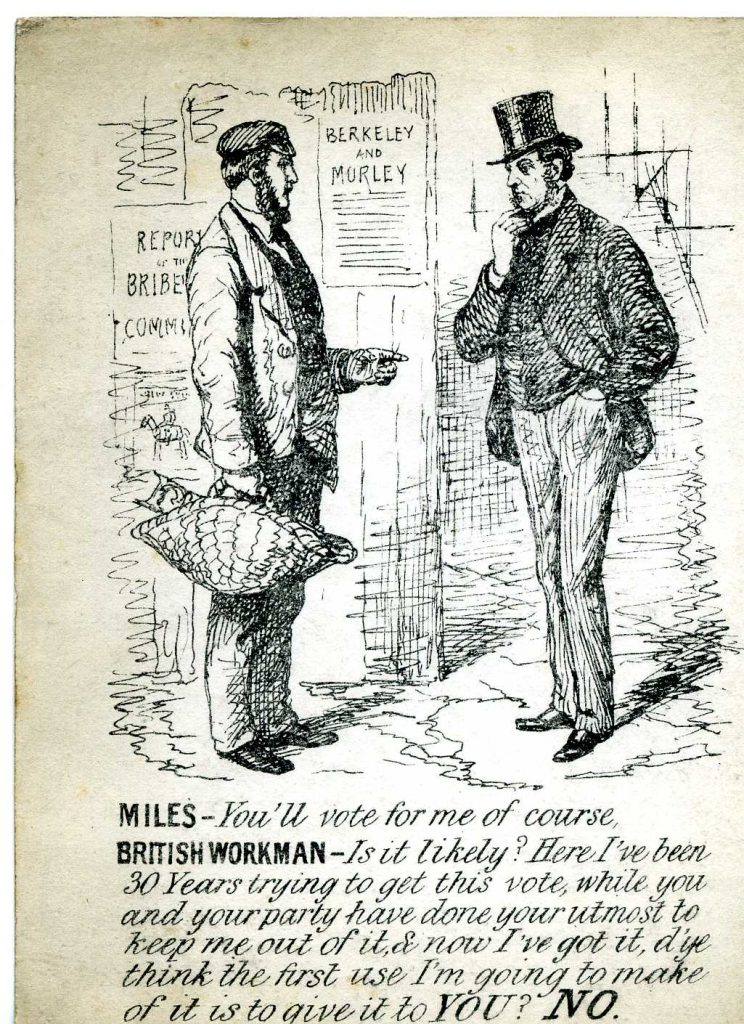
Liberal handbills criticising Conservative opposition to better representation. 

His opponents sought votes from the working classes rather than those mercantile or  gentry. They noted that the Conservatives had been against broader political representation and, even at this point in time there were only around 25,000 men in the city eligible to vote.  

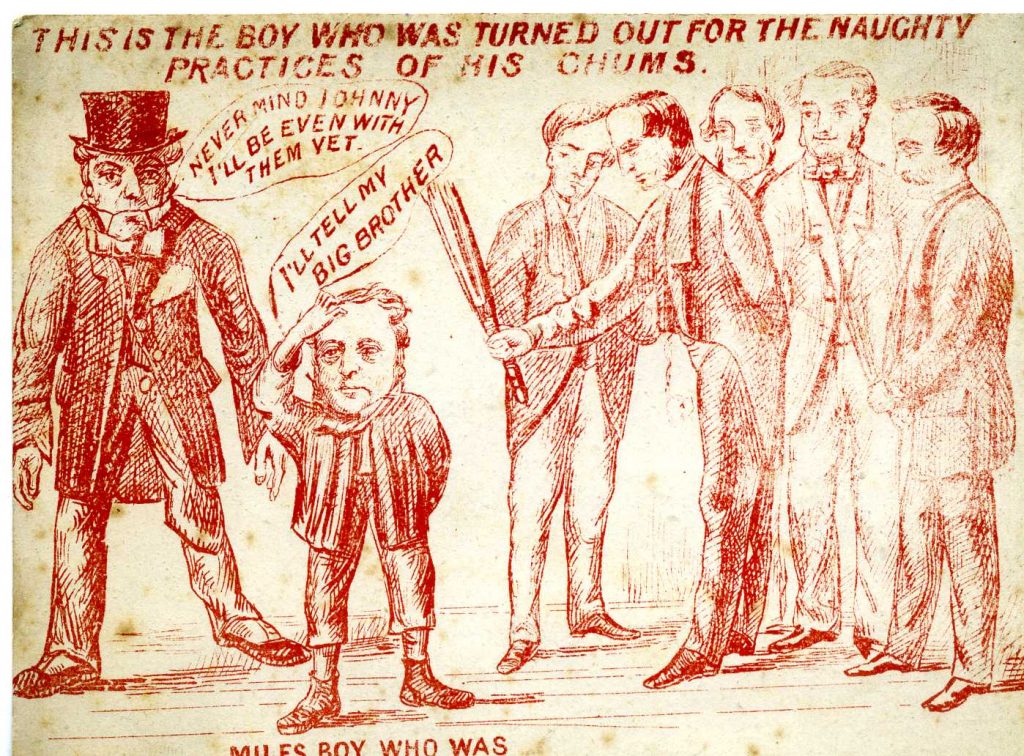
Polling day was 30th April 1868 and Miles attracted 5,173 votes to Morley’s 4,977. Almost immediately after the election results were announced there were claims of foul play. Mr Morley claimed his defeat was due to “an undue use of money, beer, and intimidation”.  The House of Commons launched an investigation and, although Miles was inducted into the House, it was only so for less than two months before the result was declared void. The committee charged with investigating the election uncovered the hiring of “roughs” to intimidate voters, with wholesale use of treating to entice votes, and paying ineligible men to impersonate voters. Miles was, through his agents’ actions, found guilty of bribery.

Handbill produced after the finding of bribery against the Miles camp, and showing both John William Miles and his elder brother Philip William Skinner Miles, both of Kings Weston house. 

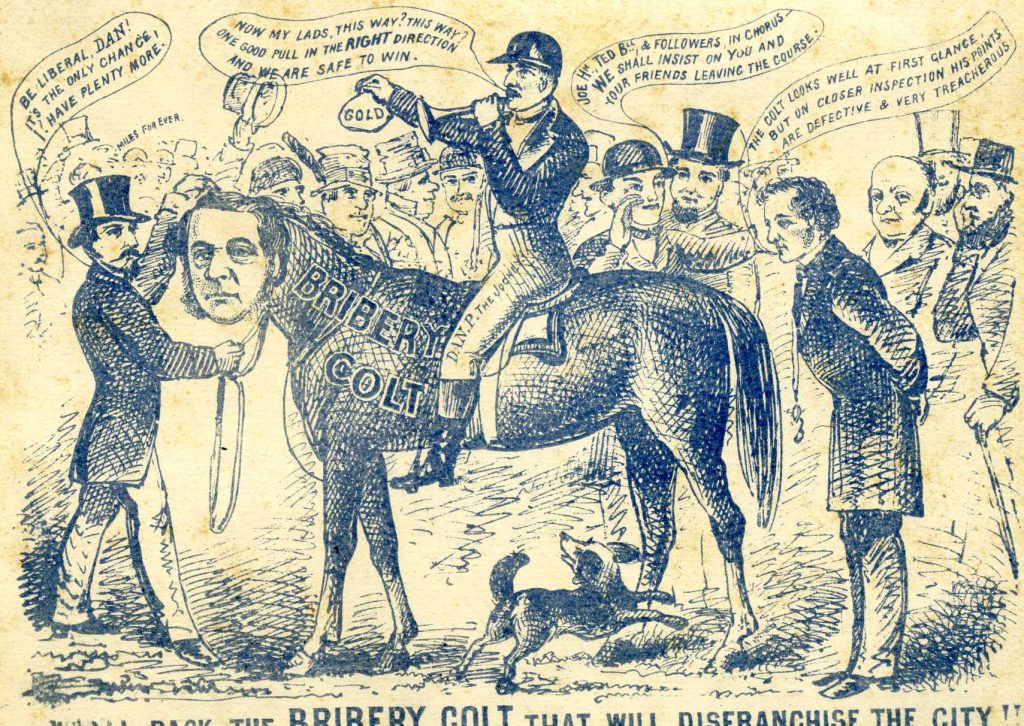
The election was not re-run, instead it was held back for the November General election. There was considerable ill feeling in all camps following the incident and, perhaps foolishly, Miles was fielded as the Conservative candidate again. This time the opposition had a cause and were vociferous in their condemnation of Miles. Numerous damning and sensationalist handbills were published, and the bitterness boiled over into violence and vandalism with damage to property. Unsurprisingly Miles’s vote collapsed and both candidates fielded by the Liberal Party came in ahead of him.

John Miles’ face superimposed on the colt of bribery in one of the most undignified of handbills against his election.

It was a sad end to the political ambitions of the Miles family who had previously been popular and well regarded representatives of their city. The actions of the party agents brought shame on the Miles family and on Kings Weston. John’s two months were the last time any resident of Kings Weston house represented Bristol in the House of Commons. John Miles returned to improving the agricultural progress of the Kings Weston estate, and died at Penpole House ten years later. He never married.        

Newly Acquired sketch

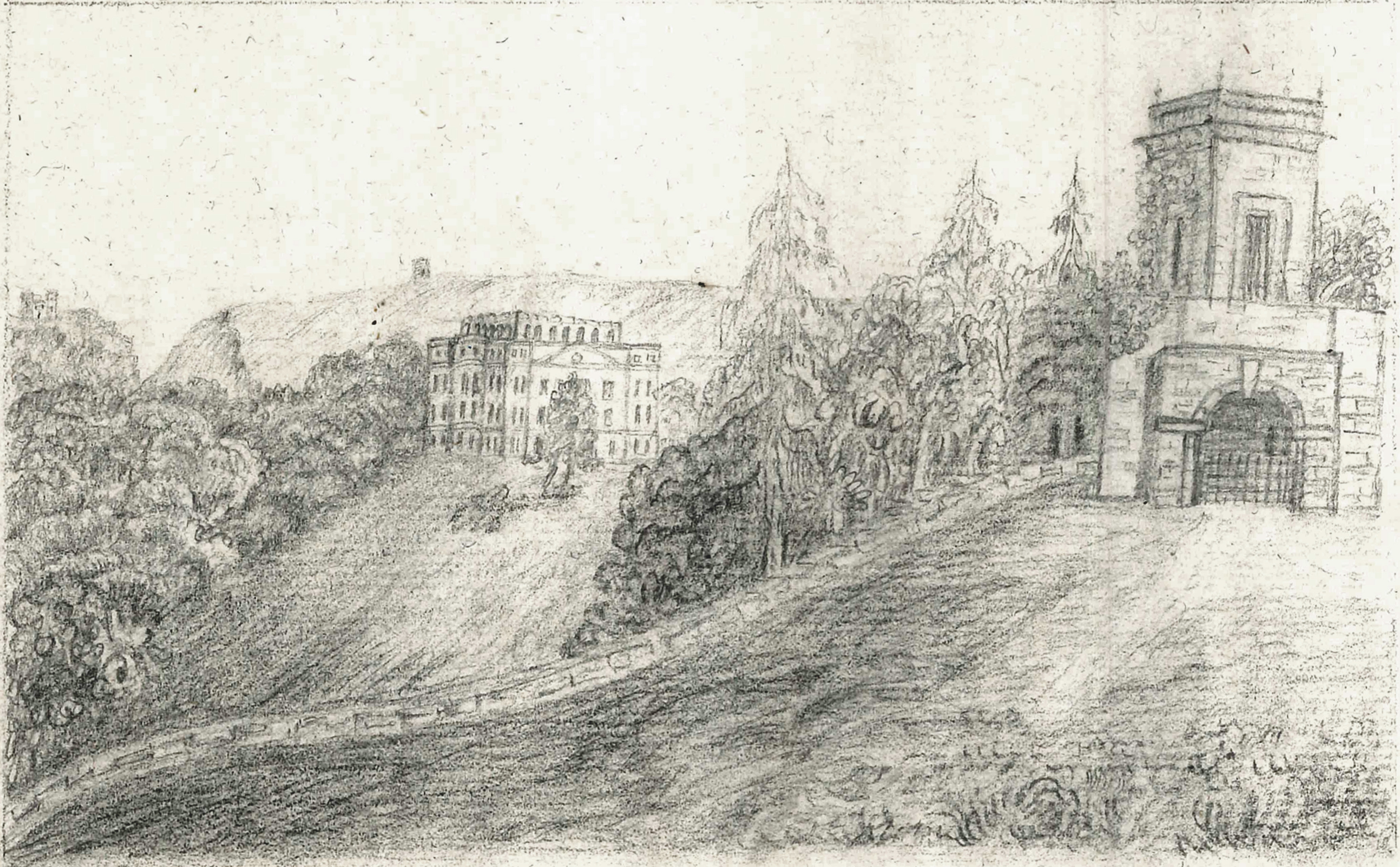
Something more new to the Kings Weston story is this small pencil sketch of the house viewed from Penpole Point. In the foreground is Penpole lodge, lost to the sledgehammers in 1951. Several similar views exist, but this one differs from all of them in the detail shown so must be an original scene. It dates to the 1820s and, in the distance, both Blaise Castle and the former windmill on the brow of Kingsweston hill can be seen. The windmill was partially reused during the Napoleonic wars as part of a signalling station, but disappeared soon after.

A possible Penpole Pond? 

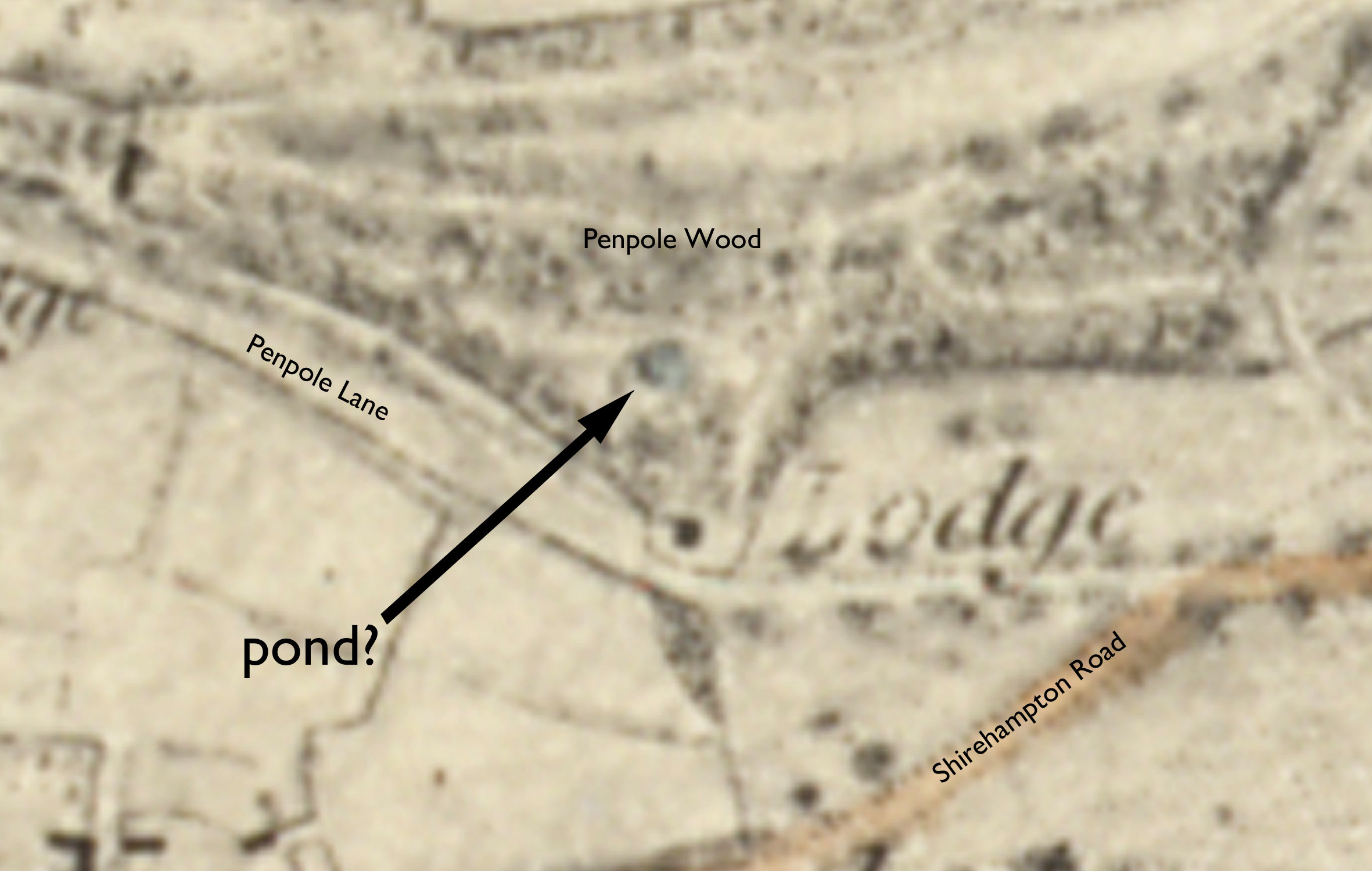
Something came to notice just recently that raises a few questions. A map of Bristol, an early production by the Ordnance Survey in 1826, has suggested a previously unknown garden feature in Penpole Wood. Looking closely at the detail it suggests that there may have been a pond in the area called Jubilee Clearing between Penpole Point and the cricket pitch.

Ordnance survey map of 1826 showing the whole of the Kings Weston Parkland Other maps and plans of the estate from similar dates show nothing in the area, lack detail, or are unreliable in what they show. That there is clearly an, albeit tiny, blue dot in the woods of such a highly detailed survey is strongly suggestive that such a water feature existed, though nothing can be seen above ground today.
Detail of the 1826 map showing the possible  pond feature hidden in the woods.
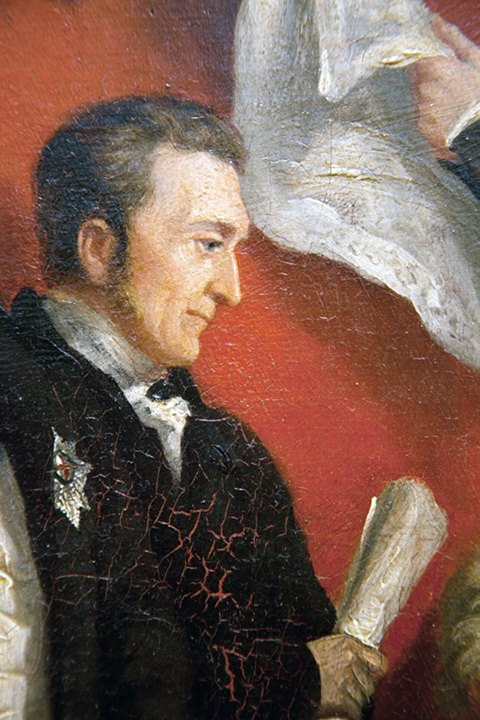
Edward Southwell, 21st Baron de Clifford 

The area still retains a number of unusual specimen pine trees, unusual species only recently introduced to the country in the Nineteenth Century. Along with a glade with a water feature they might have made an attractive garden. In 1826 Kings Weston was owned by Edward Southwell IV, the 21st Baron de Clifford. One contemporary wrote of him:

“The great enjoyments of Lord de Clifford when at home was planting shrubs and trees. Many thousands were planted under his directions. I can picture him now as I often saw him, a little insignificant man riding on a very quiet horse followed by John Webb, his favourite groom, to superintend operations.”

It is possibly him responsible for laying out whatever garden might have formerly been in this area. We hope to be able to inspect the map, currently in the British library, to look closer at the detail and hopefully come up with some answers in the future.