Category Archives: Uncategorized

Tudor stone survivals

A recent local auction brought some artefacts with a Kings Weston connection to our attention. As many people will know the present Kings Weston house was preceded by an older mansion, one swept away in 1711 ahead of reconstruction to the designs of Sir John Vanbrugh starting the following year. This earlier house appears to have been built by Sir William Wyntour.
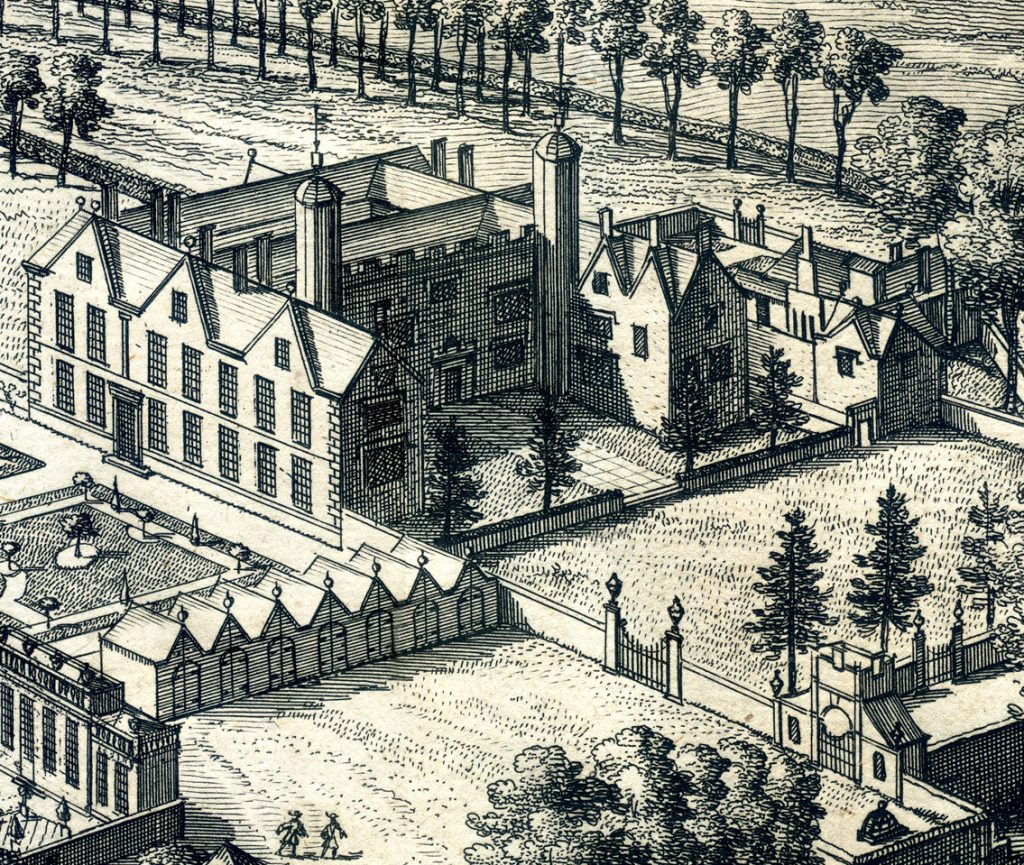
The Tudor Kings Weston House recorded in an engraving of about 1711, just before it was demolished.

Queen Elizabeth I appointed Sir William Vice-Admiral of England, the second most powerful position in the Royal Navy, and was succeeded in that position by Sir Francis Drake. Sir William was knighted by the Queen in 1573 and was pivotal in the repelling of the Spanish Armada in 1588. In 1561 William had purchased the manor of Lydney in Gloucestershire, on the north side of the Severn, and rebuilt the house there. He accumulated other Gloucestershire lands, and in 1570 bought the Kings Weston estate; As at Lydney it’s likely that he erected a grand new mansion here shortly afterwards. The recently rediscovered artifacts appear to be fragments of that house.   
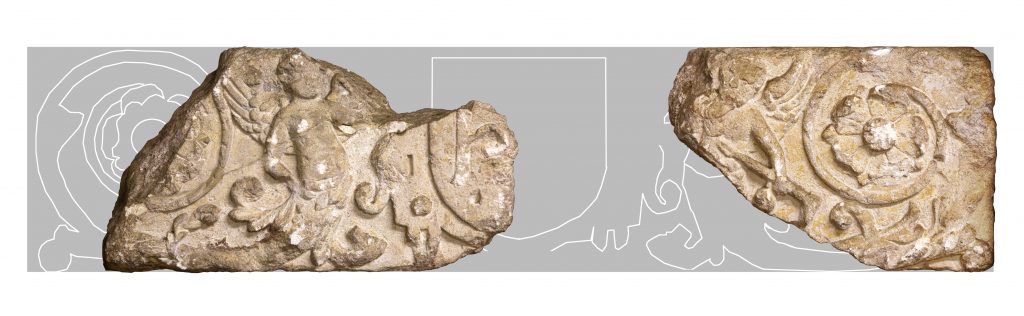
Two decorated fragments from the same fire surround. The figures either side of the coat of arms in the centre suggest youth, on the left,  and old age with a scythe on the right. 

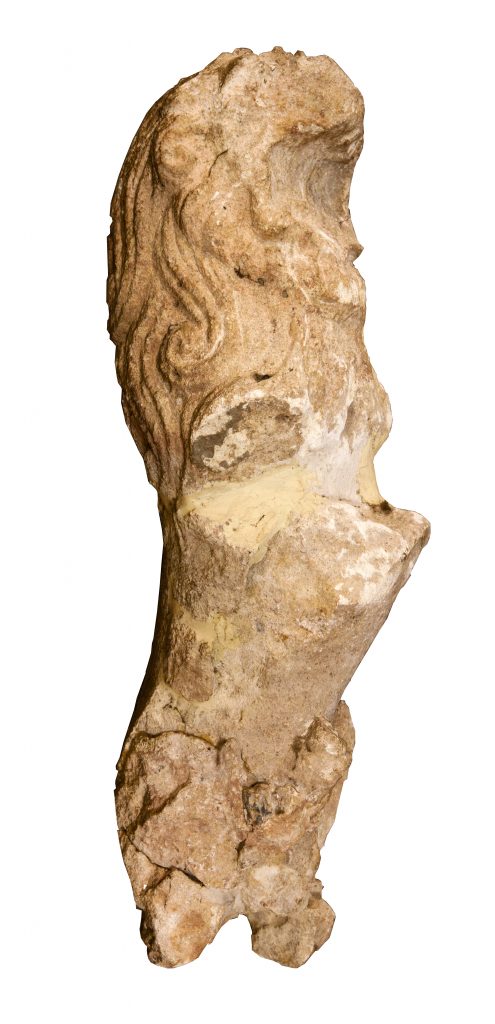
Eight decorated stone fragments make up the collection of stonework. Several can be identified as parts of decorative fireplace surrounds, one is a section of a mullion window, and there are a pair of carved stone heads. Two portions of stone have been reconstructed into a tall heraldic lion, though now heavily defaced. The lion retains an odd lead insert that might have been a lance or banner that it’d once clasped in its paws. The heads are badly weather-beaten and have been exposed to the elements longer than the other fragments, though they are still recognisable as that of two men; one with a beard and one clean shaven.
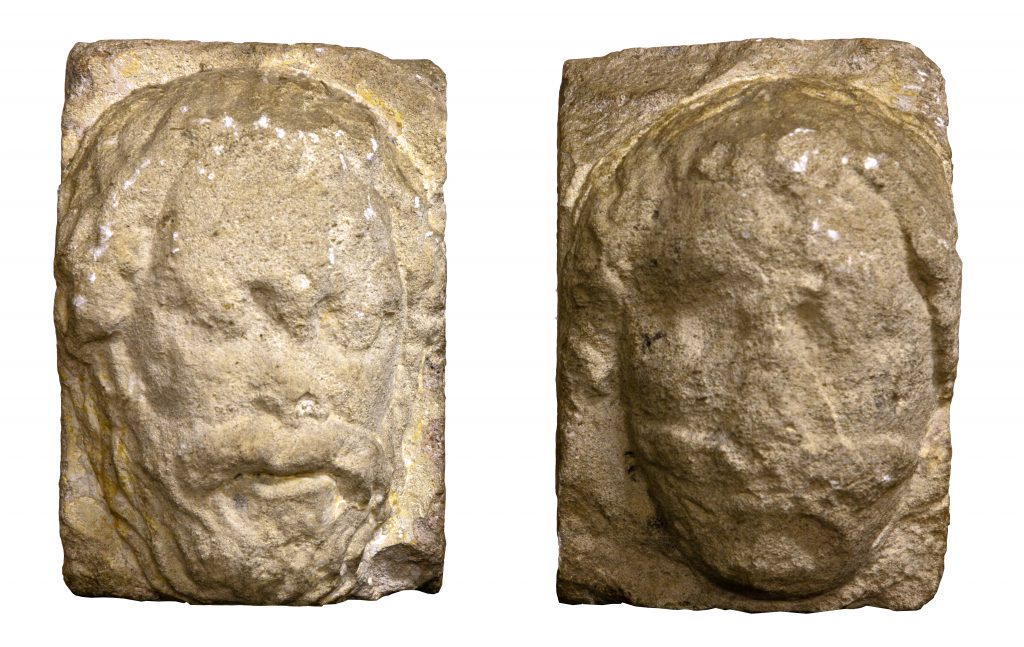
 A pair of badly weathered stone heads, supposedly showing Sir William Wyntour and his son
A heraldic lion repaired from being in two pieces. Possibly from a gate pier, or a roof parapet decoration.

When the collection came to auction it was described as “reputedly” from Kings Weston, though the circumstances of their discovery have since been established more accurately. The fragments were discovered in a boundary wall, on the “west side of Kingsweston Hill” by local amateur antiquarian Antony Scammel. Scammel was a well-known collector of historic artefacts and coins, and recorded the find in writing on the back of a print showing the old house that also formed part of the auction lot. He recovered the stones in 1967, but aside from the rough identification of the find spot we are still unsure of the exact location.
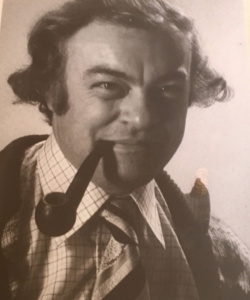
 Antony Scammel  (1937-2019) who discovered the fragments in a wall in 1967.

What we can tell from the stones is their rough date, from the style of the designs, and that they were deliberately broken up to use as building stone. Stylistically they accord with having been part of Sir William’s Tudor mansion, and the quality of the design and execution shows that they were from a high status building. Certainly a heraldic lion gate finial or roof ornament would most likely be found on a house of Kings Weston’s size and quality rather than a smaller house in the same vicinity. We must take Mr Scammel’s assessment that the wall in which they were found was Eighteenth Century on face value, but this would tie in well with the documented demolition date of the old building. Mr Scammel’s attribution of the sculpted heads as Sir William Wyntour and his son can be less certain.
Postcards from Kings Weston

A major new addition has been made to our website recently. You can now browse a collection of over 100 historic postcard images from across the Kings Weston estate.

In the early decades of the Twentieth Century postcards could be sent between towns in a matter of hours, with several deliveries a day; they were the text messages of their era. The collection dates mainly to the years before the First World War, before the telephone became the quickest way to communicate. The picturesque Kings Weston estate offered photographers great opportunities for to produce popular views for cards, and they seized on Penpole Point, the Iron Bridge, and the lily pond for their chocolate-box qualities. After the First World War postcards began a slow decline. Amongst the collection are a few representing the inter-war period, but only a couple from after WWII.

Postcard view of Shirehampton Lodge at the entrance to the landscaped parkland

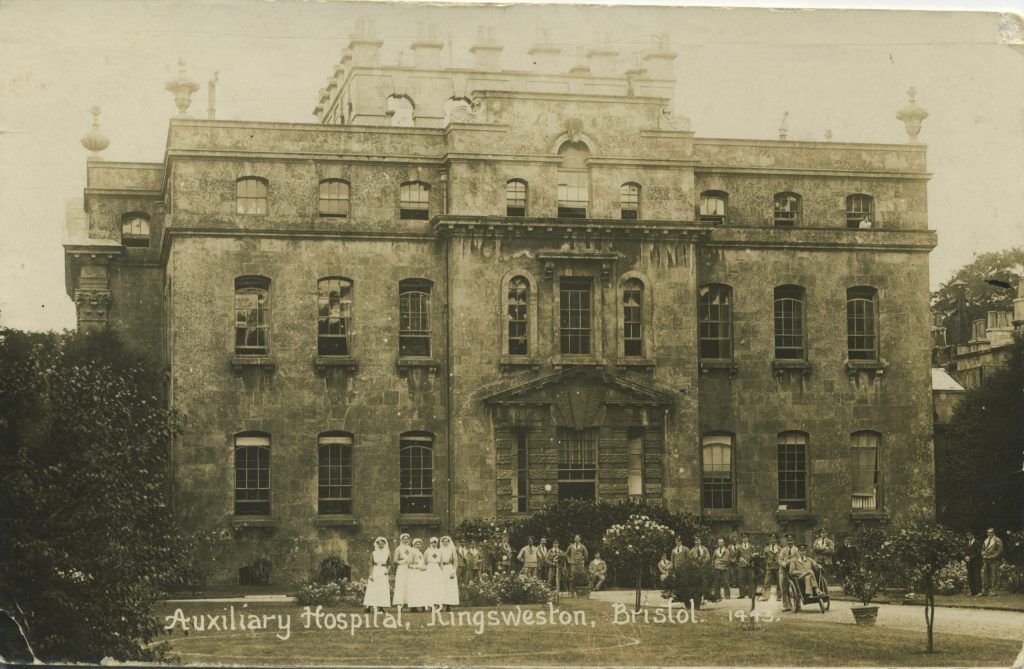
Views around Kings Weston house itself are relatively rare. It may have been the retiring character of Philip Napier Miles that saw him reluctant to see his home recorded in popular postcards. But a significant number that do record the house stem from the period it was used as an auxiliary Hospital during the Great War; perhaps the cards were sold in aid of Red Cross charities that Miles keenly supported. These were published by S E Robinson who ran the Post Office in Shirehampton and record many of the wounded servicemen who were sent to Kings Weston to recuperate. 

The house in service as a WWI Auxiliary Hospital. 

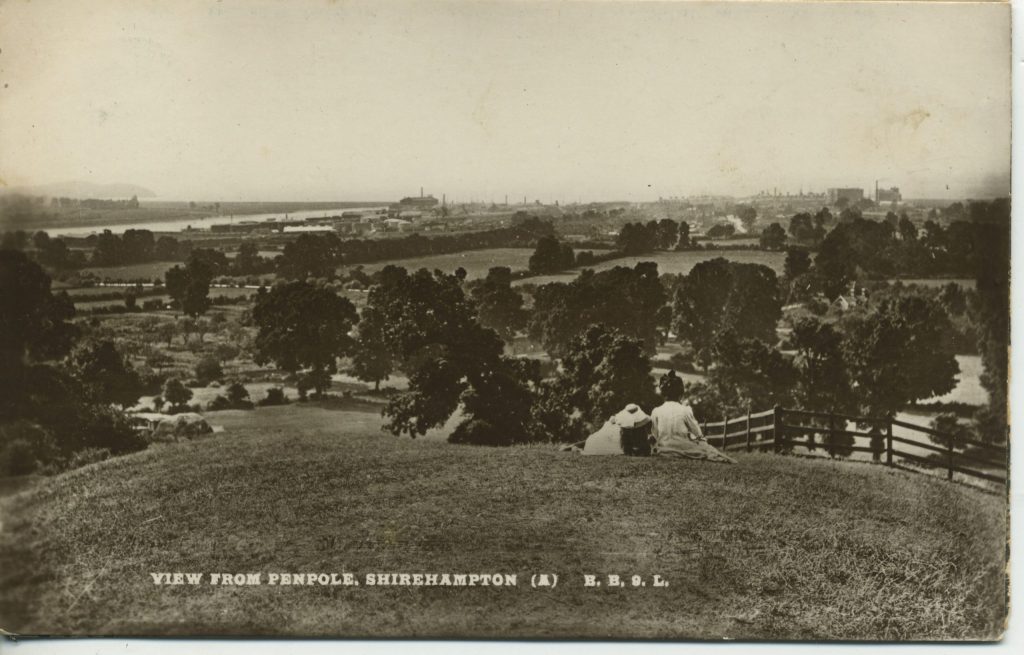
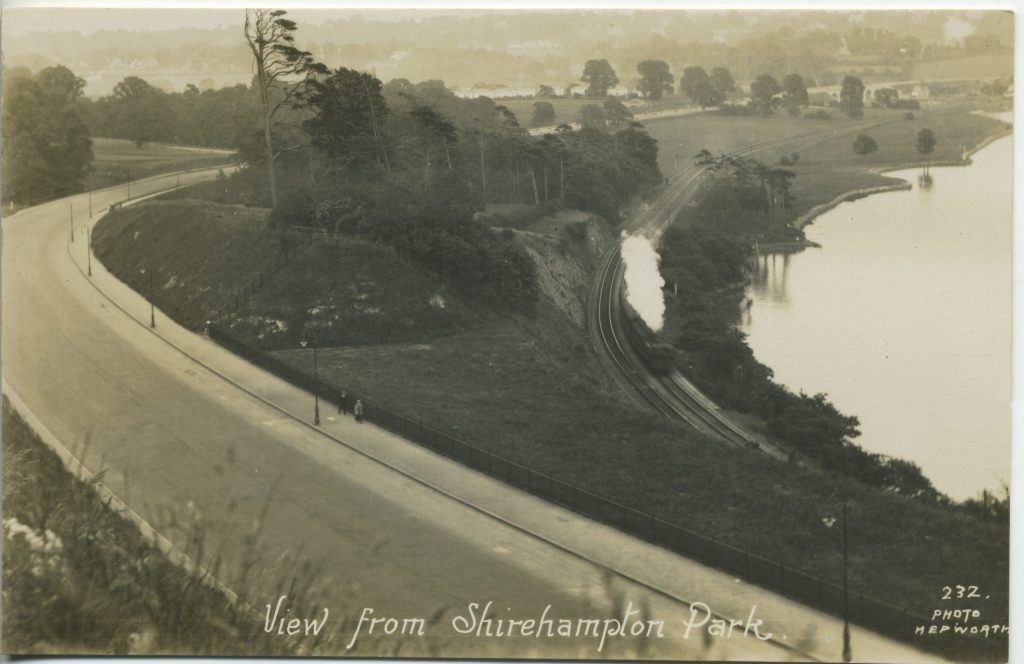
S E Robinson is again well represented amongst cards of Penpole Point that appear to have been a keen obsession of postcard photographers, with the spectacular views across the Severn of particular note. Sadly these views have gone; along with nearby Penpole Lodge that’s another frequent feature of cards. Spectacular views also attracted photographers to the southern part of the estate, on Shirehampton Park, where the impressive panoramas above horseshoe bend were a popular retreat for locals. As unlikely as it sounds the driving of the Portway through the same pastoral scene didn’t diminish its interest for postcard views. Perhaps it was the marvelous feat engineering that attracted purchasers of these views, many of which feature the new carriageway as much as the views beyond it. 

The view from Penpole Point at the turn of the Century.

These postcards are an important visual and social record of the times. Many have been written and sent, and occasionally you will find interesting snippets about the estate. One written from Kings Weston house and sent in 1906 is from an unnamed young lady who wrote “This is just a view of the house, but I am living at my mother’s. I have exactly the same work to do here as I did at the Castle, the housework. Instead of this I wish myself at home. Tell Jack I wish I never saw the place.”

You can look at the whole collection one the website at:  https://www.kwag.org.uk/gallery/historic-images-2/postcards-from-kings-weston/

The recently opened Portway with a train to Avonmouth passing below. Circa 1923. 

Historic artefacts donated to KWAG

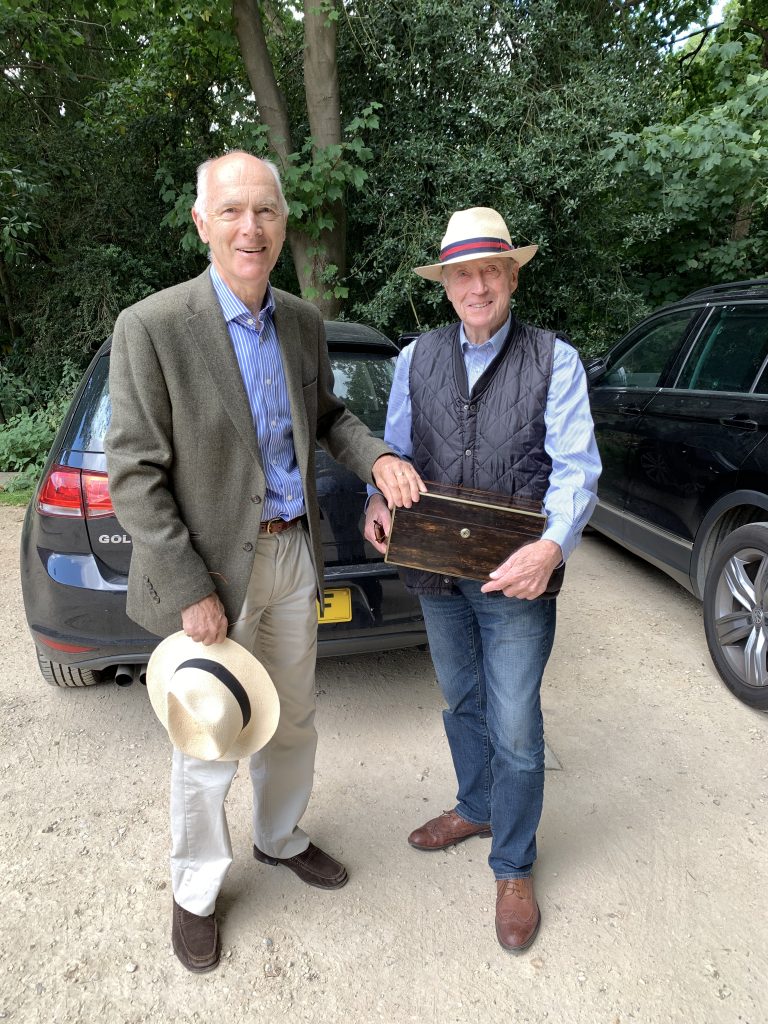
Donor, David Pickering (right) and his partner John with the box with its Kings Weston contents. 

Last month we shared some photos and memories of David Pickering whose uncle, Fred Whapshare. Since then David has very generously donated a number of historic items with Kings Weston connections to KWAG.

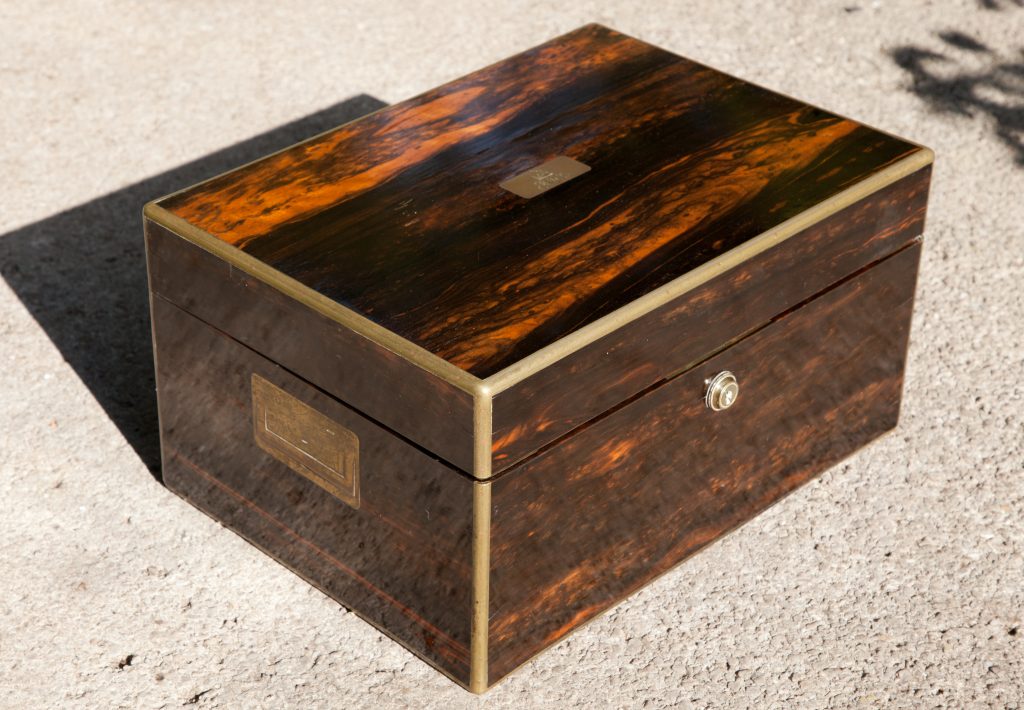
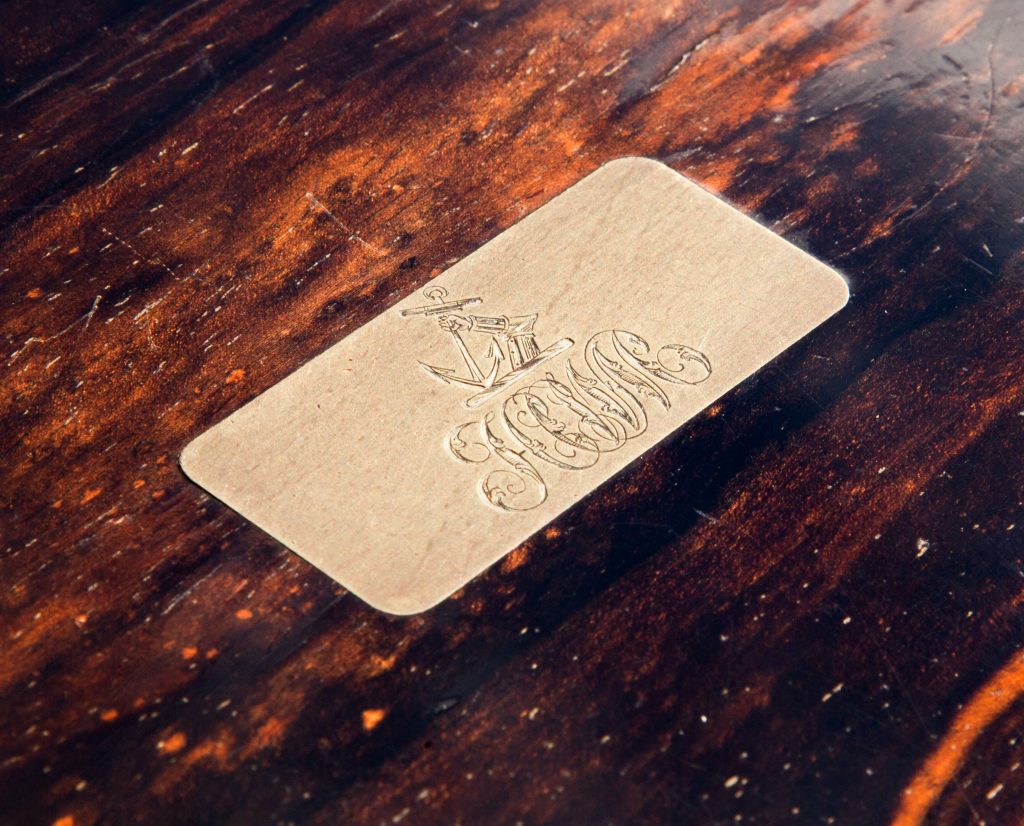
Central to the small collection is a beautiful box veneered in beautiful Coromandel wood, with robust but elegant brass edges and handles. During the reign of Queen Victoria, Coromandel was considered one of the most exotic, luxurious and expensive woods to work with and it was the veneer of choice for some of the finest boxes. It’s of little surprise that such a fine wood was selected for use on a possession of the Miles family who lived at Kings Weston between 1834 and 1935. In the top a rebated brass plaque has the initials HCWM joins the arm-and-anchor arms of the family; from this we can attribute the box’s ownership of Henry Cruger Miles, widely known as Cruger.

The Coromandel travelling case of Cruger Miles, 1874.
The Miles arms and monogram of Henry Cruger William Miles on the top of the box

He lived with his brother, Philip William Skinner Miles, at Kings Weston for much of his life. He never married, but was a highly regarded in Bristol, being High Sheriff of the City, a Master of the Merchant Ventures, and the principle supporter of the rebuilding of the Cathedral nave. On his death in 1888 he bequeathed all his possessions to the only heir, his nephew Philip Napier Miles, amongst which we assume was this case.

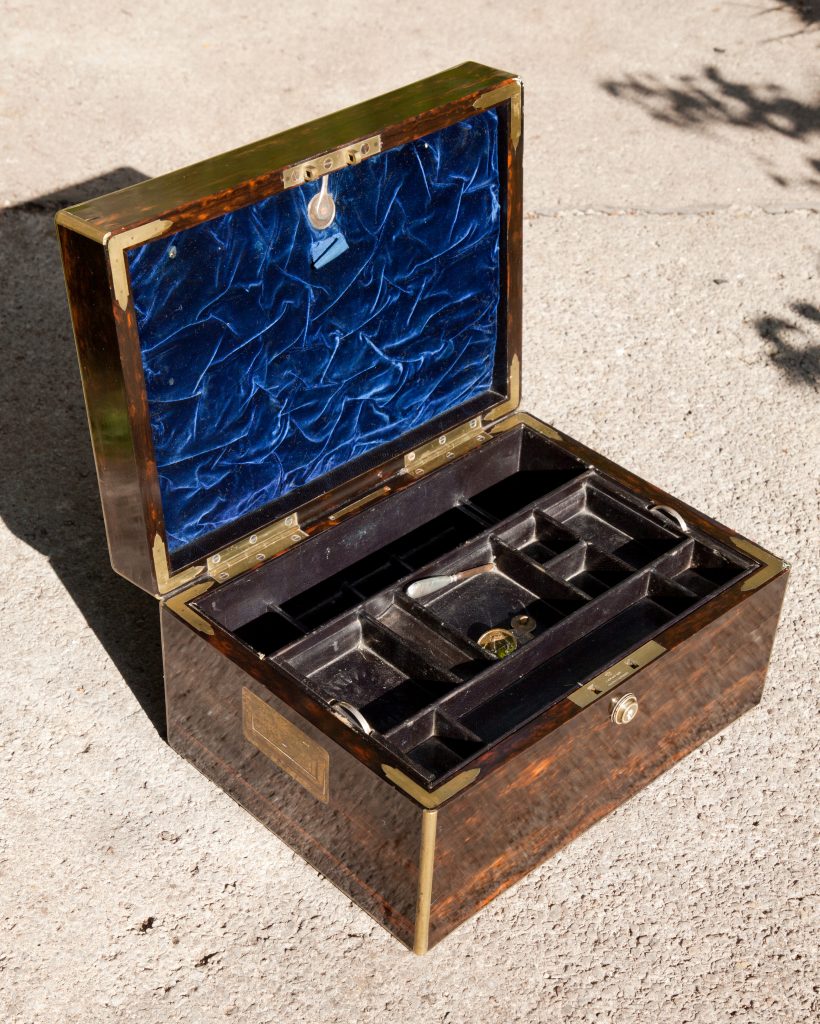
The interior of the box

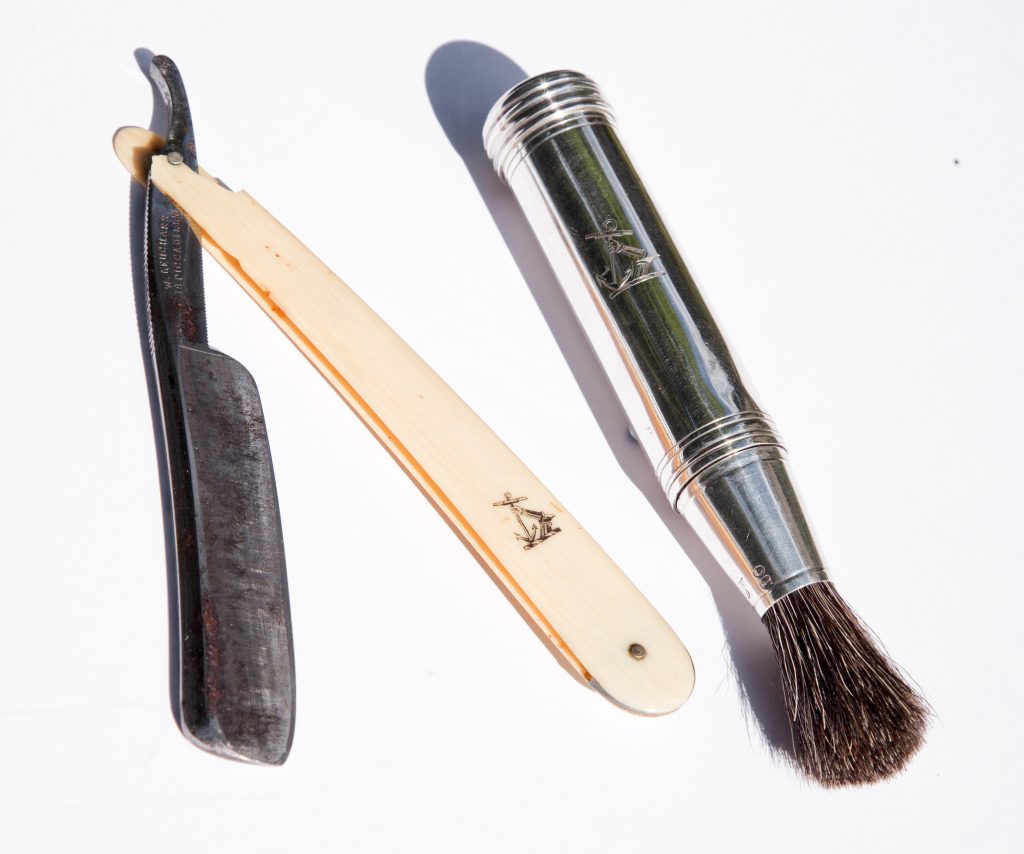
It’s designed as a travelling case, with handles, a robust but elegant exterior, and an interior fitted out with compartments, a silk lining, and a detachable mirror. Some of the original contents are happily still contained. A cut-throat razor and a silver travelling shaving brush are, sadly, the only survivors, but enough to be able to date the box to 1874 from the hallmarks.

Razor and travelling shaving brush, dated to 1874.

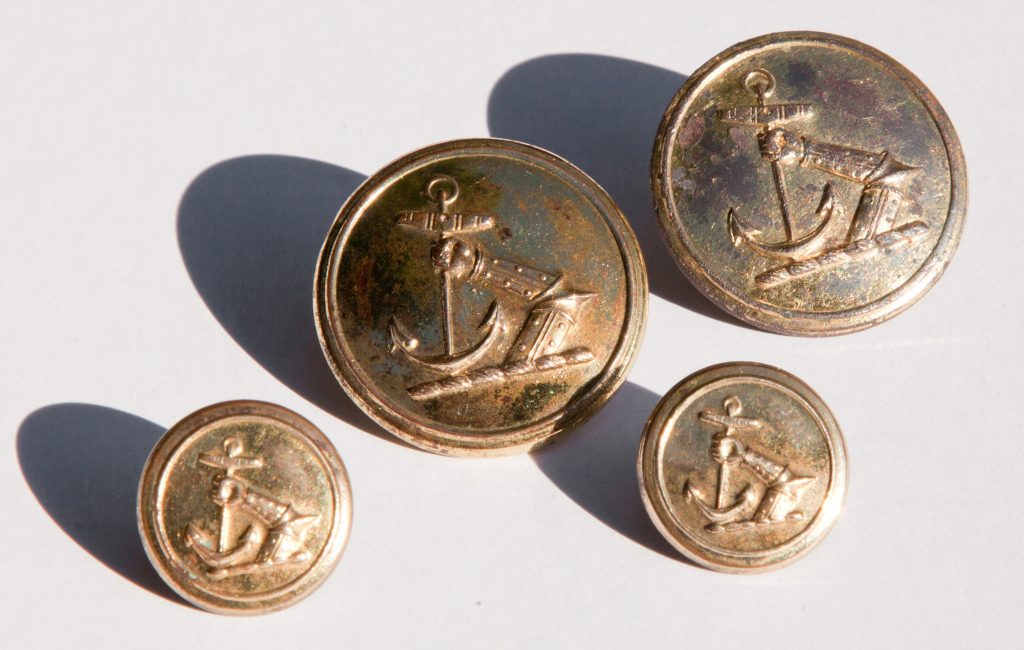
Now housed in the box are a partial set of gilt livery buttons carrying the Miles family arms. These, Mr Pickering tells us, were dug from the garden of a cottage on Kings Weston Lane that his Uncle and Aunt lived in until after WWII. Perhaps they were stripped from an old uniform and discarded when new clothes were procured.

 Four gilt livery buttons bearing the Miles arms and dug up from a cottage on Kings Weston Lane.

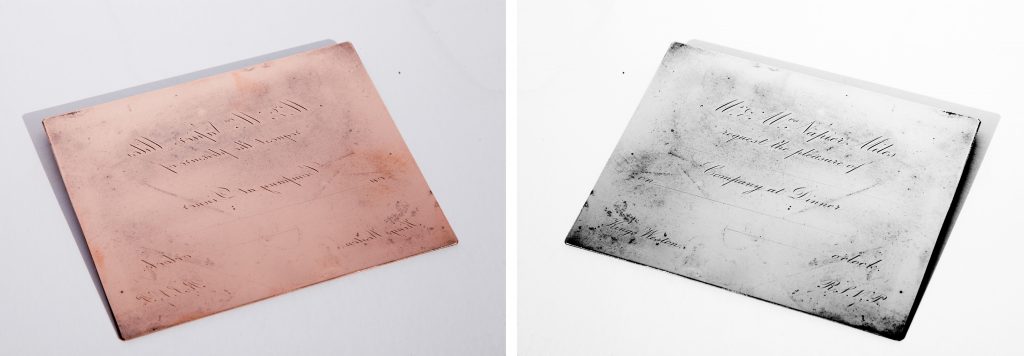
Another item with a direct Kings Weston connection is an engraved copper printing plate. On this, written backwards, is an invite to dinner with Mr and Mrs Napier Miles at Kings Weston, with the details of the invitee and time to be filled in by hand when the plate was used to print invitations. It must date to after Napier Miles married in 1899 and his death in 1935, but it’s not possible to narrow down dates further.  

Copper plate for printing dinner invited for Napier Miles and his wife. The image reversed on the right to show the text. 
Fred Whapshare, head gardener at Kings Weston’s, secateurs

The last item is a more palpable link to My Pickering’s own family connection. A pair of secateurs was owned by his uncle in his role as head gardener at Kings Weston. We shared a photo of Fred Whapshare in our last newsletter and the garden tool was his, and shared with Napier Miles when the latter borrowed them, on occasion taking them to use at his Italian villa at Allassio. 

We’re incredibly grateful to Mr Pickering for the kind gift of these items, that will now form part of our growing collection of books, images, and artefacts with Kings Weston connections.      

A Kings Weston family

We were contacted recently by David Pickering who has a family connecting to Kings Weston and still lives nearby. He’s kindly send us some historic images to publish in our newsletter and we’re grateful to him for adding to our understanding of the estate’s history.

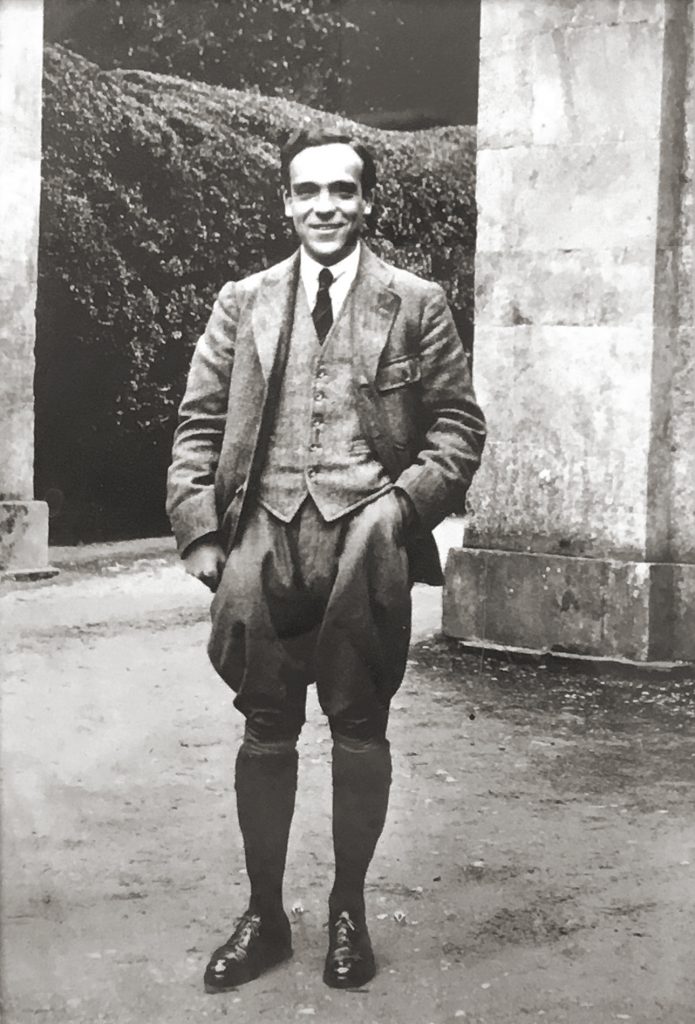
Fred Whapshare, head gardener at Kings Weston, probably in the late 1920s. The stone gate piers are those outside the Brewhouse (courtesy of David Pickering)

One of the photos is of his uncle Fred Whapshare posed, probably in the 1920s, in front of the stone gate-piers at the back of the house, one of which still stands. Mr Pickering writes that his uncle “ worked on the estate most of his life, as a gardener ,being born in about 1893. His wife worked as a housemaid there, and they were left in charge as custodians when the house was closed up before the old lady (Sybil, Philip Napier Miles’ wife) moved to the House in the Garden. They eventually bought the attached-row of Hawksmoor cottages in the lane, before one day selling up and building the bungalow ‘Wingrove’ in some of their garden.”

He continues “My uncle carried on as gardener when Mrs Miles moved to the House in the Garden, and I have fond memories of being taken round the place as a child, being given my first-ever peach from a hot-house wall. Really I have always felt that the estate was part of my own background. My Aunt and Uncle were devoted to the place, and worked there most of their lives. Some entertaining stories of staff parties, with exuberant footmen!”

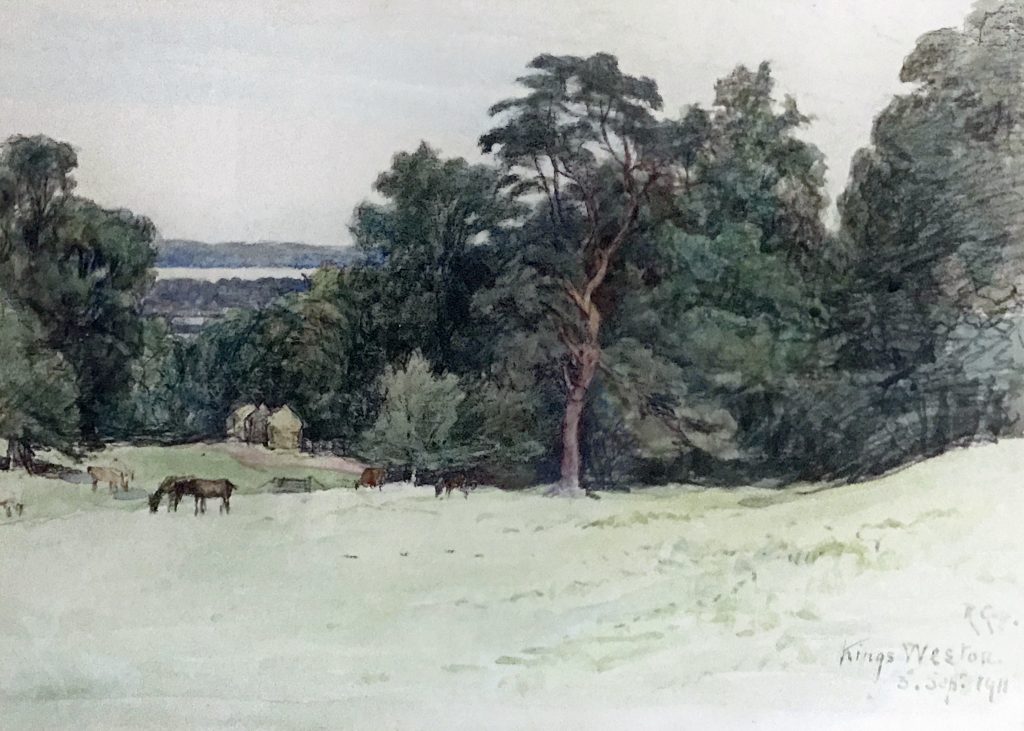
When, in 1937, the contents of the house were auctioned, after the death of Philip Napier Miles, Mrs Whapshare bought a few keepsakes. These included some paintings and etchings of Italy done by the Miles’s brother in law, the artist Robert Goff. Goff regularly joined the Miles’s at their villa on the Italian coast and they shared a love of the country. Also amongst Goff’s works Mrs Whapshare bought was this painting of Kings Weston, dated 5th September 1911, and looking across Shirehampton Park. The haystacks in the middle distance are at the bottom of Longcombe, now on the golf course, and the present location of a utilitarian steel shed, but the focus of the painting appears to be the twisted red pine tree, a feature that appears in many of Goff’s other works.

A view by Robert Goff, dated 5th September 1911, and showing the view into Longcombe in Shirehampton Park. (courtesy of David Pickering)

Another historic view of Penpole uncovered

Another Eighteenth Century picture of Kings Weston has appeared recently. Dating from the end of the century it comes for a period when the estate was internationally famed for its spectacular views, its grounds, and collection of paintings in the house. Probably produced as a souvenir for wealthy visitors to pick up as a memento of their visit this view of Penpole Point, the dial, and Lodge is one of many similar paintings and drawings produced to capture the spectacular panoramas once enjoyed. This variation on the theme is unusual in the artist having stepped-back from the point itself, and included the more ornamental east from of Penpole Lodge as well as Penpole Lane in the composition. Although the accuracy of the detail and perspective can’t be entirely trusted it’s another nice addition to the collection of known historic images of the estate.   

The Scouts and WWII remembered

There had been great efforts made to celebrate VE day at Penpole Point in 1945; volunteers had erected a huge bonfire on the spot near Penpole Lodge where celebratory beacons were traditionally lit, but all came to nothing as the weather put pay to the party and heavy rain dampened many similar bonfires across the city. Rather than to dwell on this we’d like to give you an idea how Penpole  Wood contributed to the war effort in a small way.

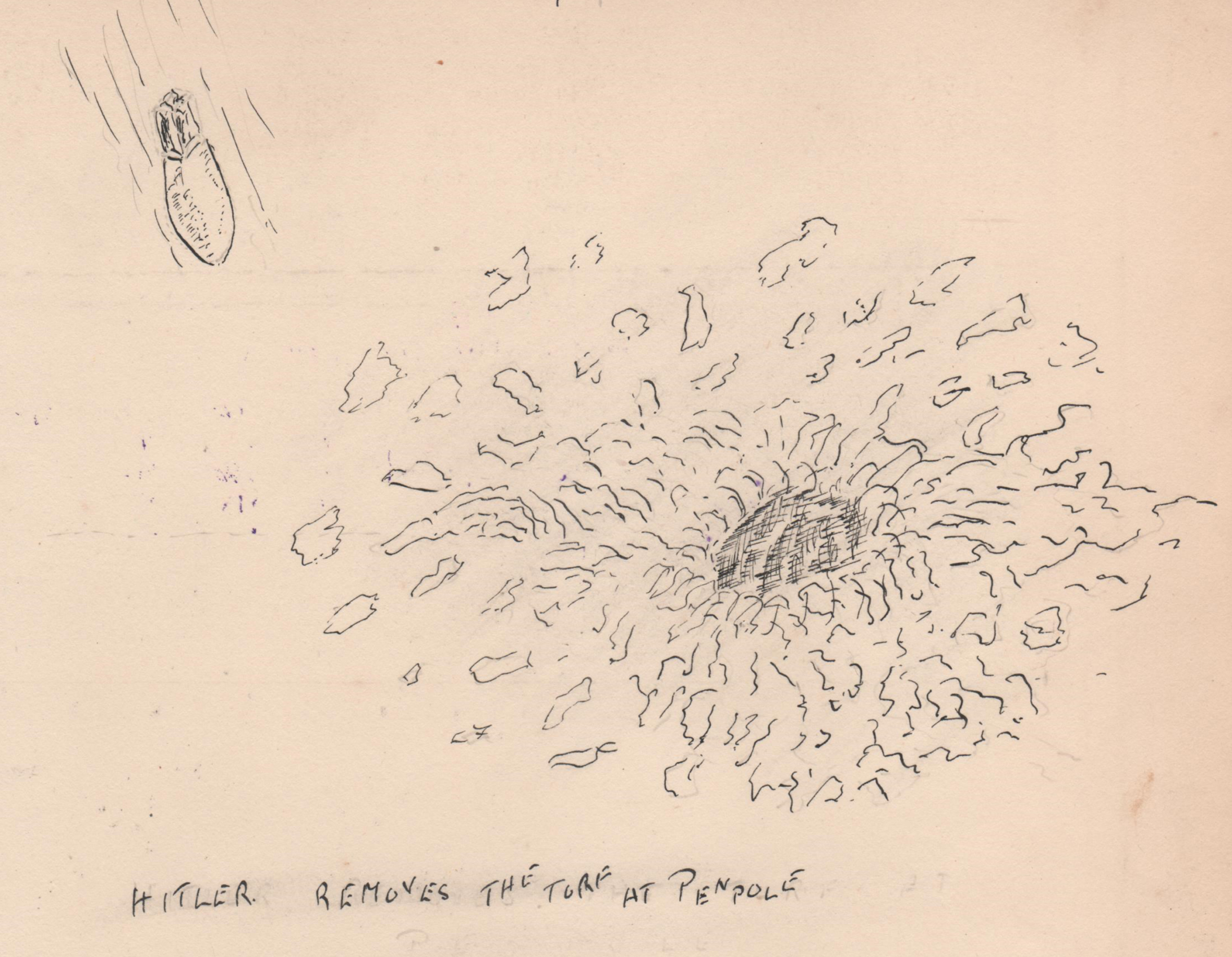
drawing showing the impact of bombs on Penpole from Webber’s log book.. 

Things started even before the war had begun. In April 1939 there was a major training exercise conducted across the city to ensure its defences were operational, and, no doubt, to give the public some reassurance the authorities were prepared. This involved planes being flown across Bristol for anti-aircraft guns to target (firing blanks), and at night a similar mock raid with the addition of seach-lights. One of the mobile searchlights was stationed at Penpole Point and the exercise was reported to have been “spectacular”. It’s not known whether Penpole Point was regularly used for search-lights when aerial attacks came for real, but its elevated position away from targets in Avonmouth would have been helpful.

We’ve mentioned before the requisitioning of Penpole Lodge by the Home Guard, but the story doesn’t end there. In 1937 Bristol’s Scout groups bought the woods and adjacent fields for a district scout camp. Their time there is well documented in a log book written by the commissioner and warden in charge of the camp Mr W Webber. Webber records how camping was heavily restricted during the war years, though it still attracted boys from around the city at weekends subject to ensuring they included their gas mask in their kit.

The change in scouting activity sketched in the log book. 

In November 1940 the woods were “lit up like fairyland” as between 60 and 80  incendiary bombs rained down. The following month two high explosive bombs exploded at the bottom of the woods. It was at about the same time that the Home Guard took over Penpole Lodge as a look-out.

The Scouts threw open the woods to the Home Guard as a training ground for scouting and their tactics likely to be helpful in case of invasion. The Home Guard were taught such essentials as camouflage and stealth movements by the Warden of the camp assisted by one of the older Ranger Scouts. Webber wrote “Penpole will have something to be proud of in the fact that she did her bit by training local defenders to do their jobs”.

Advice provided to the Home Guard by Scouts following a training exercise in Penpole Woods.  
the log altar set up in the Scouts chapel in Penpole Woods. 

One final tragic detail worth relaying from the logbook, and, at this time, it’s important to remember those who gave their lives during the war. John Halpin of the St Christopher’s scout group and a district commissioner for the East Bristol Rover Scouts, lost his life proceeding to his post in Avonmouth during an air raid; He was just 21. Rather than being buried he was cremated and his ashes were scattered in Penpole Woods at the Scout’s Chapel, within the circle of lime trees that had been turned into an open air church when the scouts first took over the land. Today it’s sometimes called the seven sisters.

Easter at Penpole Point in past times

For a few brief years in the prelude to the First World War Penpole Point became a popular place to offer praise over the Easter weekend. In 1910 the then vicar of the parish of Shirehampton, Rev Hector Powell, began the practice of holding open-air services on the grassy slopes of the point. Powell was an enthusiastic evangelical figure who stood in contrast to some of the more traditional clergy of the time, but were welcomed and attracted followers from the city beyond the village.  

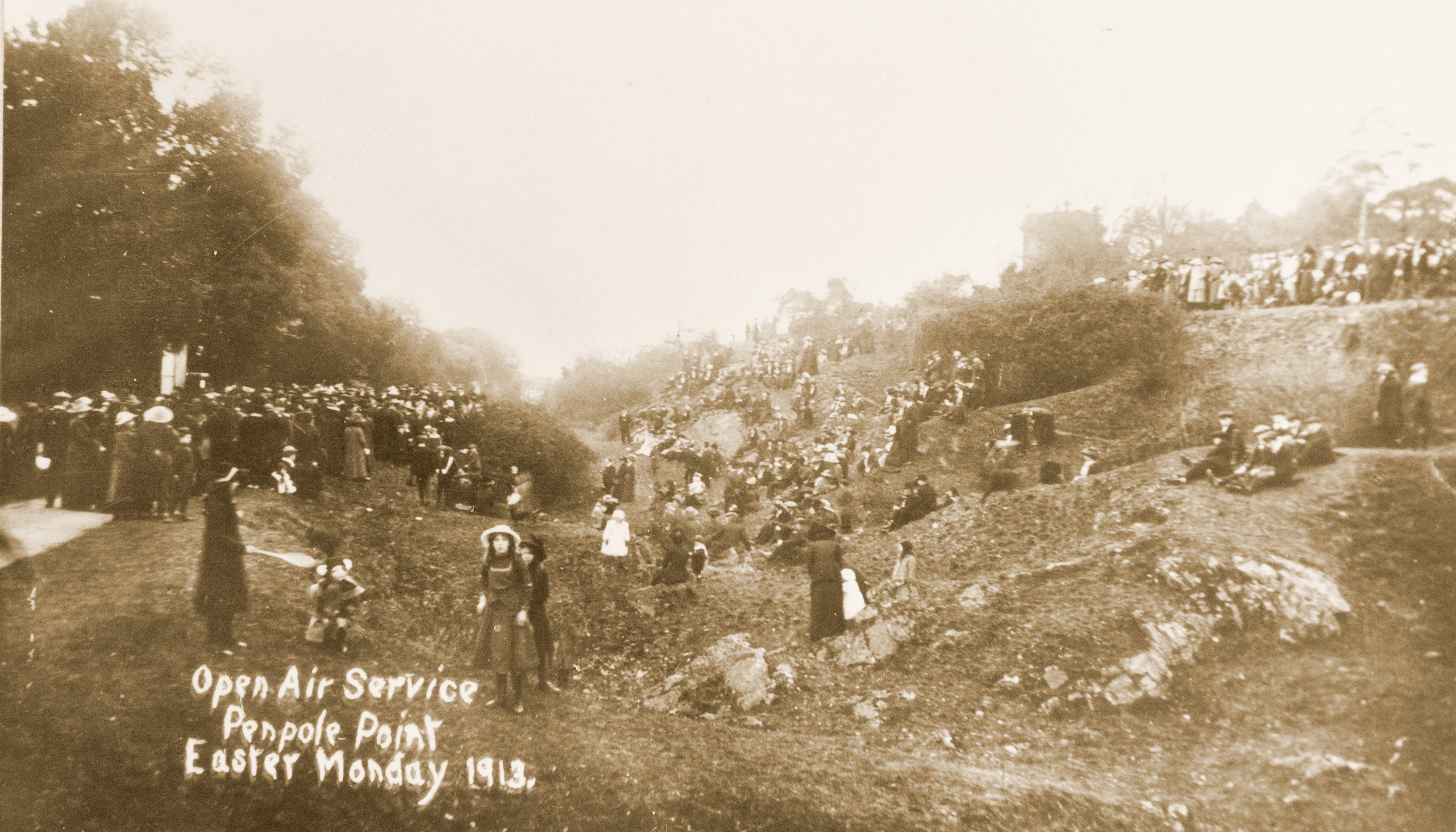
Penpole Point, Easter 1913, looking north with Penpole Lane on the left. 

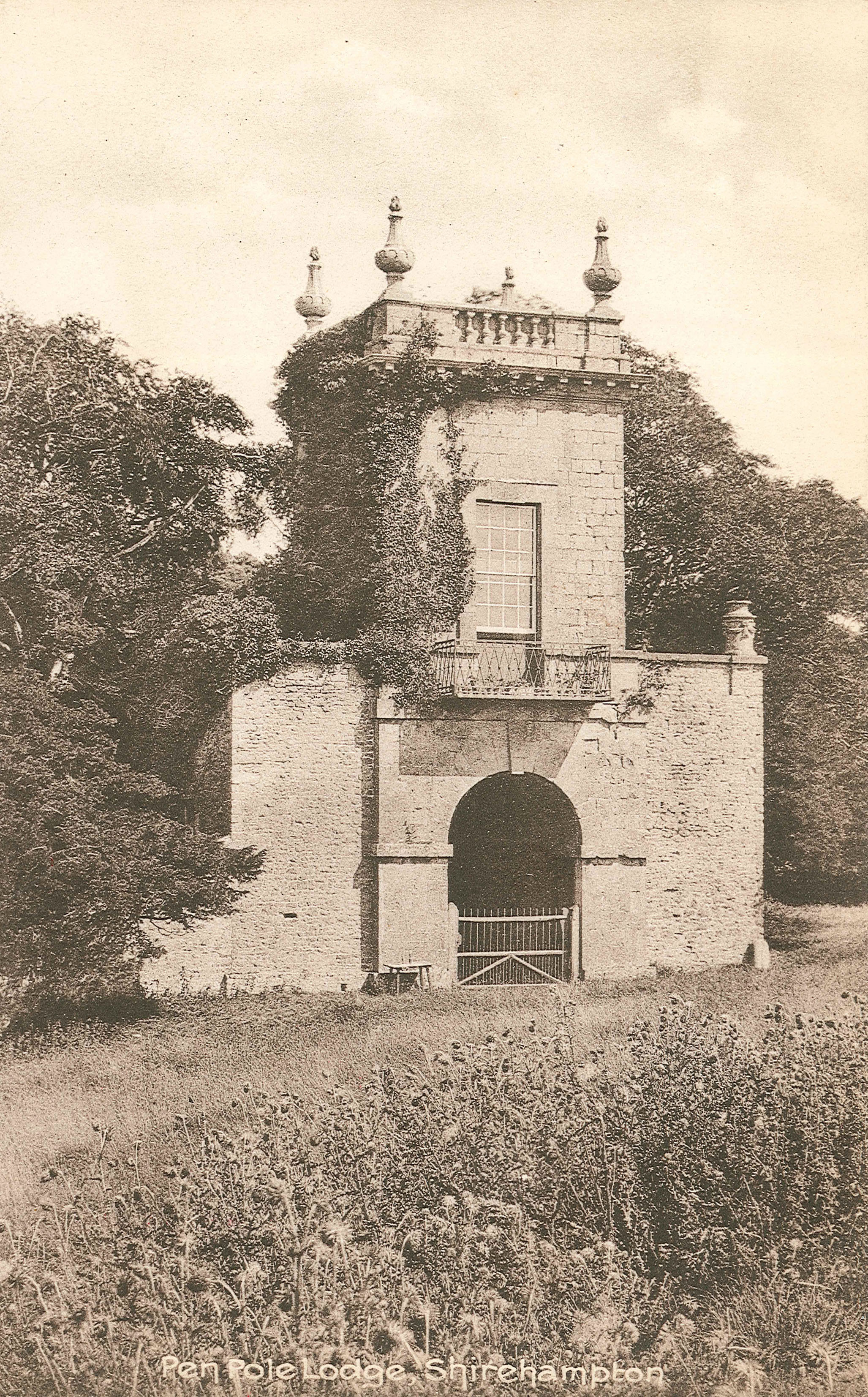
 Evangelical gatherings at Penpole Point were held on Easter Monday and were less formal than the Sunday church services. They were very popular locally and attracted great crowds. There was singing by a special choir and Powell noted “the natural formation of this valley-like spot lent itself to the sound of many voices”. The spot this 1913 photo records hosting the services does indeed offer a well-appointed amphitheatre for crowds to gather on, with the service taking place on Penpole Lane on the left. Just visible on the horizon is the tower of Penpole Lodge.  

Penpole Lodge in the early 20th Century. 

After Reverend Powel moved to a new parish in 1912 he continued the tradition of Easter Monday services at Penpole, but there was increasing conflict between him and the new incumbent at the local church over the events. Eventually, after 1914, these open air services ceased, at least in part due to the First World War.

After the war services resumed, but took place on Rogationtide, the fifth weekend after Easter, when a good harvest was prayed for and the parish boundary was often walked. The Tower of Penpole Lodge often acted as the pulpit for these open-air services, before its demolition in 1950. After that year the parish gathered in front of its ruins. In her book Shirehampton Story Ethel Thomas records that the BBC came to Penpole to film the Rogationtide ceremony which was broadcast across the UK. We wonder does anyone remember this event, or whether the BBC might have recorded it? It would be fascinating to see it again.

Rogationtide open air service taking place outside the ruins of Penpole Lodge in 1950.

Daffodils go wild on The Circle

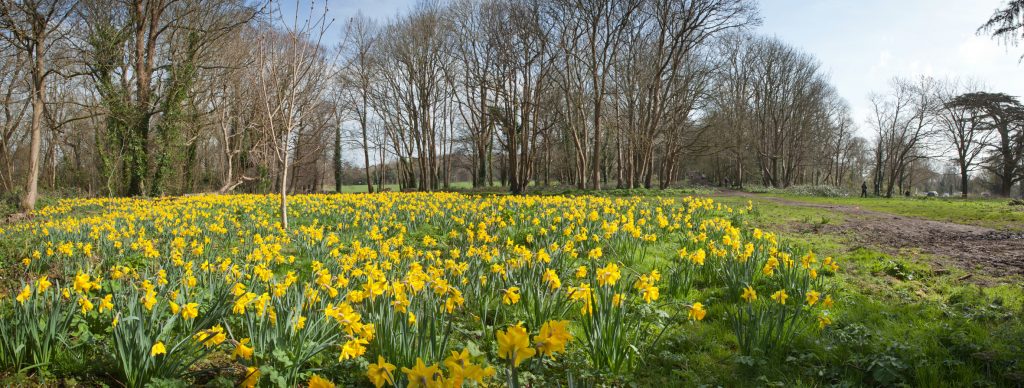
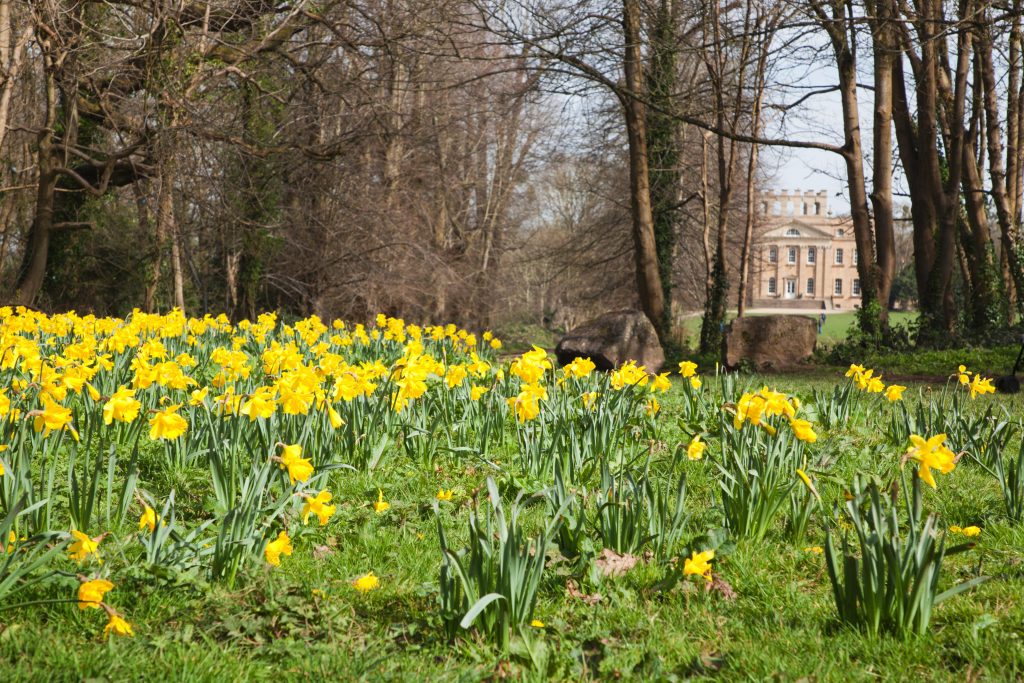
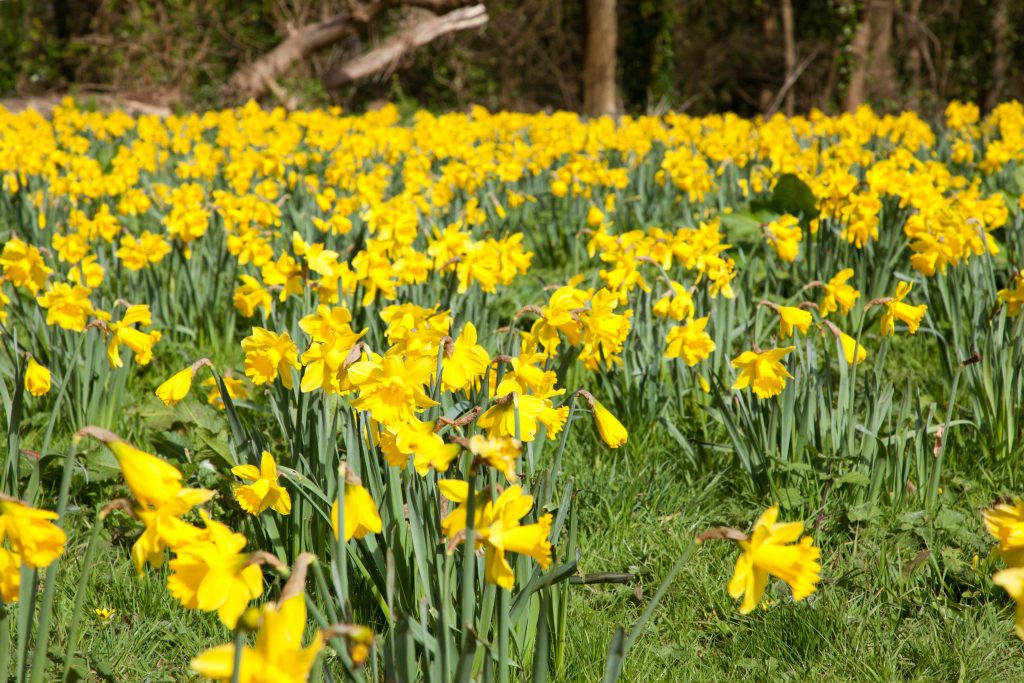
Last October volunteers from KWAG, along with families from around the estate, came up for our 7th annual Big Bulb Plant. Our target was to plant over 8000 daffodil bulbs on The Centre. This are was the historic heart of the landscaped parkland, and remains the focus of the paths and avenues crossing the estate today.

The October event was our most popular yet, and the bulbs have now burst to life in dramatic fashion! The whole are is now richly golden with a dense field of flowers and are proving quite an attraction. The daffodils can be seen far across the park, appearing in views up the main avenues, from the lawns around the house, and from the path from the public car park on Shirehampton Road.

It’s difficult to imagine that just a few years ago this same area was a deep jungle 8 feet deep in brambles and hemmed-in with invasive cherry laurel. KWAG volunteers have gradually cleared the area and have been methodically keeping on top of regrowth since then. The flowering of the bulbs marks a huge landmark in reversing the tide of neglect and enhancing the parkland.

Southwell’s Royal command – Historic document surfaces at auction

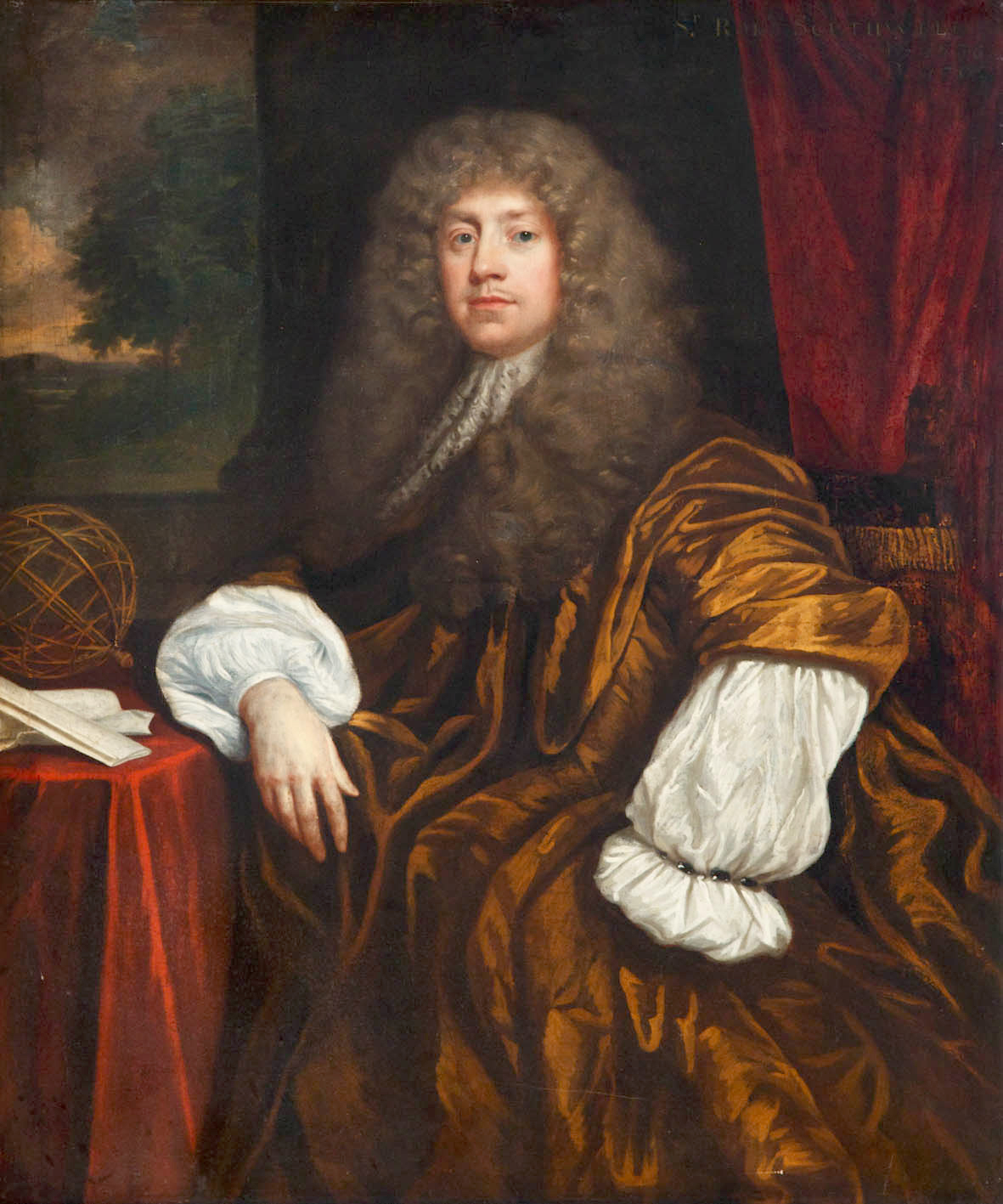
 Sir Robert Southwell by Godfrey Kneller. Circa 1675.

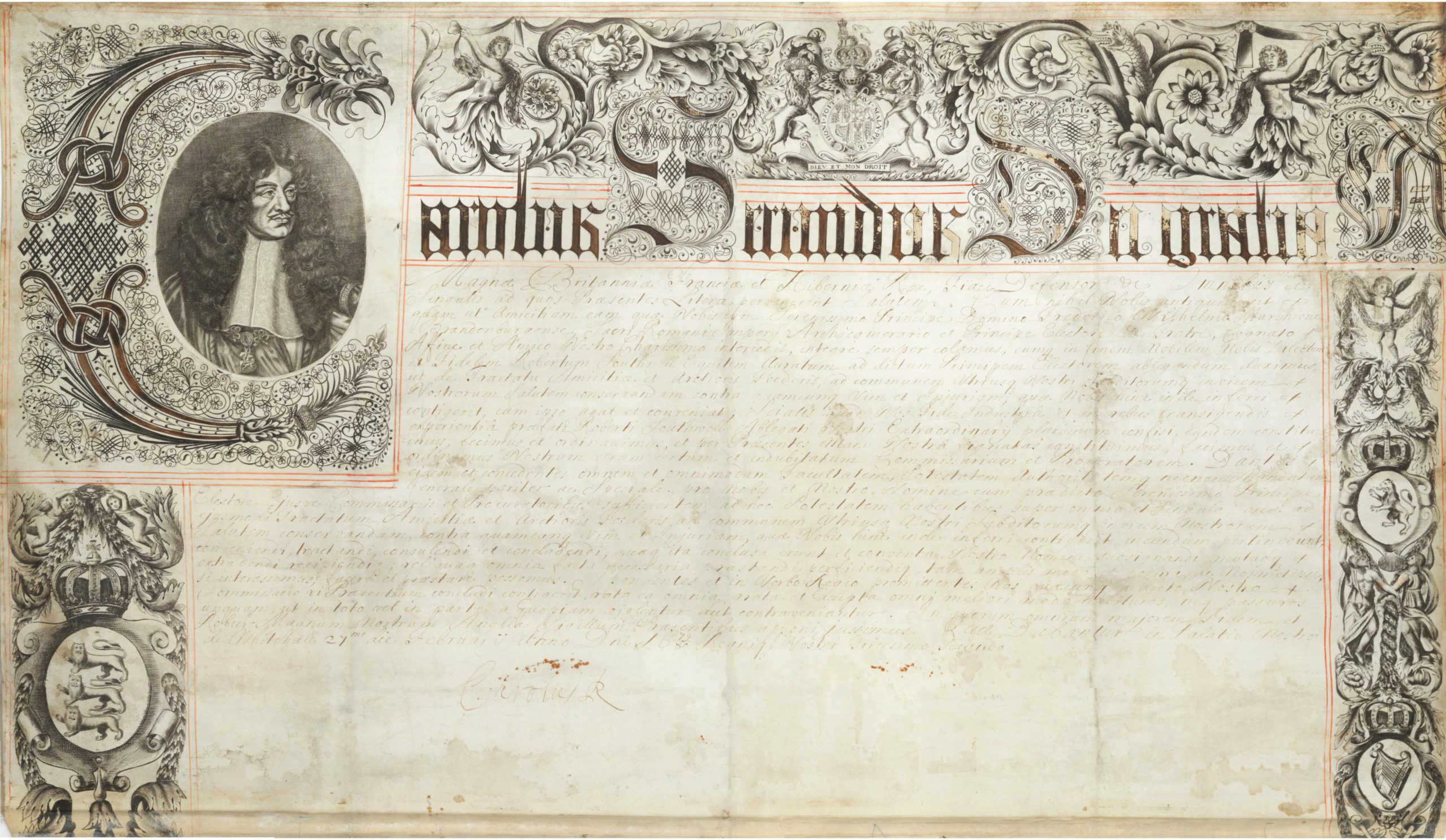
Another interesting artefact that’s appeared in auction recently is this Seventeenth Century document; it’s the warrant appointing Sir Robert Southwell to be ambassador to the Elector of Brandenburg in modern day Germany. The warrant was issued in 1679, the same year as Sir Robert had bought Kings Weston and was in the process of moving his family there. He’d been keen to retire from life in King Charles II’s court following his wrongful implication in a Catholic plot. Court life had become fraught with intrigue and Sir Robert  was eager to step away from it. He’d had a distinguished career, but ahead of his permanent move to Kings Weston resigned all his court positions, but the King maintained his trust in a faithful servant and entrusted him with an important diplomatic mission “for the purpose of promoting our friendship and diplomatic relations in accordance with our mutual wishes”.

Sir Robert regretfully accepted the instruction from the king, but it’s interesting that the warrant describes him as “our faithful and diligent servant”, indicating the regard and trust placed in him by the monarch.  The mission was connected with a scheme to construct an alliance against France, and it took Southwell to the prince of Orange, the future King William III, and the court of Brunswick–Lüneburg. His onward progress to the Brandenburg Court at Potsdam was curtailed due to plague in the city and Sir Robert gladly returned home to Kings Weston where his family waited.

It was his contact with William of Orange that no doubt put him in good stead when William came to the English throne in 1689. Abandoning his retirement he re-entered court life and was quickly appointed Secretary of State to the Kingdom of Ireland; a position that was to prove important for subsequent generations of the Southwell family. The friendship between the men was affirmed when the King was entertained overnight at Kings Weston when the pair returned from Ireland and the Battle of the Boyne in 1690.  

Engraving showing King William’s arrival at the mouth of the Avon and progress to Kings Weston house. 

The document  is on velum with an engraved border, but the text is hand written, and at the foot it’s signed “Carolus R” by the king. Possession of the document conferred  protection and total freedom as the King’s agent and ordered that he “shall not be dealt with in any way violently or unkindly”.

Sir Robert was amongst the best travelled courtiers of the age and his travels can be tracked on this map . The warrant is an important document that tells us not only of his importance to the government, but also something of his relationship with King Charles. It’s also significant in being his final commission before his planned retirement to his new estate at Kings Weston.

Should anyone be in interested in acquiring the document it’s for sale very soon, 11th March at Bonham’s auction house. The estimate is £800-£1200. 

Below: KWAG’s map showing all of Sir Robert’s know travels

New painting found of the Parkland 

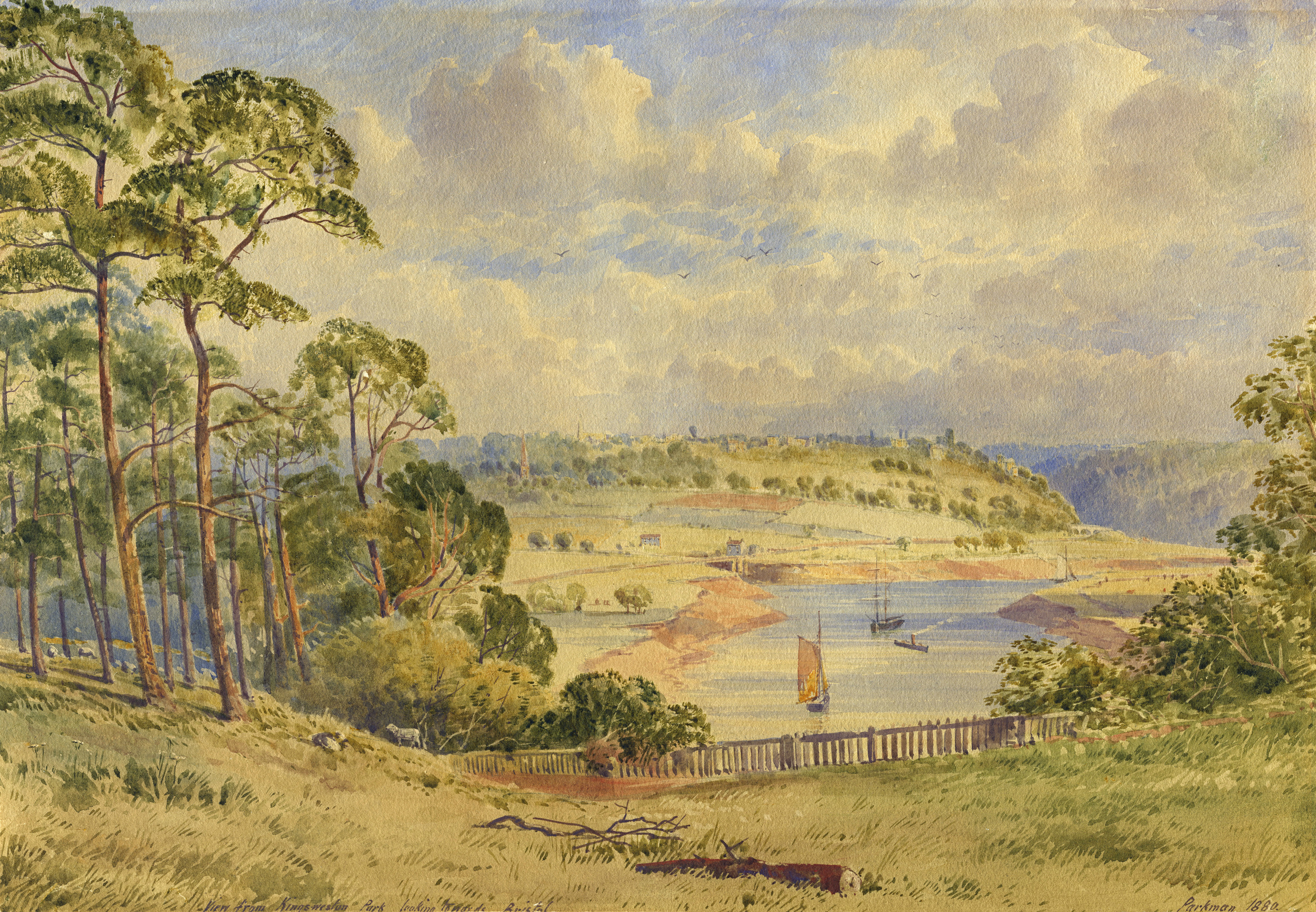
A recent auction’s turned up a new painting of Kings Weston. Showing the celebrated view south from the Shirehapton Park portion of the estate it dates from 1880; before the Portway spoiled the scene. The watercolour is by Alfred Edward Parkman (1852-1930) who was a prolific local artist specialising in views of historic Bristol, but here he strays out of the city and records the panoramic landscape view above the Avon.

The area where Sea Mills now stands is open fields, but the railway, opened in 1865, already makes its mark through the scene before winding unseen in a cutting immediately below the artist. The pines on the left were the remnants of a plantation first planted in the early 1700s and were a popular local landmark until they were felled in about 1919 for the Portway. The whole of the area of grassland seen here in the foreground would be entirely quarried away with the coming of the road, and the extensive civil engineering contributed heavily to the road remaining one of the most expensive per-mile ever attempted in the UK.  The image has already been added to the Know Your Place website at the location it was painted.   

Kings Weston Park, 1880, Alfred Edward Parkman (1852-1930)