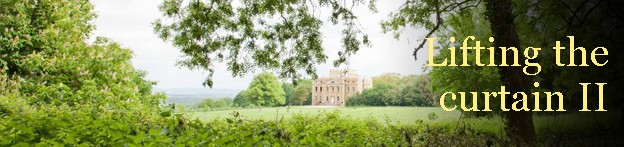
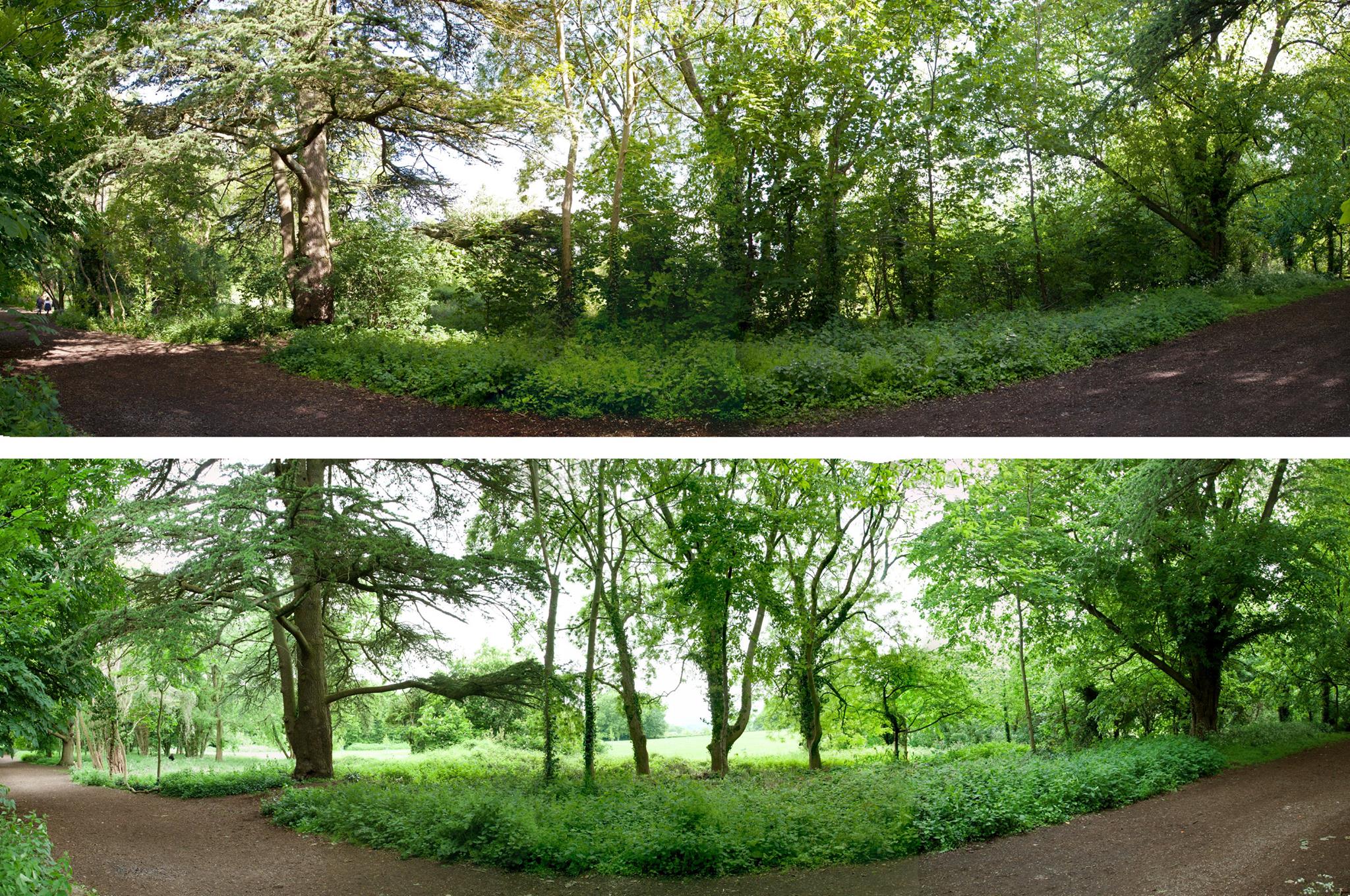
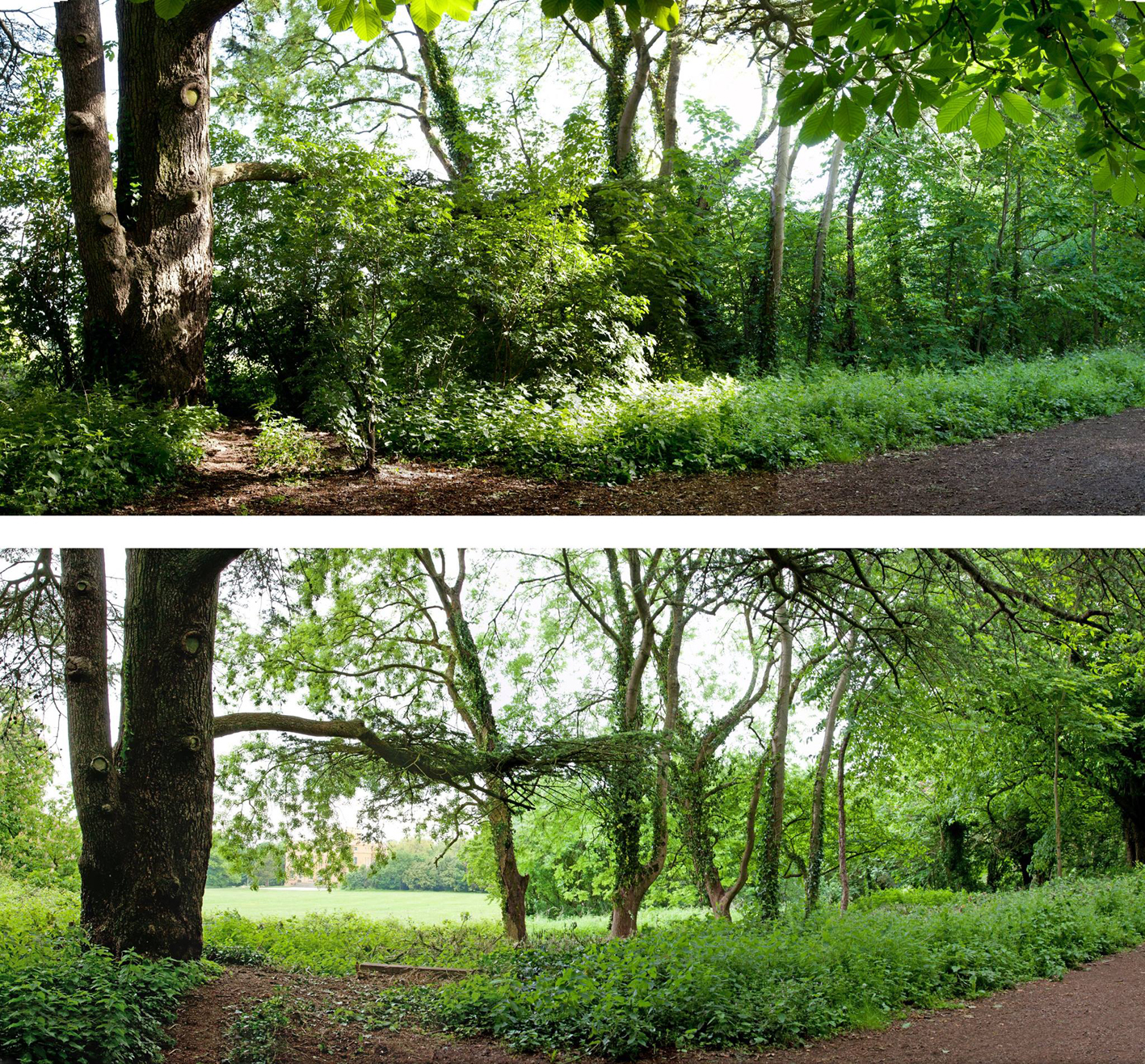
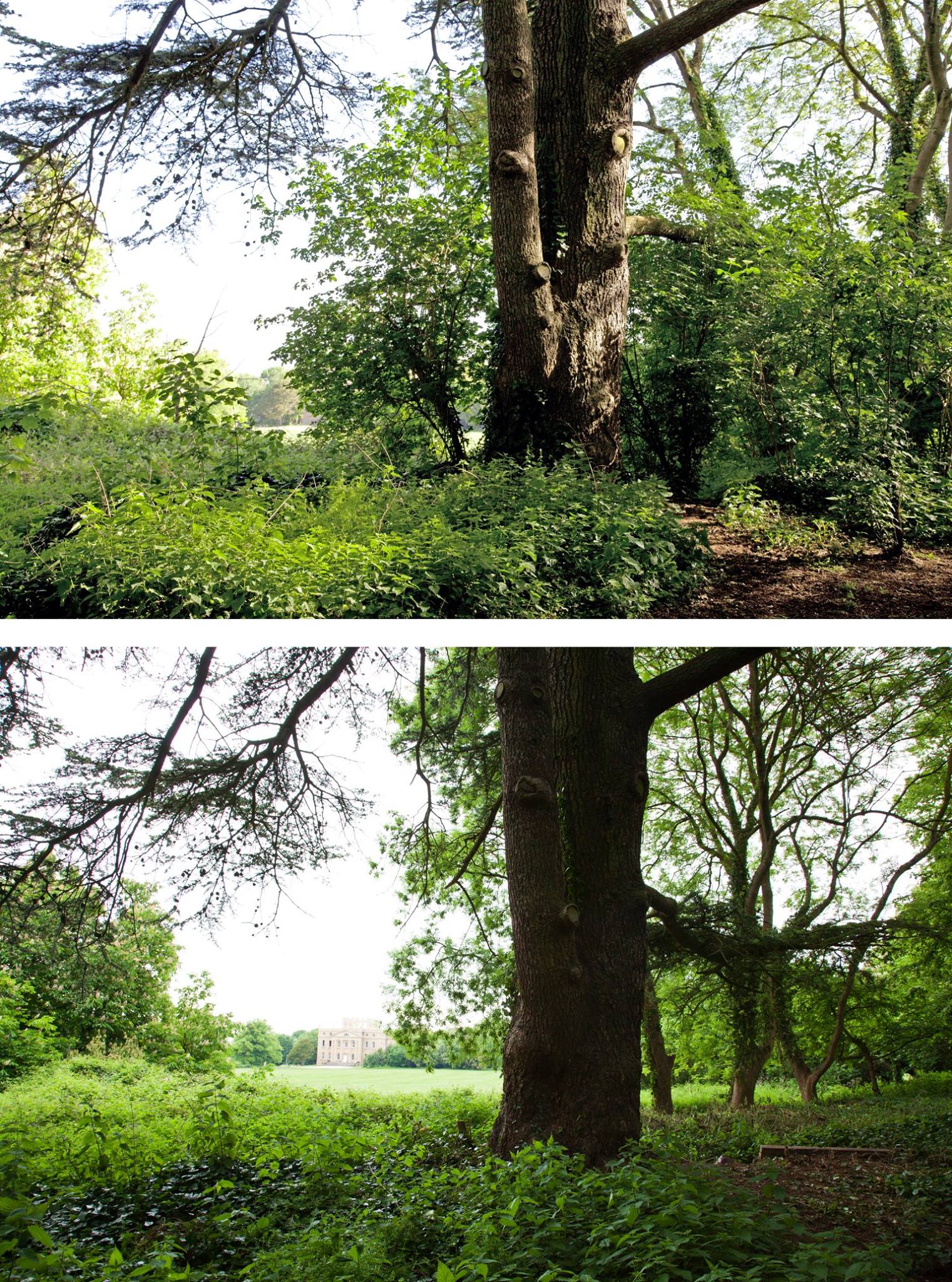
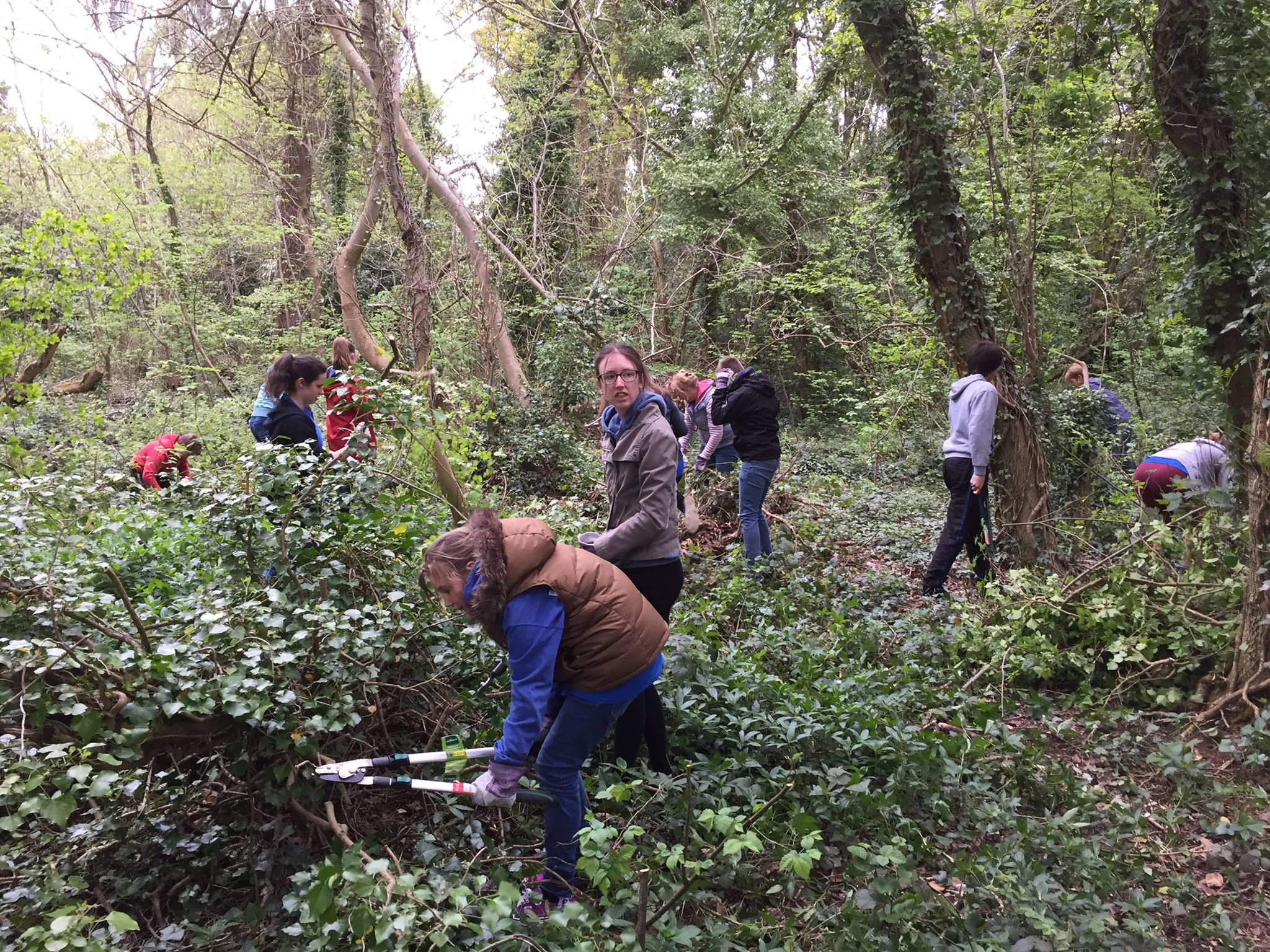
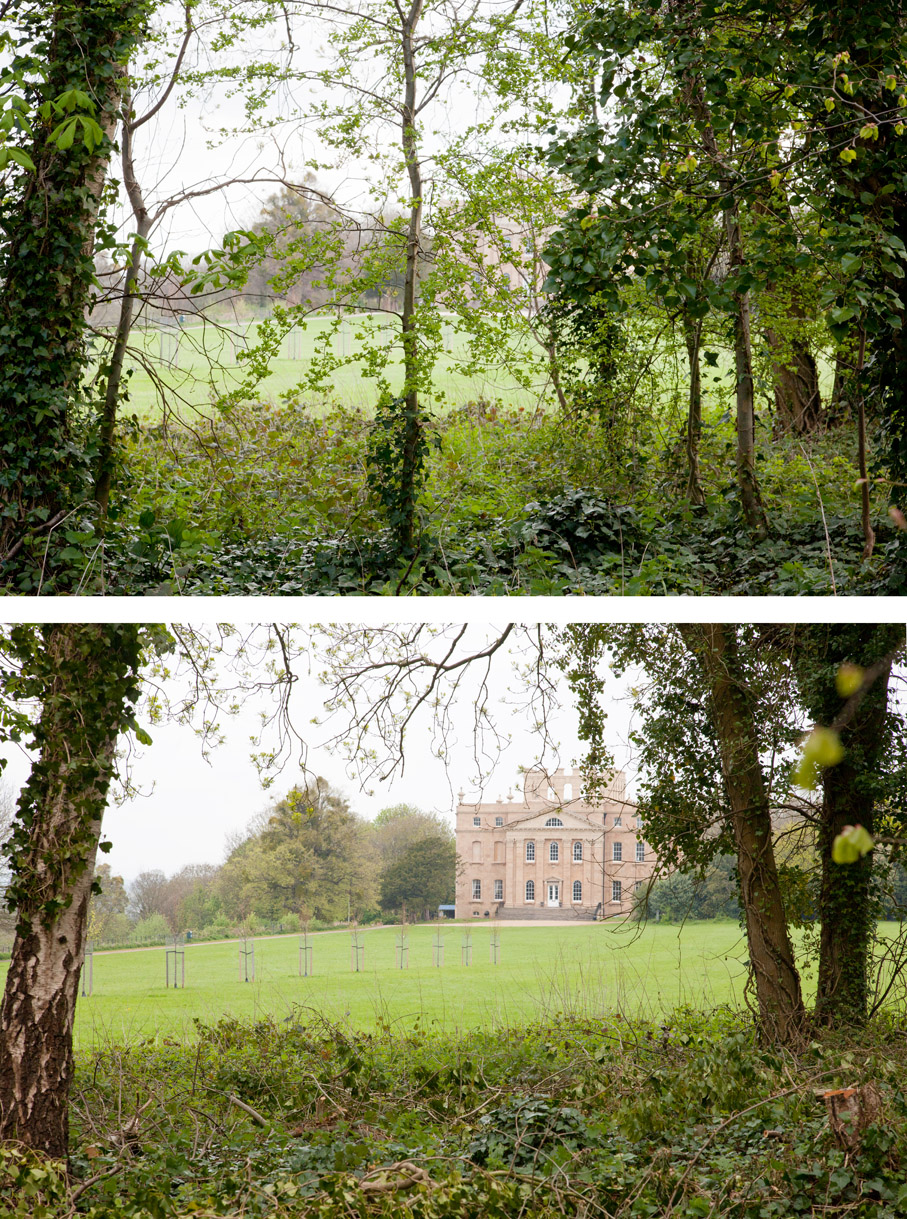
On the 11th May we returned to continue work on our Lifting the Curtain project; restoring the visual connection between the South Walk and Kings Weston House by removing self-seeded saplings and undergrowth. The pictures rarely do a project like this justice as the sense of space can;t be conveyed in just a few shots, but there is a real feel of drama reinstated as you promenade up the South Walk and look down on the house framed through the mature parkland trees.
Documents reveal new information on New World plantations
Kings Weston has always had some low-key historic connections with the slave trade. Edwards Southwell II was MP for Bristol between 1739 and 1754, during which time he promoted the interests of Bristol’s Africa, Carolina and West India merchants. After the Southwells’ the Miles family had founded their immense fortune in shipping and plantations in the West Indies, but the infamous slave trade had been banned decades before their purchase of Kings Weston in 1835.
However, new information has come to light about actual plantations and slave ownership by Edward Southwell III in the colony of East Florida. Recently catalogued documents in Bristol Record Office tell the story of how Edward Southwell III entered into partnership with his father-in-law Samuel Campbell, and the latter’s brother in law Closworthy Upton, later Baron Templetown, to petition the King to be granted land in East Florida. The territory had entered into British hands in 1763 following the Seven Years’ War and land was progressively allocated by the crown for colonisation.
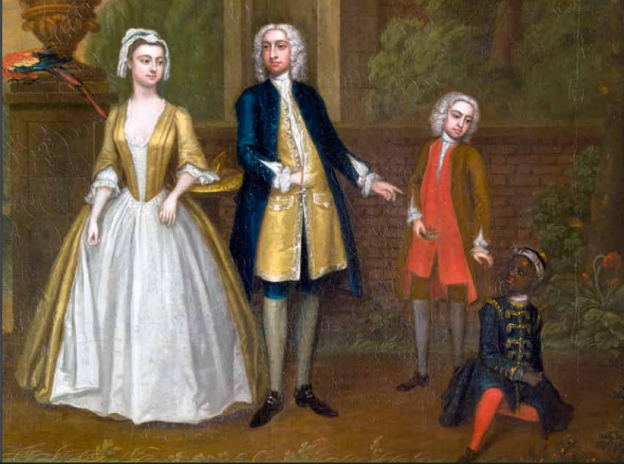
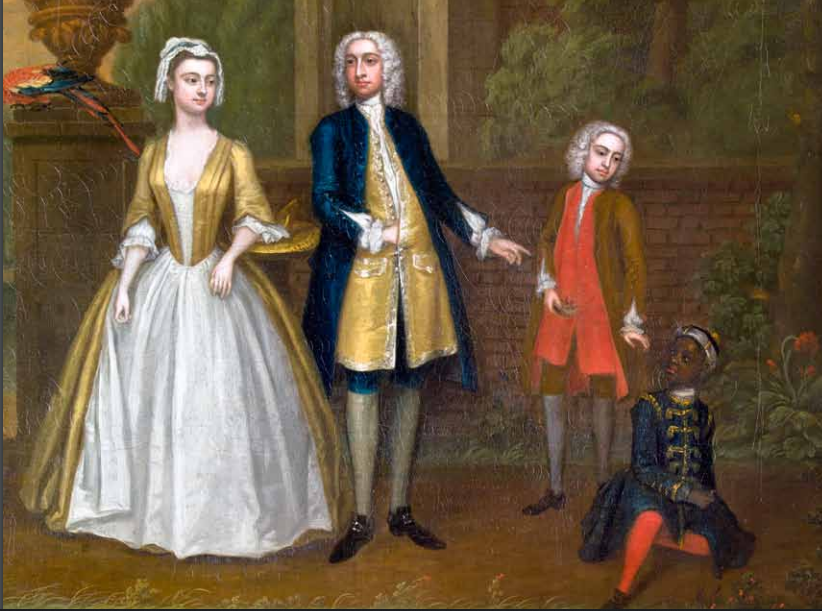
Edward Southwell (II) and his wife Catherine, with their son Edward (III) and a black servant
In 1766 the Crown granted the same amount of land to each of the three petitioners stating “In order to make a settlement thereupon” the King does “cause 20,000 acres of land to be surveyed in one continuous tract in such part of the province as the said Edward Southwell or his attorney shall choose not surveyed or granted to others” and “that the grantee do settle the land with protestant white inhabitants within three years”. The grant further demands that if any of the lands are suitable for hemp or flax production then this use should be given precedence.
With 60,000 acres between them the partnership sought suitable and experienced hands to develop them on their behalf. The services of William MakDougale [sic] were secured and he was dispatched with other eager planters and agents to set-out the claim. Land was secured on the east bank of Lake George, but MakDougale was concerned that the £2000 contributed by each partner would not be sufficient for the venture. In this respect he was entirely correct. The Southwell account books for the following years show a constant flow of large sums of money out to Florida for little return.
Southwell’s land on the east bank of Lake George – still unspoilt today.
There was an enormous amount of fraud and corruption perpetrated by unscrupulous agents and planters in the colony, at the expense of their absentee landlords in England and Scotland. This, combined with the swampy land, poor resources, and occassional attacks by the Spanish, meant that Edward Southwell’s venture was probably doomed from the beginning. To make matters worse their planter, MakDougale, died in 1774 and the 60,00 acres were charged to another planter, James Penman to administer. Little appears to have been produced by the plantations, small quantities of timber and barrels of tar being the only exports, and after the death of Edward Southwell III in 1777 his executors were forced to come to terms with the scale of the losses he’d incurred.
In 1779 the plantation collapsed completely. Writing to Southwell’s executors Penman describes how he abandoned his own plantations, initially to find safer territory to settle following the outbreak of “the Spanish War, and then retreating to the main town St Augustine. He promised to take good care of the partnership’s 20 ‘Negro’ slaves who he took in with his own, but later sold at very poor prices, keeping the money for the expenses he’d incurred.
The venture had led to Edward Southwell becoming heavily indebted, and it is no surprise that the several English and Irish estates he owned, including Kings Weston, all had to be mortgaged for over £30,000 to help support the disastrous endeavour.
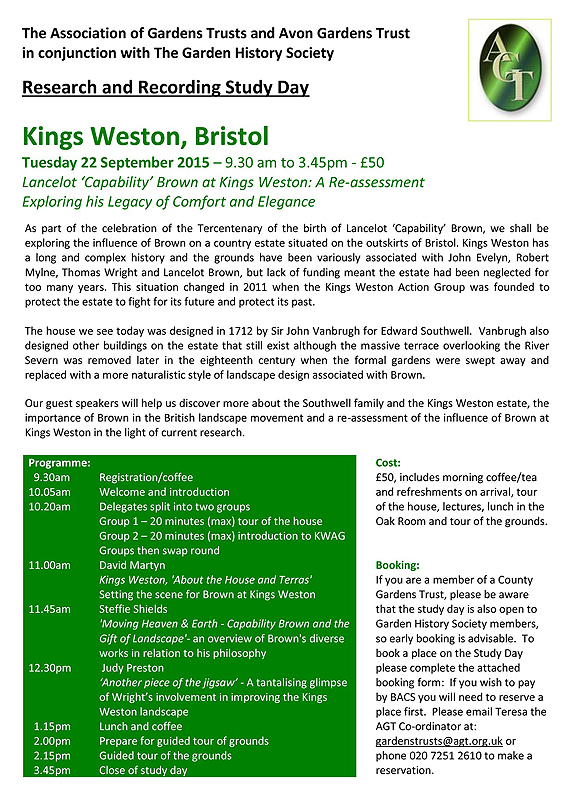
Join KWAG at an exclusive event in partnership with The Association of Gardens Trusts and Avon Gardens Trust in conjunction with The Garden History Society
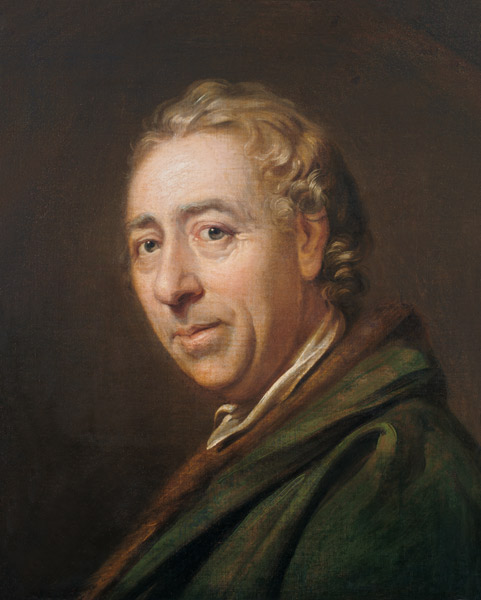
Lancelot ‘Capability’ Brown at Kings Weston: A Re-assessment
Research and Recording Study Day – Kings Weston, Bristol
Tuesday 22 September 2015 – 9.30 am to 3.45pm – £50
Exploring his Legacy of Comfort and Elegance
A Research and Recording Study Day to be held at Kings Weston, Bristol on Tuesday 22 September 2015. As part of the celebration of the Tercentenary of the birth of Lancelot ‘Capability’ Brown, we shall be exploring the influence of Brown on a country estate situated on the outskirts of Bristol. Kings Weston has a long and complex history and the grounds have been variously associated with John Evelyn, Robert Mylne, Thomas Wright and Lancelot Brown, but lack of funding meant the estate had been neglected for too many years. This situation changed in 2011 when the Kings Weston Action Group was founded to protect the estate to fight for its future and protect its past.
The house we see today was designed in 1712 by Sir John Vanbrugh for Edward Southwell. Vanbrugh also designed other buildings on the estate that still exist although the massive terrace overlooking the River Severn was removed later in the eighteenth century when the formal gardens were swept away and replaced with a more naturalistic style of landscape design associated with Brown.
Our guest speakers will help us discover more about the Southwell family and the Kings Weston estate, the importance of Brown in the British landscape movement and a re-assessment of the influence of Brown at Kings Weston in the light of current research.
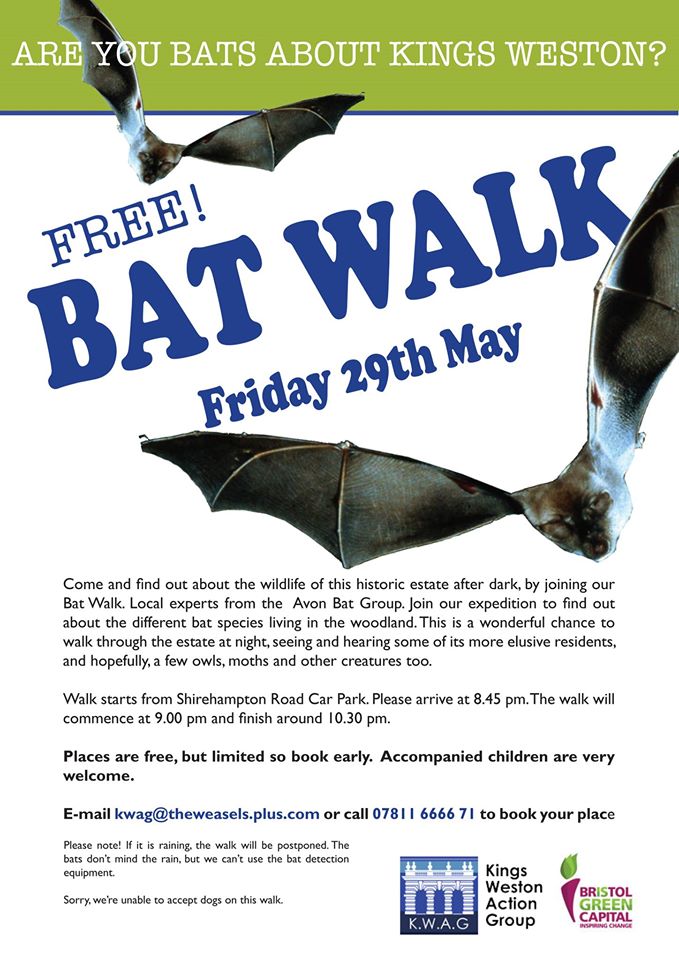
Come and find out about the wildlife of our historic estate after dark. Local expert, David Brown, and members of the Avon Bat Group will lead an expedition to find out about the different bat species living in the woodland. This is a wonderful chance to walk through the estate at night seeing and hearing some of its more elusive residents, and hopefully, a few owls, moths and other creatures too. This walk is free of charge, and supported by a Neighbourhood Partnership Green Capital Grant .
We will be starting from Shirehampton Road Car Park, on Friday 29th May
Please arrive at 8.45pm. The walk will commence at 9.00pm and finish around 10.30 pm.
Please make sure you have:
suitable footwear
jacket for when it gets cooler
a torch
water
This walk is free but you must book! Places are limited so book early. Accompanied children are very welcome.
E-mail kwag@theweasels.plus.com or phone 07811 666671 to book your place
The Noise turning back the clock in Jubilee Clearing
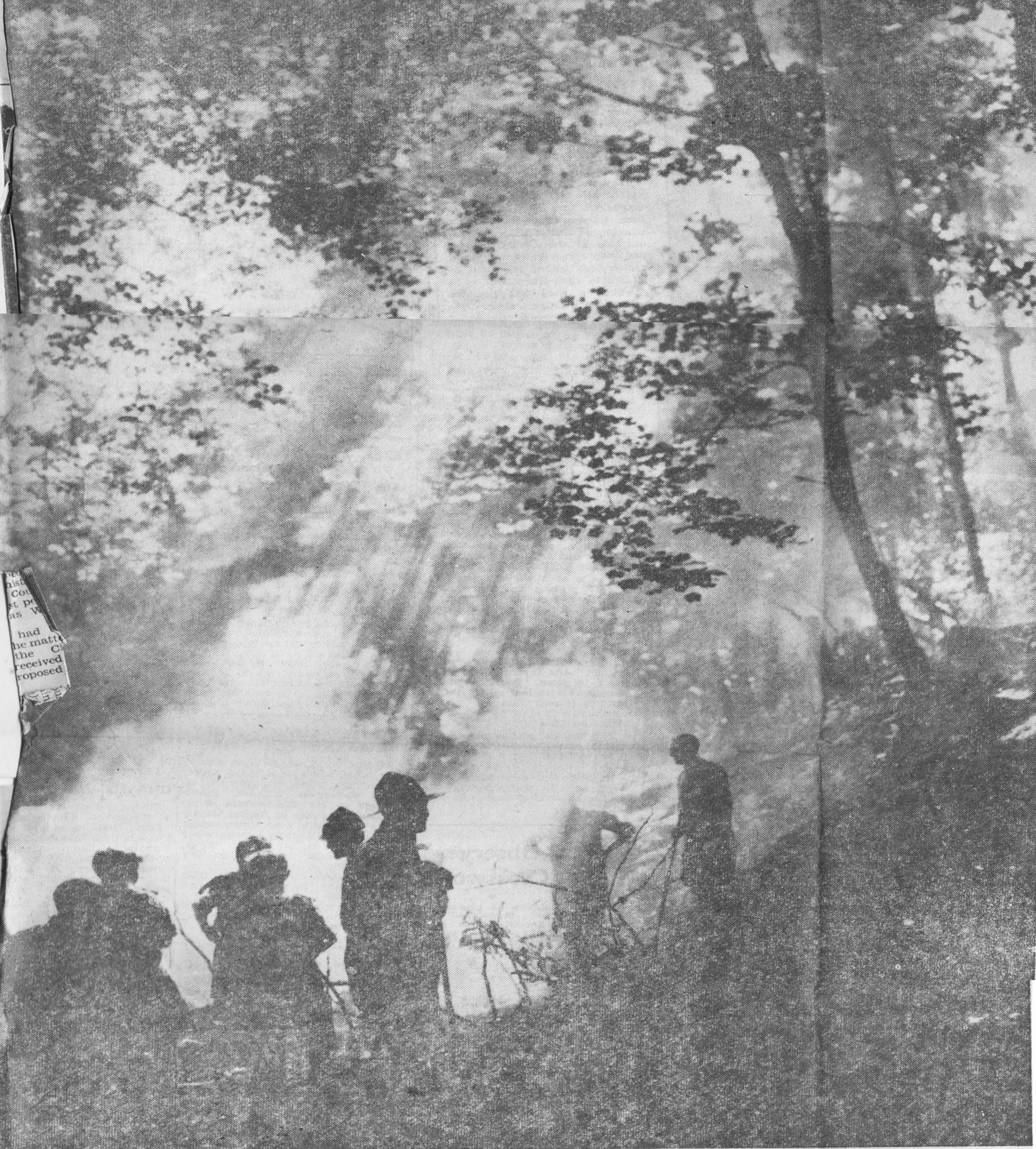
We know that many local members of KWAG recall with affection their time camping in Penpole Wood when it was used by Bristol Scout troops between 1937 and 1947. The accompanying, atmospheric, image of Penpole Wood (right) shows shows it in the final year of operation as the District camp. During the period we understand that ‘Jubilee Clearing’ in Penpole Wood offered the most choice location to pitch your tent. The area had, until recent efforts, almost vanished into the woodland.
On 2nd May this year a large group of The Noise volunteers from Christian groups around Bristol came to Penpole Woods and commenced on the clearance of the old camp area. As with much of Penpole Wood, since the Second World War it has become largely unmanaged and overgrown. The recent work has restored a sense of openness to the area once more, and the Victorian specimen conifers – Coastal Redwood and Morinda Spruce – planted around its edges can now be seen to their full effect. (Find out more about these historic trees on our Tree Trail). It is hoped that the Clearing will offer different habitats to the main woodland area and that the clearing will add to the biodiversity of the estate. Volunteers also took up the challenge to clear dumped rubbish in the lower area of Penpole Wood behind Mancroft Avenue, making a huge impact on the amenity of the area.
We owe all the volunteers who made this project happen a huge debt of gratitude, and we’re sure that everyone who remembers Jubilee Clearing in its former condition will join us in thanks to The Noise. It was also wonderful to see young people getting so involved in the restoration project and clearly having as much enjoyment from it as the Scouts would once have had.
A new album is available on our website showing the progress we made in raising the tree canopy and thinning overgrowth along the South Walk close to the Circle. We’ve made good progress in visually reconnecting the Home Park with the walk and promoting a new sense of openness to the area. A full album of images here!
View towards the House from the South Walk before, and after Sat 18th’s work
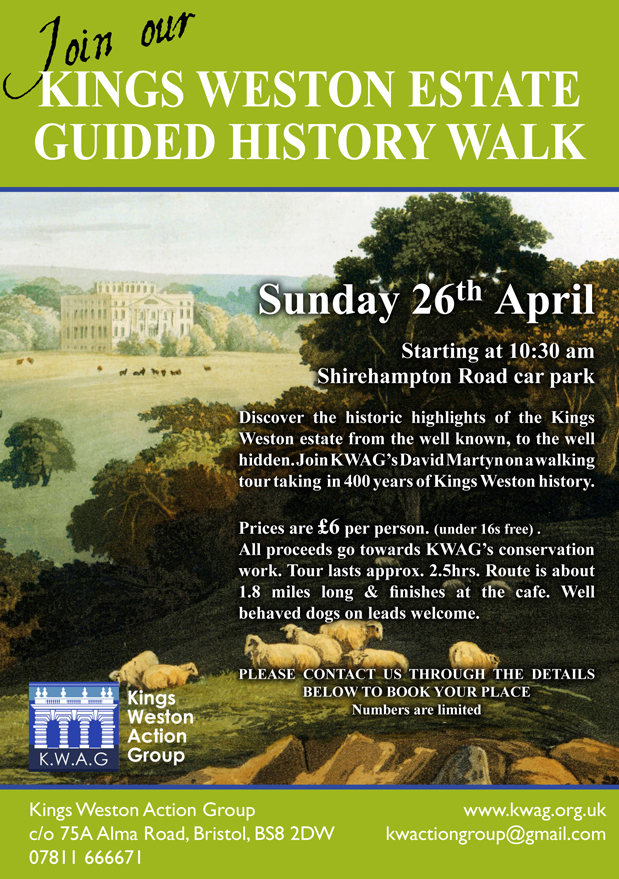
New Event – Join us on a History walk on Sunday 26th April
We’re running another guided history walking tour of the Kings Weston landscape on Sunday the 26th April. This will be a chance to explore the rich history of the parkland under the expert guidance of KWAG’s chairman David Martyn.
Taking in both familiar landmarks and some of its hidden treasures it’s sure to prove fascinating to anyone with an interest in the estate. Come and discover over four hundred years of history and the cast of the people who led to development of Kings Weston as one of Bristol’s greatest and most famous country estates.
The history walk is one of our regular fund-raising events and we ask a fee of £6 for anyone who would like to join us. The event will start at 10:30 from Shirehampton Road car park and last approximately 2.5 hours. Places on the walk are limited, and please book in advance by contacting us through the details below. Payment should be made on the day. Children under 16 are free and well behaved dogs on leads are welcome.
Tel: 07811 666671 or email kwactiongroup@gmail.com
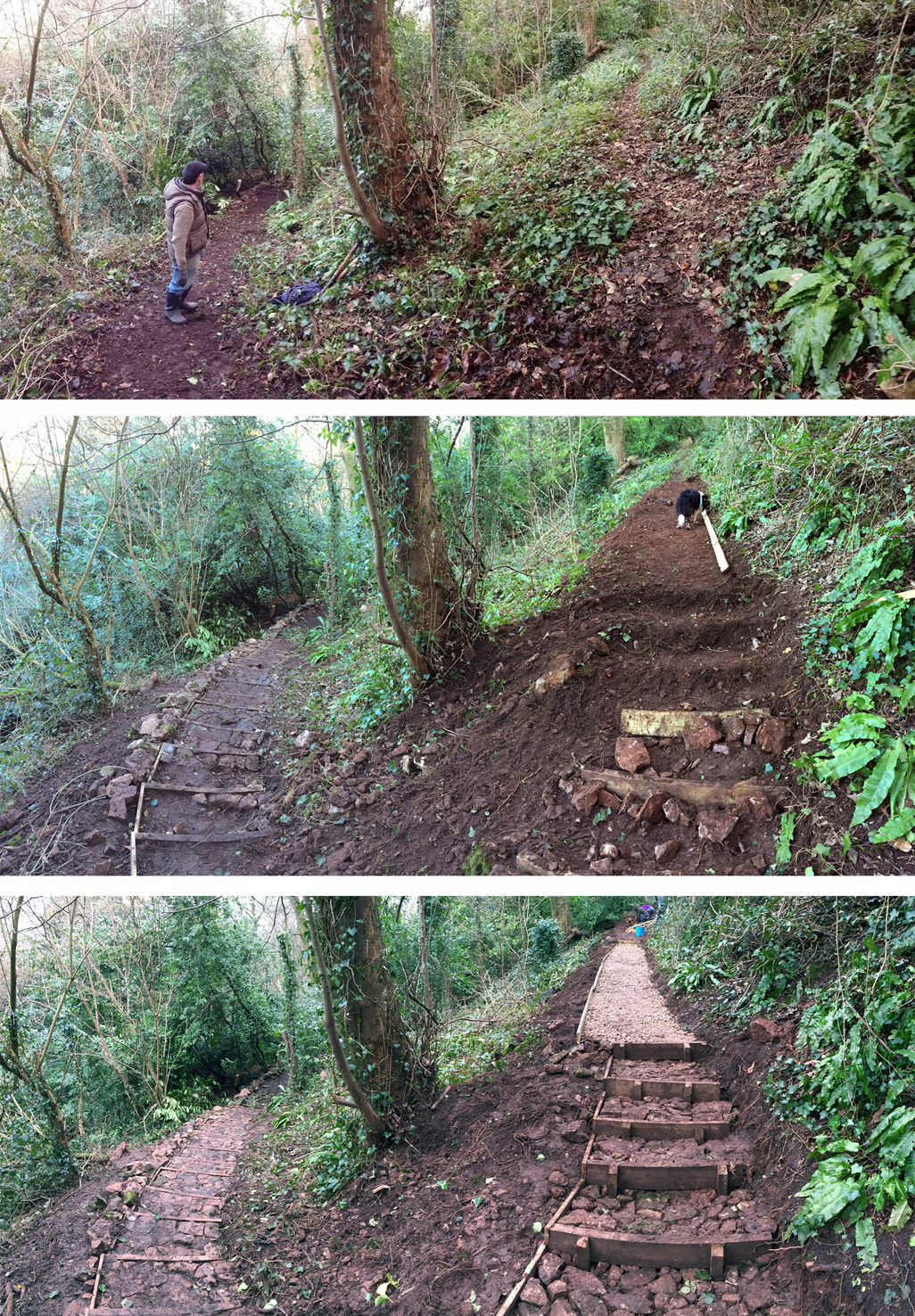
We’ve finally completed a project we began in January; the steps linking the historic upper and lower paths through Penpole Woods.
The works are all part of a project in Partnership with Bristol City Council and grant-funded by the Forestry Commission to improve access within the woodland. The steps were one of our priorities and we worked with the Forest of Avon Trust to ensure that they formed part of the original bid. January’s 2-day training course was really well attended and over the two days we had more than 20 KWAG volunteers learn how to put the steps together. Our thanks go to Bristol’s Conservation Volunteers, the training they gave us, and for some of their own volunteers who came along to help on the first Saturday.
We continued the work between January and March working through some very hard terrain, and finally completed the 61 step target in early March. The results from the last few month speak for themselves, and we should be incredibly proud of what we’ve achieved as a group.
We’ve got two galleries of images from the project; one with our usual working party before-after photos, and another in our completed projects files. Please take a look and see what you think of the finished project.
A new image has just been acquired of one of the Kings Weston Estate’s 23 individual Listed Buildings. Seen above, this is a pencil drawing of Wood Lodge dates to 1956 and was sketched by local artist, and Bristol Savage, George Holloway. This view looks towards the Grade II Listed building from the east and shows a number of features that have since been lost including the blocked windows and the stone drip-mouldings above others.
The lodge owes much of its ornamental appearance to Philip Skinner Miles during the Victorian era. It was in the 1860s that Miles undertook the refurbishment of a number of the estate’s buildings, including Wood Lodge, and added rustic wood work, decorative barge-boards and a clay pantile roof; Kingsweston Inn Sea Mills Farm, and Henbury Lodge also received similar alterations at this time. However, Wood Lodge has a much earlier origin.
The lodge has always had an important role on the estate; guarding the private parkland to the east from the publicly accessible common land on Penpole Point in the west. It is first depicted on an estate plan of 1772 and is seen in the smaller accompanying image here, by Samuel Hieronymus Grimm, in 1788 (Copyright of the British Library). This earlier view shows the front of the building as it would have appeared from the west. What is obvious is that the present building has very different proportions when viewed from the side, and appears to have shrunk from its original width. The projecting bay on the Penpole Lane side is likely to be the same one as seen today.
From the general appearance of the building, and some of the features shown in these two illustrations, it is possible to attribute this lodge to the architect, garden designer, and mathematician Thomas Wright. We know that Wright was working on designs with Edward Southwell III of Kings Weston House from 1761 and there are strong stylistic similarities between Wood Lodge and some of his other work on the Badminton Estate, Gloucestershire and Tollymore Park in Ireland. At what time the building was so drastically altered it’s not known, and although the thatch has a far more picturesque effect, its present tiled roof must be far easier to maintain!
SPRING BIRD WALK
BOOKING NOW OPEN FOR OUR FREE WALK WITH BRISTOL BIRD EXPERT ED DREWITT
We’re delighted to announce we’ve received Green Capital Grant funding through Avonmouth and Kingsweston Neighbourhood Partnership and we can now put on this years programme of nature i walks for FREE!
The first in the series, our Spring Bird Walk, will be led by expert naturalist, author, and broadcaster Ed Drewitt. Ed has led two previous Dawn Chorus walks before, but this walk will start at the more sociable hour though should be no less fascinating! With Spring upon us there will be plenty to see and listen out for on the estate.
Join us in a months time at 8:15 on Saturday 18th April for an 8:30 start from Shirehampton Road Car Park. The walk should last approx 1.5 hours and the cafe at the house will be open for teas, coffees, and refreshments afterwards. Please note that although free it’s essential that you book for this event as places are limited. Sorry that we aren’t able to allow dogs on this particular walk.
To book a place please get in touch by email to KWAG@theweasels.plus.com, or call on 07811 666671.
Please feel free to forward this post and poster to anyone you think might be interested. A PDF copy of the poster for printing and display can be downloaded HERE.