Category Archives: Uncategorized

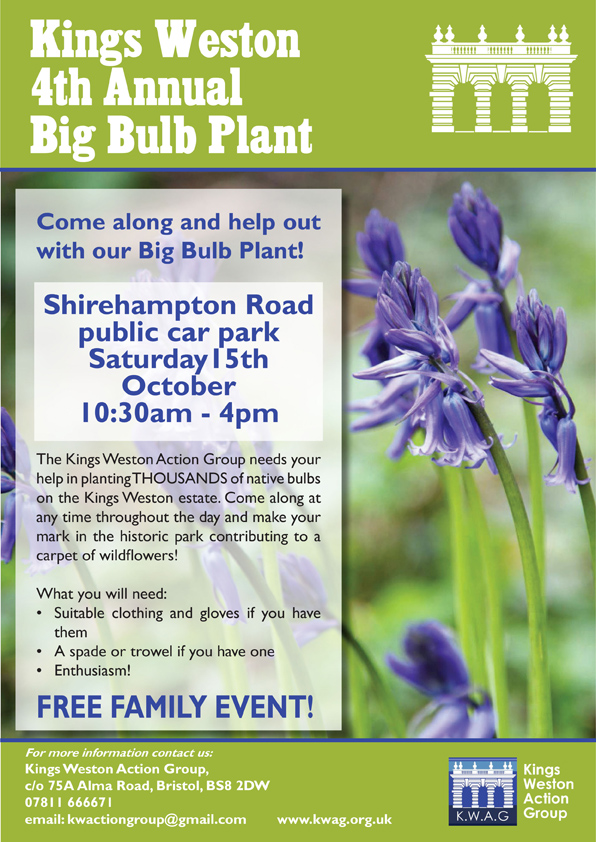
4th Annual Big Bulb Plant! Coming soon!

Coming soon! Our next event will be our annual Big Bulb Plant. Now in its fourth year it offers a great family opportunity to make your own contribution to the park. This year we’ll be planting long the avenue close to the house and around the Shirehamoton Road car park. COME ALONG AND LEND A HAND!

Begun in 2012 as part of our Heritage Lottery Fund project Big Bulb Plant has continued as one of our big public events. This year our focus will be in two areas, along the recently cleared avenue into Penpole Woods, and nearby close to the Shirehampton Road car park. Native bluebells, fritillary, and daffodils have been bought already and will be with us ahead of the day on Saturday 15th October beginning at 10:30am at the Shirehampton Road public car park.
This is an ideal family event and a great way to get involved if our usual working party efforts are beyond your ability. Please see the poster below and download and print a copy for display if you have somewhere, or pass the message on to anyone who you think might be interested in joining us!


1235c1e9-0503-426b-854d-35433e582174-copy

Feedback required on developing plans

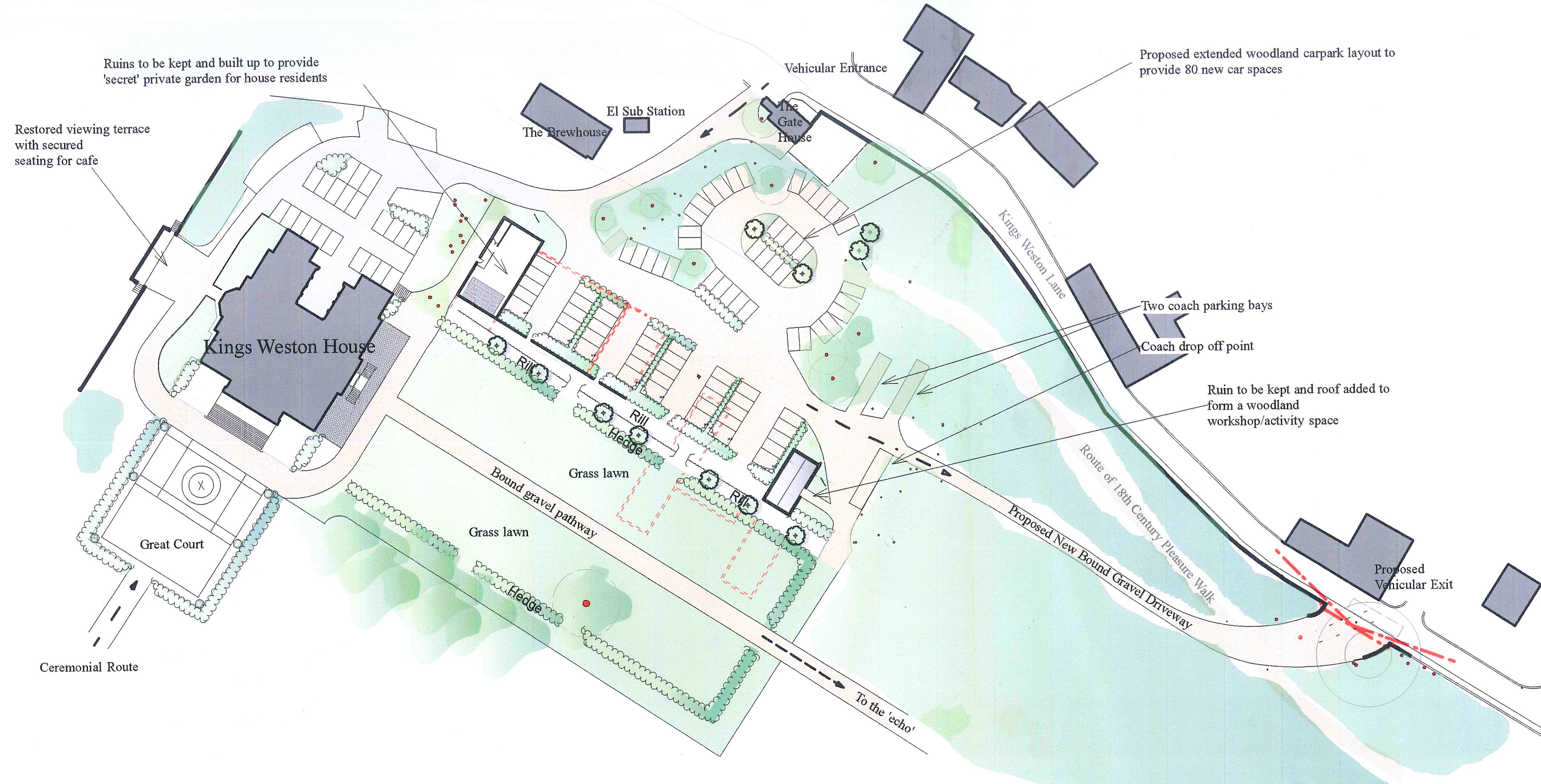
Over the last twelve months plans have been in development for the gardens and car park immediately around Kings Weston house. Proposals are now sufficiently developed to go out for public comment ahead of planning applications being lodged for the works. If you are a regular reader of our newsletters you will be aware of the on-going felling of trees and the removal of the ruins of QEH school. These works have been informed by the gradually developing plans that Norman Routledge at Kings Weston house and his architect and landscape designer have been working on. Through our regular steering group meetings with Kings Weston house and Bristol City Council, and with input from Avon Gardens Trust, the proposals have evolved and are presented here for your feedback and comments.
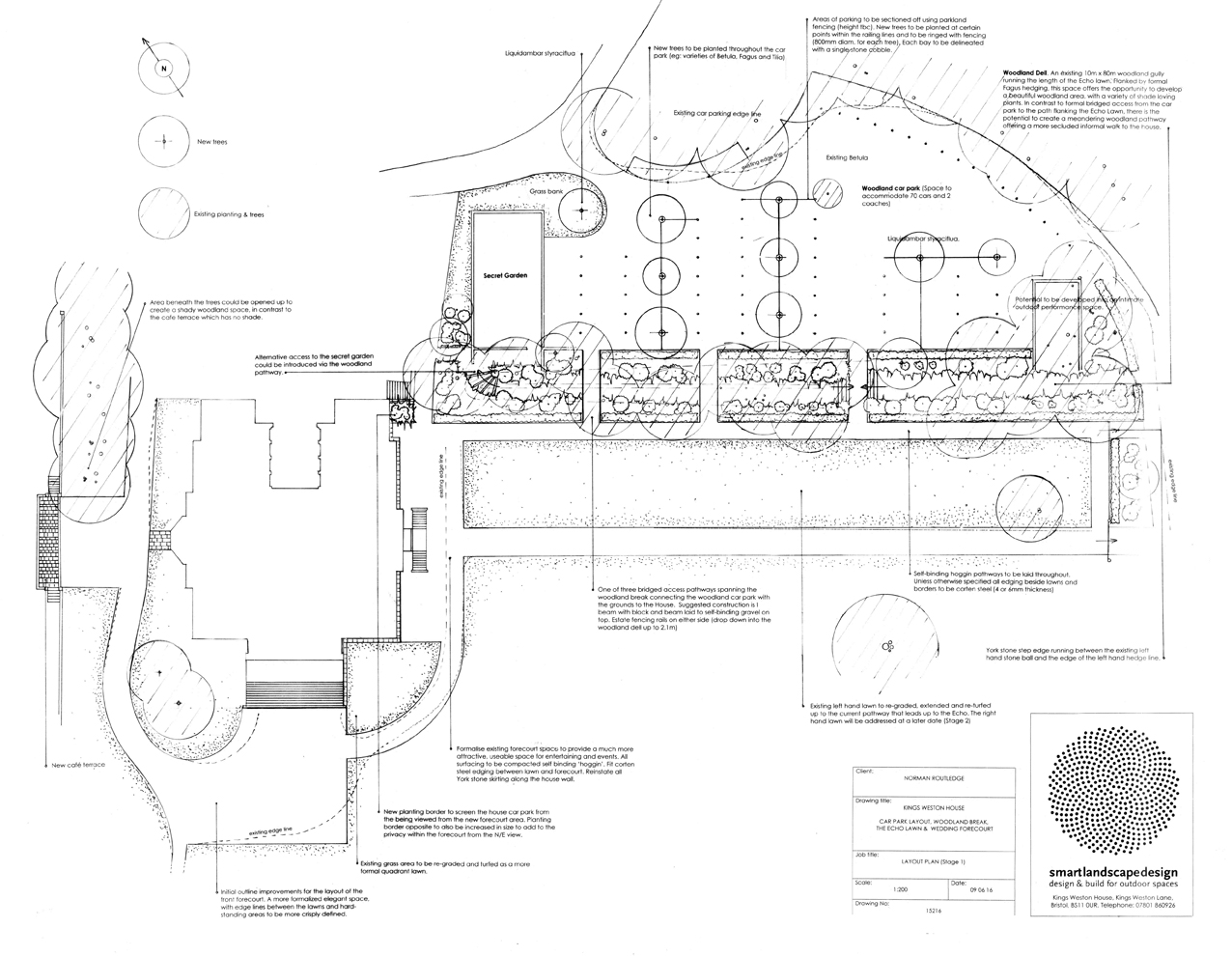
In summary there are two drawings here for consideration; The coloured drawing shows the masterplan for the area and has been drawn-up by Quentin Alder architects, and the second plan is a detailed proposal for the first phase of works including planting and detailed layout drawn up by Al Smart landscapes.

One of the key premises of the proposals is to maintain public enjoyment of the area around the house and we have wholeheartedly supported that aspiration by Norman. The other consideration needs to be ensuring the continued viable use of the house and grounds to secure the long-term future of the historic property. Proposals include for enhanced car parking in the current area with a small extension into the land formerly lost to the ruins.

20160808144709107
A new single-lane exit track is proposed to pass from the existing car park onto Kings Weston Lane to provide a safer vehicle exit from the grounds than is currently possible at the blind junction opposite Napier Miles Road. This would travel through the woodland area, towards the Echo, but be distinct from the main axial path, or the historic pleasure walk that passes close to the park wall. An existing opening in the wall would be re-used without further damage to the boundary. Proposals for the coffee shop terrace balustrade, the Great Court area, and improving the drainage and hard surfaces close to the house are also part of the wider scheme.

The detailed proposals relate to the first phase of works which relate mainly to the proposed landscaping and planting scheme. This currently does not include the expansion of the car park into the woodland area, or the new exit route. Many trees will be retained, and these will be complemented with more ornamental species. The car park will be linked to the main lawn by new paths crossing the current trench through the site and pleached lime trees and lower planting will create a buffer, concealing the car park from the gardens.
KWH - Layout plan (stage 1)
It is intended that a design competition be launched that will invite ideas for how the Great Court at the main front of the house could be recreated in some fashion. This idea is being developed with the support  of Bristol City Council and Norman Routledge and we will keep you abreast of how this develops.
We would very much like to hear your thoughts on the proposals. If you could get in touch with us by email or other means we’d like to collate them into a coordinated response from KWAG. If you are keen for your comments to be included we would be extremely grateful if you could get them to us by Monday 12th September. The proposed drawings can be seen here, or downloaded as two PDF documents here, and here.

A new Italian perspective

A new description of Kings Weston has come to light with some fascinating new detail about the estate dating from the height of its fame. The description comes from an Italian author, Luigi Angiolini, who was drawn to Kings Weston in 1788 by its international reputation. Two features in particular stand out in a translation of his 1790 book “Letters from England, Scotland and the Netherlands”, and are unique insights.
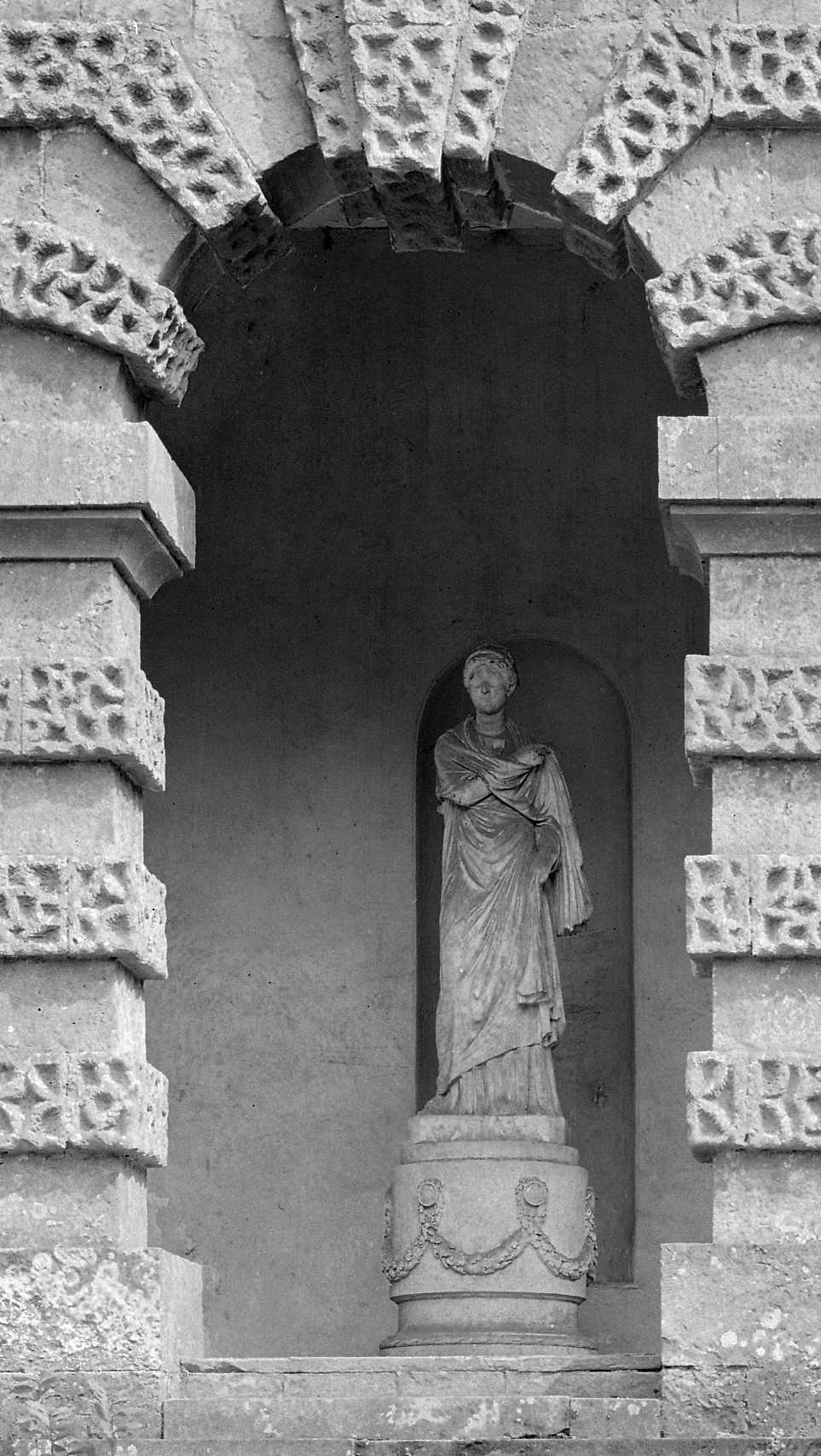
Kings Weston Echo statue

The statue in the Echo, 1927 (Country Life)

Describing his visit to the grounds Angiolini describes the long-lost statue in the Echo as being a “good ancient Roman” figure. This is the earliest mention of the statue we’ve so far found and adds considerable weight to our belief that it was a classical era state collected on the continent by one of the Southwell family and transported to the estate. Our identification of the pose as conforming to a standard classical portrait model, retrospectively categorised as “small Herculaneum Woman”, always implied that it was not a bespoke commission for the Echo. Had it been we might expect it to have represented a more recognisable deity.

We might hope that Angiolini’s assessment of the statue is based on a knowledge of ancient examples which, as he notes, survived in far greater numbers in his homeland; his countrymen lacking the same reverence or value that Gentlemen travelers from Britain attributed to them.

Sadly it’s likely that the only confirmation of the statue’s origins might come if it can be located, perhaps still, where anecdotal evidence suggests, tipped of off the terrace wall and into the ash pile close to the house.
Untitled-1

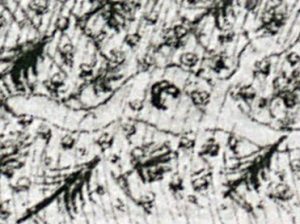
Detail of Isaac Taylor’s estate plan of 1772(Bristol Record Office)

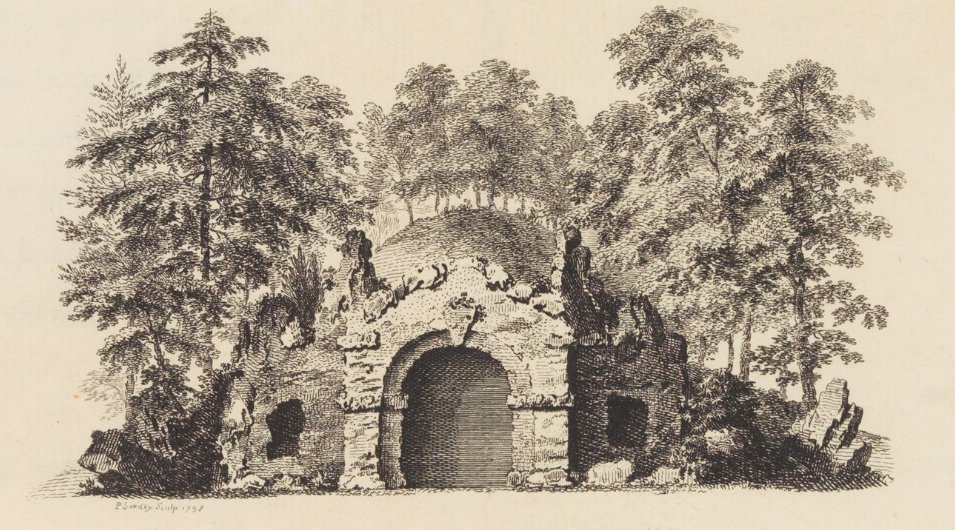
Angiolini also treats us to another revelation about the landscaped grounds; He mentions an “artificial cave”, made of wood, and hidden in a grove of evergreens. Five years ago we identified an unusual feature in a 1772 map of Penpole Wood which may correspond to Angiolini’s cave, and, at the time, we tentatively attributed it to the landscape designer Thomas Wright. Since then we have proven Wright’s involvement in the design of the Kings Weston grounds and the description of a rustic wooden cave, intertwined with ivy, compares favorably with other known examples of then-fashionable grottoes and seats in Arcadian settings.  Such examples of “grotesque architecture” were perishable by nature, an intentional contrast to the permanence of classical garden temples, and so often decayed unrecorded, but a quarried area adjacent to one of the paths through the woods corresponds to the map location.
Untitled-1

An example of one of Thomas Wright’s designs from his book “Universal Architecture”

We are left to imagine what the structure looked like, but the closest example is the root house at Blaise Castle Estate. This was recorded by the artist Samuel Hieronymous Grimm the year after Angiolini’s visit to Kings Weston. Angiolini doesn’t mention visiting Blaise in his writings, and travels quickly on to Aust and the ferry to Wales. We trust that in describing the example at Kings Weston he was not conflating it with a similar rustic seat on the adjacent Blaise estate.

005ADD000015540U00116000[SVC2]

The root house at Blaise Castle depicted by S H Grimm in 1789 (British Library)

A full translation of Angiolini’s description of Kings Weston follows:

“It was a total satisfaction to visit the palazzo of the Lord; It is not big, but is tasteful, with portico supported by columns in Palladian style, which I liked. I will not speak at length about the different parts that compose it; the paintings are mostly Italian, few originals, many copies, including some very good. I was occupied with the pleasure gardens, even those said orchards, namely gardens of fruits and green vegetables. I will not dwell on the way they are maintained; It would be easier to perform than to describe what I observed. The park, which is well cut with many majestic evergreen trees, obliges one to take a path which is long but not tiring, because one is amused by many diversions of variety and innovation. If ever you came into these parts, do not neglect to educate yourself of a point half a mile from the palazzo, from which you can discover all the Bristol Channel at once, the outlet of ‘Avon into Severn, the Counties of Somerset, Gloucester and Wilts, and a large tract of country of Wales. In the Gardens there is a good ancient Roman statue for which a temple has been built, if not very large, very elegant and dignified. In England, perhaps for the rarity, you have a respect and a reverence for old things that we, too abundant of them, do not. In the midst of an evergreen grove, there is a pleasant surprise, a kind of hidden cave, made of timber and artificially covered in ivy that appears alive. Englishmen are unique in their knowledge of how to contrive art from nature. “


Old Stone: New discovery

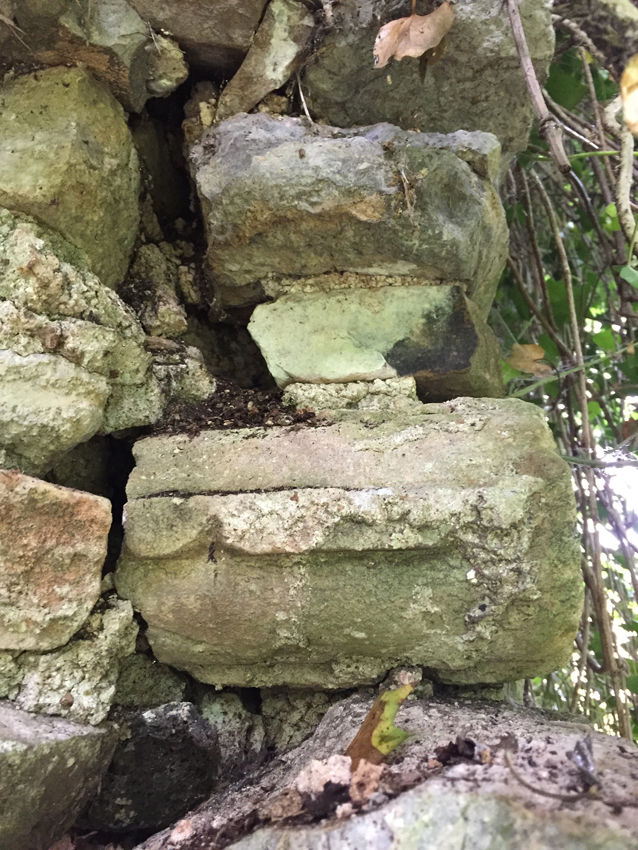
As well as uncovering the historic glasshouse wall KWAG’s recent clearance efforts uncovered a fascinating new fragment of the estates history. The discovery of a decorative cut stone fragment, still built into the wall, raises questions about where it came from.

Photo Jun 11, 12 32 45 PM

The stone fragment in-situ in the glasshouse wall

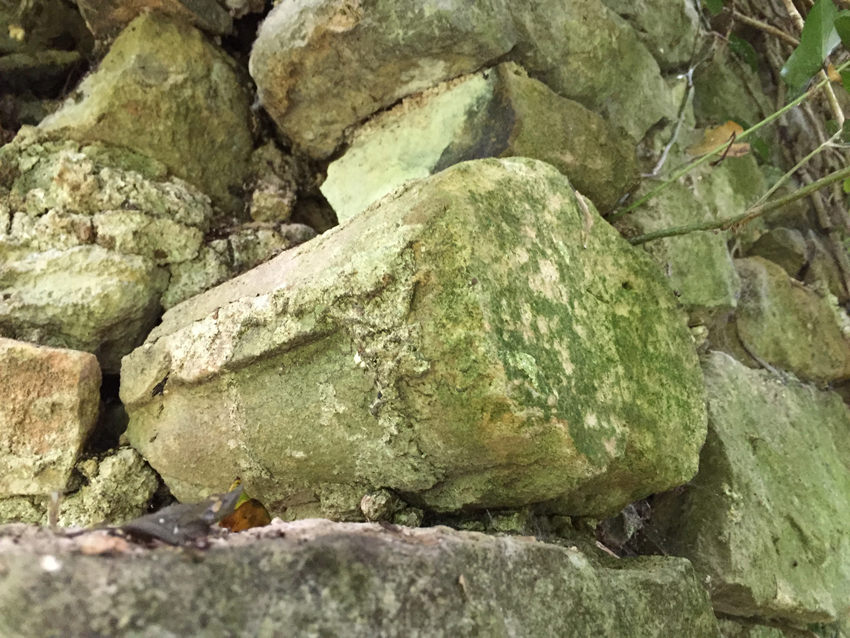
The stone is not in its original location; it’s built into the wall at about eight feet off ground level and with its carved mouldings formerly hidden within the fabric of the wall. This carved surface has now been revealed through the gradual collapse of the wall to the north of it. It measures approximately 7” x 7” x 4” and the stone is not from any of the quarries of the Kings Weston Estate. Instead it’s of the much finer oolitic limestone from quarries at Dundry or perhaps Bath. This finer grade of stone was frequently used for its easily worked qualities on ornamental work.

There are only two faces visible in the present location. The most diagnostic face has ovolo mouldings along its narrowest edge and is clearly set on its side so that its plainer face would have formed a flat surface within the glasshouse, with the ornamental parts deliberately obscured within the wall fabric.

Photo Jun 11, 12 33 48 PM

The stone mullion in-situ

By 1712, when the rebuilding of Kings Weston house and estate buildings were begun, mullion windows would have been anachronistic and ovolo mouldings replaced by new classical details. The mullion is likely to date from a period between the late-Sixteenth to the late-Seventeenth Century, but to be more precise is difficult. It is undoubted that the stone forms part of a window mullion, but from where, and under what circumstances did it end up in its current location?

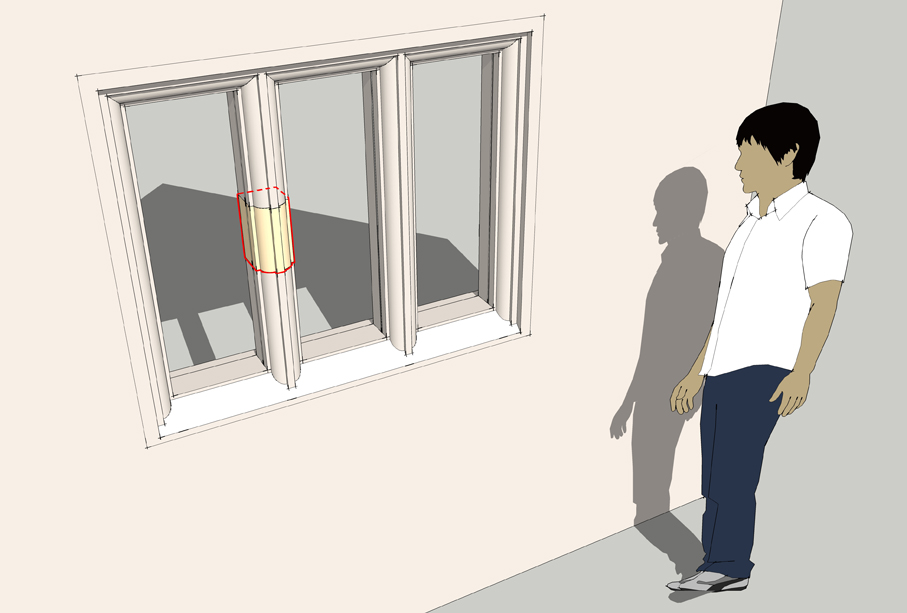
Reconstruction of the stone fragment in the sort of context it was originally designed for.

Reconstruction of the stone fragment in the sort of context it was originally designed for.

From estate plans we can date the wall in which it presently resides to about 1770. This was towards the end of a period of major upheaval on the estate, when Edward Southwell III was, once again, remodelling and renewing Kings Weston house and its gardens and service buildings to a grand and new coordinated plan. The stables and walled gardens around the glasshouse are the most substantial evidence of that programme of development.

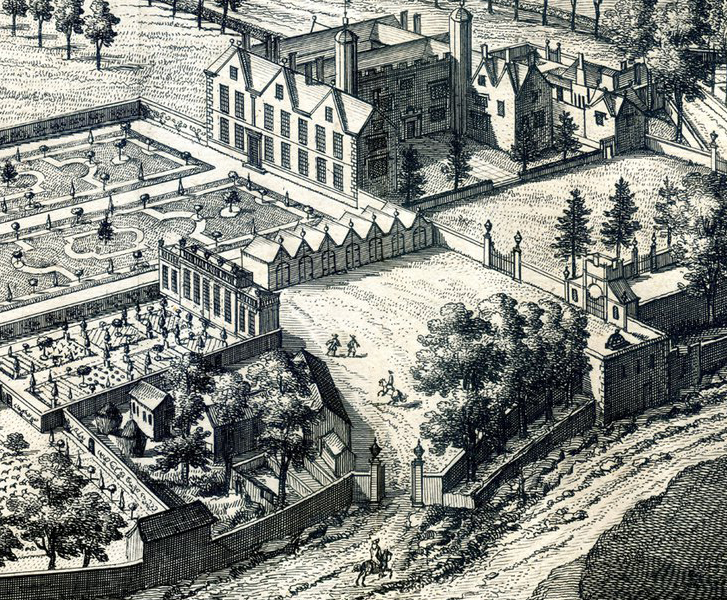
Southwell sought to lay out the new walled complex to accommodate all the services and kitchen gardens he was removing from their original locations. Originally densely massed around the rear of the house many structures would have pre-dated the mansion designed by Sir John Vanbrugh. Early engravings and estate plans show a series of low-rise structures arrayed around yards, no doubt swept away to expand the ornamental parkland setting.

The service buildings behind Kings Weston house in about 1710

The service buildings behind Kings Weston house in about 1710

So with this level of upheaval could the stone have come from one of these out-buildings on the other side of Kings Weston Lane? It is certainly a possibility that the rubble was salvaged and reused in new structures. It would be logical that the glasshouse, an ornamental building built for leisure rather than utility, would have followed the more important kitchen gardens and service blocks which needed to be complete before the old buildings across the lane could be decommissioned. It could then have been erected at a time when the old buildings were being dismantled and material transported the short distance across the lane for reuse.

However, there remain a couple of other possibilities. Although the late Tudor mansion that preceded the current house was demolished sixty years previously it is not inconceivable that material from it was still scattered about and scavenged for new building work, but perhaps the strongest argument can be made for it having been salvaged from buildings closer at hand.

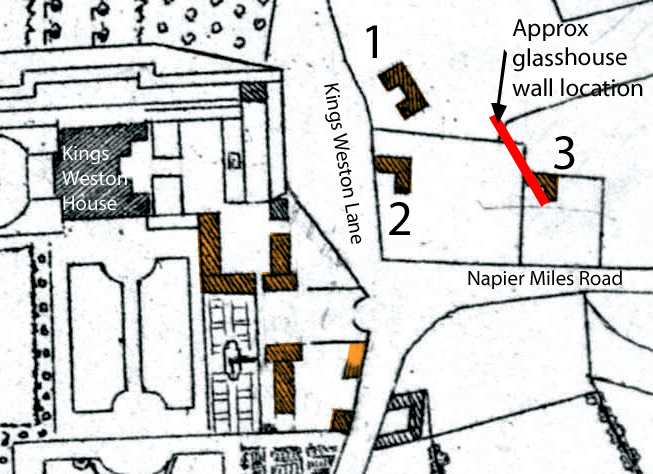
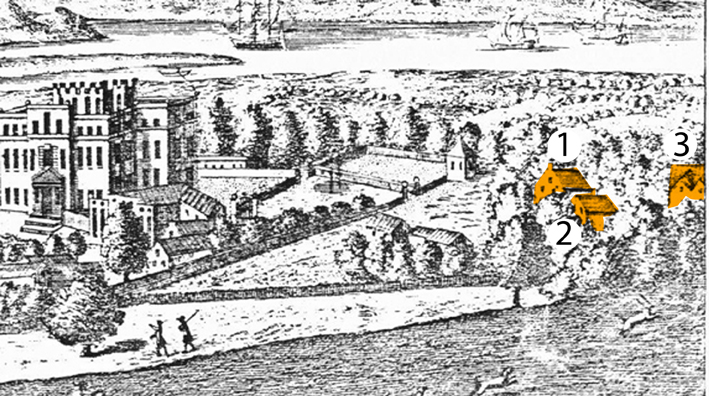
Close to the site of the glasshouse we know that there were at least three properties in existence in 1720 each within its own plot(marked 1-3 on the plan). From a closely contemporary engraving we get a sense that these were good sized buildings, each of two storeys. Building 3 lay almost exactly on the site of the glasshouse, and all of these structures had been erased by the time the walled gardens were begun. There is a strong possibility that fabric could have been reutilised in the new works.

C18th-print-of-view-from-KW-Down

Above: The 1720 estate plan and a near-contemporary engraving showing the buildings demolished for the walled gardens and stables

It is interesting to note the east-west alignment of building 2 on the plan and there is speculation that this structure may have incorporated the medieval chapel of St Thomas that was associated with the earlier manor. Sadly there’s been no recent identification of any medieval material at Kings Weston and the fragment of mullion post-dater the reformation when it was, most likely, abandoned.

The quarter of the walled gardens to the west of the stables, incorporating the remains of the glasshouse wall, may hold significant archaeological interest. Perhaps, in the future, we might be able to identify more of this cluster of earlier buildings, swept away in the Eighteenth Century race for modernity.

The rise and fall of QEH at Kings Weston

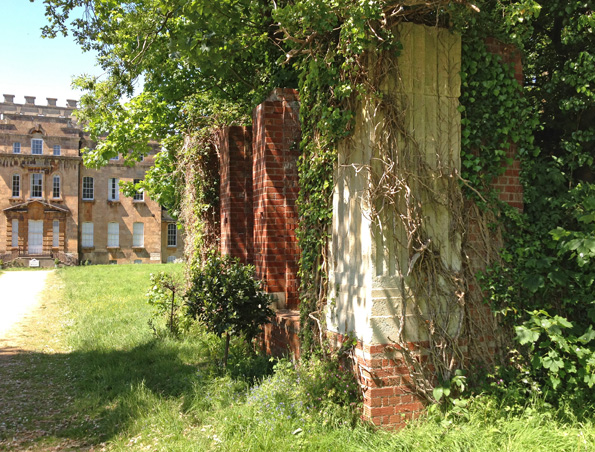
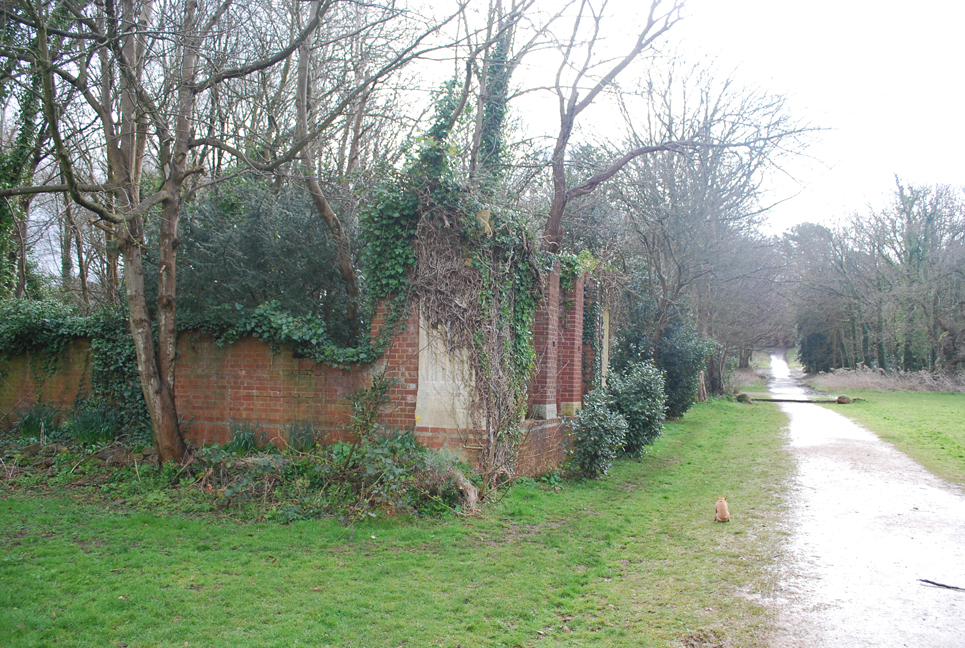
Outside the garden front of Kings Weston house, lying almost across the main axis between house and the Echo, is a complex of overgrown brick structures long lost to the undergrowth. These ruins often provoke curiosity from visitors and, with their imminent removal, it seems a timely moment to uncover their past.  Rather than being the ruins of buildings they are in fact ruins of a building site. The walls, some standing up to ten feet, are all that remains of a grandly ambitious plan to relocate one of the City’s best knows schools to Kings Weston.1583

Even in the first decades of the Twentieth Century Queen Elizabeth Hospital School had a pretty formidable reputation for harsh and disciplined education. However, by the 1920s the regime was changing and, as part of a campaign of modernisation the school, better known as QEH, they were keen to shed their Victorian workhouse-style premises on Jacobs Wells Road for greener pastures. The death in 1935 of the last private owner of the house, Philip Napier Miles, gave them their opportunity and they entered into negotiations with his widow and trustees. Eventually it was agreed that Bristol Municipal Charities would purchase the grounds on behalf of the school for the discounted price of £9,800 “provided that the historic house was preserved”.

There was a short delay as funds were sought for the purpose and for the construction of new accommodation the school would need; the purchase only being completed in 1937. The Western Daily Press of July 31 that year announced “It has been stated at recent prize-giving a Queen Elizabeth’s Hospital that the Governors were looking out for a site for a new school. This has now been secured and Bristol will lose from its centre a school which has made its mark on the educational world. It is announced that the negotiations for the sale of Kings Weston House, Shirehampton, have now been concluded, and Mrs Napier Miles, the owner, has sold Kings Weston House with land, including the front park lands and Echo Walk, to the Trustees of Queen Elizabeth Hospital… Mrs Napier Miles is retaining the Kings Weston walled Vanbrugh Gardens, together with the lily pond, and other adjoining lands in which she is building a house for her own future occupation.”

qeh school IMG_5391

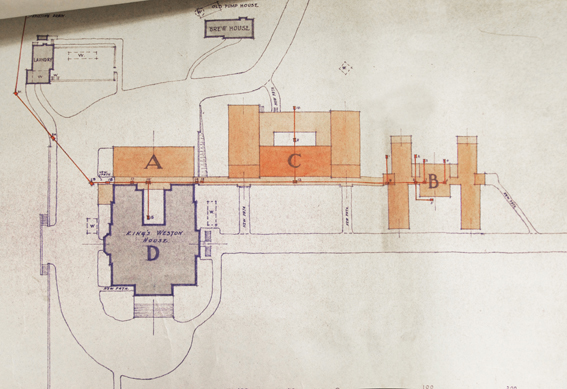
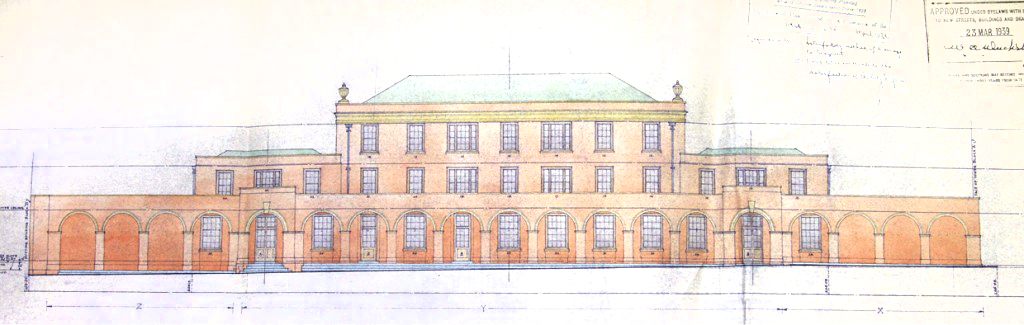
There was a further delay to the project as drawings for the new buildings were secured from the eminent London firm of architects Sir Aston Webb & Sons. The plans involved a new wing at the back of Kings Weston house replacing the former kitchens, and connecting it to two further blocks of accommodation via an open “cloister”. The new sections were to incorporate a gymnasium, refectory and kitchens in the centre (Block C), sandwiched between school rooms and library in the main house, and new dorm accommodation at the far end. The architects confidently expected the school to be ready for occupation by September 1940.

QEH-school

The continual delays in the project were to prove terminal. Planning approval was finally signed on the 23rd of March 1939, and although work began very quickly on site the declaration of WWII less than six months later put pay to the project, as all non-essential building work was laid aside for the war effort. The Evening Post of October 27th gloomily reported “School scheme in abeyance – Kings Weston affected by war: A paragraph in the later editions of yesterday’s Evening Post announced the cancellation of certain arrangements which involve the temporary abandonment of two important local educational schemes. As a result Queen Elizabeth Hospital School will continue to function as at present and the scheme for the proposed new secondary school at Kings Weston remains in abeyance for the time being”

qeh kw copy

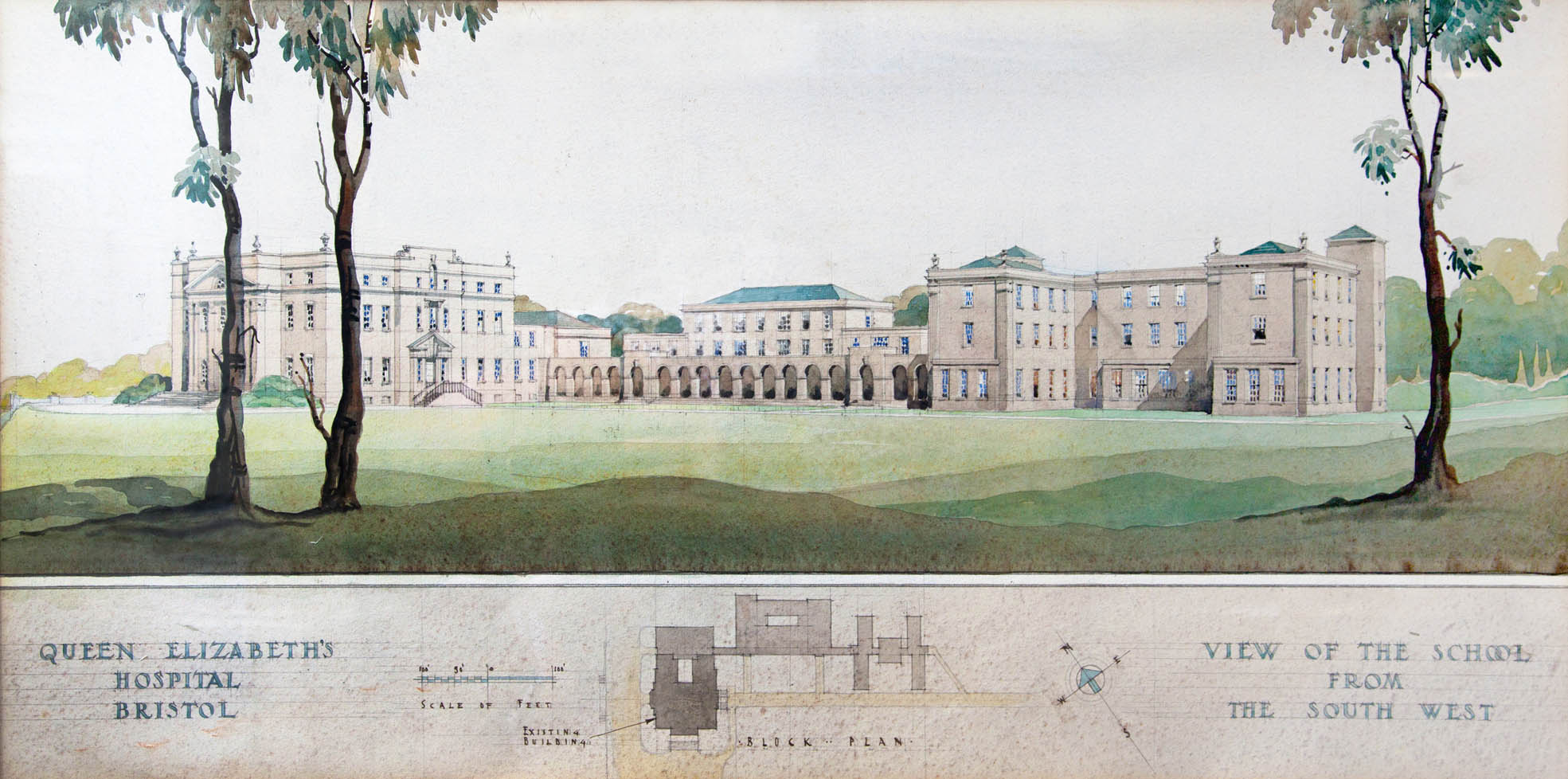
Above: A recently found image of the proposals now held by QEH

Throughout the war QEH nursed their ambition to complete their project and relocate to Kings Weston when hostilities ended. The house and park were requisitioned by the army, but the half-built walls of the school were left alone. The large quantities of stonework salvaged from the old house kitchens still litter the grounds today, and the rear of the house, where the new structure was to connect, was left scarred and open, only to be quickly patched to make it temporarily watertight (a repair that’s still in service today!). Instead of an open cloister there was a deep trench along which the services were to have run. And so it remained.

In 1947 the grounds were still under requisition when Lord Methuen brought the plight of the house and school up in the House of Lords, “I am sure it would be generally agreed that there is no better way of keeping a house in good condition than by its being lived in and properly cared for under responsible ownership. That will be the case with Kings Weston when the school is able to take up its abode there.”  But rationing and restrictions on construction continued after the war and no further progress could be made. As soon as the Army had left then the Corporation took control of the house and grounds for use as a temporary junior school for the fast-developing Lawrence Weston Housing estate. QEH, with its patience and enthusiasm stretched, eventually abandoned their plans, and Bristol Municipal Charities sold the land on in 1960.

DSC_4814Today the ruins stand much as they were left at the outbreak of war. The walls have been upset by the roots and branches of trees, but still stand. The giant trench can still be seen, along with the Victorian detritus that was tipped into it in the hurry to close the building site down; but this is shortly to change. The Conservation Management Plan for the estate published in 2014, although recognizing the part the ruins play in the story of the house and Grounds, identifies the ruins as having a negative impact. It is true that, as Lord Methuen pointed out in 1947,  the extension of the buildings onto the axis to the Echo was “unfortunate”, and the replacement of the walls with a more appropriate setting should be welcomed. As part of the developing plans around the house the walls will be gradually reduced, though Norman Routledge who now owns the house and area immediately around it intends to retain certain sections. The remains will be carefully photographed ahead of this work and serve as a permanent record of this failed project.


Sad day for ancient avenue

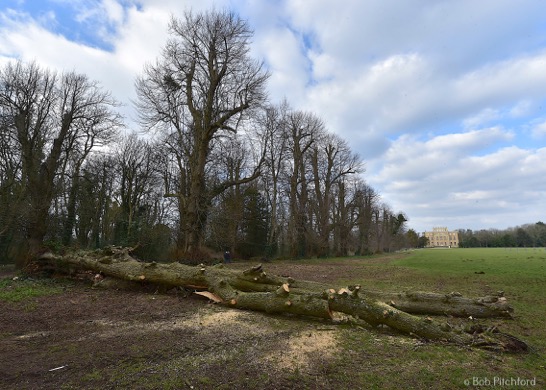
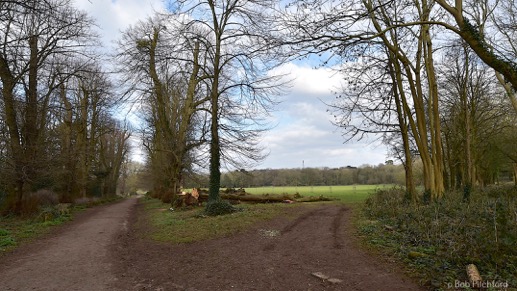
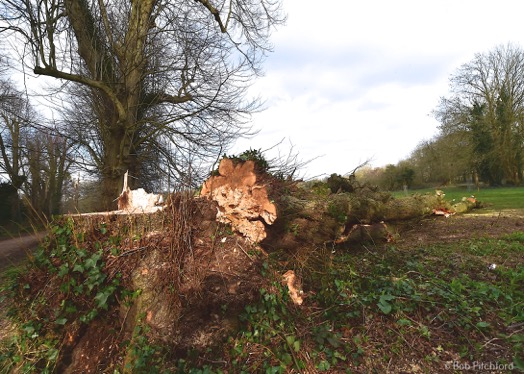
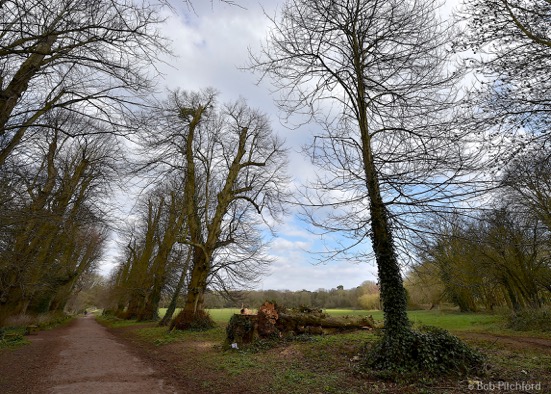
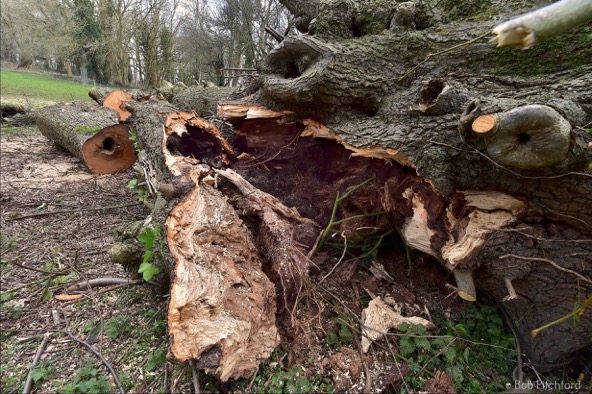
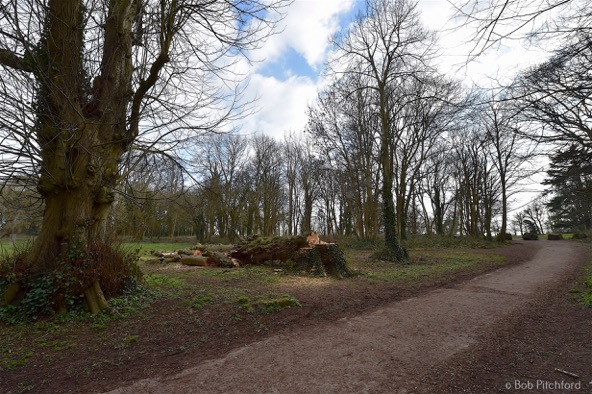
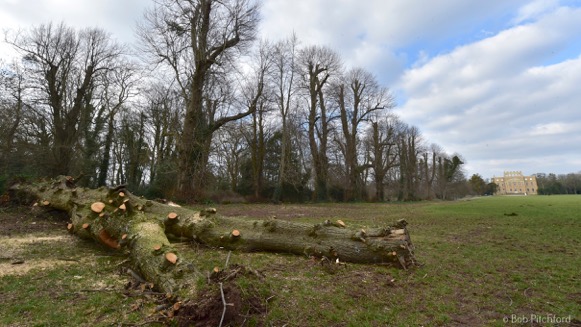
A sad day yesterday as the first of the 300 year old lime trees was felled by the Council contractors. Four trees have sadly succumbed to fungal disease and will be felled from the ancient avenue over the next few days.

Tree Felling 16-03-2016 3

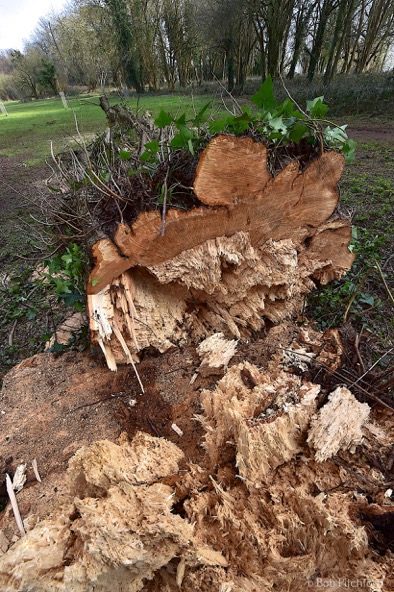
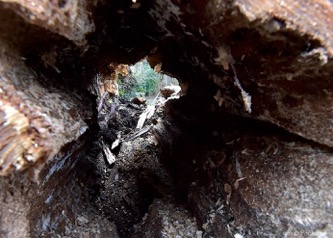
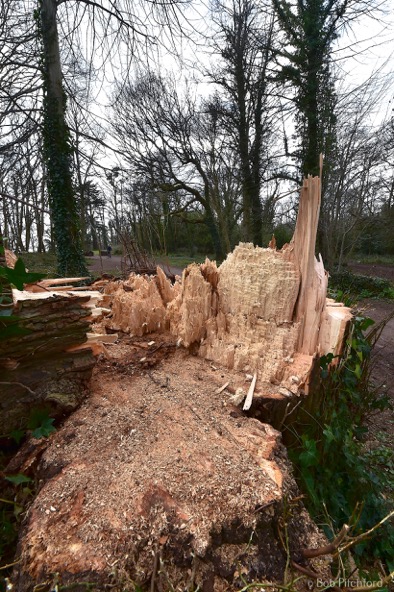
Tree Felling 16-03-2016 2As you can see from some of these pictures, aside from the hollow parts of the tree you can just see the spongy fibrous texture where the tree has felled – not the hard dense structure it should be. You’ll also be able to see how weak it was, with less than half the trunk cut before it fell.

KWAG has committed to replanting these limes as soon as possible. Of course they’ll not be the same as those we’ve just lost, but it will, in time, help repair the damage to this historic feature.

With many thanks to Bob Pitchford for this photographic record

Tree Felling 16-03-2016 12 Tree Felling 16-03-2016 7 Tree Felling 16-03-2016 10 Tree Felling 16-03-2016 1 Tree Felling 16-03-2016 8 Tree Felling 16-03-2016 5 Tree Felling 16-03-2016 4 Tree Felling 16-03-2016 6

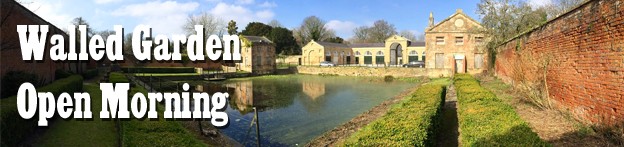
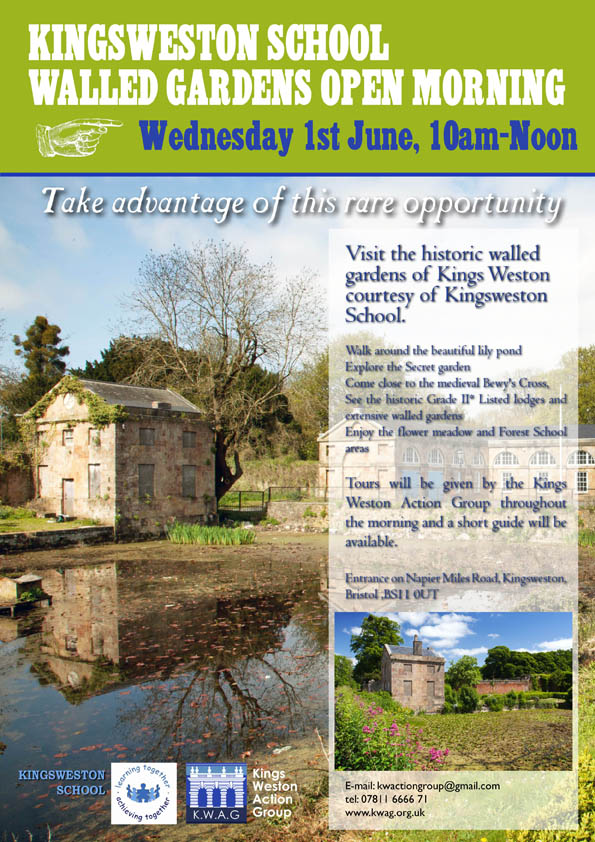
Walled Garden Open Morning, Kingsweston School

We’ve been delighted to hear from Kingsweston School, who occupy the Eighteenth Century walled gardens on Napier Miles Road. They are planing an open morning on Wednesday 1st June between 10. This is an opportunity to explore the school grounds, and we hope that many of you will be interested, not only in the historical aspects, but also to see how the school still uses the gardens as part of their work with children with a wide range of special needs.

Clive Farmer from the school said “As you can image it is not always easy for us to open up the school to the community, but we would like to propose that we open up the grounds to visitors whom may wish to take advantage to see the walled gardens, forest school and flower meadow. We would only be able to open between 10:00am – 12:00, but this should allow a reasonably time span for groups/individuals to wander the grounds. Unfortunately we would not be able to grant access into the school buildings.”

KWAG hope to be offering tours and information on the day and hope that people will take advantage of this rare opportunity.

walled garden open day poster

Iron Bridge Update

We have some good news from the City Council!

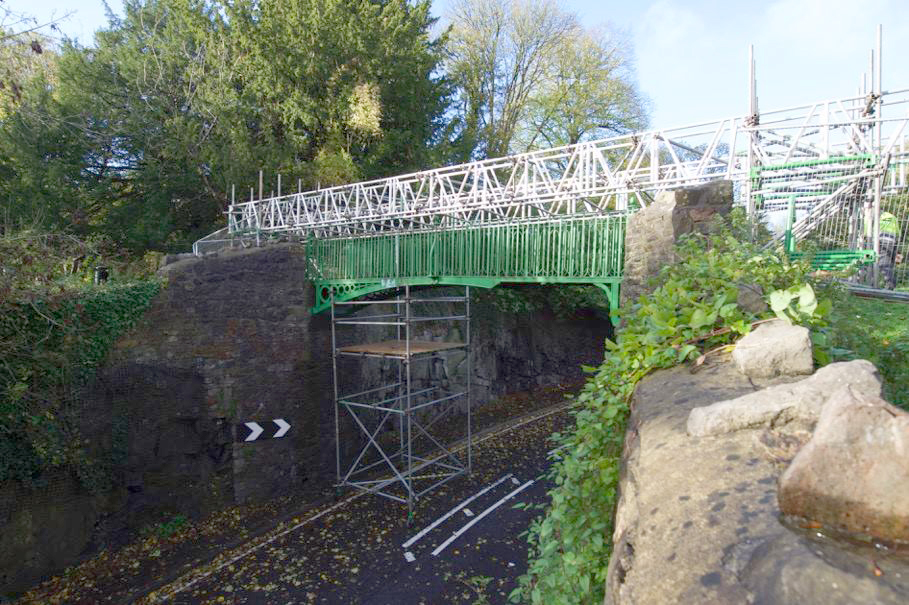
Thanks to one of our followers on Facebook the moulding patterns for the Grade II Listed Iron Bridge over Kings Weston Road have been uncovered in storage by the Council. They’re presently undergoing “fettling and repair” before casting iron replacement parts for repair of the footbridge.

It is likely that the reproduced new casting will be completed by the end of March with the view that the re-installation on the footbridge will be programmed into the new financial year 2016/2017. Once the complete programme for the new financial year has been agreed we will be kept up to date, but it will not be before April that this will happen. Hopefully it will be open again soon.
12189594_978250048908121_4425914531793775877_n
(photo courtesy of Bob Pitchford)