
Before now, we’ve looked at the history of most of the lodge houses that guarded the perimeter of Kings Weston estate and the architects involved in them. This has included Penpole Lodge by Vanbrugh, Shirehampton Lodge by Robert Mylne, Wood Lodge, probably by Thomas Wright, and Henbury Lodge by Thomas Hopper; but the history of Park Lodge is less clear.
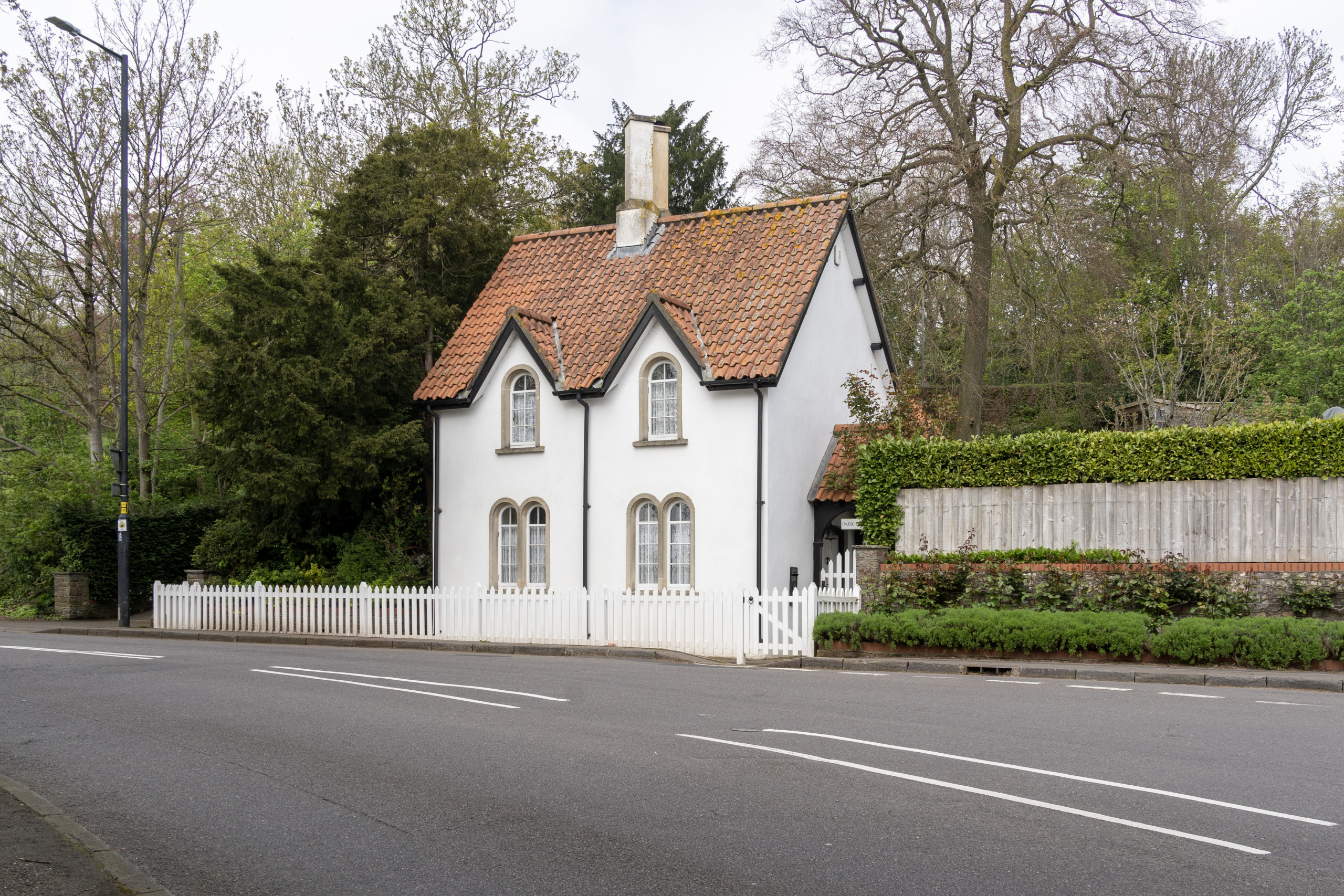
Park Lodge is today a Grade II Listed building and will be familiar to thousand who pass it daily on the corner of Shirehampton Road and Kingsweston Road. Sat behind a white picket fence, the building is a pleasant but not extravagant cottage. It fits broadly into the Cottage orné style of buildings designed for picturesque effect. Its steep pitched pantile roofs and dormers give it an alert posture and its arch-headed window add a little light ornamental appearance. A a pair of tall conjoined chimney stacks punctuate the centre point of the roof profile.
The lodges weren’t toll houses, but demarked the boundary of the landscaped parkland and controlled access through the estate after dark. Each of the roadside lodges were equipped with gates that could be closed at dusk, despite it being the public highway. In this way the Southwell and Miles family could assert the impression of authority over the landscape despite having to allow traffic to travel through their lands to Shirehampton, Lawrence Weston, and Henbury.
However picturesque Park Lodge might be, it’s far from being as architecturally noteworthy as its partner lodges and its history is less well documented. It appears first on the 1772 estate plan by Isaac Taylor, complete with its wooden gates, but this was a very different building to the one we see today.
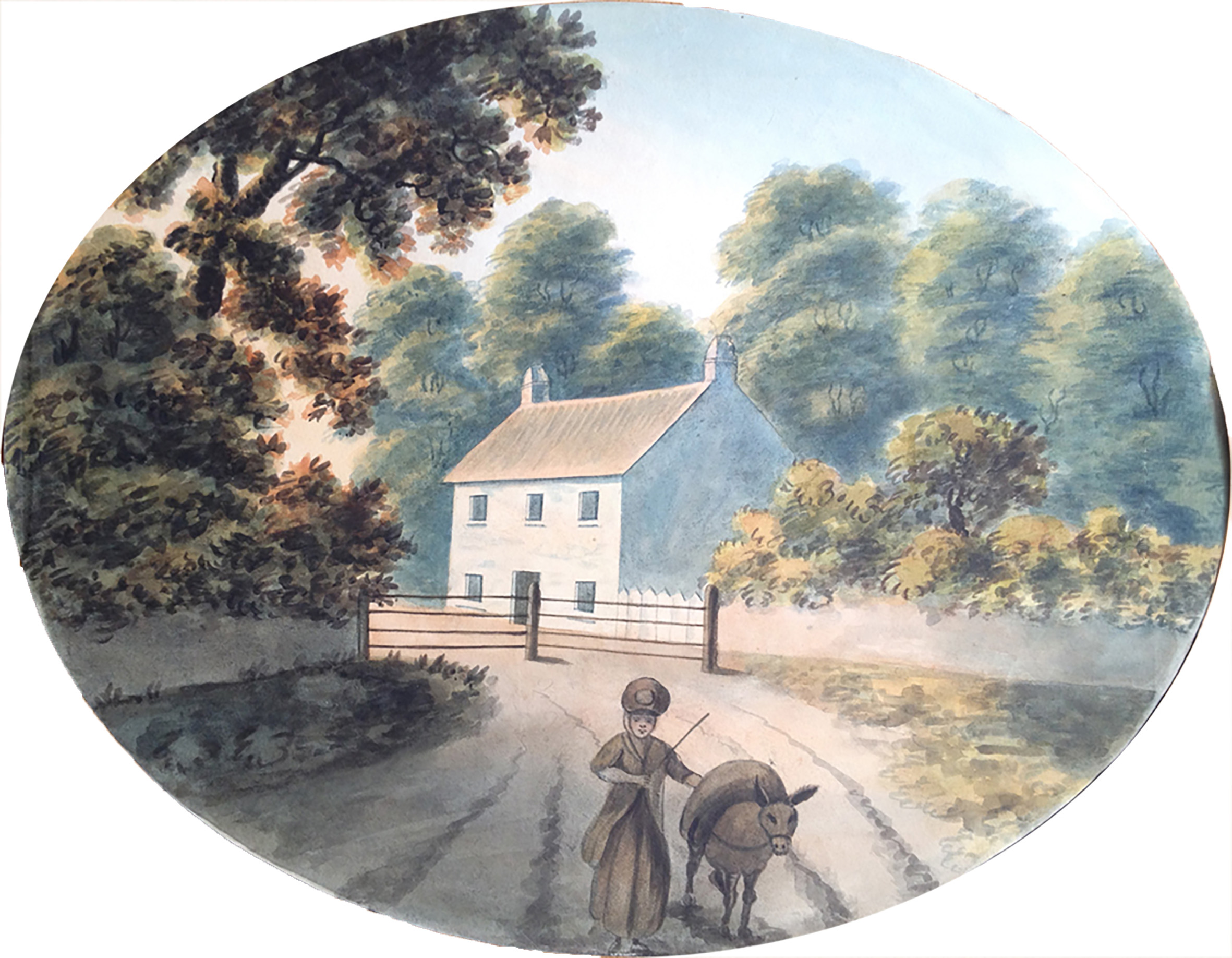
We’re fortunate that two illustrations exist to show the earlier building, one even less architecturally satisfying than the present one. The first is an undated watercolour of around 1820. The scene looks west from Shirehampton Road at its junction with Kings Weston Road, roughly where the bus stop is today.
A small cottage with a simple symmetrical frontage faces onto the road with a central door and five identical square windows. A simple tiled pitched roof is anchored at either gable by a squat little chimney. In front of it are the gates, shown on the eastern side of the building. The bucolic character of the scene is set off by a woman driving her loaded donkey in the direction of the artist. The lodge’s backdrop is dominated by mature trees, perhaps the verge plantations shown on the 1772 plan. To its right the estate wall encloses a lower shrubbery, perhaps the cottage gardens.
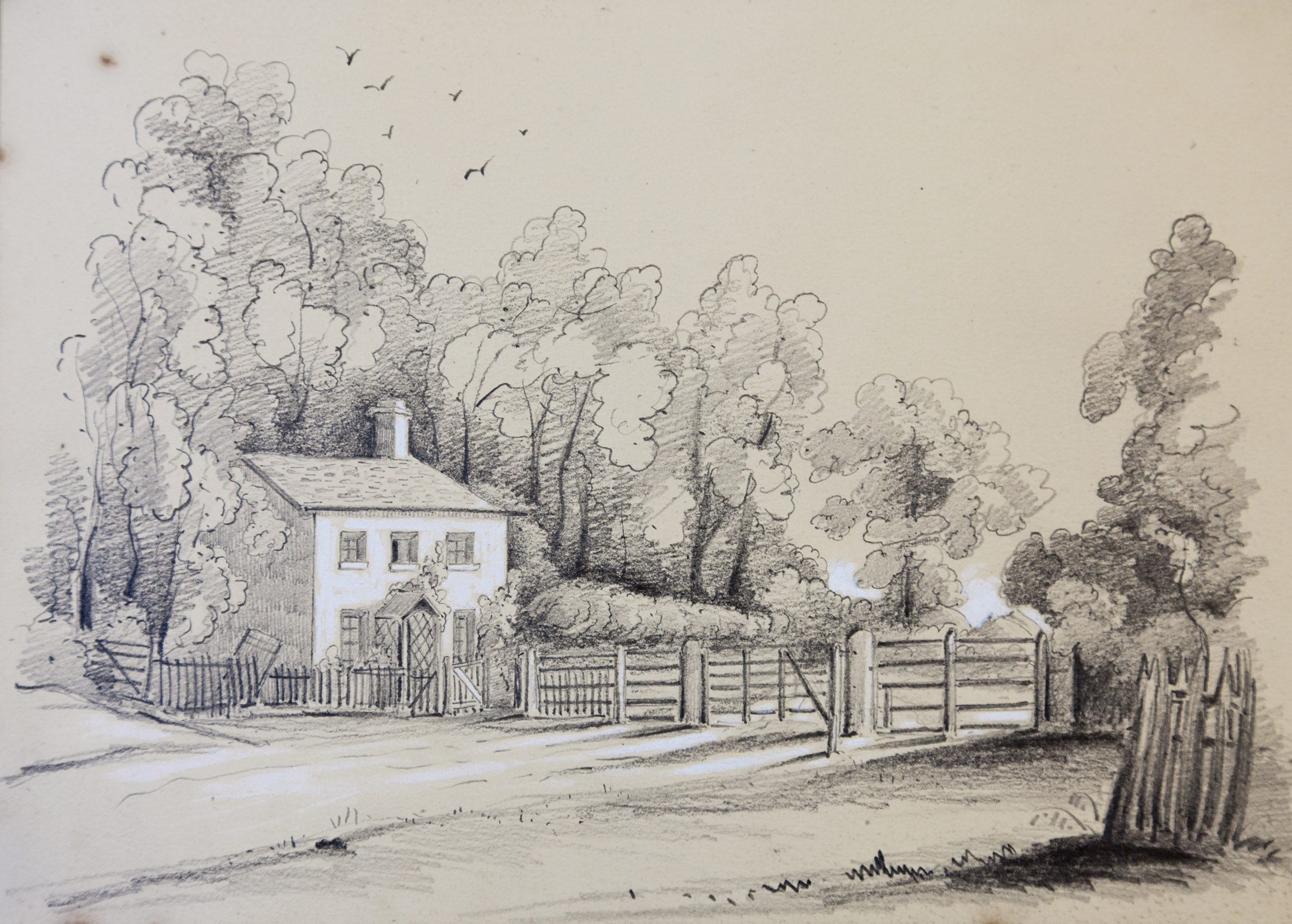
The general accuracy of the image is confirmed by another painting around twenty years later, helpfully dated 1846. It’s from an artist’s sketchbook belonging to Edward Emra Earle, of Westbury-on-Trym and shows the opposing view, from the west. The small ground floor windows have perhaps been enlarged, and a simple porch with trellis added around the front door. The park gates are shown in more detail, suggesting how imposing they might have been to anyone unaware they were permitted passage through them.
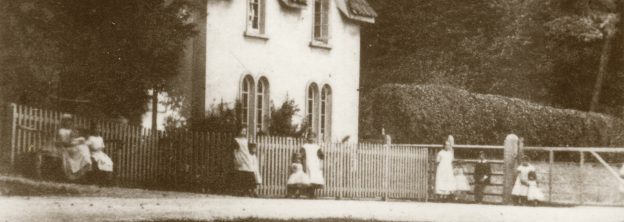
Clearly, this little building’s no longer with us having taken on its present appearance later in the Victorian era. By the 1870s, when it is first recorded photographically, it had been transformed, but did any of the earlier building survive? The ‘new’ lodge looks very different, but it’s footprint must surely be similar to the earlier building. Was it simply altered?
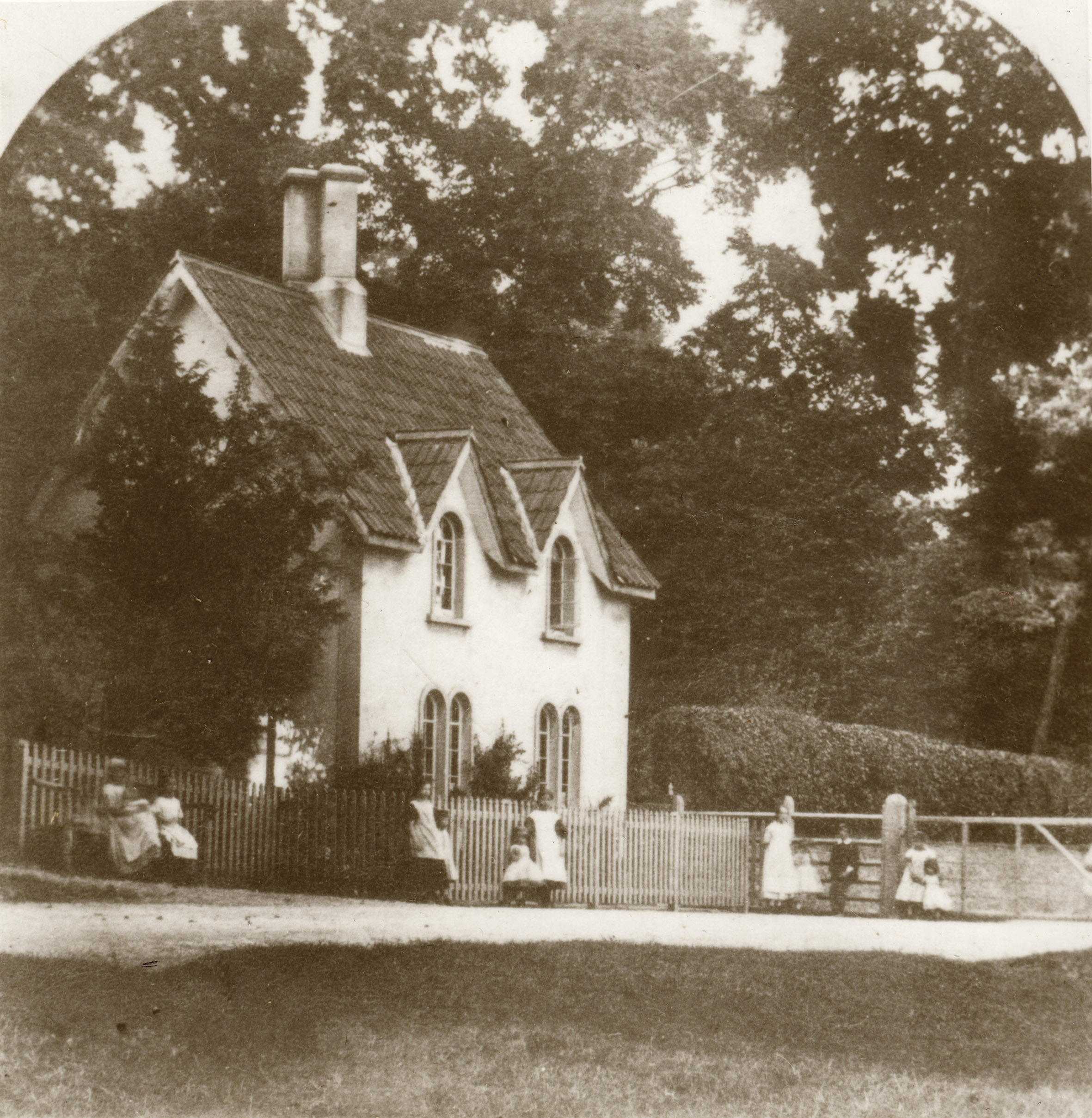
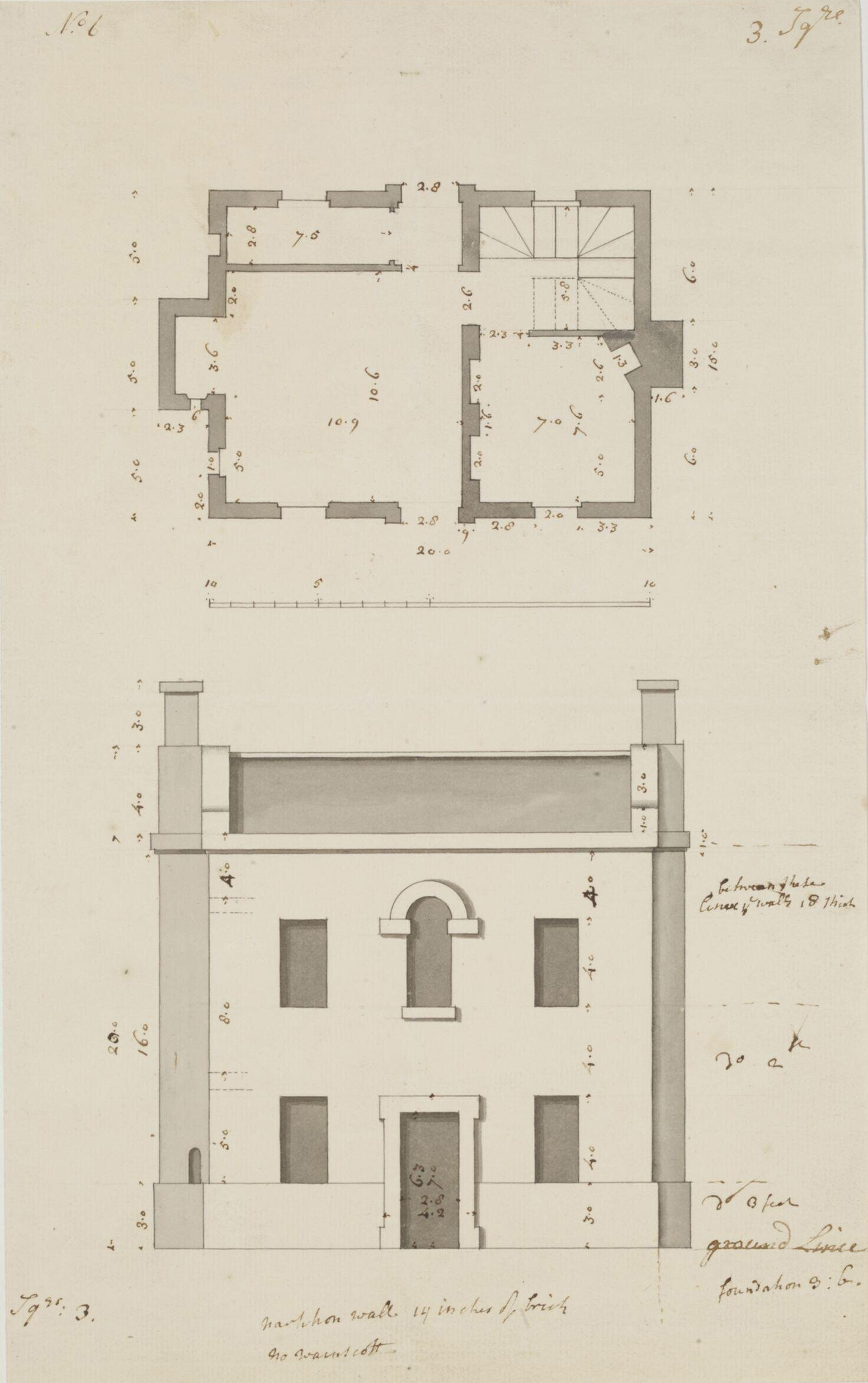
If it was a reconfiguration of the old building, the interior had been heavily changed, with chimneys being taken from the end gables and centred together in the middle of the roof. The central front door has also gone, replaced on the end of the building.
A date for these changes is uncertain, but drawings held in Bristol Archives show similar reconfiguration was made to Henbury Lodge in 1863. These alterations were penned by William Skinner Miles, then-owner of Kings Weston; this would explain why the architectural effect of Park Lodge was a more ammeter production than might be expected.
The question remains, why was the most prominent of the park lodges not treated in a more architectural manner? Arriving from Bristol, the main approach to the front of Kings Weston house would have been through this gate and down the drive from The Circle. The lodge and gates would have been visually prominent for anyone approaching Kingsweston Hill from the south.
One theory is that it had been something more when first built, only to have been reduced to an visually inauspicious cottage by the early 19th Century. Sir John Vanbrugh’s drawings are littered with sketches for small unpretentious cottages of similar scale and symmetry; could Park Lodge have begun life as one of these?